Artwork
Tathagata Buddha
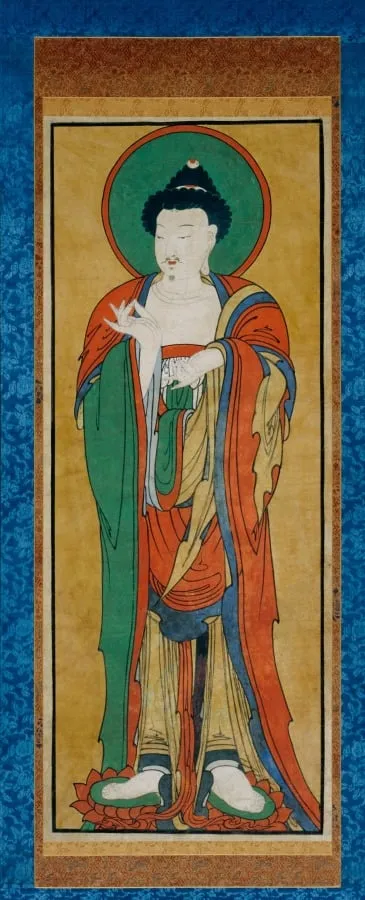
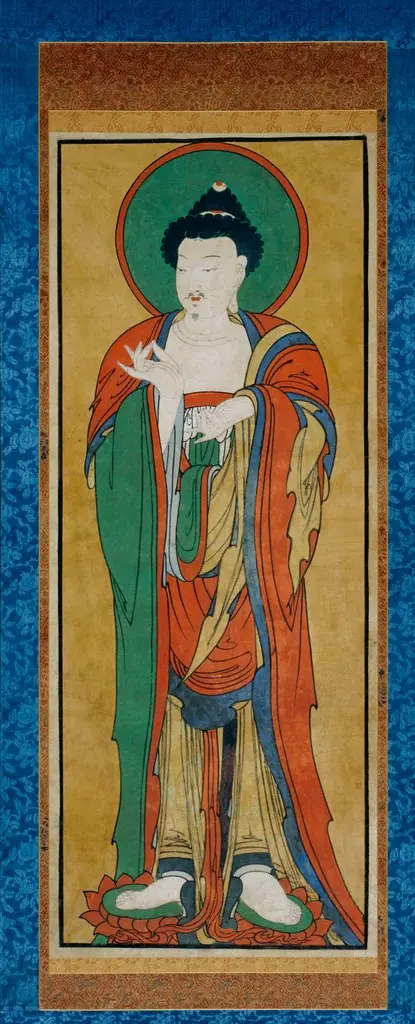
Tathagata Buddha is an unspecified painting by the Impressionist artist Unknown. It dates from 1804 and is held in the collection of the Cleveland Museum of Art. This large Buddhist painting, measuring over 2 meters tall, was created for outdoor ceremonies during the late Joseon period in Korea.
- Accession no.
- 1918.542
- Credit line
- Worcester R. Warner Collection
About this work
Look up more paintings from Korea, Joseon dynasty (1392–1910) to see how artists of that time showed sacred figures.
You see a tall Buddha in a red robe, hands folded, floating on a lotus cloud against a gold background.
This painting was made to hang outside during Buddhist ceremonies in Korea. It’s over six feet tall, big enough to see from far away. The bright colors come from crushed minerals, which last longer in sunlight and rain.
Look up more paintings from Korea, Joseon dynasty (1392–1910) to see how artists of that time showed sacred figures.
Overview
This large Buddhist painting, measuring over 2 meters tall, was created for outdoor ceremonies during the late Joseon period in Korea.
Subject & Meaning
The painting depicts a serene Tathagata Buddha in a red robe, hands clasped together, seated on a lotus flower amidst clouds, set against a gold background, symbolizing spiritual enlightenment and peace.
Technique & Style
The artwork is characterized by the use of bright mineral pigments on a durable material, likely thick paper or hemp, allowing it to withstand outdoor conditions during ceremonies.
History & Provenance
Dating back to the late Joseon dynasty, which spanned from the 17th to the 19th century, this painting was used as a banner for rituals such as the water-and-land rite.
Artist & collection