Artwork
The carrying of the cross
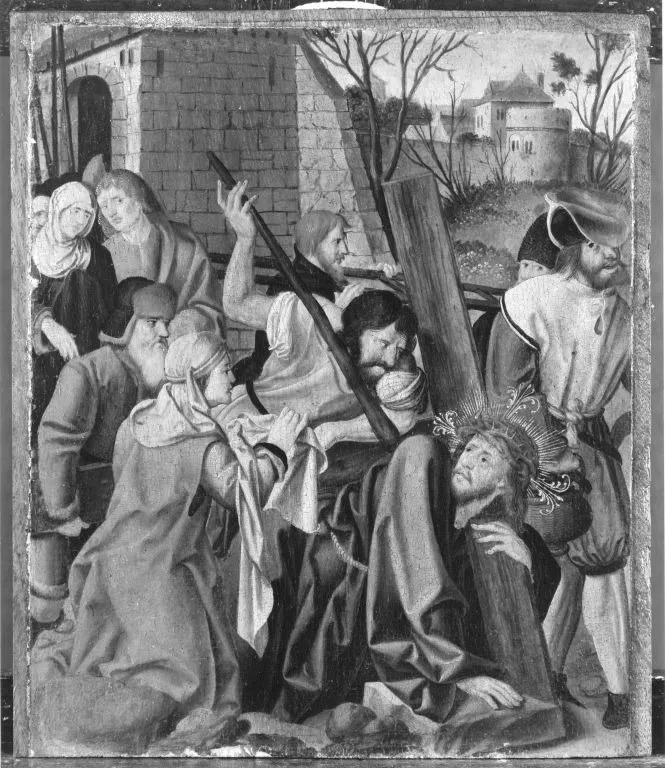
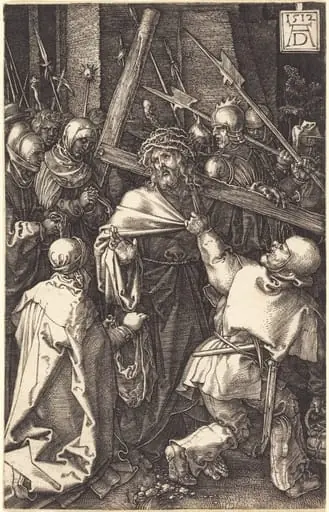
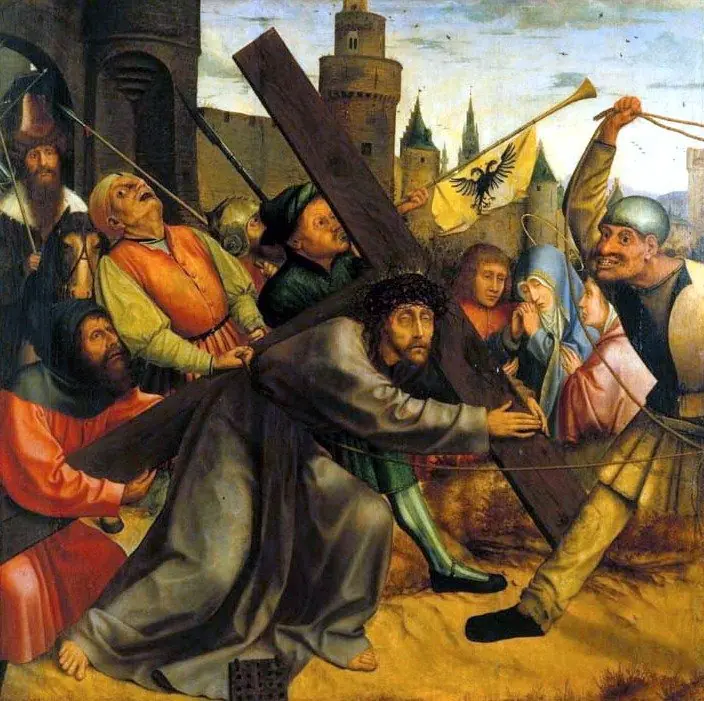
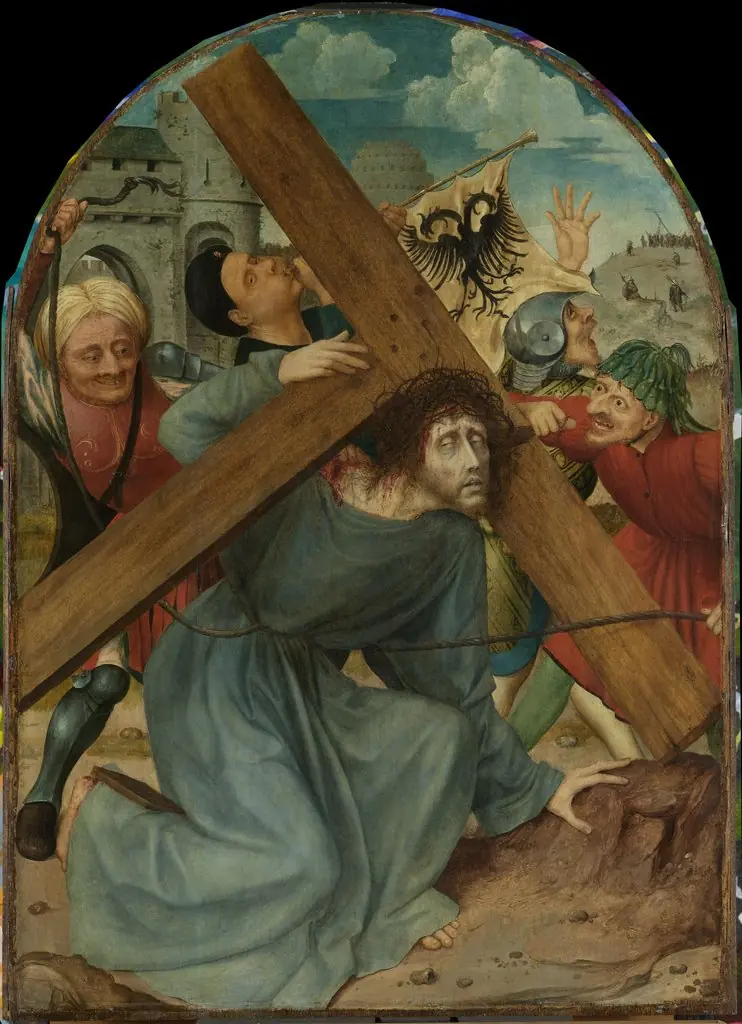
The carrying of the cross is an oil painting by the Mannerist artist Unknown. It dates from 1545 and is held in the collection of the Bavarian State Painting Collections. The work depicts a procession in which a group of figures transports a massive wooden cross.
About this work
Subject & Meaning
The depiction underscores themes of endurance and redemption within Christian theological symbolism.
The painting shows Christ bearing the cross on his shoulders, a traditional iconographic moment from the Passion narrative that emphasizes his suffering and sacrificial role. The depiction underscores themes of endurance and redemption within Christian theological symbolism. The work is an oil painting on oak panel, measuring 34.3 cm in height and 29.1 cm in width, created in 1545. It is housed in the Bavarian State Painting Collections at the Alte Pinakothek.
The composition aligns with late medieval religious art conventions, portraying Jesus Christ as the central figure in the act of carrying the cross, a visual metaphor for the weight of humanity’s sins. This subject has been interpreted as a devotional focus for contemplation of Christ’s Passion, linking the visual narrative to broader theological concepts of sacrifice and salvation.
Technique & Style
Created in 1545, this religious painting is executed in oil paint on an oak panel support. The work measures 34.3 cm in height and 29.1 cm in width. Stylistically, the piece is attributed to the Northwest German school of the mid-16th century, specifically dated between 1540 and 1550.
The composition focuses on the depiction of Jesus Christ carrying the cross, adhering to the conventions of religious art from this period and region.
History & Provenance
The work titled The carrying of the cross was created in 1545 as an oil painting on oak panel, likely by an artist from northern Germany active around 1540–1550. It was commissioned for the Bavarian State Painting Collections and has remained in the Alte Pinakothek in Munich since its inception, where it is catalogued as part of the museum's religious art holdings.
The painting depicts Jesus Christ in the moment of bearing the cross, reflecting its religious genre. Its dimensions measure 34.3 cm in height and 29.1 cm in width, and it was produced using oil paint on an oak panel support.
The work's creation history is anchored to the year 1545, consistent with its inception date recorded in archival documentation. Its provenance is straightforward, with continuous ownership by the Bavarian State Painting Collections since its creation, establishing a stable chain of custody within a state-managed art collection.
The painting is held by the Bavarian State Painting Collections and is on display at the Alte Pinakothek in Munich. It is executed in oil paint on an oak panel measuring 34.3 cm in height by 29.1 cm in width. No specific inventory or accession number is recorded in the available sources, and no exhibition history is documented.
Legacy
The painting The carrying of the cross, created in 1545, has been recognized as an early example of German religious art from the mid-sixteenth century. Its depiction of Jesus Christ bearing the cross was noted for its emotional intensity and technical execution in oil on oak panel. The work entered the collection of the Bavarian State Painting Collections and remains on display at the Alte Pinakothek in Munich, where it continues to be studied as part of the region's artistic heritage. Scholars have cited its influence on later interpretations of the Passion narrative in European art.
The piece measures 34.3 cm in height and 29.1 cm in width, reflecting the scale typical of devotional panels from this period. Its stylistic elements contributed to discussions about the evolution of narrative painting in the Renaissance, particularly in Northern European contexts.
The painting's legacy persists in both academic discourse and museum interpretation, often referenced in analyses of religious imagery and artistic responses to biblical themes.
Overview
The work depicts a procession in which a group of figures transports a massive wooden cross. Central to the composition is a man supporting a crowned figure, identified as Jesus, while a surrounding crowd in robes watches with varied expressions. The setting includes a stone wall and an adjacent building, grounding the scene in an architectural space.
Context
Created during the Renaissance, the painting reflects the period’s renewed interest in naturalistic representation and dramatic narrative. Its focus on human expression, detailed drapery, and architectural elements aligns with contemporary approaches to biblical subjects, aiming to engage viewers through realistic portrayal and spiritual resonance.
Artist & collection