Artwork
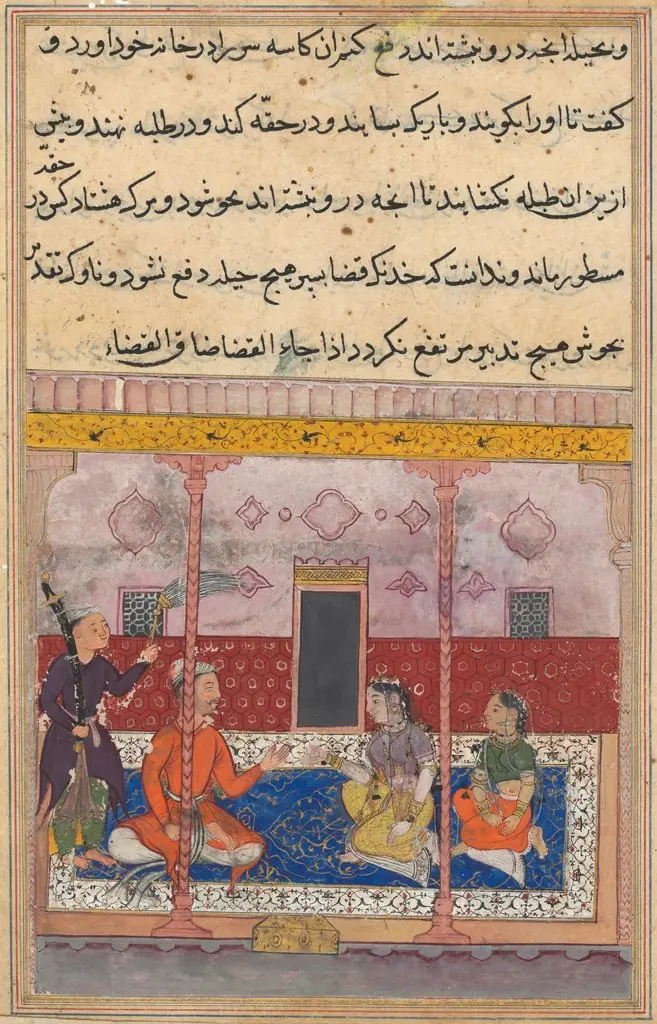
The goldsmith judged; the bear cubs trained by the carpenter as though they were his sons, from a Tuti-nama (Tales of a Parrot): Third Night
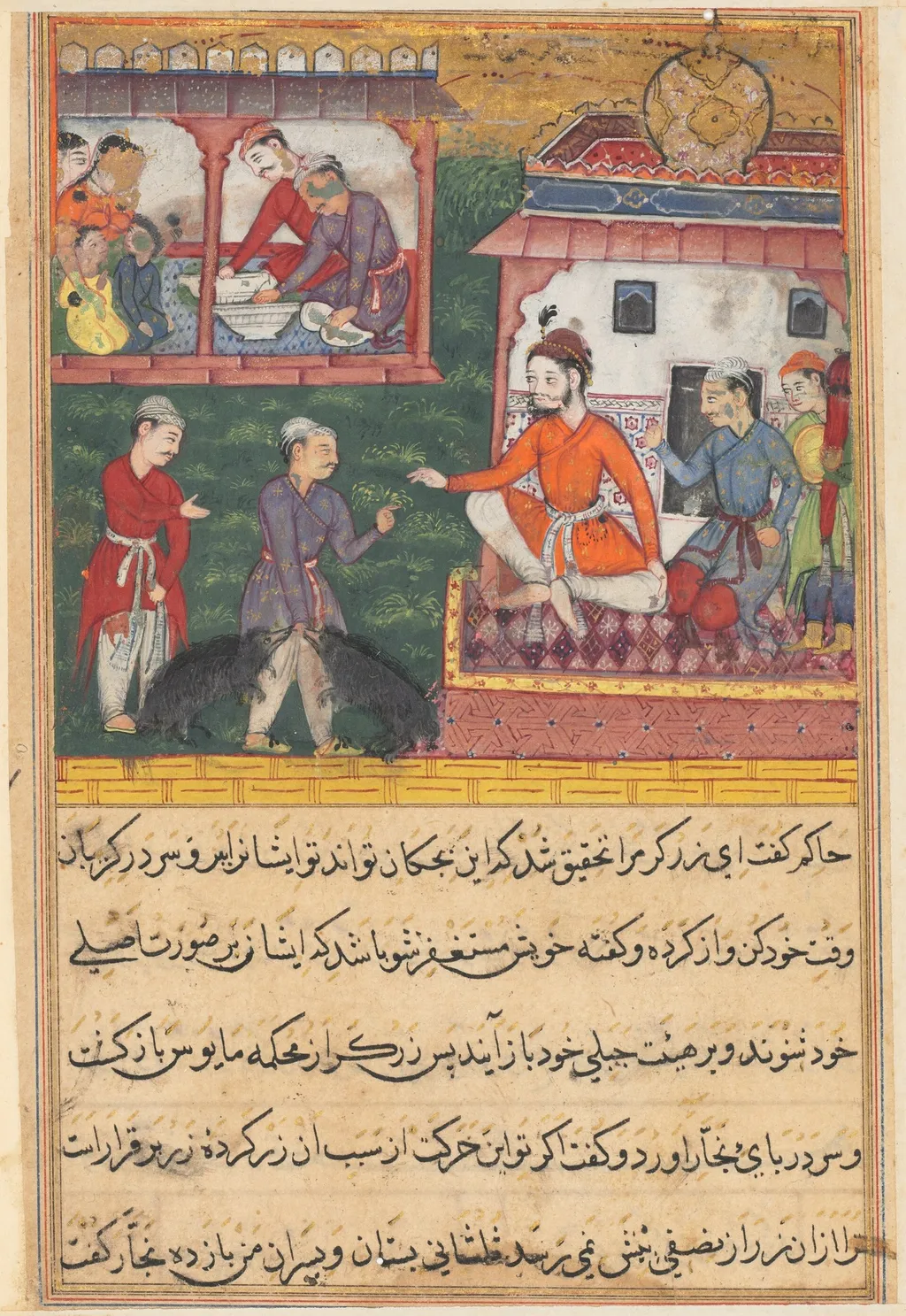
The goldsmith judged; the bear cubs trained by the carpenter as though they were his sons, from a Tuti-nama (Tales of a Parrot): Third Night is an unspecified painting. It dates from 1560 and is held in the collection of the Cleveland Museum of Art.
About this work
Subject & Meaning
The painting illustrates a narrative scene from the Third Night of the Tuti-nama (Tales of a Parrot), depicting two distinct episodes: the judgment of a goldsmith and the training of bear cubs by a carpenter who raised them as his own sons. Created within the Mughal Empire in 1560, the work visualizes moral fables central to this Persian literary tradition, where animal behavior serves as an allegory for human conduct and ethical dilemmas. The juxtaposition of the carpenter's paternal care for the cubs with the legal judgment of the goldsmith highlights themes of justice, nurture, and the consequences of actions.
As an illuminated manuscript illustration, the piece functions to bring the didactic stories of the parrot to life for its viewer, using visual storytelling to convey the text's underlying lessons on morality.
History & Provenance
It is currently held in the collection of the Cleveland Museum of Art, where it is cataloged under the accession number 1962.
Created in 1560 within the Mughal Empire, this painting depicts the Third Night of the Tuti-nama. The work was produced by an unknown artist during the height of Mughal manuscript illumination. It is currently held in the collection of the Cleveland Museum of Art, where it is cataloged under the accession number 1962.279.23.a.
The painting entered the museum's holdings as part of a specific acquisition, though the exact details of the initial commission or the specific patron who ordered the Tuti-nama manuscript are not detailed in the provided records.
The goldsmith judged; the bear cubs trained by the carpenter as though they were his sons, from a Tuti-nama (Tales of a Parrot): Third Night is a painting attributed to an unknown artist and dated to circa 1560. It is held in the collection of the Cleveland Museum of Art, where it bears the accession number 1962.279.23.a and is noted as originating from the Mughal Empire. The available sources do not record any exhibition history for this work.
Context
The miniature depicting the goldsmith judging bear cubs trained by a carpenter appears in the third night of the Tuti-nama manuscript produced in the Mughal Empire around 1560. Attribution to an unnamed artist working within the Mughal court context is documented in scholarly catalogues of the period, with the work housed in the Cleveland Museum of Art collection. Its stylistic placement within Mughal miniature painting reflects broader workshop practices of narrative illustration and moral allegory in Persianate manuscript traditions.
Overview
The work illustrates a lively domestic tableau drawn from the third night of the medieval Persian collection known as the Tuti‑nama, or Tales of a Parrot. Central to the composition is an orange‑robed figure seated on an elaborately patterned rug, gesturing toward a standing companion. Adjacent, two men attend a black bear cub, handling the animal as one would a child.
Technique & Style
Executed in vibrant pigments, the artist employs a rich palette of orange, red, and green to delineate figures, textiles, and architectural elements. Fine linear work renders the rug’s intricate motifs and the characters’ clothing, while broader washes define the white building with a red roof and the surrounding verdant foliage, creating depth through layered detail.
Artist & collection

- The goldsmith judged; the bear cubs trained by the carpenter as though they were his sons, from a Tuti-nama (Tales of a Parrot): Third Night
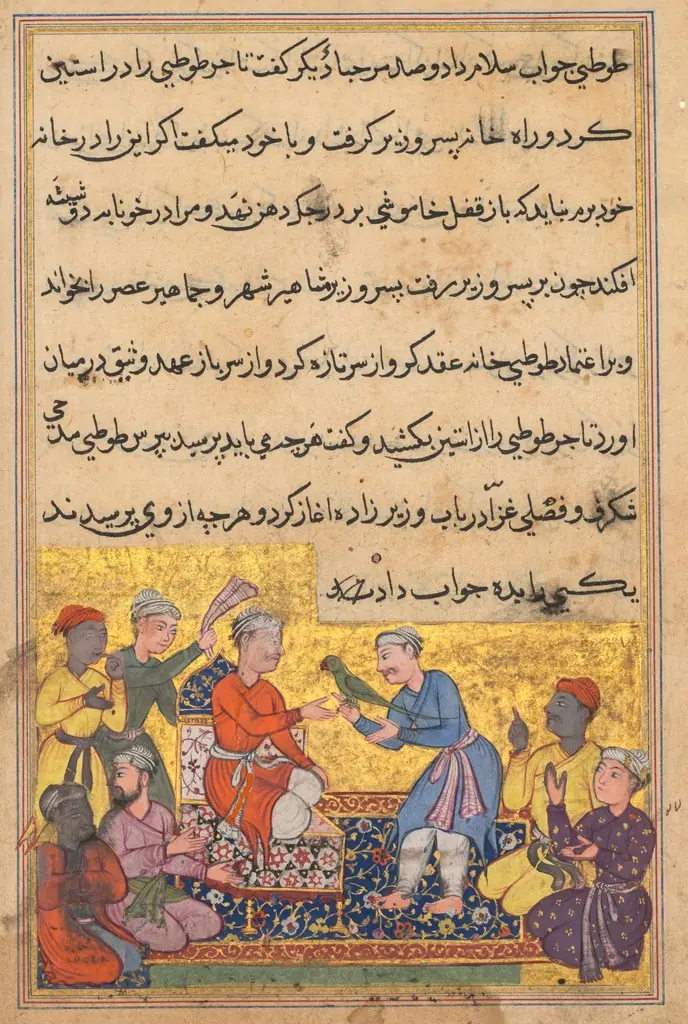 The magic parrot of the merchant talks to the vizier’s son, from a Tuti-nama (Tales of a Parrot): Tenth Night
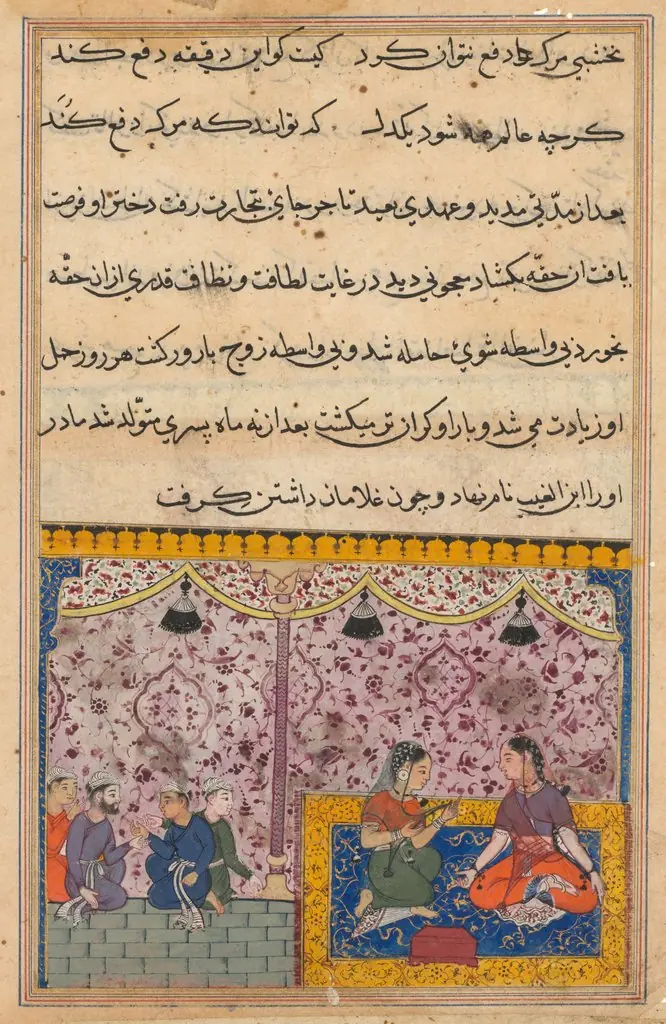 The merchant’s daughter gives birth to a son as a result of eating out of the box. The clever child recognizes the false gems from true, from a Tuti-nama (Tales of a Parrot): Twenty-third Night
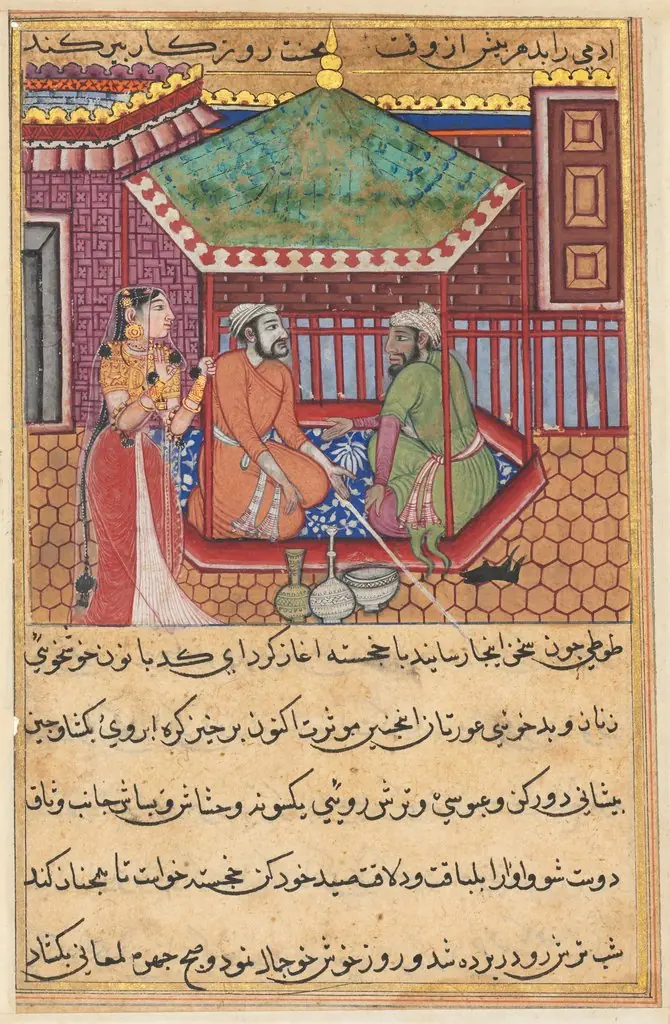 The eldest brother explains the reason for his youthful appearance, from a Tuti-nama (Tales of a Parrot): Forty-ninth Night
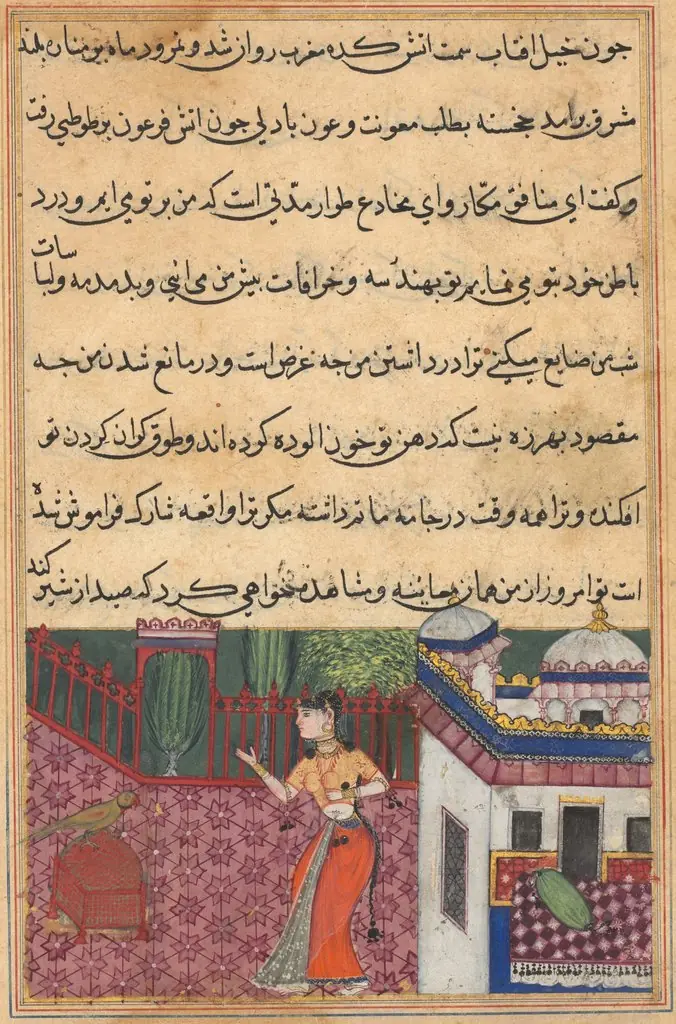 The parrot addresses Khujasta at the beginning of the thirty-third night, from a Tuti-nama (Tales of a Parrot)
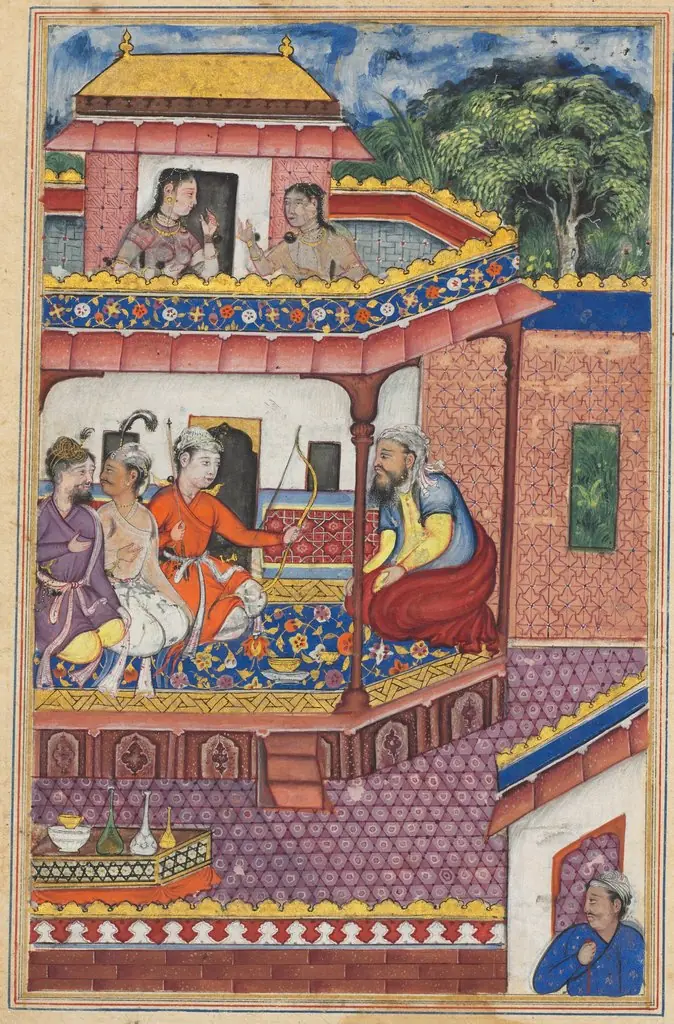 The three young men present themselves as suitors for the hand of Zuhra, the daughter of the merchant of Kabul, from a Tuti-nama (Tales of a Parrot): Thirty-fourth Night
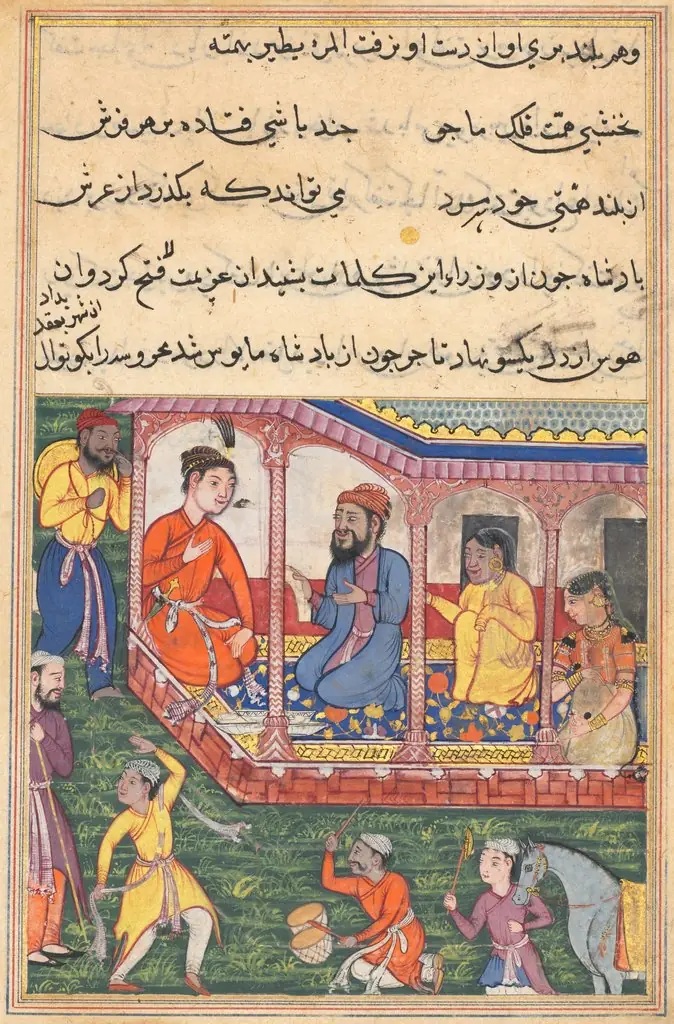 Mahrusa’s marriage to the prefect of the city, from a Tuti-nama (Tales of a Parrot): Thirty-sixth Night
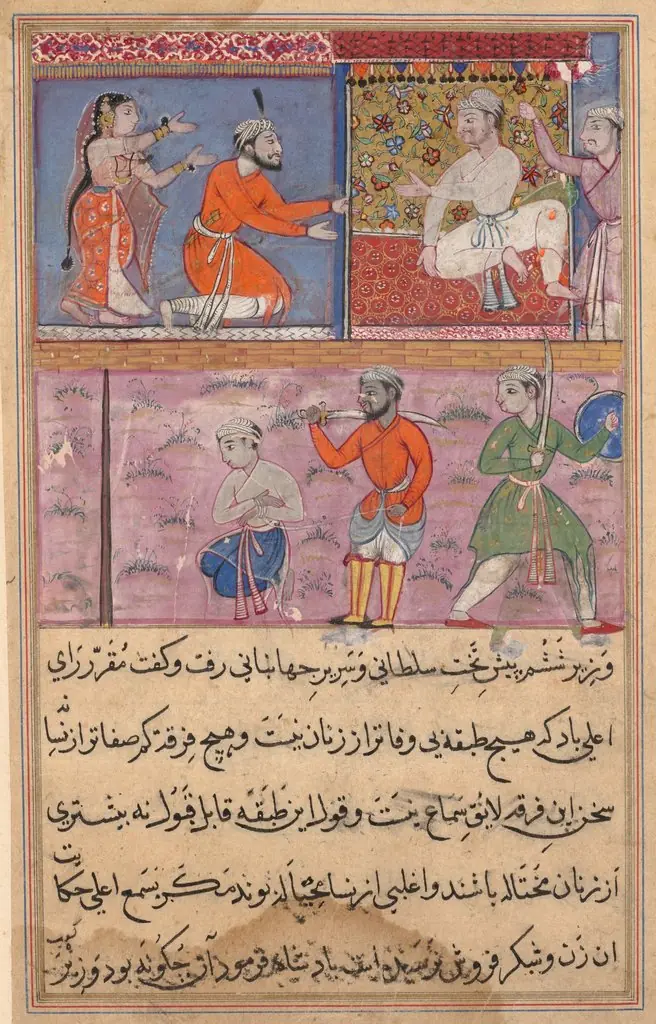 Page from Tales of a Parrot (Tuti-nama): text page
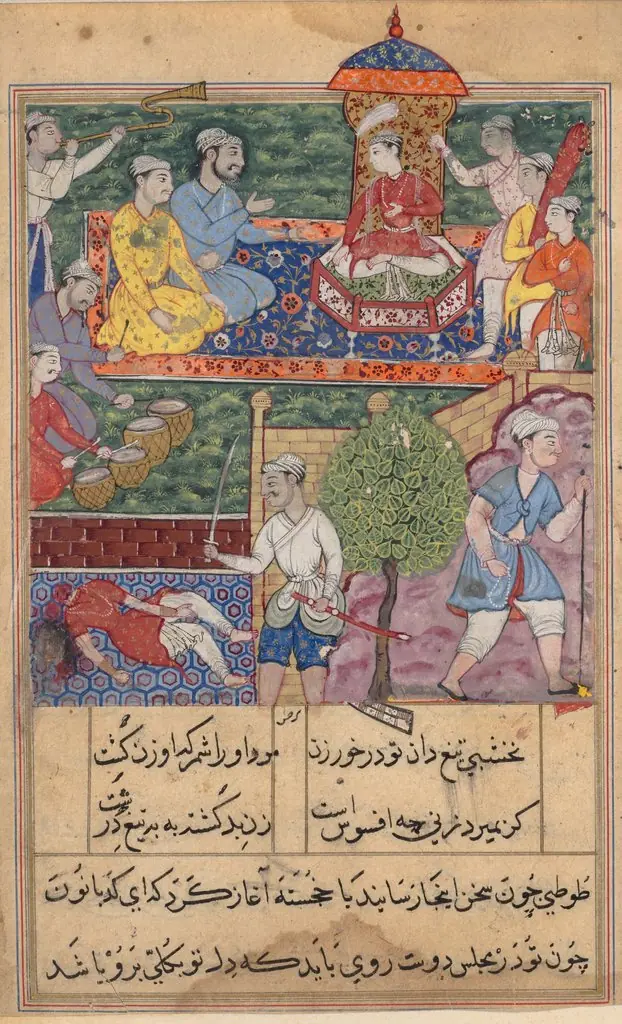 Page from Tales of a Parrot (Tuti-nama): text page
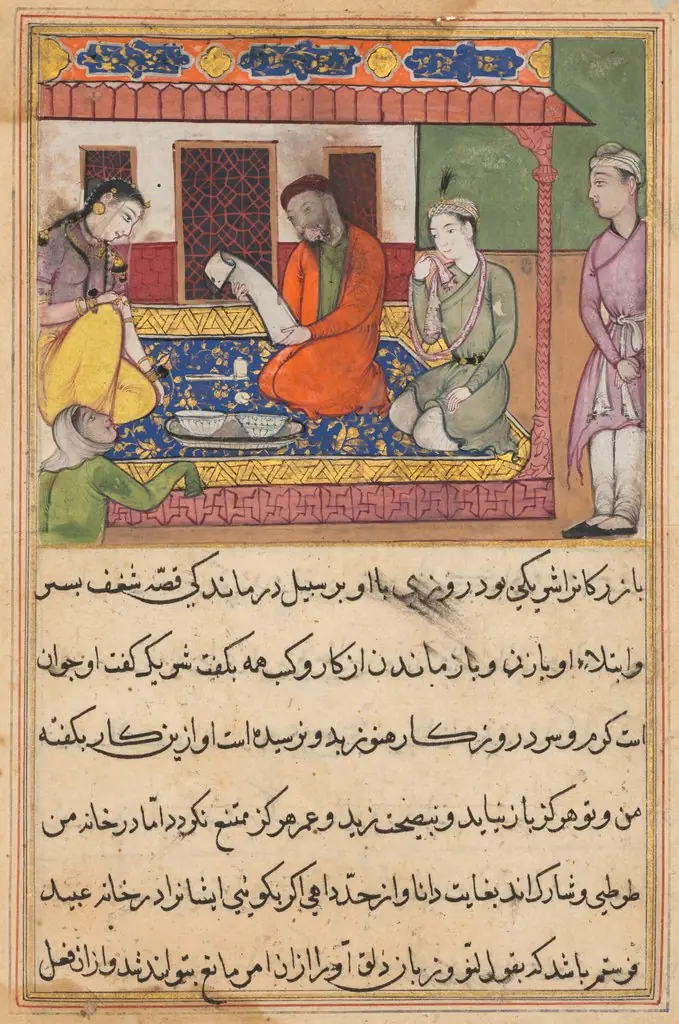 The marriage of ‘Ubaid, son of a merchant of Tirmiz, from a Tuti-nama (Tales of a Parrot): Forty-second Night
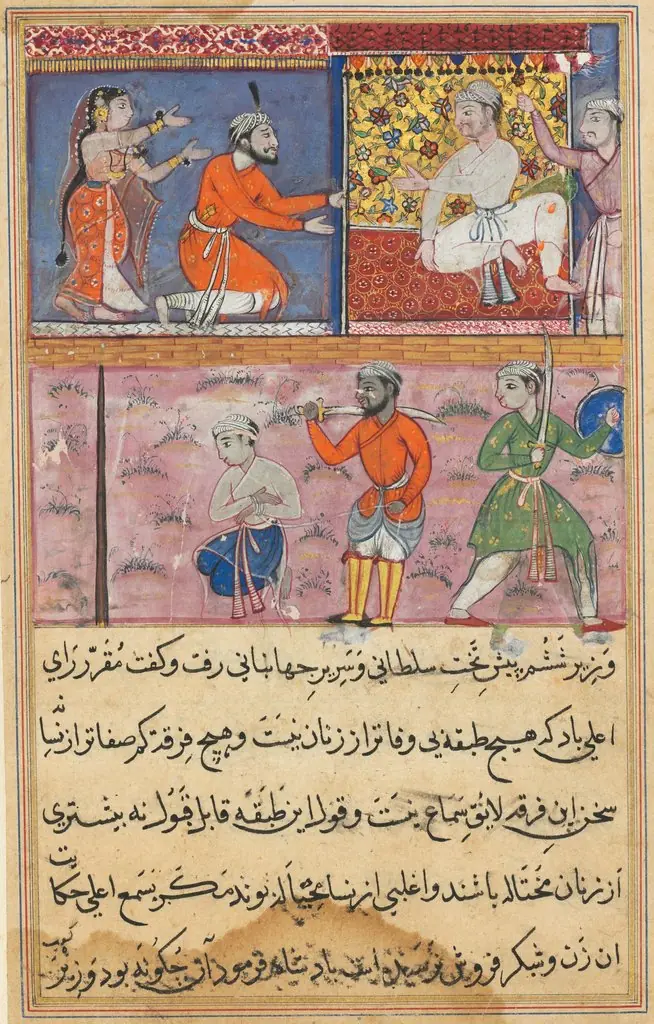 The prince sent back to the place of execution for the sixth time, from a Tuti-nama (Tales of a Parrot): Eighth Night
 The merchant has the hateful skull ground and put into a box, from a Tuti-nama (Tales of a Parrot): Twenty-third Night