Artwork
高野四所明神像|The Four Deities of Mount Kōya
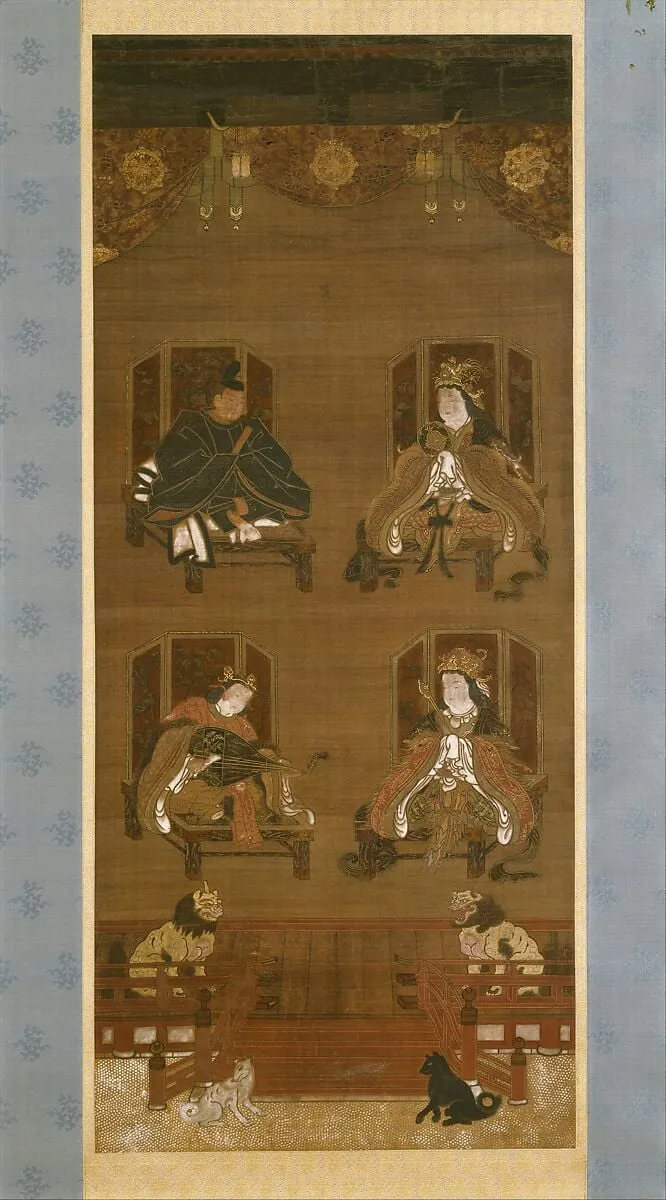
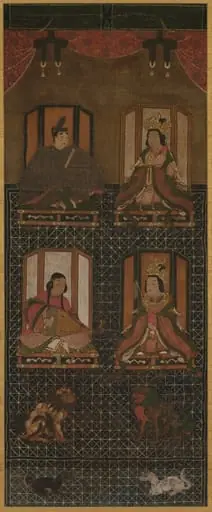
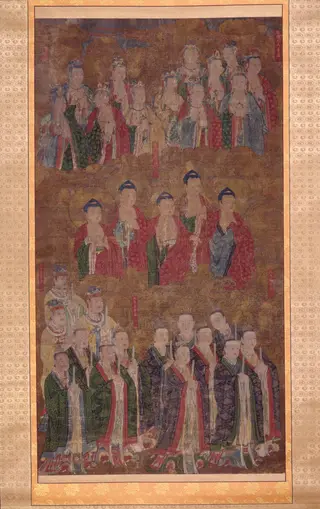
高野四所明神像|The Four Deities of Mount Kōya is an ink painting. It dates from 1379 and is held in the collection of the Metropolitan Museum of Art. This hanging scroll, titled The Four Deities of Mount Kōya, depicts four divine figures rendered in ink, color, and gold on silk.
About this work
Subject & Meaning
The iconography explicitly features divine beings accompanied by animals, specifically dogs and lions, which serve as attendant figures or mounts.
Created in 1379, this religious hanging scroll depicts the Four Deities of Mount Kōya, central figures within the Buddhist tradition associated with the sacred mountain. The iconography explicitly features divine beings accompanied by animals, specifically dogs and lions, which serve as attendant figures or mounts. These creatures likely function as symbolic guardians or manifestations of the deities' power within the Shingon Buddhist context of Mount Kōya.
As a work of religious art produced in Japan, the painting visually represents the spiritual hierarchy and protective forces believed to inhabit the monastery's realm. The inclusion of gold alongside ink and color on silk underscores the sacred status of the subjects, framing them as objects of veneration rather than mere portraiture. The composition serves to materialize the invisible spiritual presence of the four specific gods revered at the site.
Technique & Style
The work is a hanging scroll executed in ink, color and gold on silk, a format typical of Japanese religious paintings from the late 14th century. The anonymous artist rendered Buddhist deities accompanied by a dog and a lion, reflecting the iconographic program described in the record. The piece was created in Japan in 1379 and is presently held by the Metropolitan Museum of Art, underscoring its significance within the museum's collection of Asian religious art.
History & Provenance
The Four Deities of Mount Kōya is a hanging scroll executed in 1379 by an anonymous Japanese artist. Created during the late fourteenth century, the work depicts Buddhist deities alongside a dog and a lion, rendered in ink, color, and gold on silk. While the specific commissioning patron and detailed creation narrative remain unrecorded in available documentation, the piece is firmly dated to the year 1379.
The painting is currently held within the collection of the Metropolitan Museum of Art, where it is classified as a religious artwork. Its provenance traces back to its inception in Japan, though the intermediate ownership chain prior to its acquisition by the museum is not detailed in the provided records. The work stands as a significant example of anonymous religious painting from the late medieval period in Japan.
The Four Deities of Mount Kōya is held in the collection of the Metropolitan Museum of Art in New York. While the provided records confirm the museum as the current location and custodian of this 1379 hanging scroll, they do not specify a particular inventory or accession number. Furthermore, the available documentation contains no details regarding the work's exhibition history, such as specific shows, dates, or venues where it has been displayed publicly.
Context
The Four Deities of Mount Kōya is dated to 1379 and was produced in Japan, placing it within the Muromachi period's religious painting tradition. The work is attributed to an anonymous painter, reflecting the typical anonymity of Buddhist scrolls from this era. Its hanging‑scroll format employs ink, color, and gold on silk to portray Buddhist deities alongside symbolic dog and lion figures, illustrating the syncretic iconography of Japanese esoteric Buddhism.
The painting is held by the Metropolitan Museum of Art, where its inclusion in the collection signals sustained scholarly and curatorial interest.
Overview
This hanging scroll, titled The Four Deities of Mount Kōya, depicts four divine figures rendered in ink, color, and gold on silk. The artwork was created with the specific aim of safeguarding Mount Kōya, a significant Buddhist religious center in Japan. It presents a vibrant portrayal of guardian gods, each mounted on an animal, suggesting their protective role over the sacred site.
Artist & collection

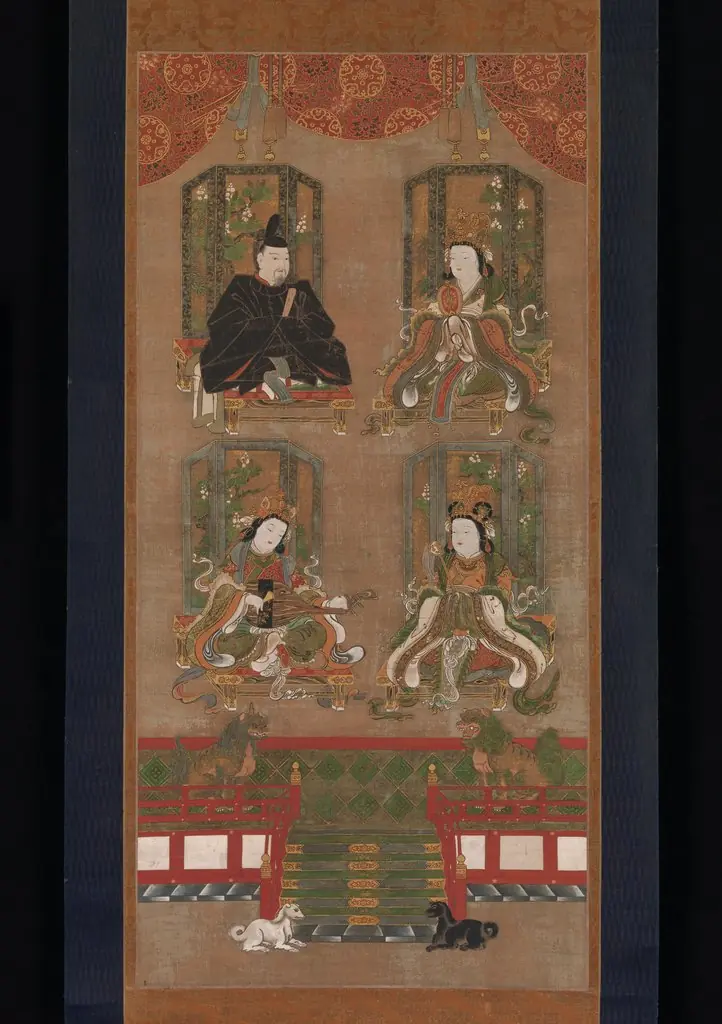
- The Four Deities of Mount Kōya
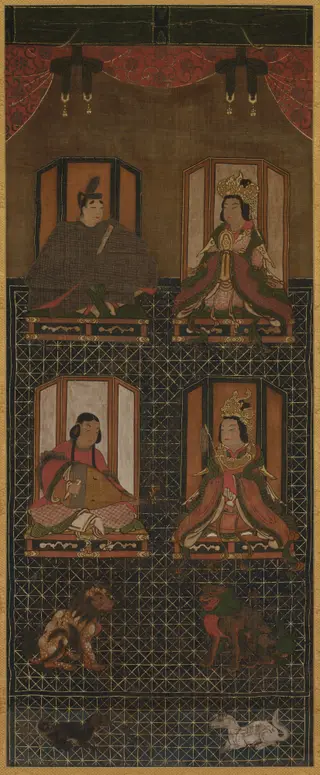 Mandala of the Four Deities of Mt. Kōya
 Mandala of the Four Deities of Mt. Kōya
 明景泰 佚名 北斗中斗本命星君圖 軸|Star deities of the northern and central dippers
 Buddhist Deities
 Mount Kurama Mandala: Bishamonten Triad (Kuramayama mandara: Bishamonten sanzonzō)
 Celestial Buddhas and Deities of the Eastern and Southern Dipper Constellations