Artwork
Mandala of the Four Deities of Mt. Kōya
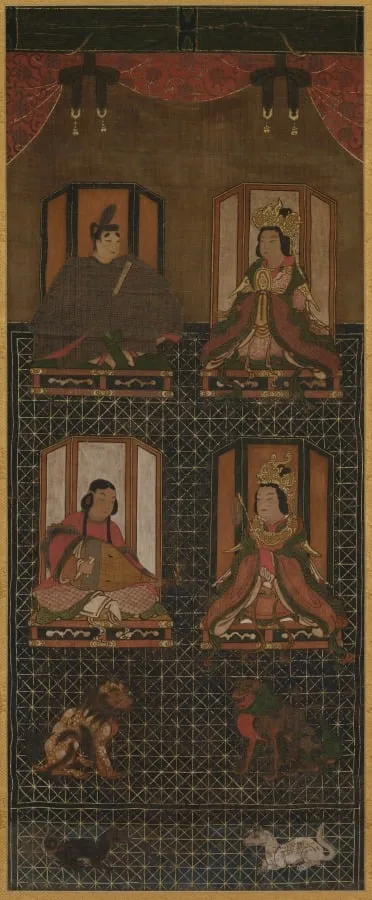
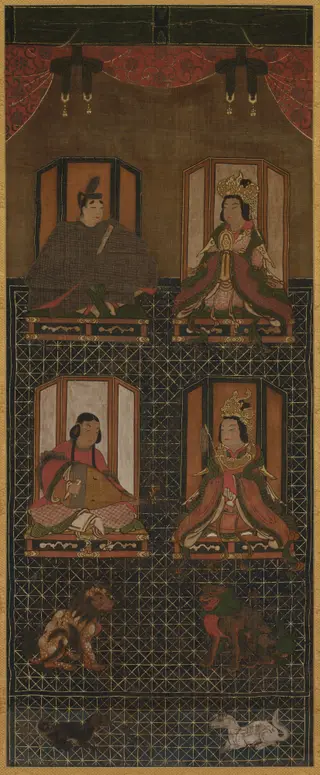
Mandala of the Four Deities of Mt. Kōya is an unspecified painting by the Joseon dynasty painting artist Unknown. It dates from 1504 and is held in the collection of the Cleveland Museum of Art.
- Accession no.
- 1999.262
- Credit line
- Gift of Rosemarie and Leighton Longhi
About this work
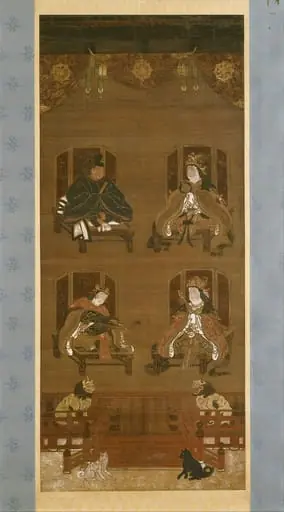
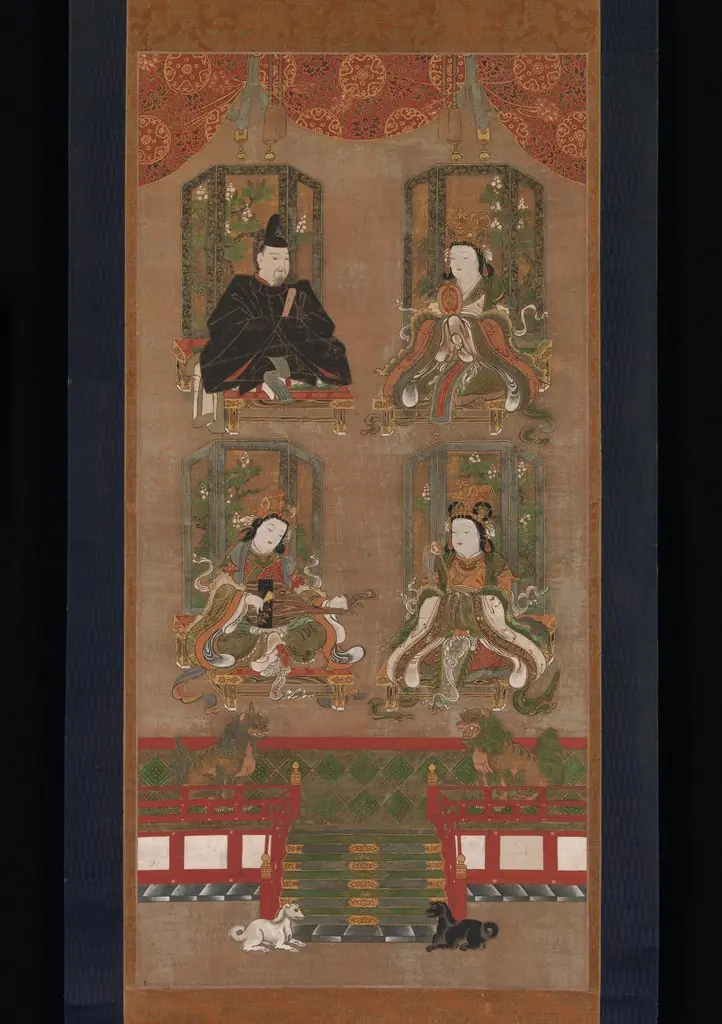
Two wear fancy court robes, one holds a whisk, and the last plucks a small lute.
You see four gods seated in a circle on a gold-leaf background. Two wear fancy court robes, one holds a whisk, and the last plucks a small lute.
This painting was made for monks on Mount Kōya, a sacred mountain in Japan. The gods are shown as nobles, blending religious power with earthly elegance. The gold leaf makes the scene glow like a vision.
If you like this, look up more works from the muromachi period (1392–1573).
Overview
This painting depicts a mandala featuring four deities associated with Mount Kōya, arranged in a circular composition against a gold-leaf background. The work blends religious and secular elements, reflecting the synthesis of spiritual power and worldly refinement.
Subject & Meaning
The four deities shown are Kariba Myōjin, Niu Myōjin, Kehi Myōjin, and Miyajima Myōjin. Kariba and Niu, depicted as son and mother, are dressed in Japanese and Tang dynasty-inspired court attire, respectively. Kehi Myōjin is portrayed with a whisk, while Miyajima Myōjin plays a biwa (lute). Their noble representations merge divine authority with earthly elegance.
Technique & Style
The painting utilizes gold leaf to create a luminous, visionary effect. The circular arrangement of the deities and the blend of Japanese and Tang dynasty styles in their attire reflect the artistic eclecticism of the time.
History & Provenance
Commissioned for monks on Mount Kōya, this work is attributed to the Muromachi period (1392–1573). Notably, it was inspired by an earlier historical event involving Hōjō Masako, who invited these deities to the mountain in the 12th century.
Context
Mount Kōya, a revered Buddhist site in Japan, was the intended location for this painting. The work's themes and style are characteristic of the Muromachi period, which saw the flourishing of Buddhist art and the intersection of religious and secular aesthetics.
Artist & collection