Artwork
The Hunting Party—New Jersey
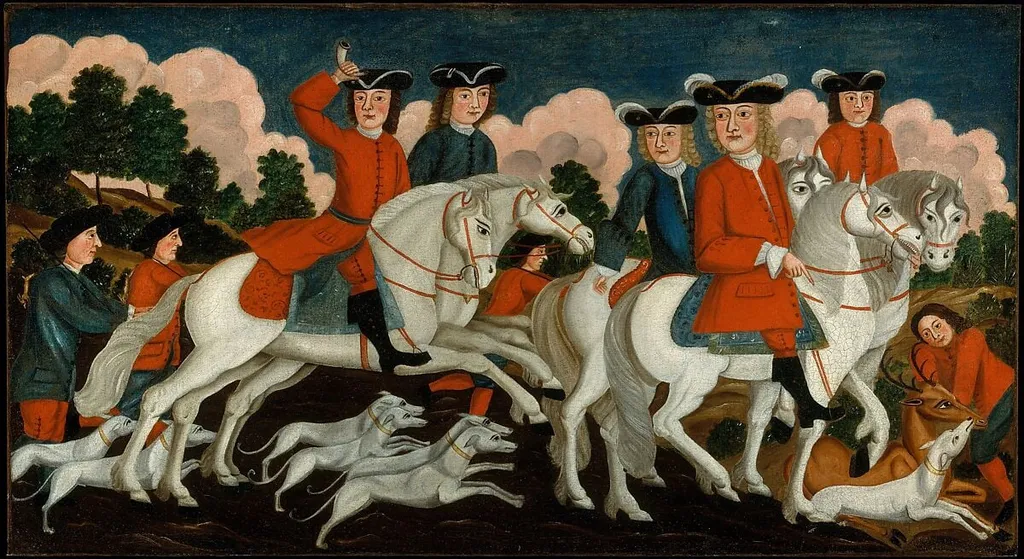
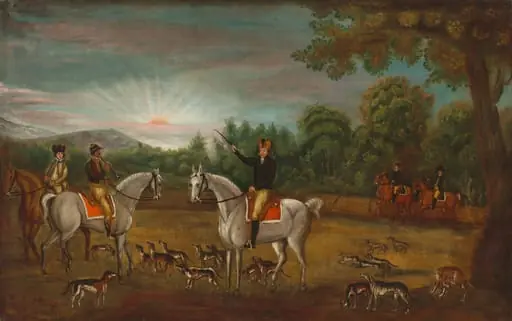
The Hunting Party—New Jersey is an oil painting. It dates from 1750 and is held in the collection of the Metropolitan Museum of Art. This oil on canvas painting depicts a hunting scene set within a verdant forest clearing.
About this work
Technique & Style
The Hunting Party, New Jersey is executed in oil paint on a canvas support, a standard technique for mid-eighteenth-century American genre works.
The Hunting Party, New Jersey is executed in oil paint on a canvas support, a standard technique for mid-eighteenth-century American genre works. The painting's material composition, oil pigment applied to a woven canvas ground, allows for detailed rendering of the figures, horses, deer, and dog that populate the hunting scene. Classified as a genre scene, the work emphasizes narrative content and naturalistic description, focusing on the activity of the hunt rather than portraiture or landscape alone. No specific information on the painting's handling or current condition is provided in the sources.
History & Provenance
The Hunting Party, New Jersey is held by the Metropolitan Museum of Art, accessioned as 1975.1.211. The painting was first recorded in the museum's collection in 1975 through an acquisition that remains unattributed. Its dimensions are 65.4 cm in height and 119.7 cm in width, consistent with its genre as a mid-18th-century American oil on canvas.
Legacy
The Hunting Party, New Jersey, an anonymous 1750 oil on canvas, entered the collection of the Metropolitan Museum of Art and is displayed in The American Wing, where it is presented as a genre scene of colonial hunting. As an example of mid-18th-century American genre painting, the work contributes to the museum's record of pre-Revolutionary depictions of sport and rural life.
Overview
This oil on canvas painting depicts a hunting scene set within a verdant forest clearing. Five men on horseback are shown alongside a pack of hounds, with a freshly hunted deer tied to a pole. The composition captures a moment of rest or triumph after the chase, presenting a detailed view of a common colonial pastime.
Subject & Meaning
The artwork portrays a hunting party, distinguished by the participants' practical, everyday attire rather than formal riding gear. This choice suggests a depiction of a genuine outing rather than a staged or ceremonial royal hunt. The painting likely served as a commissioned record for local patrons, documenting their engagement in the sport and aspects of their daily lives in the New Jersey colony.
Context
Created prior to the American Revolution, this painting offers a glimpse into life when New Jersey was still under British colonial rule. Its subject matter reflects the leisure activities and social customs prevalent among the colonists during this period. The work provides insight into the interests of local patrons who sought to commemorate their sporting pursuits through art.
Artist & collection

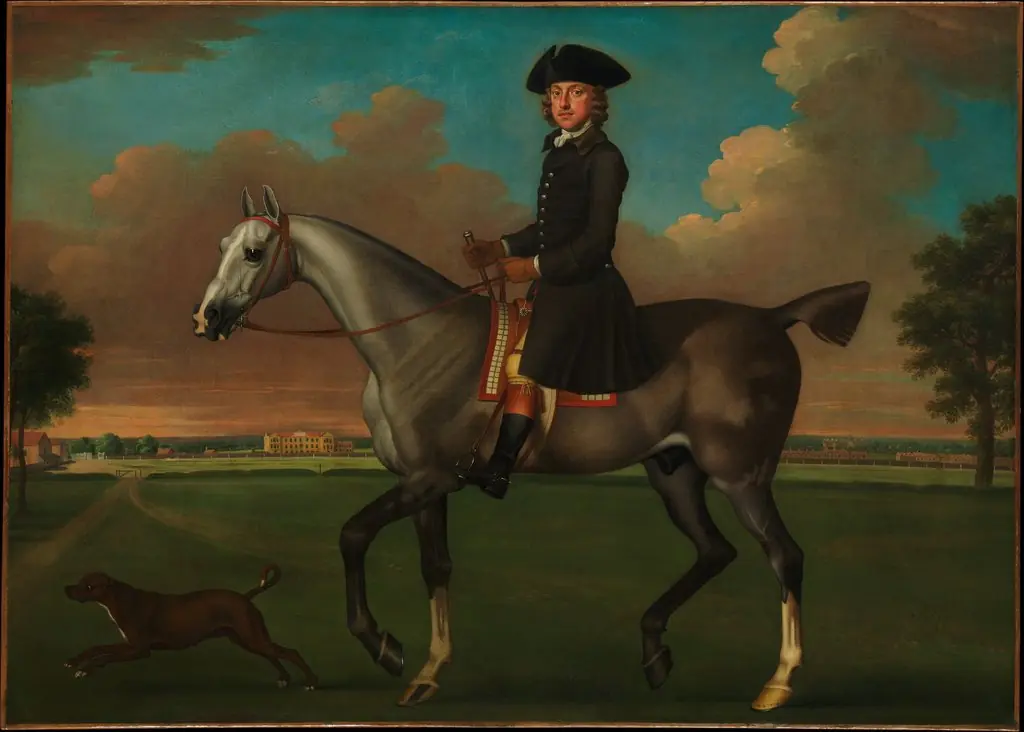
- Portrait of a Horseman
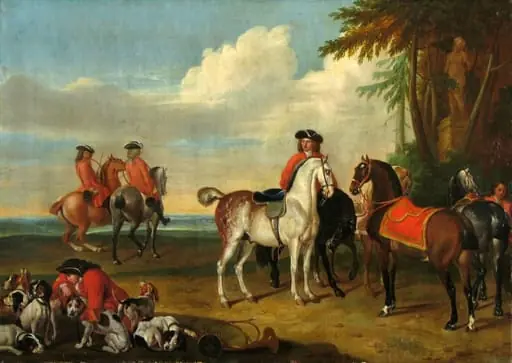 Plecare la vânătoare cu câini; pandant: Plecare la vânătoare cu șoimi
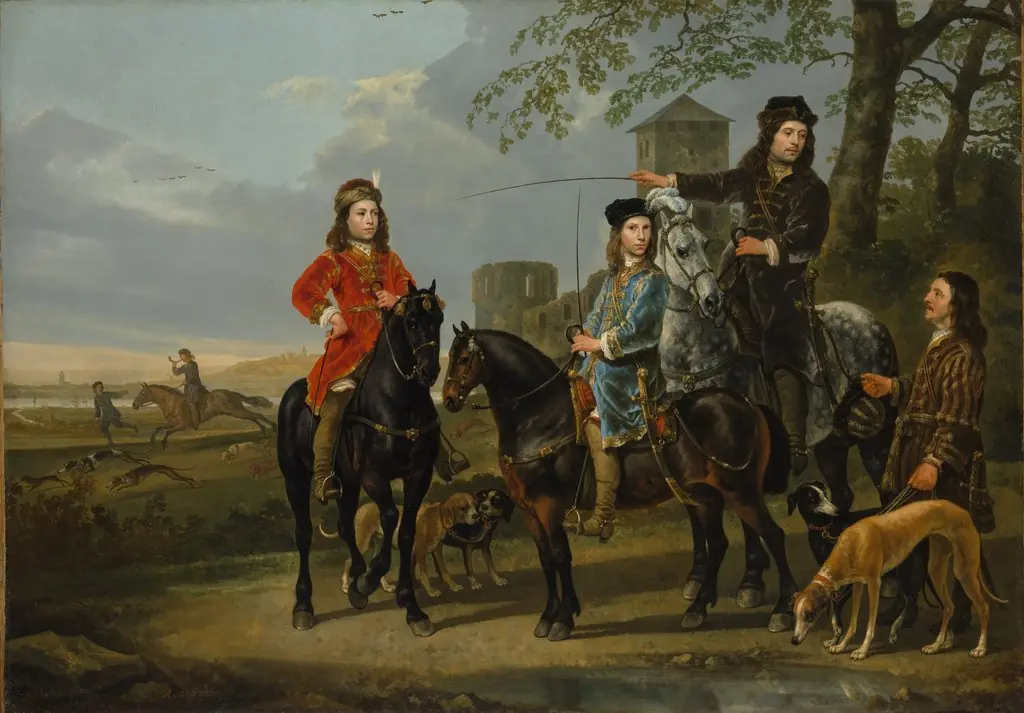 Equestrian Portrait of Cornelis (1639–1680) and Michiel Pompe van Meerdervoort (1638–1653) with Their Tutor and Coachman ("Starting for the Hunt")
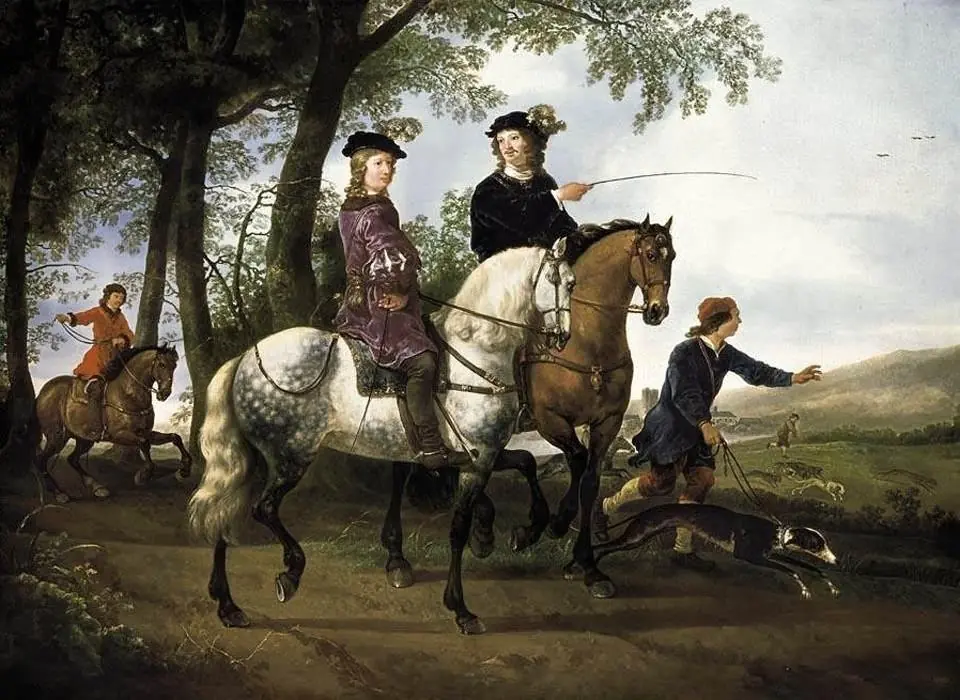 Landscape with a Youth and his Tutor on Horseback
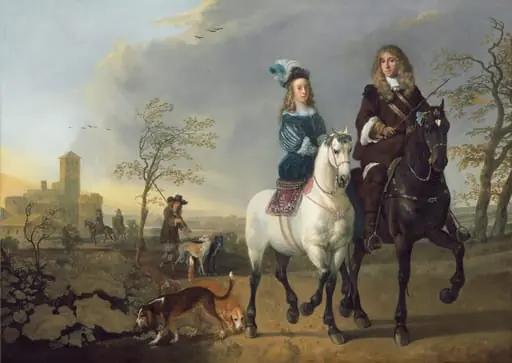 Lady and Gentleman on Horseback
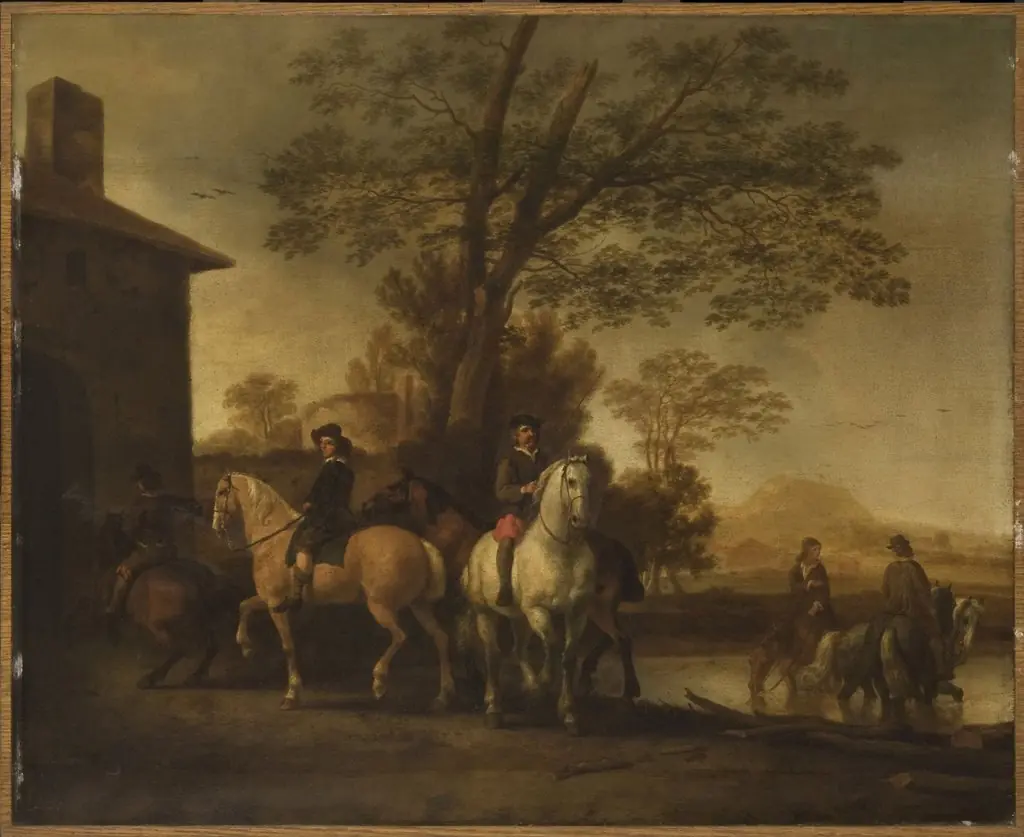 Horsemen Watering Their Horses
 To jægere til hest
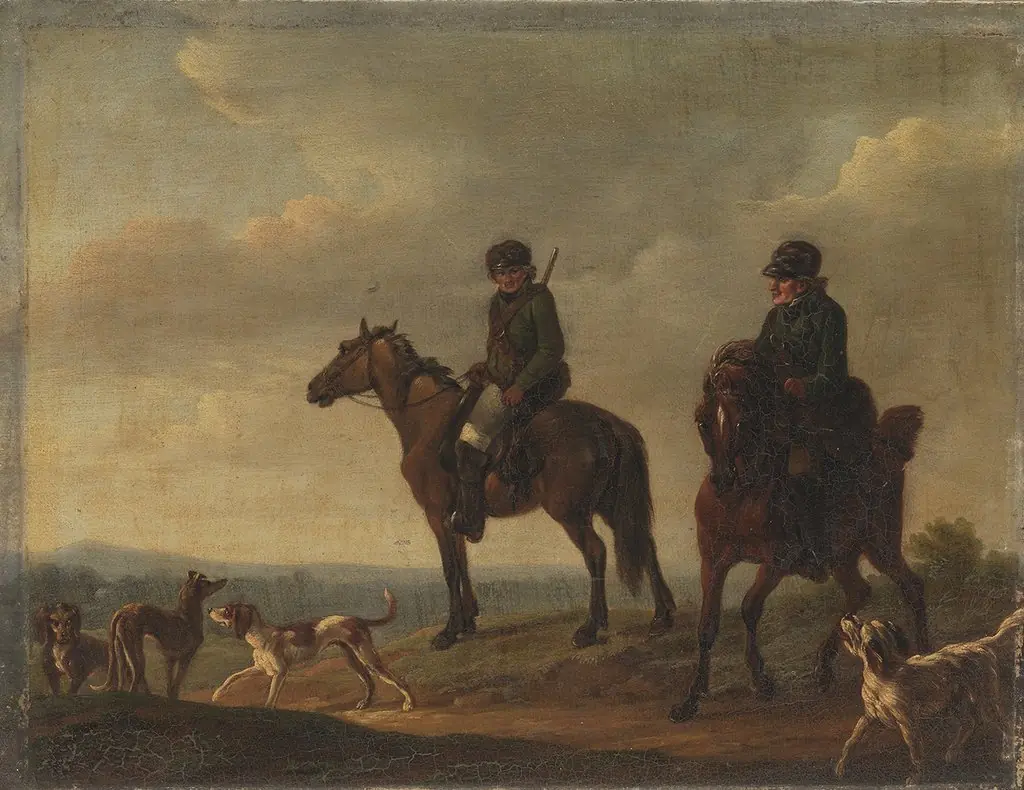 To jægere til hest
 The Start of the Hunt
 Groom with Three Horses and Two Dogs
 The Hellfire Club, Dublin
 Portrait of two unknown man on horseback