Artwork
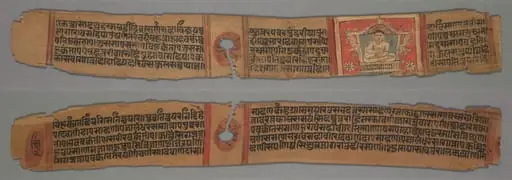
The Monk Gautama, Enthroned: Folio 2 (recto), from a Kalpa-sutra and Story of Kalakacharya of Devachandra

The Monk Gautama, Enthroned: Folio 2 (recto), from a Kalpa-sutra and Story of Kalakacharya of Devachandra is an unspecified painting by the Indian Miniature artist Unknown. It dates from 1279 and is held in the collection of the Cleveland Museum of Art. This early Jain manuscript page features a monk seated on a throne in a classic meditative pose.
- Accession no.
- 1971.123.a
- Credit line
- Purchase from the J. H. Wade Fund
About this work
Overview
This early Jain manuscript page features a monk seated on a throne in a classic meditative pose. He is depicted in a white robe, with a small broom draped over his shoulder, and his right hand raised in a gesture associated with teaching or recitation. The illustration accompanies a text recounting the birth of Mahavira, one of Jainism’s central figures.
Subject & Meaning
The monk’s posture and hand gesture convey his role as a spiritual instructor, while the broom symbolizes the Jain commitment to ahimsa, the principle of non‑violence. By sweeping the ground before walking, the monk avoids harming even the smallest creatures, illustrating the religion’s rigorous ethical discipline.
Technique & Style
Rendered with bright pigments and flat, stylized forms, the image reflects the conventions of early Indian book art. The composition emphasizes clear outlines and solid color fields, typical of manuscript illustration in western India during the period.
History & Provenance
The page belongs to a Kalpa‑sutra and the Story of Kalakacharya of Devachandra, among the oldest surviving Jain codices. Its origin is traced to the Patan region of Gujarat, historically known as Anahilapura, a center of Jain manuscript production.
Context
Jain manuscripts of this era often combined devotional narrative with didactic imagery, using visual cues like the broom to reinforce doctrinal teachings. The work exemplifies how religious texts were integrated with illustrative art to educate lay and monastic audiences alike.
Artist & collection









- Folio 2, from a Kalpa-sutra and Story of Kalakacharya of Devachandra: Enthroned Monk Gautama (recto); Text (verso)
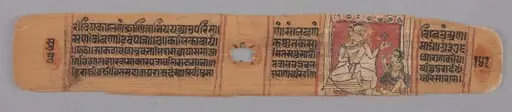 Monk Holding a Flower Venerated by a Lay Disciple: Folio 141 (verso), from a Kalpa-sutra and Story of Kalakacharya
 Leaf from a Jain Manuscript: Kalpa-sutra: The Monk Gautama, Enthroned (recto)
 Folio 141 (recto), from a Kalpa-sutra and Story of Kalakacharya
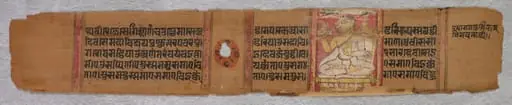 A Monk Preaching: Folio 2 (recto), from a Kalpa-sutra
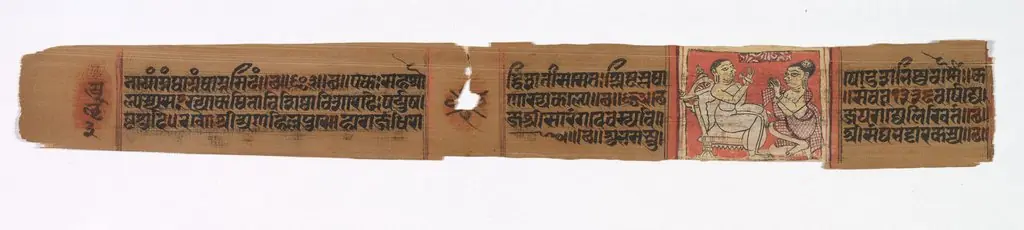 Leaf from a Jain Manuscript: Colophon page, Kalpa-sutra and The Story of Kalakacharya of Devachandra: Monk Teaching Lay Disciple
 Leaf from a Jain Manuscript: Kalpa-sutra: Text (verso)
 Leaf from a Jain Manuscript: Kalpa-sutra: Enthroned Monk (recto); Leaf from a Jain Manuscript: Kalpa-sutra: Text (verso)
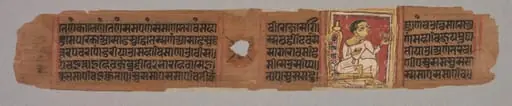 Monk Holding a Flower: Folio 2 (recto), from a Kalpa-sutra and Story of Kalakacharya
 Folio (recto) from a Kalpa-sutra and Story of Kalakacharya of Devachandra: Text
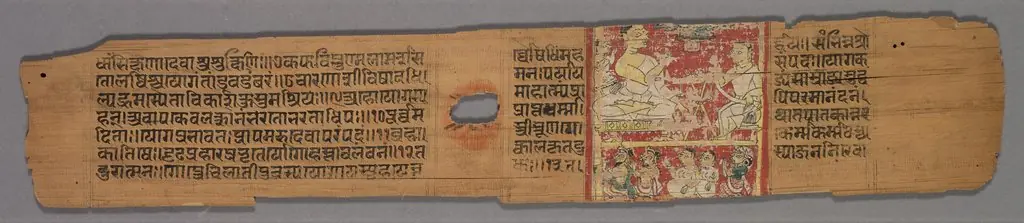 Leaf from a Jain Manuscript: Yoga-shastra: Jain monk with Disciple and Two Laymen, Two Nuns and a Laywoman below (verso)
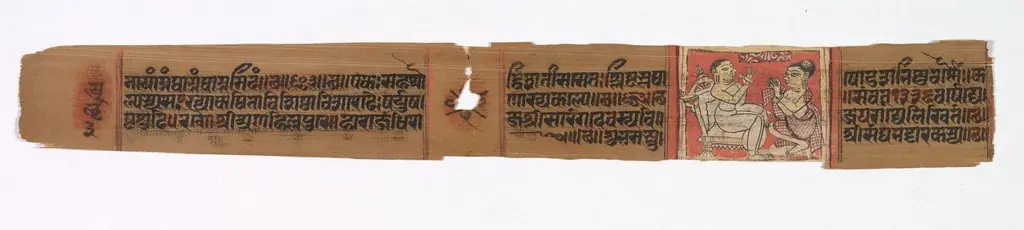 Leaf from a Jain Manuscript: Colophon page, Kalpa-sutra and The Story of Kalakacharya of Devachandra: Monk Teaching Lay Disciple (recto)