Artwork
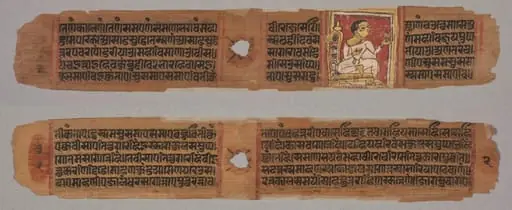
Monk Holding a Flower: Folio 2 (recto), from a Kalpa-sutra and Story of Kalakacharya
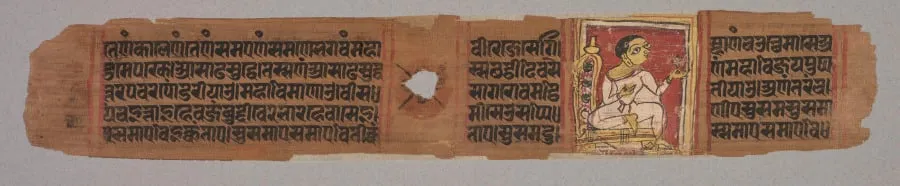
Monk Holding a Flower: Folio 2 (recto), from a Kalpa-sutra and Story of Kalakacharya is an unspecified painting by the Indian Miniature artist Unknown. It dates from 1287 and is held in the collection of the Cleveland Museum of Art. This folio comes from a manuscript illustrating Jain religious narratives, likely part of a larger illustrated Kalpa-sutra.
- Accession no.
- 1971.120.a
- Credit line
- Purchase from the J. H. Wade Fund
About this work
Overview
This folio comes from a manuscript illustrating Jain religious narratives, likely part of a larger illustrated Kalpa-sutra.
This folio comes from a manuscript illustrating Jain religious narratives, likely part of a larger illustrated Kalpa-sutra. It portrays a monk in quiet meditation, holding a single flower. The composition is restrained, emphasizing stillness over narrative action.
The warm, textured background and delicate brushwork frame the figure without distraction, focusing attention on the monk’s inward state and the flower as a symbol of transient beauty.
Subject & Meaning
The monk represents a Jain ascetic engaged in deep contemplation, a core practice in the tradition. The flower he holds is not ornamental but symbolic, evoking impermanence, purity, and the quiet dignity of non-attachment. His closed eyes and gentle smile suggest inner peace achieved through discipline, aligning with Jain ideals of self-restraint and mindfulness in the present moment.
Technique & Style
Painted with fine brushwork and mineral pigments on paper, the image displays meticulous attention to detail, especially in the flower’s petals and the monk’s robe. Colors are muted yet rich, with earthy tones dominating the background. Subtle gradations and fine lines define texture without overt modeling, reflecting the regional Jain manuscript tradition’s emphasis on clarity and spiritual precision over illusionistic depth.
History & Provenance
The folio originates from a 15th-century Jain manuscript produced in western India, likely Gujarat or Rajasthan. It was part of a devotional text used in ritual recitation. The painting entered the Cleveland Museum of Art’s collection through documented acquisitions in the 20th century, preserving its integrity as a fragment of a larger sacred manuscript tradition.
Context
Jain manuscripts of this period were commissioned by wealthy lay patrons for temple use or personal devotion. Illustrated folios like this one accompanied recitations of the Kalpa-sutra, which recounts the lives of spiritual teachers. The focus on solitary figures in contemplation reflects the Jain emphasis on individual spiritual progress, distinct from the more narrative-driven styles of contemporary Hindu or Mughal painting.
Legacy
This folio exemplifies the quiet aesthetic of Jain manuscript painting, where spiritual depth is conveyed through restraint rather than spectacle. It remains a key reference for understanding how religious ideals were visually encoded in pre-modern India. Its preservation allows ongoing study of regional techniques and devotional practices, contributing to broader scholarship on South Asian visual culture.
Artist & collection









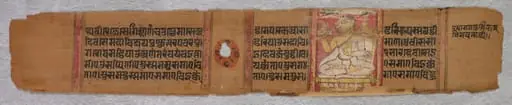 A Monk Preaching: Folio 2 (recto), from a Kalpa-sutra
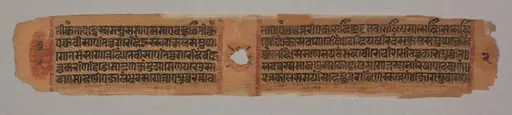 Folio 2 (verso), from a Kalpa-sutra and Story of Kalakacharya
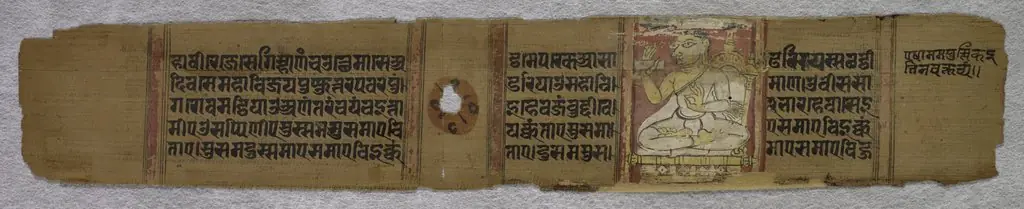 A Monk Preaching: Folio 2 (recto), from a Kalpa-sutra
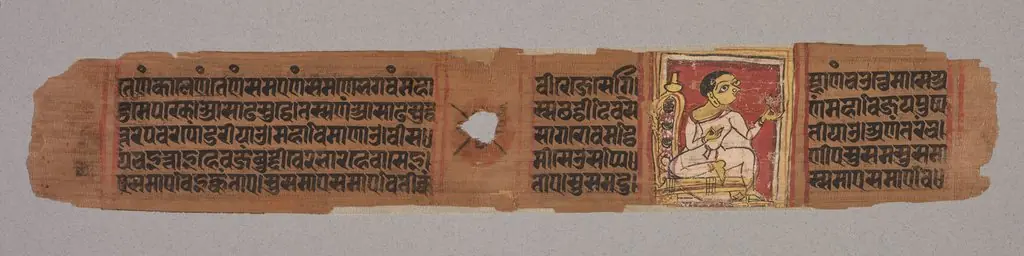 Leaf from a Jain Manuscript: Kalpa-sutra: Monk Holding a Flower (recto)
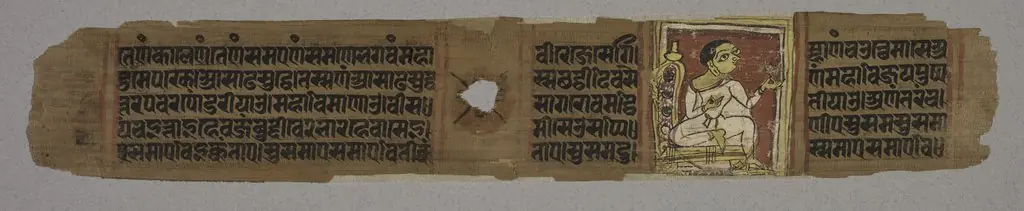 Monk Holding a Flower: Folio 2 (recto), from a Kalpa-sutra and Story of Kalakacharya
 Folio (recto) from a Kalpa-sutra and Story of Kalakacharya of Devachandra: Text
 Leaf from a Jain Manuscript: Kalpa-sutra (verso)
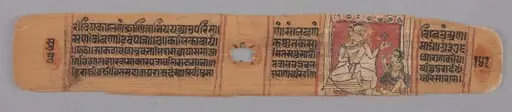 Monk Holding a Flower Venerated by a Lay Disciple: Folio 141 (verso), from a Kalpa-sutra and Story of Kalakacharya
 Leaf from a Jain Manuscript: Kalpa-sutra (recto)
 Folio 141 (recto), from a Kalpa-sutra and Story of Kalakacharya
 Text: Folio 2 (verso), from a Kalpa-sutra