Artwork
The Resurrection of Christ and the Harrowing of Hell
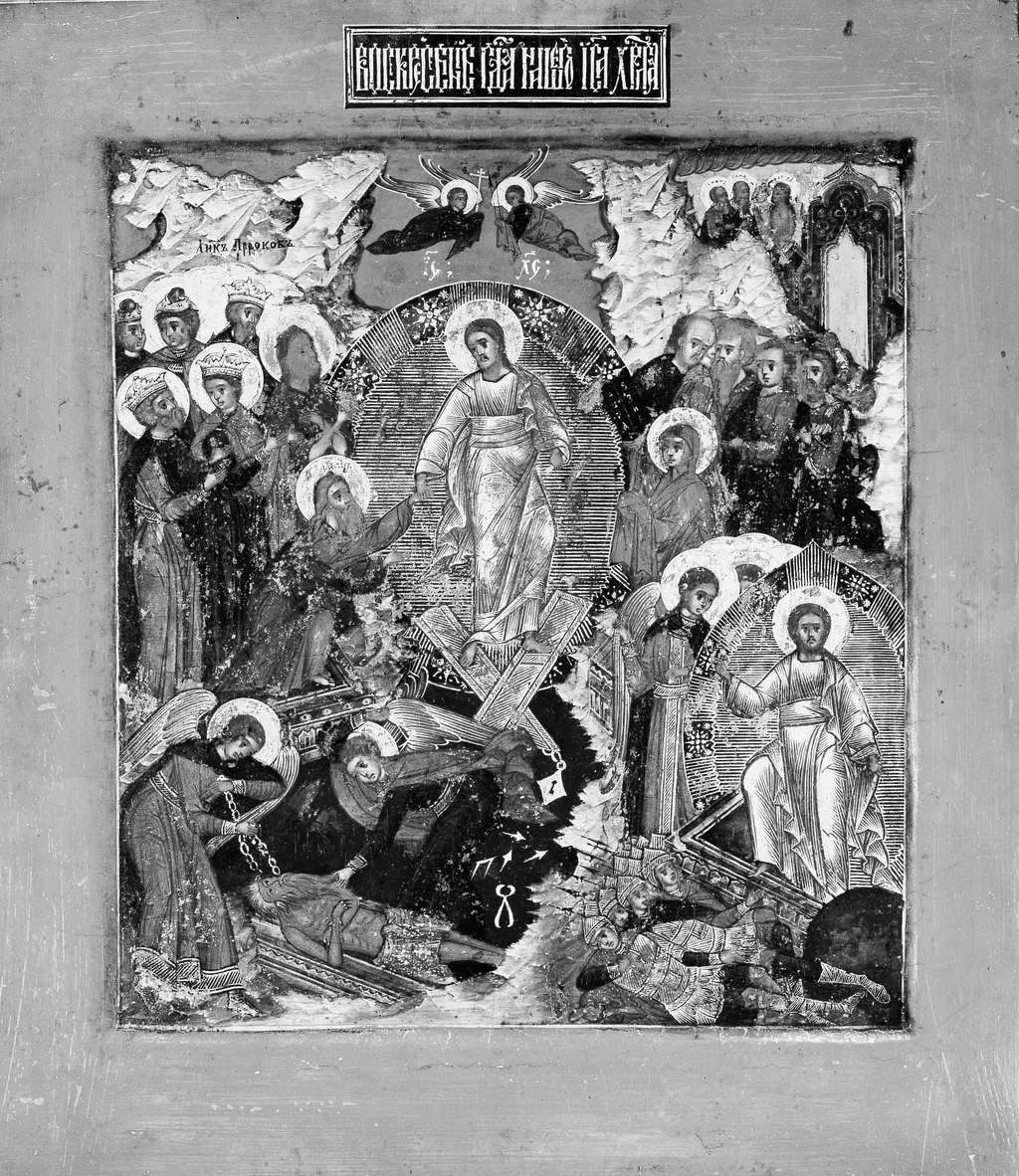
The Resurrection of Christ and the Harrowing of Hell is an unspecified painting. It dates from 1800 and is held in the collection of the Metropolitan Museum of Art.
About this work
Subject & Meaning
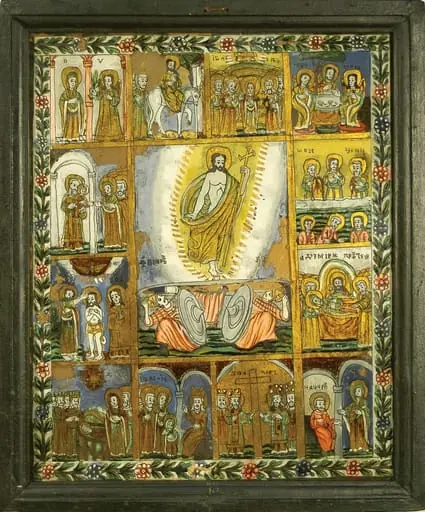
The painting depicts two intertwined biblical narratives: the Resurrection of Jesus and the Harrowing of Hell.
The painting depicts two intertwined biblical narratives: the Resurrection of Jesus and the Harrowing of Hell. Central to the iconography is Christ, shown in the act of descending into hell to liberate the righteous dead, a theme explicitly identified as the main subject. The composition includes an angel and various saints, visualizing the moment of triumph over death.
As a work of Russian religious art from 1800, the piece functions as a theological representation of Christ's victory, merging the physical resurrection with the spiritual rescue of souls from the underworld. The imagery serves to illustrate the core Christian doctrine of salvation, where the divine figure breaks the gates of hell to gather saints and angels, symbolizing the ultimate defeat of death and the promise of eternal life.
History & Provenance
The painting is dated to circa 1800, as indicated by its inception year in both the internal catalog and the Wikidata entry. It is attributed to an anonymous Russian artist, with no record of a specific commissioner in the available sources. The work entered the Metropolitan Museum of Art in 1972, where it is catalogued under accession number 1972.145.32 and remains in the museum's collection.
Prior to its acquisition by the Met, the provenance of the piece is not documented in the provided sources.
Overview
The painting titled "The Resurrection of Christ and the Harrowing of Hell" presents a complex visual narrative. It depicts a busy scene populated by numerous figures, with a central robed individual prominently positioned. The composition integrates elements of divine triumph and spiritual struggle, set against a somber background, inviting viewers to interpret its layered theological themes.
Technique & Style
The painting employs a dense arrangement of figures, creating a visually active and crowded composition. Although the overall color palette has largely faded, specific elements like gold and white accents stand out distinctly against the dark background. The figures are rendered with a degree of stiffness and flatness, departing from naturalistic representation. This stylistic choice emphasizes symbolic clarity rather than anatomical realism, characteristic of certain historical periods.
Artist & collection

 Saint Elias's Fiery Ascension
 The Protection of the Mother of God
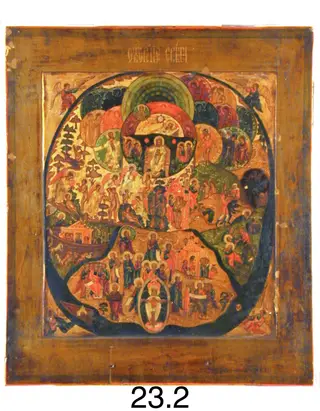 The Creation of the World
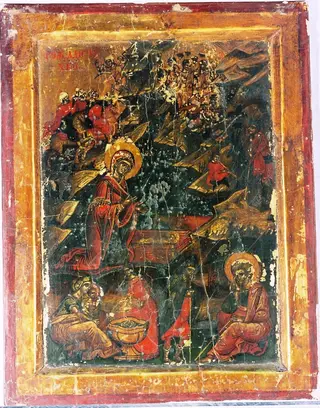 NASTEREA LUI IISUS
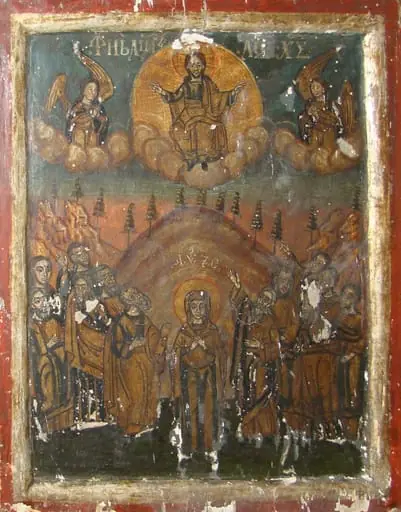 Înălțarea Domnului
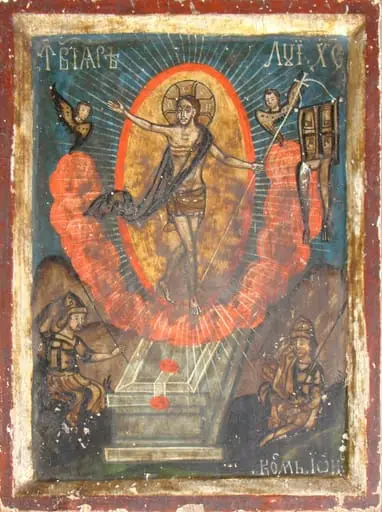 Învierea lui Iisus
 The Congregation of the Mother of God
 Schimbarea la față
 Pääsiäinen ja kirkkovuoden juhlia, venäläinen ikoni
 Scene din viața lui Iisus și a Maicii Domnului
 Învierea lui Iisus, cu 12 scene de praznic
- The Resurrection of Christ and the Harrowing of Hell