Artwork
The Resurrection of Christ and the Harrowing of Hell
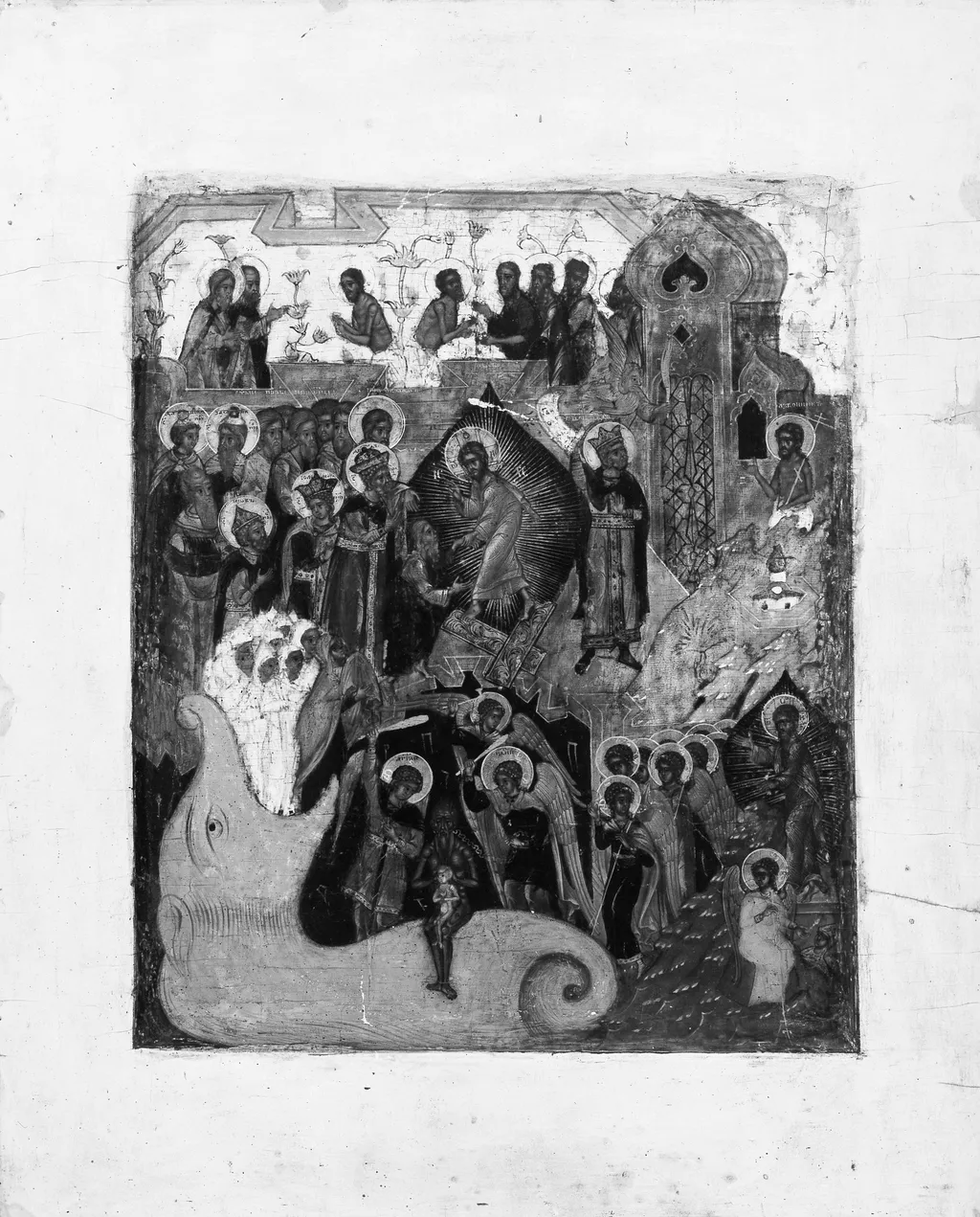
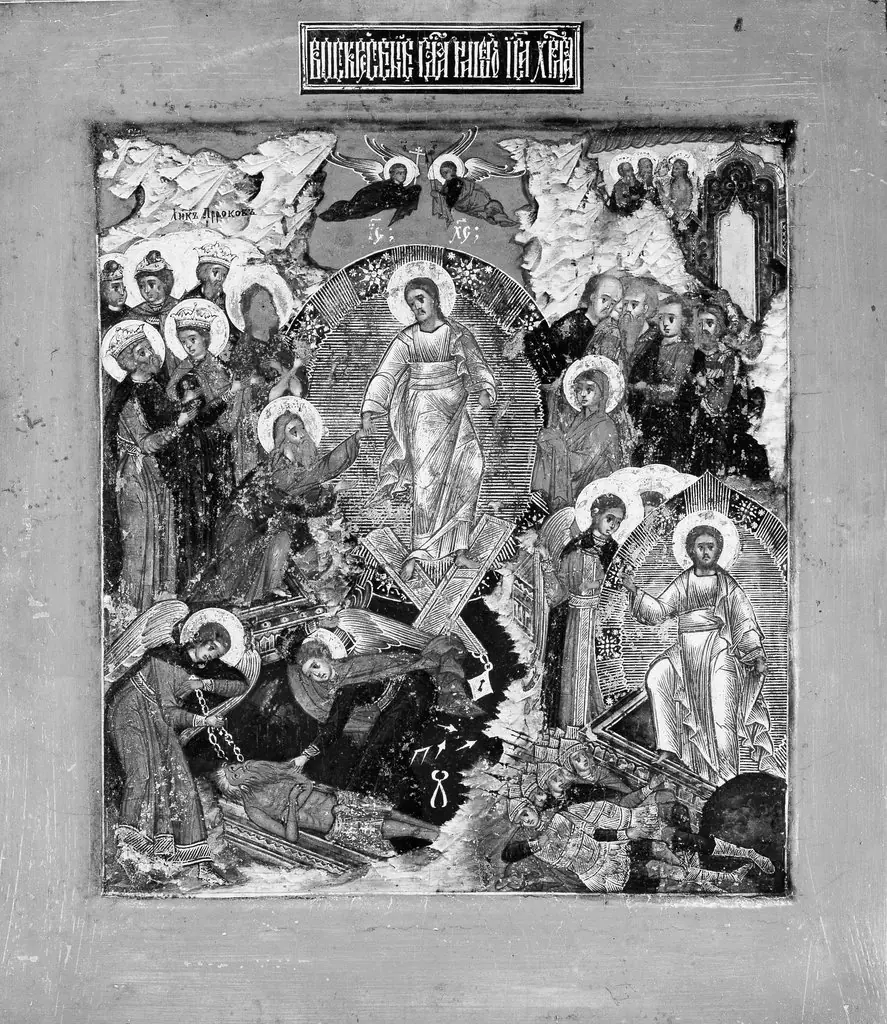
The Resurrection of Christ and the Harrowing of Hell is a tempera painting. It dates from 1700 and is held in the collection of the Metropolitan Museum of Art.
About this work
Christ breaks from a dark tomb at the center while shadowy figures rise and kneel around him, gold halos glowing through the faded paint. Robed onlookers watch calmly from a balcony above, the lower cave tangled in movement against the quieter courtyard. Painted in tempera around 1700.
Subject & Meaning
The iconography includes a radiant Christ, a broken gate, and assorted saintly figures emerging from darkness, symbolizing victory over sin and death.
The painting portrays the Resurrection of Jesus accompanied by the Harrowing of Hell, a composition that combines two biblical episodes. In the upper part Christ emerges from the tomb, surrounded by angels, while below he descends into a tormented realm where he liberates souls, a motif drawn from apocryphal tradition. The iconography includes a radiant Christ, a broken gate, and assorted saintly figures emerging from darkness, symbolizing victory over sin and death.
Executed in tempera on panel around 1700, the work reflects Orthodox theological emphasis on redemption and the cosmic scope of salvation.
Technique & Style
Created circa 1700 by an anonymous Russian artist, this work is executed in tempera on a wooden panel. The painting measures 31.1 cm in height and 25.1 cm in width. As a piece of religious art, it visually narrates the Resurrection of Jesus and the Harrowing of Hell, featuring figures such as Christ, saints, and representations of hell.
The classification as a panel painting utilizing tempera reflects traditional techniques employed in Russian religious iconography of the period. The specific combination of egg-based binder and wood support defines the material handling and surface characteristics typical of this genre and era.
History & Provenance
The work titled The Resurrection of Christ and the Harrowing of Hell was produced in 1700 by an anonymous Russian painter working in tempera on panel. It belongs to the religious genre and depicts the Resurrection of Jesus alongside the Harrowing of Hell, a subject identified in both the internal catalog entry and the Wikidata record. The painting entered the collection of the Metropolitan Museum of Art, where it remains on view, representing the earliest documented ownership chain linked to the museum’s acquisitions.
No records of earlier commissions or private owners are noted in the available sources, and the dating is anchored to the 1700 inception listed in the documentation.
Legacy
The work, dated 1700 and executed in tempera on panel, entered the collection of the Metropolitan Museum of Art, where its prominent display has made it a reference point for scholars examining Russian religious painting of the early 18th century. Its dual depiction of the Resurrection of Christ and the Harrowing of Hell continues to inform studies of Orthodox iconography and the theological themes prevalent in Russian art of the period. The painting’s provenance and material details, documented in museum records, contribute to its reputation as a key example of anonymous yet influential religious artworks that shaped later Russian visual culture.
Overview
This painting, titled The Resurrection of Christ and the Harrowing of Hell, illustrates two pivotal Christian narratives. Jesus is centrally positioned, emerging from a dark, confined space amidst a chaotic array of shadowy figures. Above this dynamic scene, a group of robed individuals observes calmly from what appears to be a balcony.
While the overall palette has softened with age, the gold halos encircling many heads retain their luminous quality.
Artist & collection

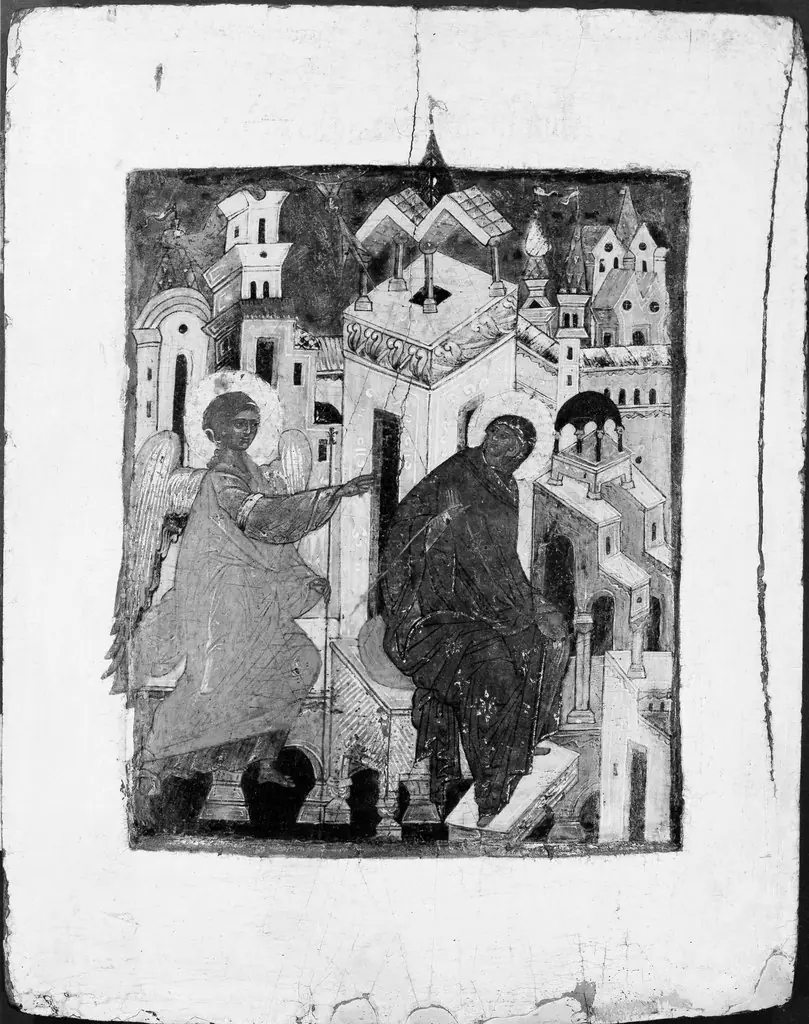 The Annunciation
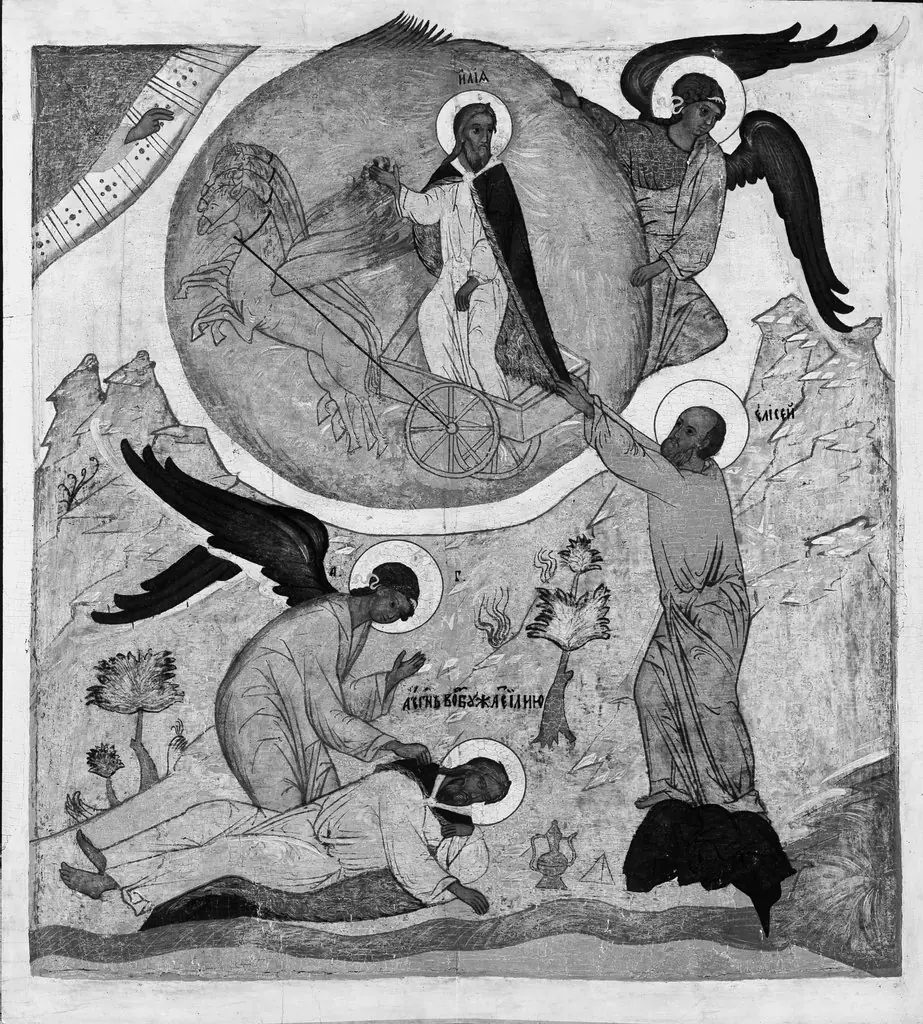 Saint Elias's Fiery Ascension
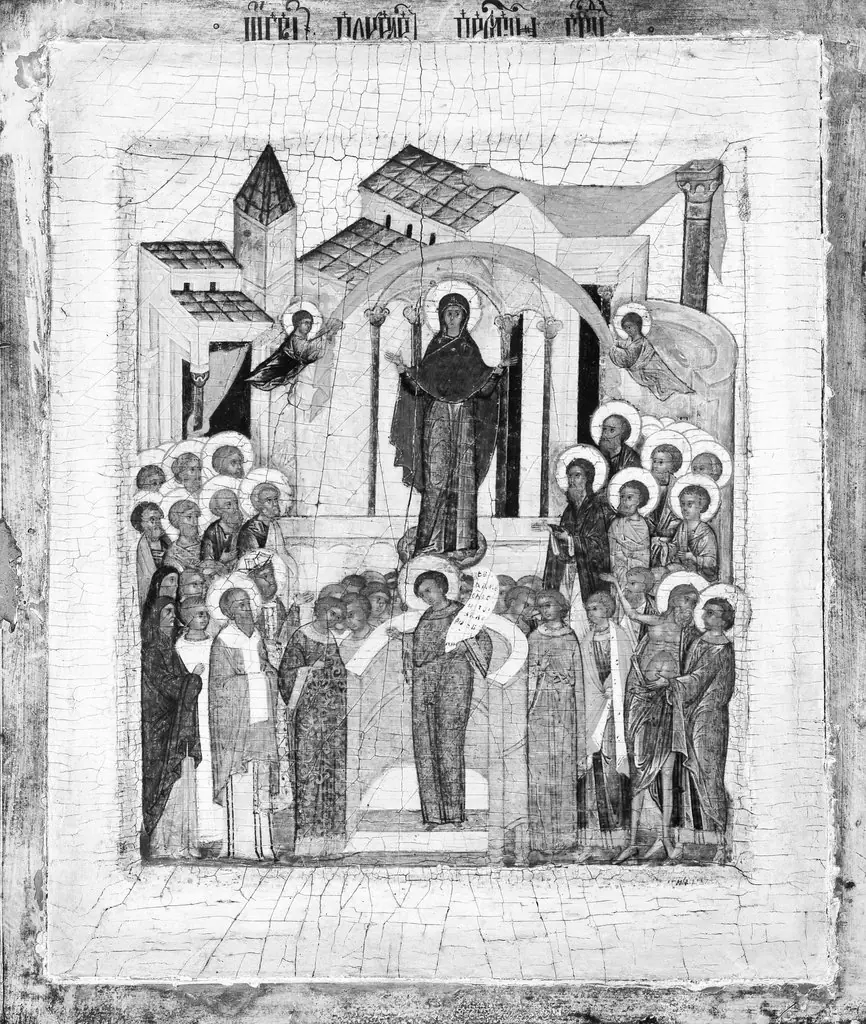 The Protection of the Mother of God
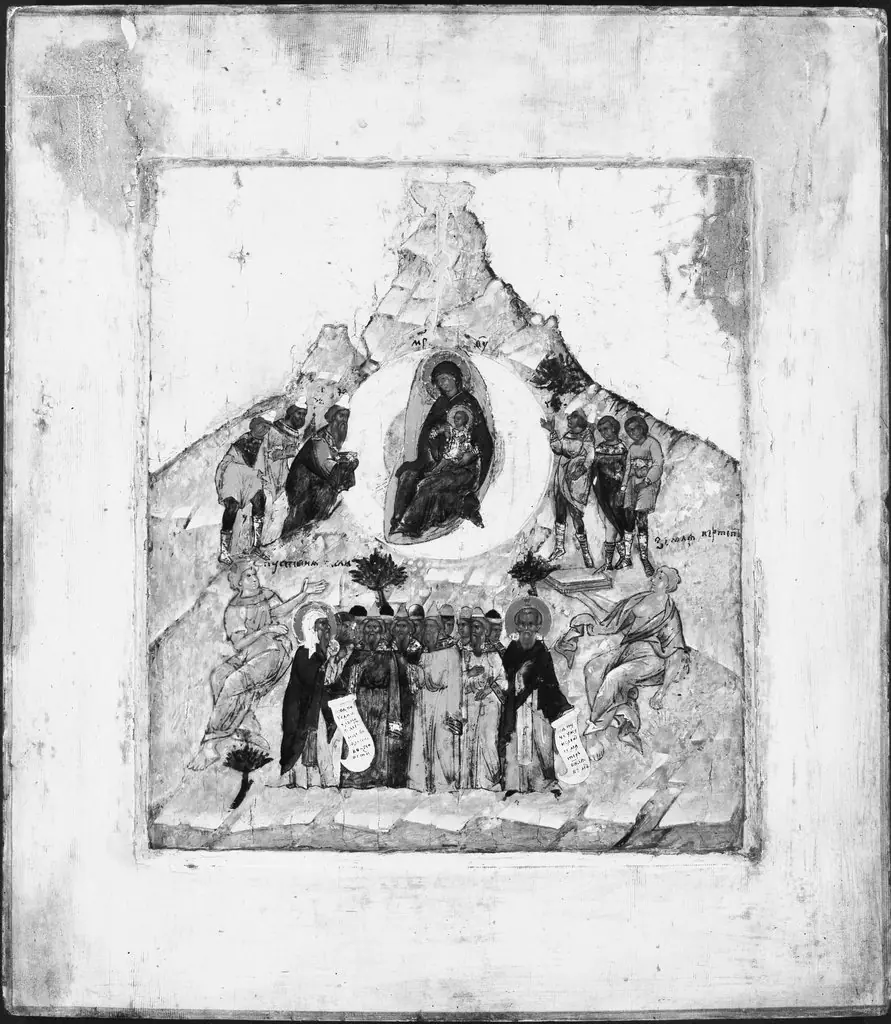 The Congregation of the Mother of God
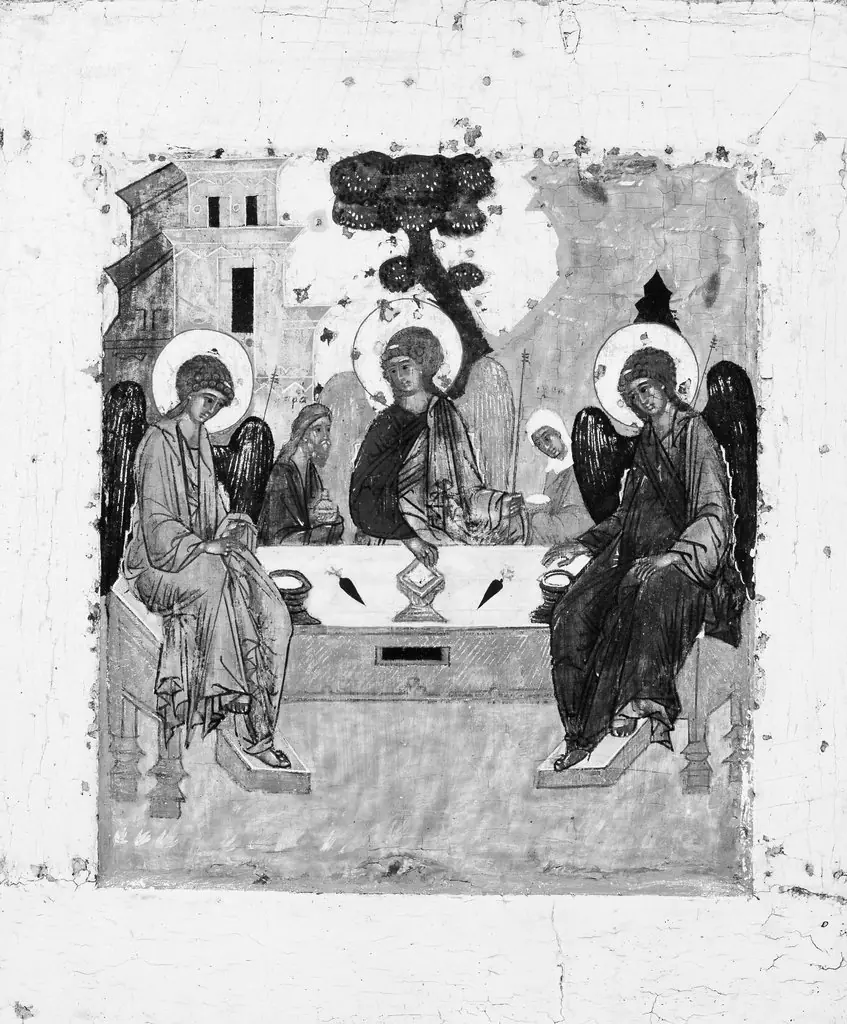 The Trinity
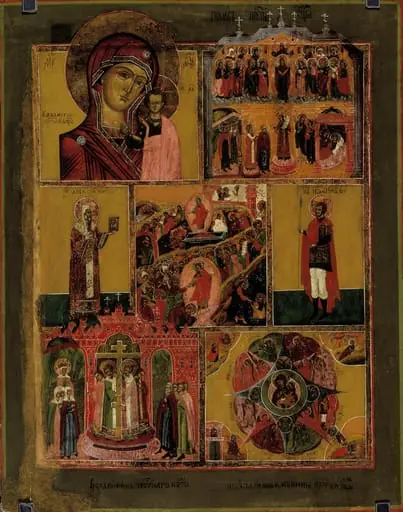 Pääsiäinen ja kirkkovuoden juhlia, venäläinen ikoni
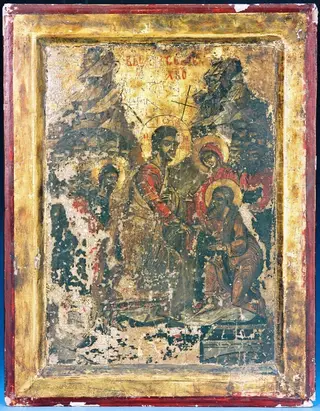 INVIEREA
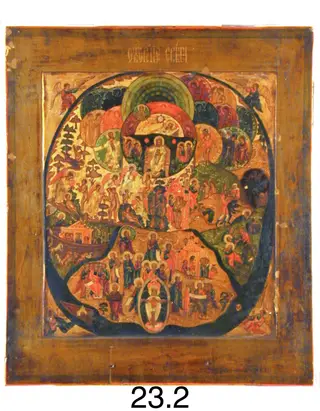 The Creation of the World
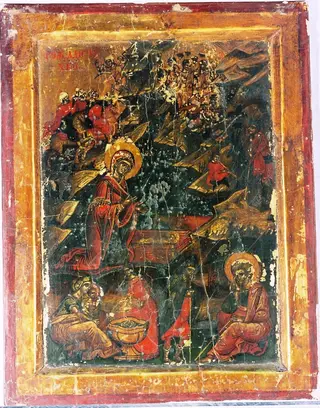 NASTEREA LUI IISUS
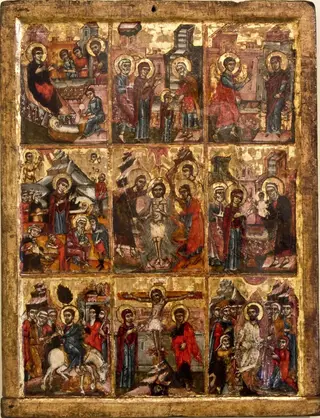 Scene din viața lui Iisus și a Maicii Domnului
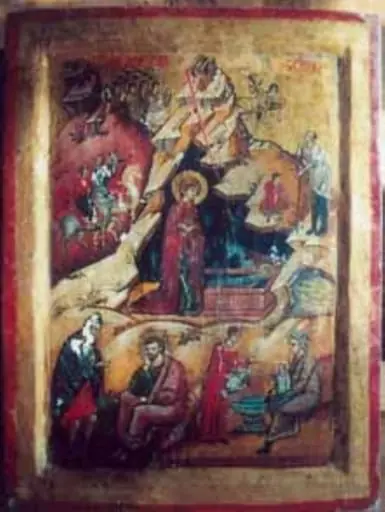 Nașterea Domnului
- The Resurrection of Christ and the Harrowing of Hell