Artwork
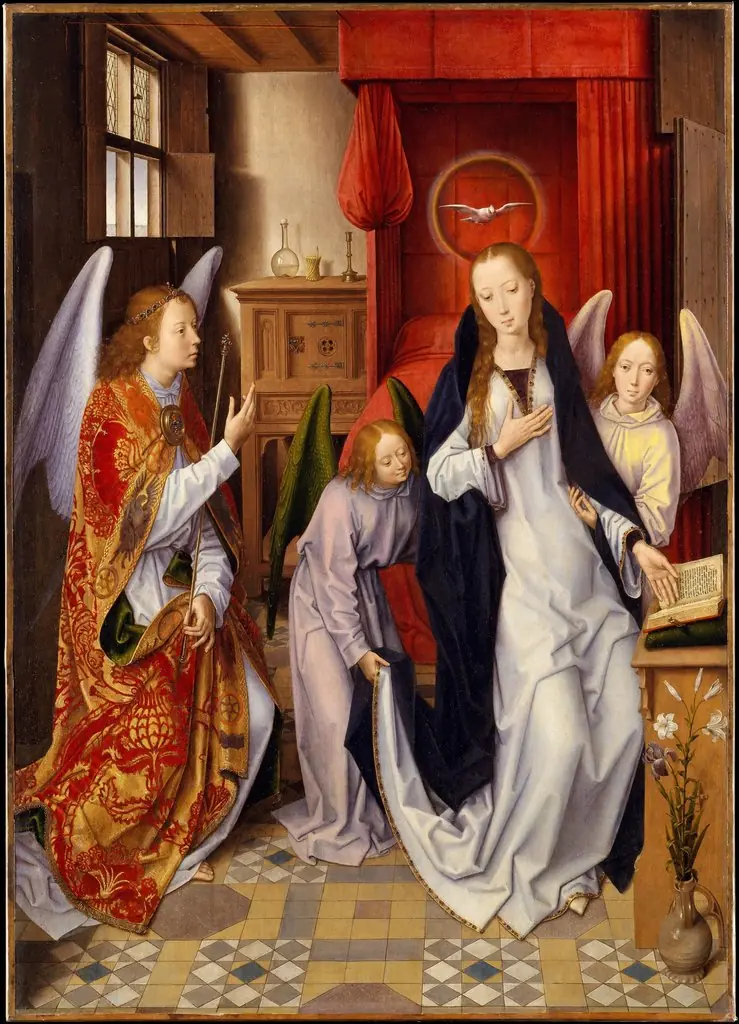
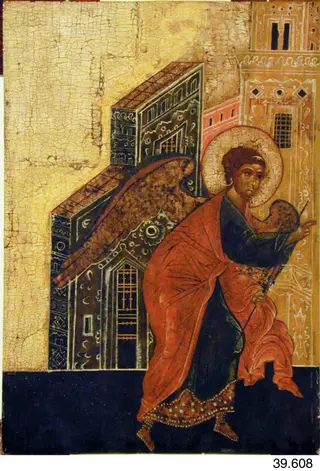
The Annunciation
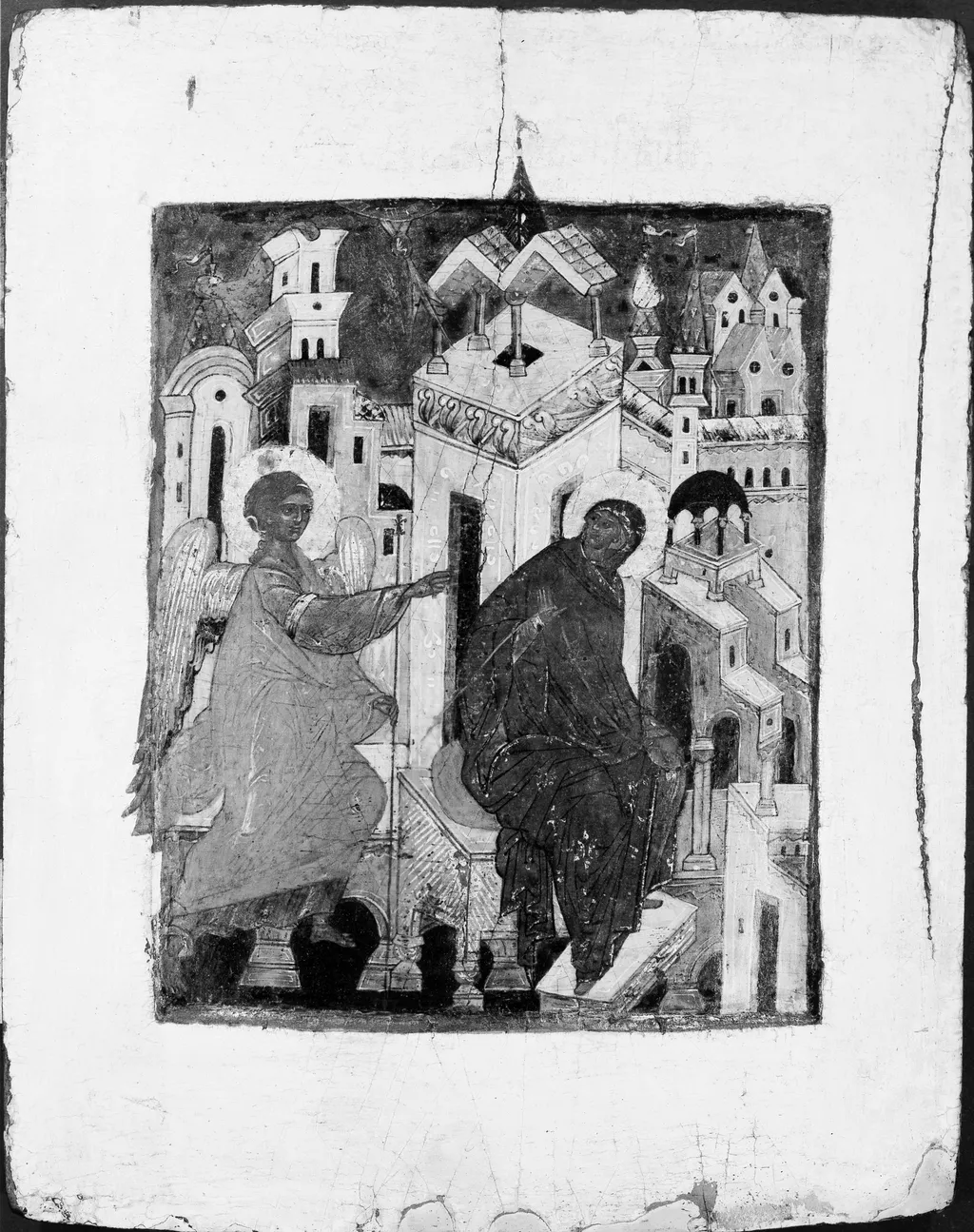
The Annunciation is a tempera painting. It dates from 1600 and is held in the collection of the Metropolitan Museum of Art.
About this work
Two figures stand before a white building of towers and domes. The winged one, an angel, holds a round object and gestures toward the other, who listens in dark robes. The scene shows a moment of momentous news, the buildings behind shaped like a small city. Painted in tempera around 1600.
Subject & Meaning
The painting depicts the Annunciation, the biblical moment when the Archangel Gabriel announces to the Virgin Mary that she will conceive and bear Jesus Christ.
The painting depicts the Annunciation, the biblical moment when the Archangel Gabriel announces to the Virgin Mary that she will conceive and bear Jesus Christ. According to the source records, the work shows the angel Gabriel and Mary as its principal figures, rendered in tempera on a small wooden panel measuring roughly 33 by 26.4 centimeters. Classified as a religious work, the composition belongs to a long iconographic tradition in which the encounter between Gabriel and Mary signals the Incarnation.
The piece is attributed to an anonymous Russian painter of the second half of the sixteenth century and is dated to 1600, situating it within late Russian Orthodox devotional practice, where the Annunciation was a recurring subject conveying divine revelation and Mary's acceptance of her role in salvation history.
Technique & Style
The work titled The Annunciation is executed in tempera on a wooden panel, dating to 1600 according to the catalog entry. It was created by an anonymous Russian painter active in the second half of the 16th century, as recorded in the Metropolitan Museum of Art's documentation. The painting belongs to the religious genre and portrays the moment of the angel Gabriel announcing to the Virgin Mary, employing a composition typical of devotional imagery of the period.
The formal handling emphasizes clear outlines and a restrained palette, reflecting the medium's matte quality and the panel's smooth surface.
History & Provenance
The provenance of The Annunciation traces to the Metropolitan Museum of Art, where it entered the collection as a tempera on panel attributed to an anonymous Russian painter of the second half of the 16th century. The work is dated to circa 1600, aligning with the late 16th-century period indicated by the museum's records. Its dimensions are recorded as 33 × 26.4 cm, depicting the religious scene of the Annunciation with the archangel Gabriel and the Virgin Mary.
The painting's anonymous authorship and Russian origin are consistent with devotional works produced in that region during the period, though specific commissioning details remain undocumented.
The painting is held in the collection of the Metropolitan Museum of Art. While the work depicts the Annunciation scene with the angel Gabriel and the Virgin Mary, specific accession numbers or detailed exhibition histories are not provided in the available documentation. The painting measures 33 centimeters in height and 26.4 centimeters in width.
It remains part of the museum's permanent holdings, categorized as religious art from the late sixteenth or early seventeenth century.
Overview
This tempera painting, titled The Annunciation, depicts a pivotal moment from Christian scripture. It features two central figures positioned before an architectural backdrop that suggests an urban setting. The work's composition draws the viewer's attention to the interaction between the figures, emphasizing the communication of significant news.
Artist & collection

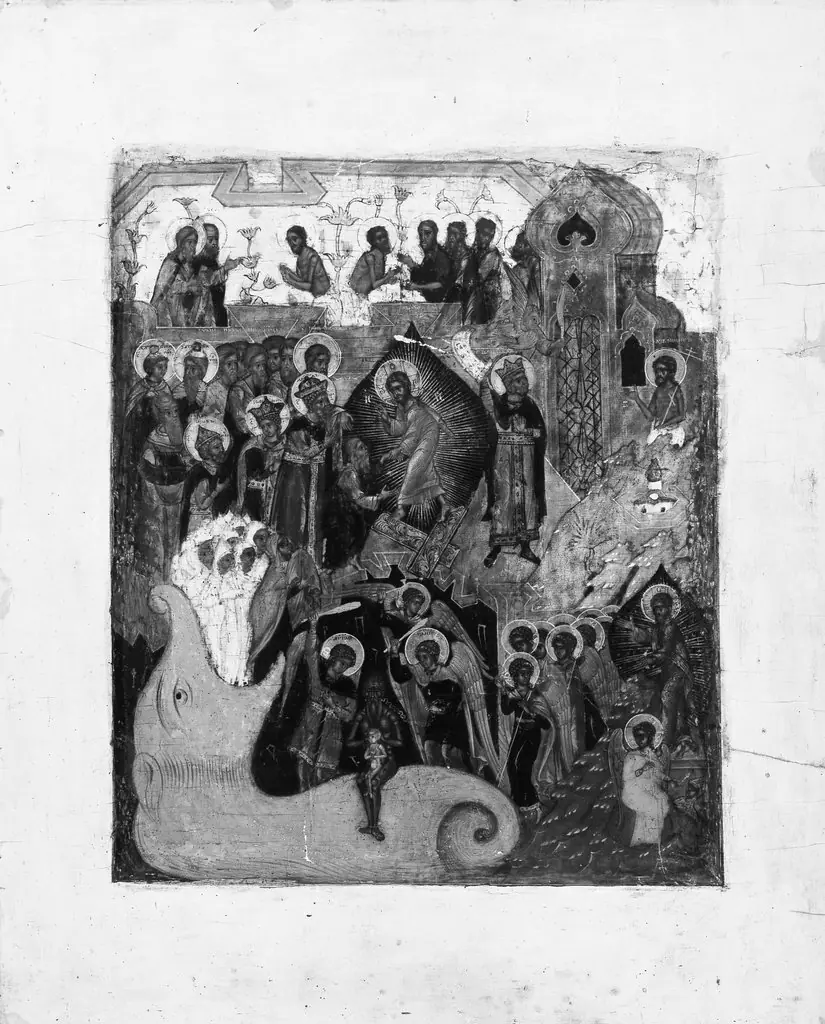
- The Resurrection of Christ and the Harrowing of Hell
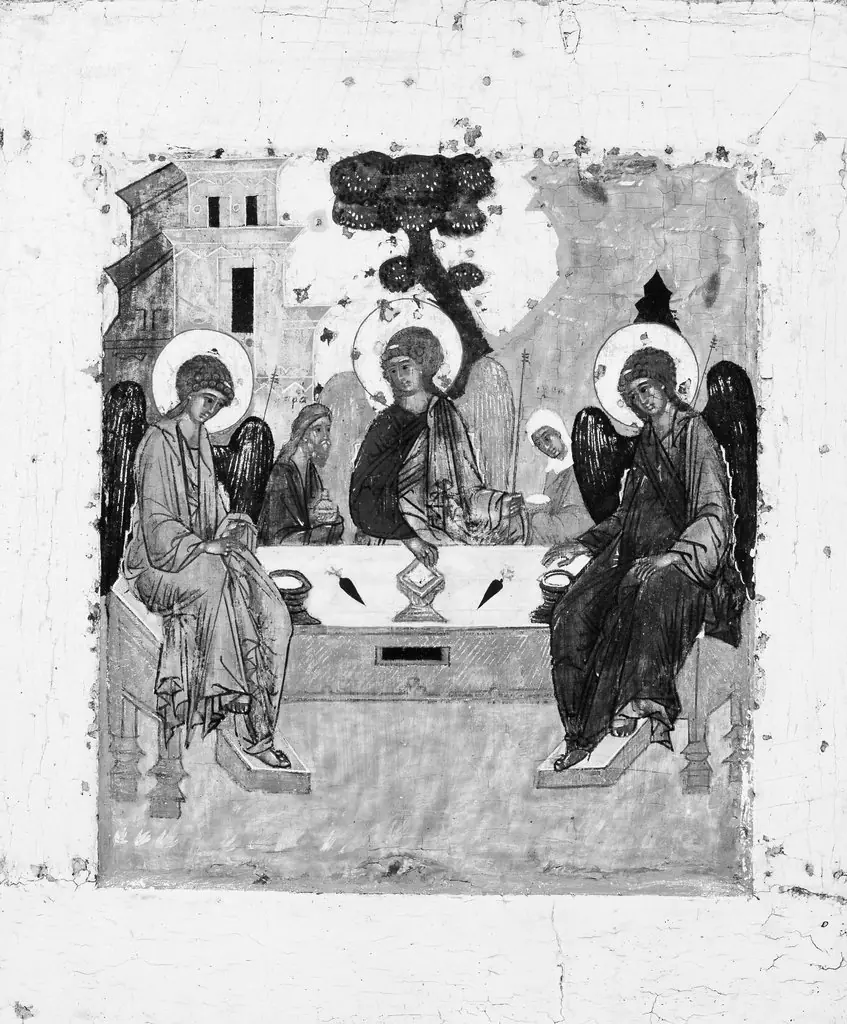 The Trinity
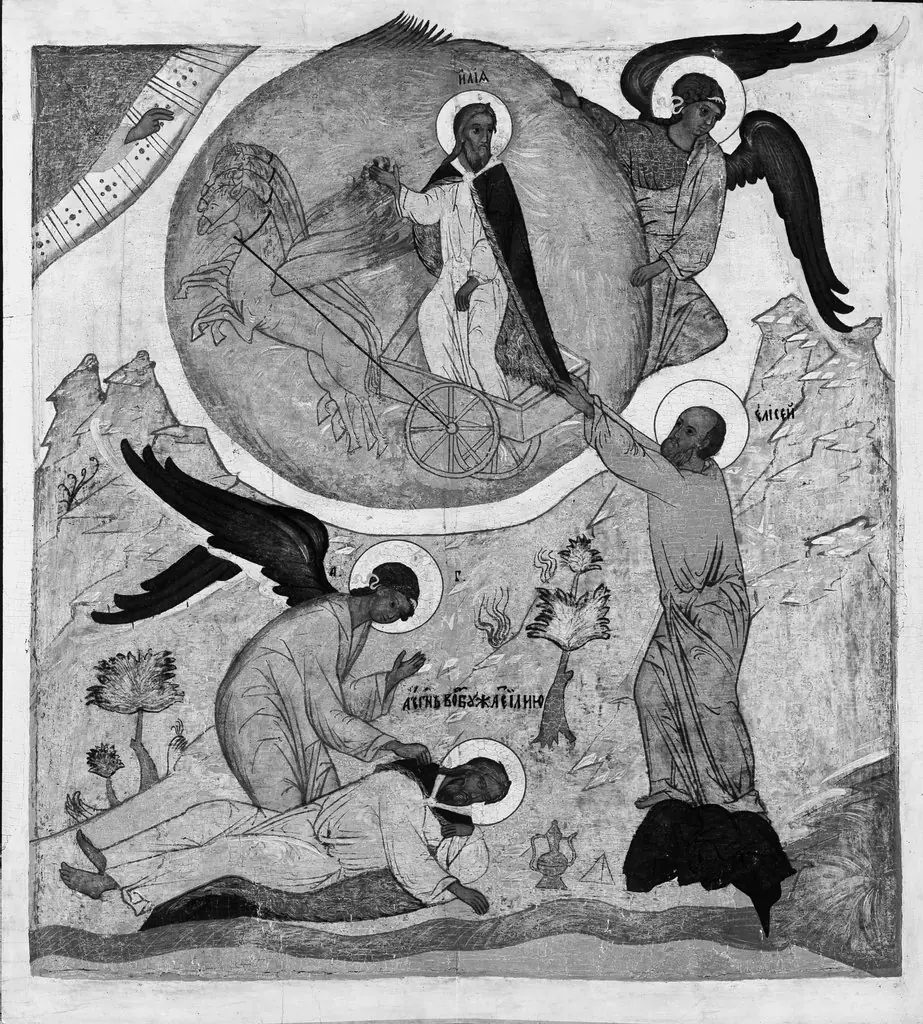 Saint Elias's Fiery Ascension
 Annunciatory Angel
 The Protection of the Mother of God
 The Entry into Jerusalem
 NASTEREA LUI IISUS
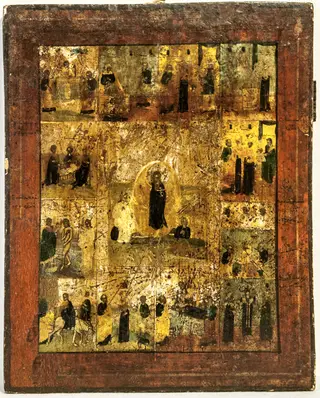 Compoziție complexă, (13 scene), centrată pe scena Învierii. Scena ridicării din mormânt a Mântuitorului, într-o mandorlă, lângă piatra mormântului, îngerul în veșminte albe, în fața pietri de mormânt probabil un soldat. În celelalte casete sunt reprezentate scene din viața lui Iisus Hristos și a Maicii Domnului, cu un număr redus de personaje (3 – 4, maxim 5): „Sfânta Treime”(ospitalitatea lui Avraam), Nașterea Fecioarei Maria”, „Intrarea Maicii Domnului în biserică(Ovidenia), „Buna Vestire”, „Nașterea lui Iisus Hristos”, Întâmpinarea Domnului(Stretenia), „Botezul lui Hristos” „Schimbarea la față” „Intrarea Domnului în Ierusalim”, „Înălțarea Domnului, Adormirea Maicii Domnului, „Înălțarea Sfintei Cruci”. Toate personajele au nimburi trasate cu alb.Desen schematic, trasat cu finețe, ușor dezordonat, ca și inscripțiile. Cromatica specifică, tonuri calde, brun, galben, roșu în contrast cu verde, albastru, negru, valorate de foița de aur. Chenarul lat, roșu(tipul de icoană krasnushka) Stratul pictural prezintă deteriorări, zgârieturi și lacune, deteriorări cromatice. Pictura se remarcă prin finețea execuției miniaturale.
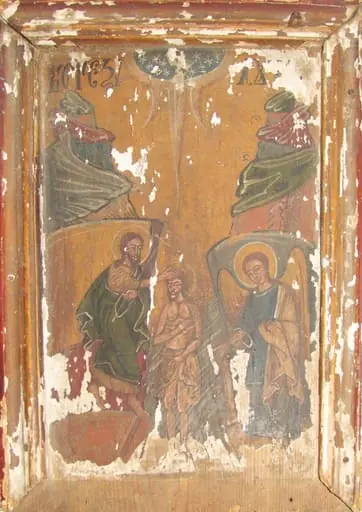 Botezul lui Iisus
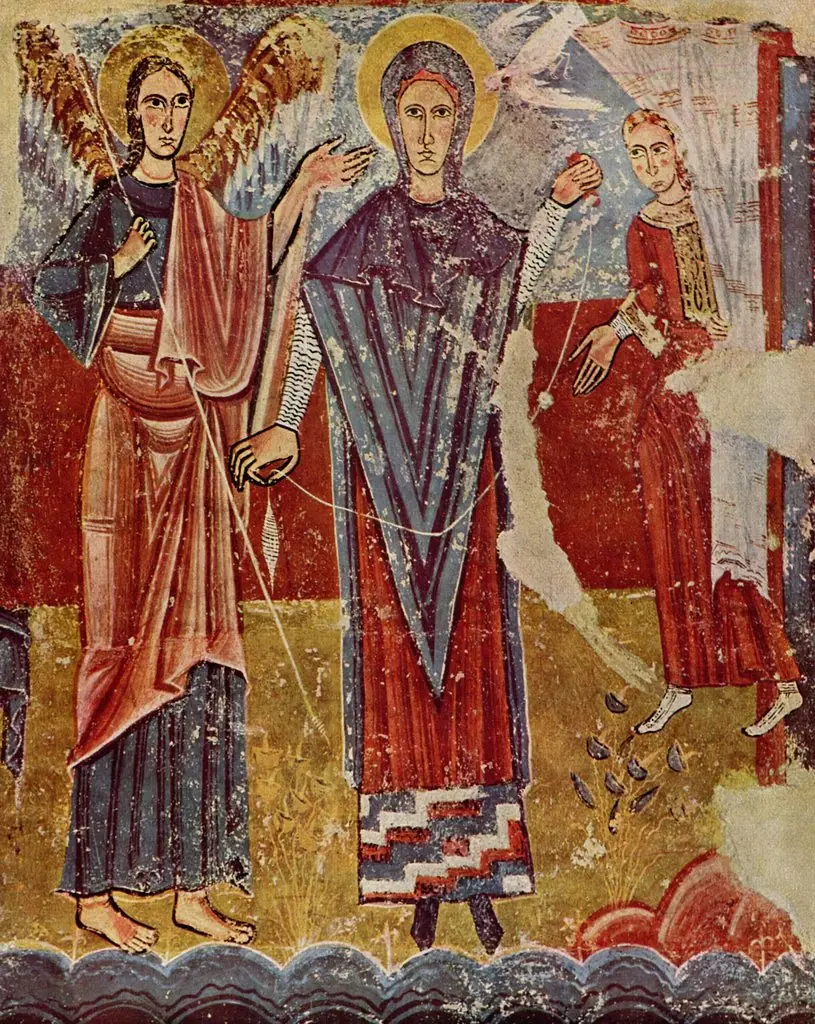 Annunciation, Birth and Crucifixion from Sorpe
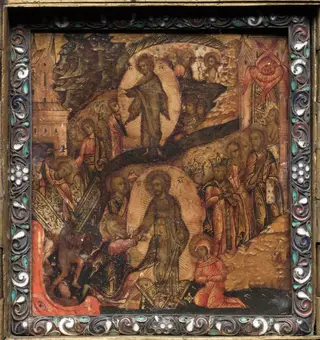 Portable Triptych Icon: The Resurrection and Anastasis
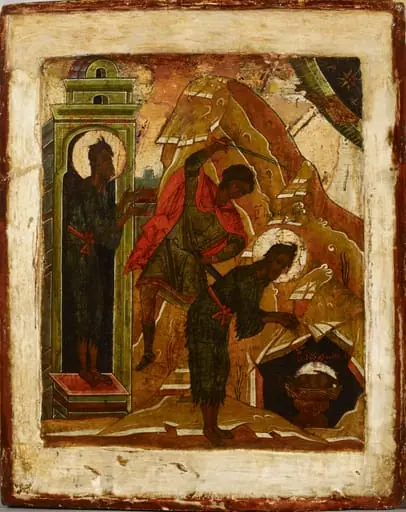 Johannes Kastajan mestaus, venäläinen ikoni