Artwork
The Trinity
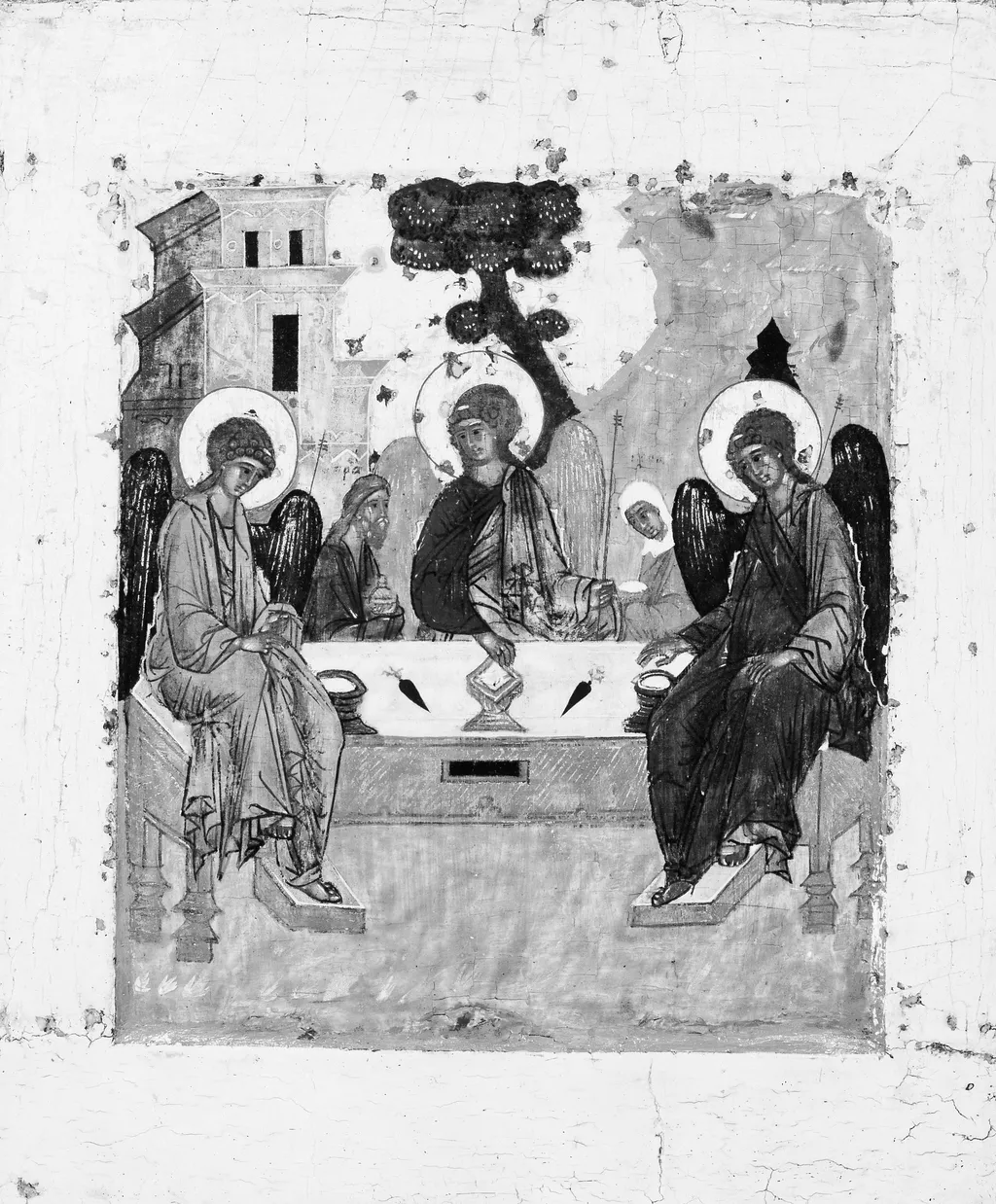
The Trinity is a tempera painting. It dates from 1700 and is held in the collection of the Metropolitan Museum of Art.
About this work
Subject & Meaning
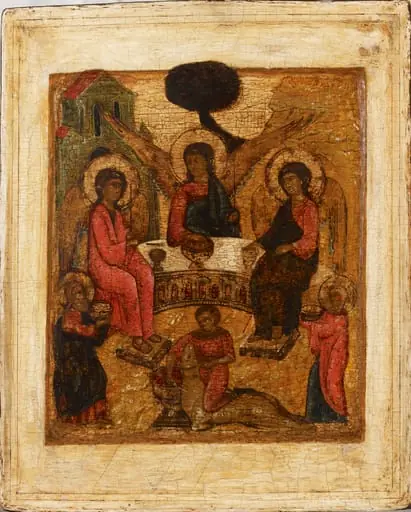
The painting depicts the Holy Trinity, the central Christian doctrine of God as three co-equal persons.
The painting depicts the Holy Trinity, the central Christian doctrine of God as three co-equal persons. As a work of religious art from 1700, it belongs to the long tradition of Eastern Orthodox iconography devoted to this subject, in which the Trinity is rendered in tempera on a small wooden panel measuring 32.7 by 27 centimeters. The use of tempera and panel, together with the work's modest scale, situates the image within the conventions of Russian icon painting, where the Trinity served both as a devotional object and a theological statement about divine unity.
Held by the Metropolitan Museum of Art, the panel reflects the religious function of such images in Orthodox practice, where depictions of the Trinity were intended to communicate the mystery of the triune God and to invite contemplation of the doctrine through visual form.
Technique & Style
Created in 1700 by an anonymous Russian artist, this religious painting depicts the Holy Trinity. The work is executed in tempera on a wooden panel support. Measuring 32.7 cm in height and 27 cm in width, the piece exemplifies traditional Russian iconographic materials and scale from the turn of the eighteenth century.
History & Provenance
The Trinity is a religious painting created in 1700 by an anonymous Russian artist. Executed in tempera on a panel, the work measures 32.7 cm in height and 27 cm in width. While the specific commission details and original ownership chain are not documented in the available records, the piece is currently held in the collection of the Metropolitan Museum of Art.
The Trinity is held in the collection of the Metropolitan Museum of Art, where it is recorded as a tempera-on-panel work measuring 32.7 by 27 cm. It is attributed to an anonymous Russian painter and dates to 1700.
No accession number or detailed exhibition history is documented in the available sources.
Context
The work titled The Trinity dates to 1700 and was created in tempera on panel, measuring 32.7 cm by 27 cm. It depicts the Holy Trinity and belongs to the religious art genre. The painting is part of the collection at the Metropolitan Museum of Art, where it is held as an anonymous Russian work from the early 18th century. Scholarship situates it within the broader context of Russian religious painting of the period, reflecting devotional practices and stylistic traditions of the time.
Its composition and material choices align with devotional art intended for ecclesiastical use, though its precise workshop origin remains unidentified.
Overview
The work titled “The Trinity” is a tempera painting that presents three cloaked figures seated around a table. The central figure grasps a small object, while the figure to the right is distinguished by wings and a halo. A modest building and a stylized tree form a simple backdrop, rendered in muted tones with dark outlines that define the composition.
Artist & collection

 The Protection of the Mother of God
 The Annunciation
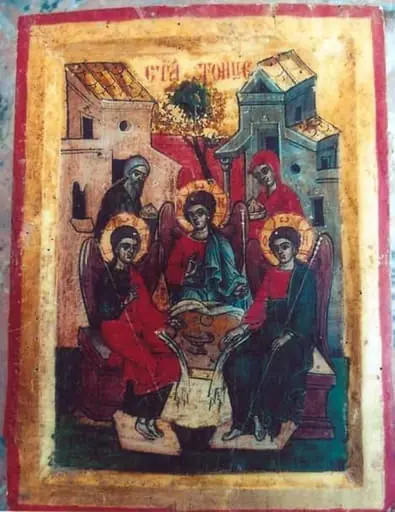 Sfânta Treime, patriarhul Avraam și Sara
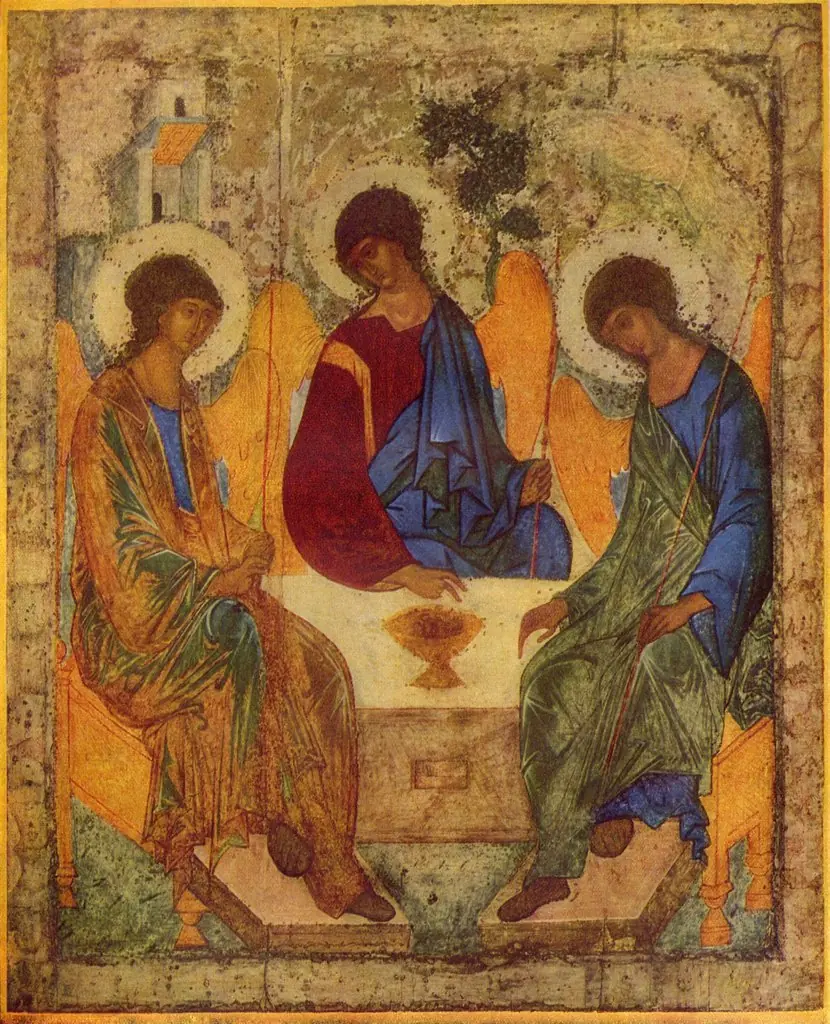 Hospitality of Abraham
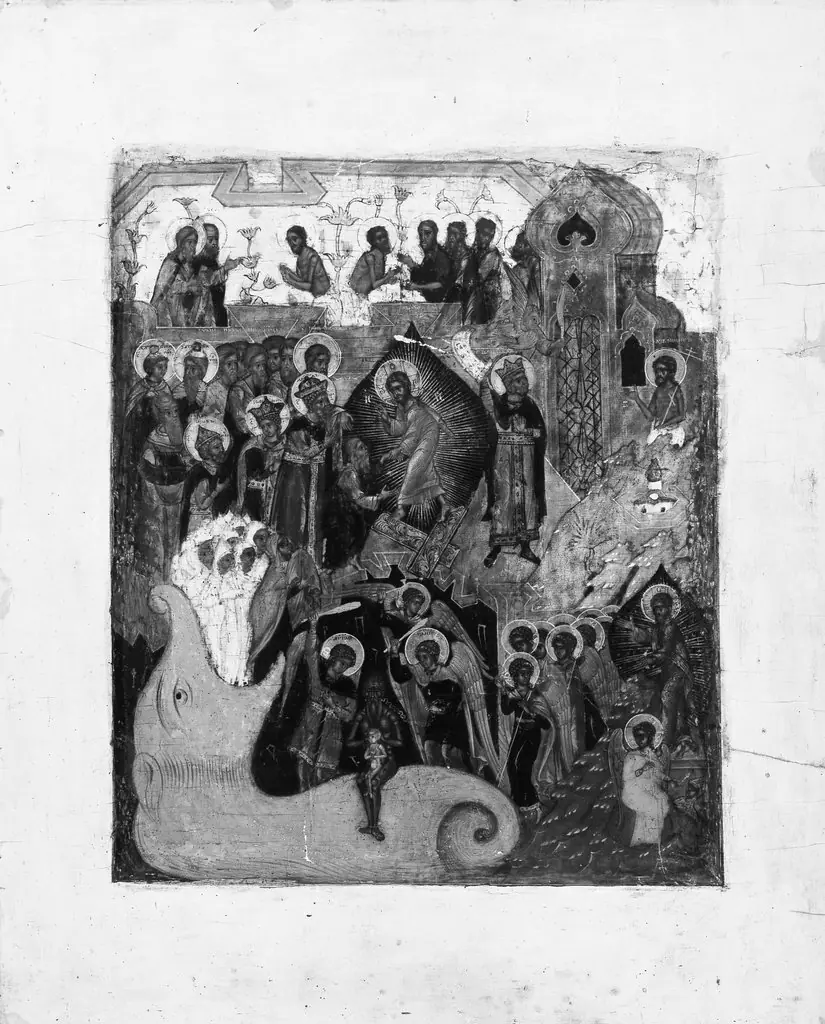 The Resurrection of Christ and the Harrowing of Hell
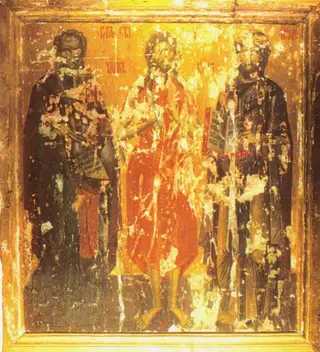 Sfântul Varlaam, Sfântul Alexie Omul lui D-zeu, Sfântul Ioasef; Sfântul militar călare - Dimitrie
 Compe.
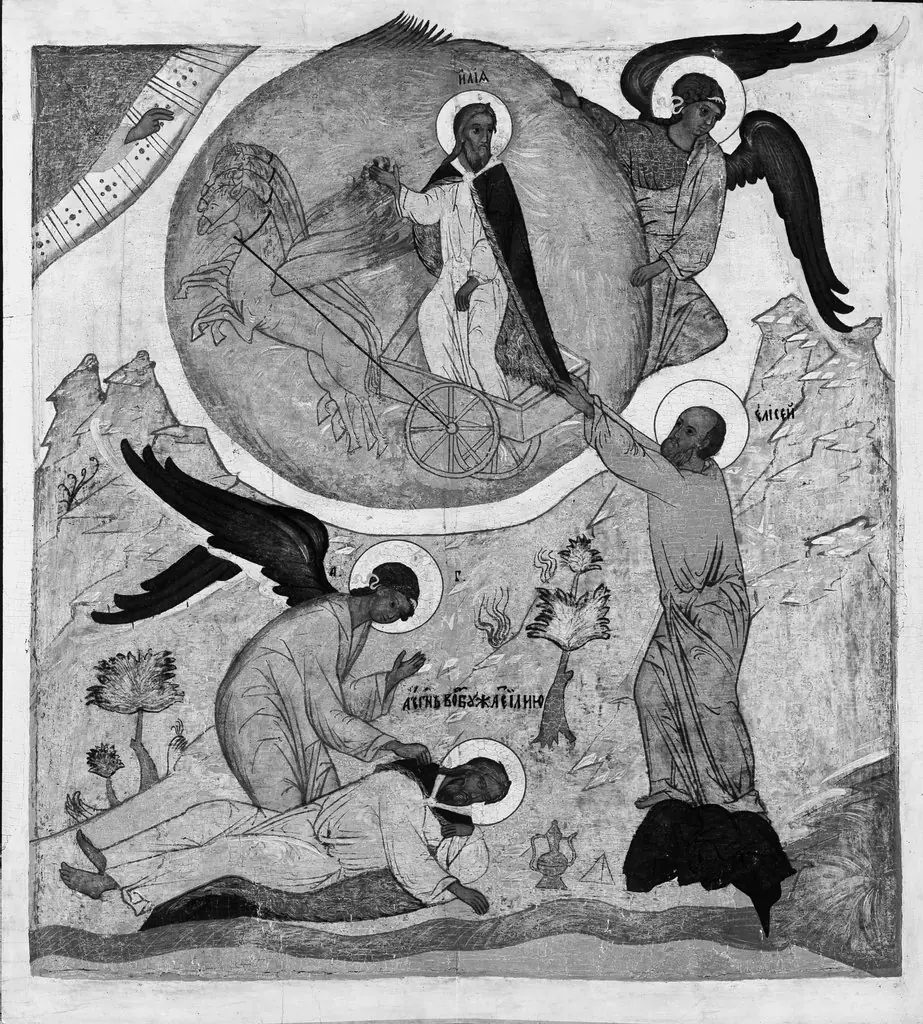 Saint Elias's Fiery Ascension
 Pyhä Kolminaisuus, venäläinen ikoni
 INALTAREA
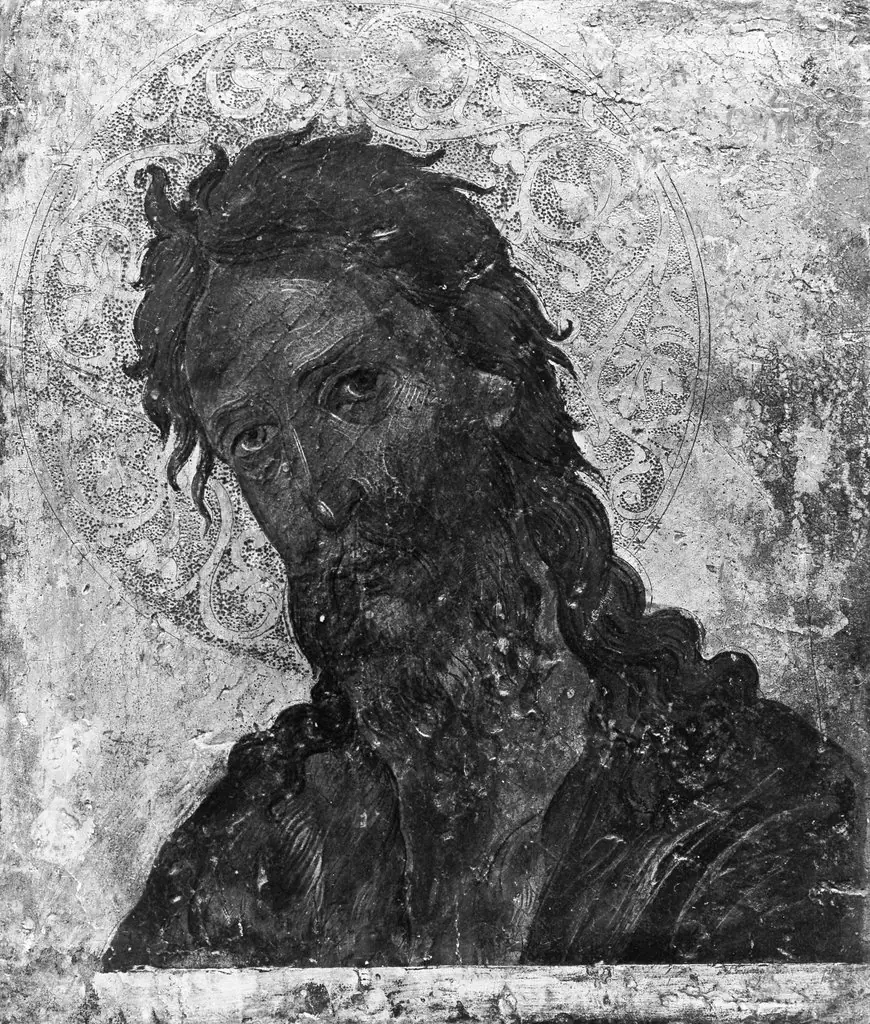 Head of Saint John the Baptist
- Icon of the New Testament Trinity