Artwork
The Swedish Nightingale
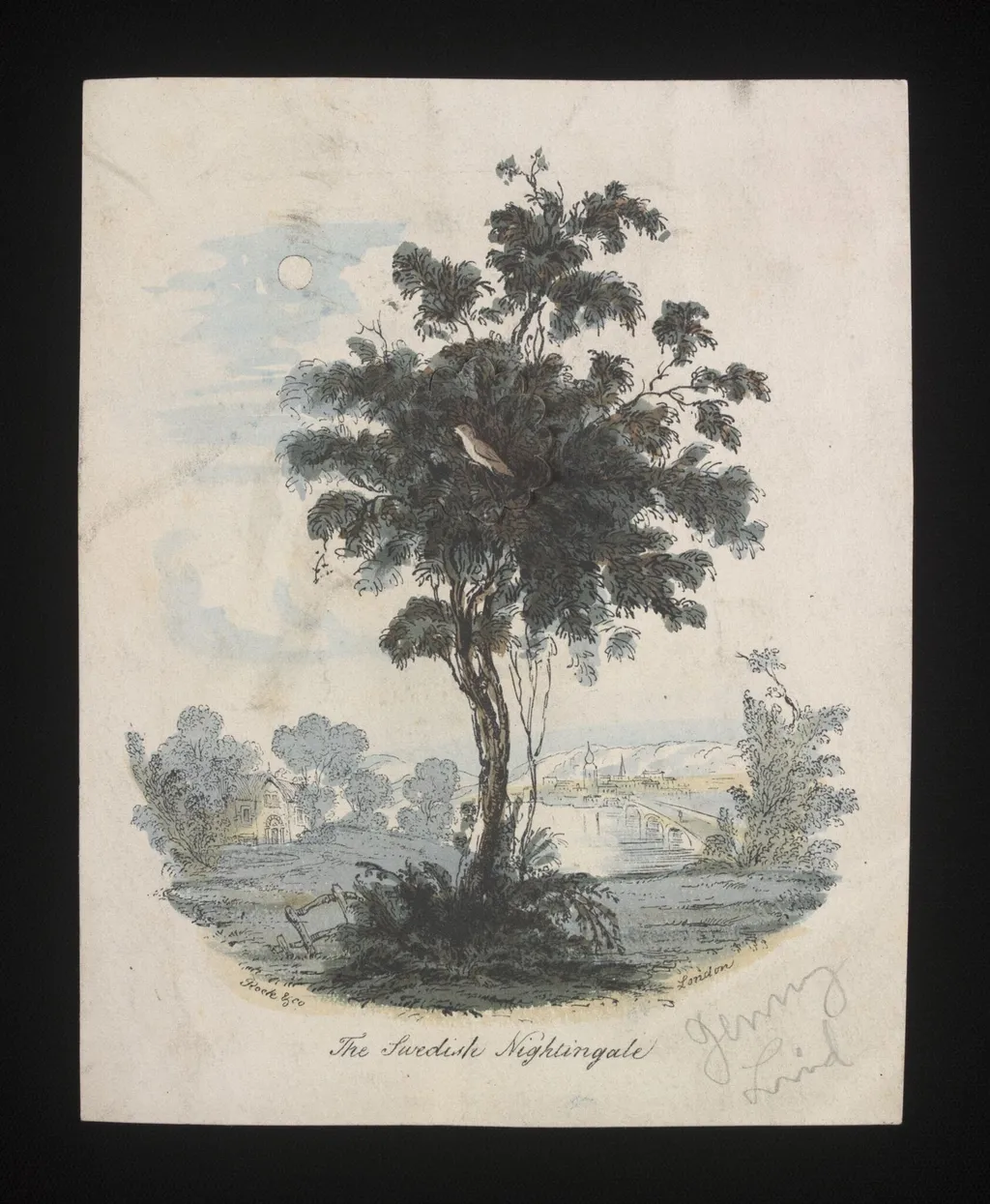
The Swedish Nightingale is a print by Unknown. It dates from 1850 and is held in the collection of the Victoria and Albert Museum. This print is part of the Harry Beard Collection, a curated assemblage of 19th-century commemorative images.
About this work
Overview
Its inclusion in Beard’s collection underscores the cultural practice of preserving celebrity imagery through print media.
This print is part of the Harry Beard Collection, a curated assemblage of 19th-century commemorative images. It honors Jenny Lind, the Swedish soprano celebrated across Europe and America for her vocal purity and philanthropy. The image was produced as a tribute, reflecting the public’s admiration during her peak fame in the 1840s and 1850s. Its inclusion in Beard’s collection underscores the cultural practice of preserving celebrity imagery through print media.
Subject & Meaning
The figure depicted is Jenny Lind, portrayed in an idealized, ethereal manner as she sings amid lush floral and leafy motifs. The natural elements symbolize grace and organic beauty, aligning her voice with the purity of nature. The flowing gown and serene posture convey dignity and emotional resonance, reinforcing her public image as a morally upright and artistically transcendent figure, rather than a mere performer.
Technique & Style
The print employs fine line work and delicate tonal gradations to render the figure and surrounding foliage with softness and clarity. While not using sfumato, a technique associated with oil painting, the print achieves a similar atmospheric effect through controlled hatching and shading typical of high-quality lithographic or engraved portraiture of the period. The composition prioritizes elegance over realism, emphasizing symbolic harmony.
History & Provenance
The print originates from the personal collection of Harry Beard, a British theater enthusiast who amassed hundreds of theatrical and musical memorabilia prints between the 1840s and 1880s. His collection, now held by the Victoria and Albert Museum, documents popular cultural icons of the time. This piece was likely produced during or shortly after Lind’s 1850–52 American tour, when her fame peaked and commemorative imagery proliferated.
Context
In mid-19th-century Europe and America, celebrity culture was increasingly mediated through prints, photographs, and sheet music. Lind’s reputation as a charitable and modest artist made her an ideal subject for such tributes. Unlike theatrical stars, she was often portrayed with spiritual or natural symbolism, reflecting broader Victorian ideals of feminine virtue and artistic purity.
Legacy
The print survives as a material artifact of how public admiration was visually codified before mass photography. It reflects the role of print culture in shaping and preserving the reputations of cultural figures. Today, it contributes to scholarly understanding of 19th-century celebrity, gender norms, and the intersection of art and commerce in the age of industrial reproduction.
Artist & collection









- Untitled
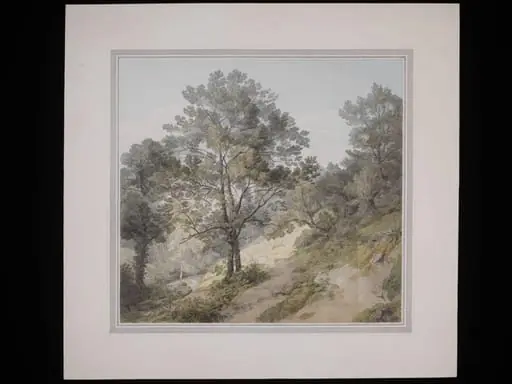 View near Canonteign, Devon
 Untitled
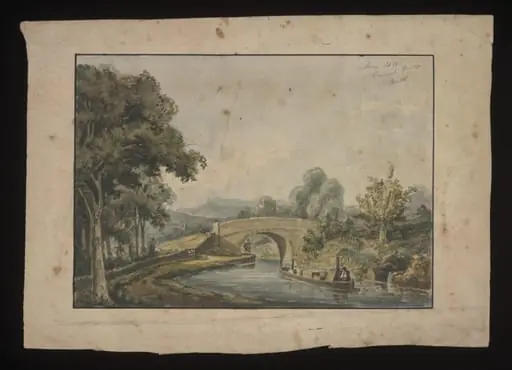 Watercolour drawing by the Grieve family, probably by John Henderson Grieve, showing a canal bridge near Bath
 Untitled
 Landscape
 Study of trees
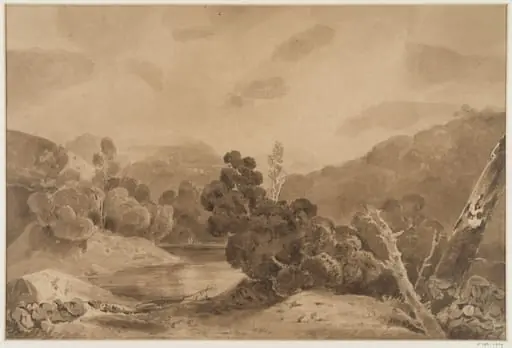 River scene with a temple or palace in the clouds
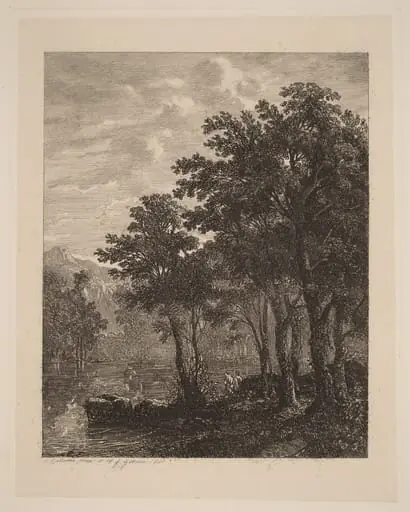 Trees by a River
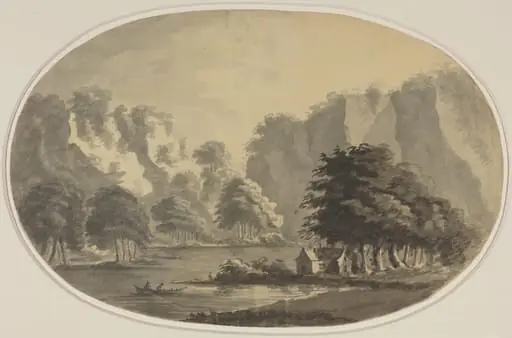 View of Ullswater
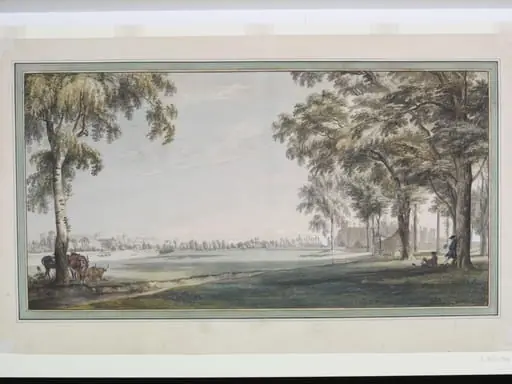 Eton College and Windsor from the Playing Fields
 Landscape with Lake and Cliffs