Artwork
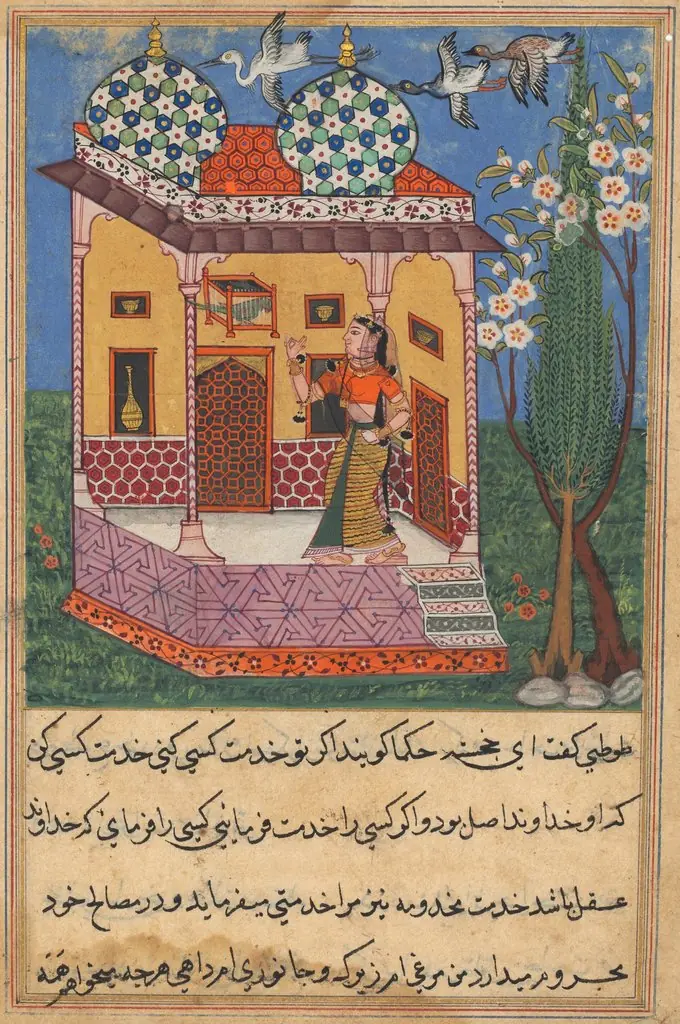
The deceitful wife returns to her terrace after caressing her lover, from a Tuti-nama (Tales of a Parrot): Eighth Night
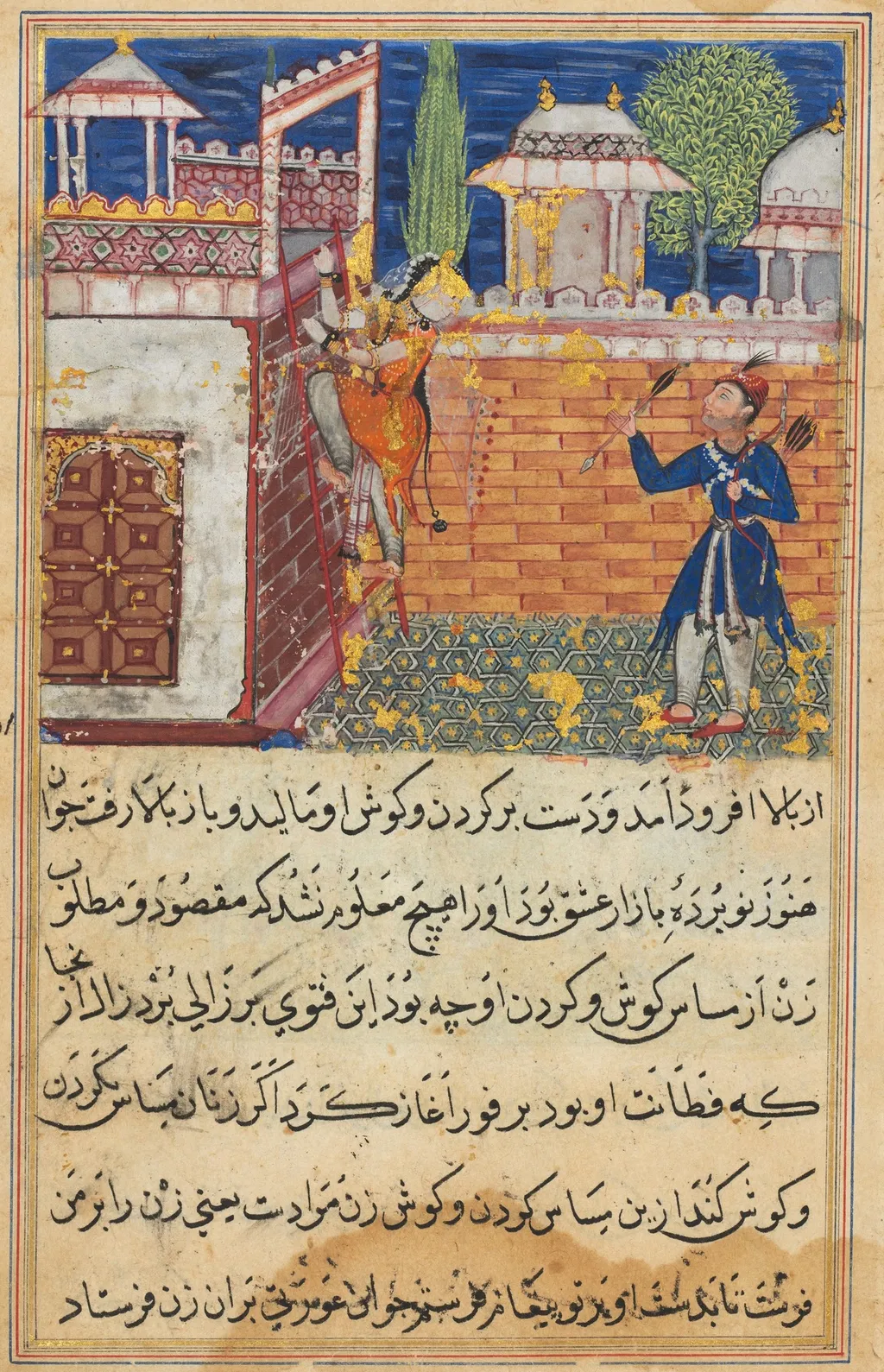
The deceitful wife returns to her terrace after caressing her lover, from a Tuti-nama (Tales of a Parrot): Eighth Night is an unspecified painting by the Mughal Painting artist Shravana. It dates from 1560 and is held in the collection of the Cleveland Museum of Art.
About this work
Subject & Meaning
This scene represents a moment of calculated deception within the larger frame story, where a parrot narrates tales to prevent a husband from killing his wife.
The painting illustrates a narrative episode from the Tuti-nama (Tales of a Parrot), specifically the Eighth Night. The subject depicts a deceitful wife returning to her terrace after an intimate encounter with her lover. This scene represents a moment of calculated deception within the larger frame story, where a parrot narrates tales to prevent a husband from killing his wife.
The work visualizes the wife's attempt to maintain her secrecy and manipulate her husband's perception of her fidelity.
History & Provenance
The painting titled The deceitful wife returns to her terrace after caressing her lover, from a Tuti-nama (Tales of a Parrot): Eighth Night, was created around 1560 by Shravana (active 1550s–c.1600). It entered the collection of the Cleveland Museum of Art, where it remains today.
The painting is held in the collection of the Cleveland Museum of Art. Its accession number is 1962.279.67.a. The work has been exhibited in the museum's Indian miniature paintings gallery.
The painting was created in 1560 by the Indian artist Shravana. It appears in the museum's online catalog under the title The deceitful wife returns to her terrace after caressing her lover, from a Tuti-nama (Tales of a Parrot): Eighth Night.
Overview
Created in 1560 by the artist Shravana, this miniature painting illustrates a scene from the eighth night of the Persian narrative collection known as the Tuti‑nama, or Tales of a Parrot. The work is part of the collection of the Cleveland Museum of Art, where it is displayed as an example of courtly illustration.
Technique & Style
Executed in the miniature tradition, the painting employs a vivid palette of contrasting reds, blues, and golds against an orange‑brick background. Fine brushwork delineates the patterned floor, the leafy tree, and the architectural details, while a flowing Persian script runs beneath the scene, integrating text and image in a typical narrative illustration style.
Context
The Tuti‑nama, a collection of romantic and moral tales, was popular among the elite of Safavid Persia. Illustrations such as this one served both decorative and didactic purposes, reinforcing the moral lessons of the stories while showcasing the patron’s taste for luxurious visual culture.
Own this work as a print
Artist & collection

- The deceitful wife returns to her terrace after caressing her lover, from a Tuti-nama (Tales of a Parrot): Eighth Night
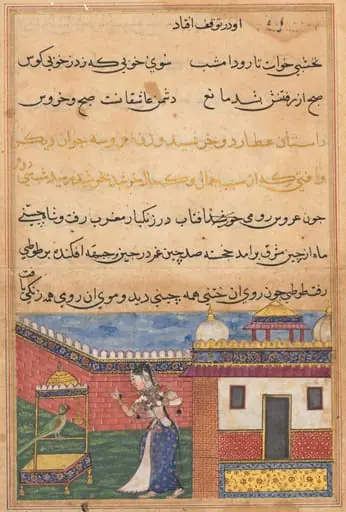 The parrot addresses Khujasta at the beginning of the thirty-second night, from a Tuti-nama (Tales of a Parrot)
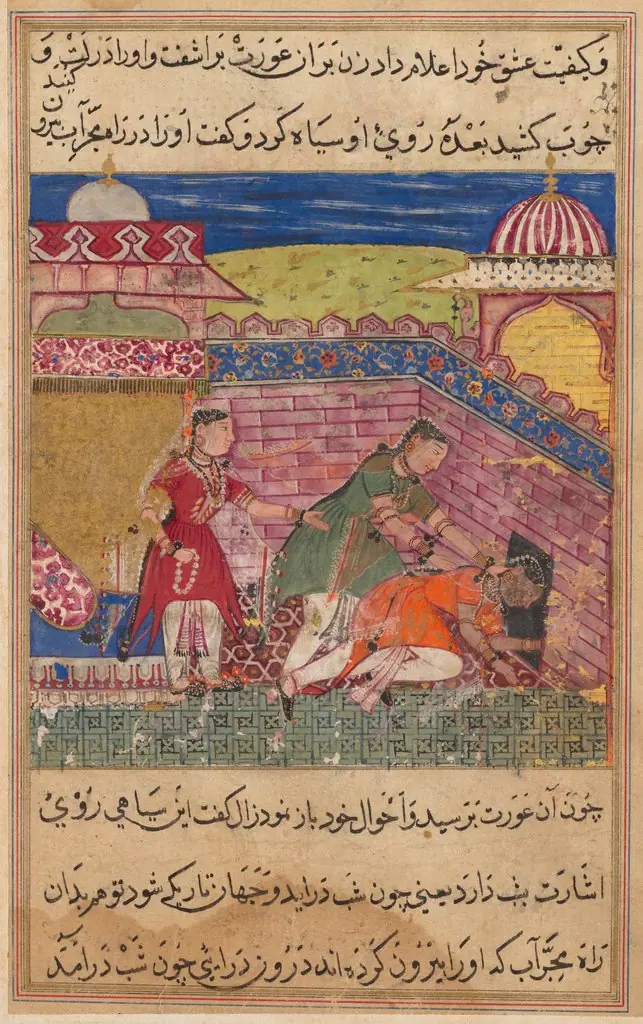 The deceitful wife ejects the procuress after blackening her face, from a Tuti-nama (Tales of a Parrot): Eighth Night
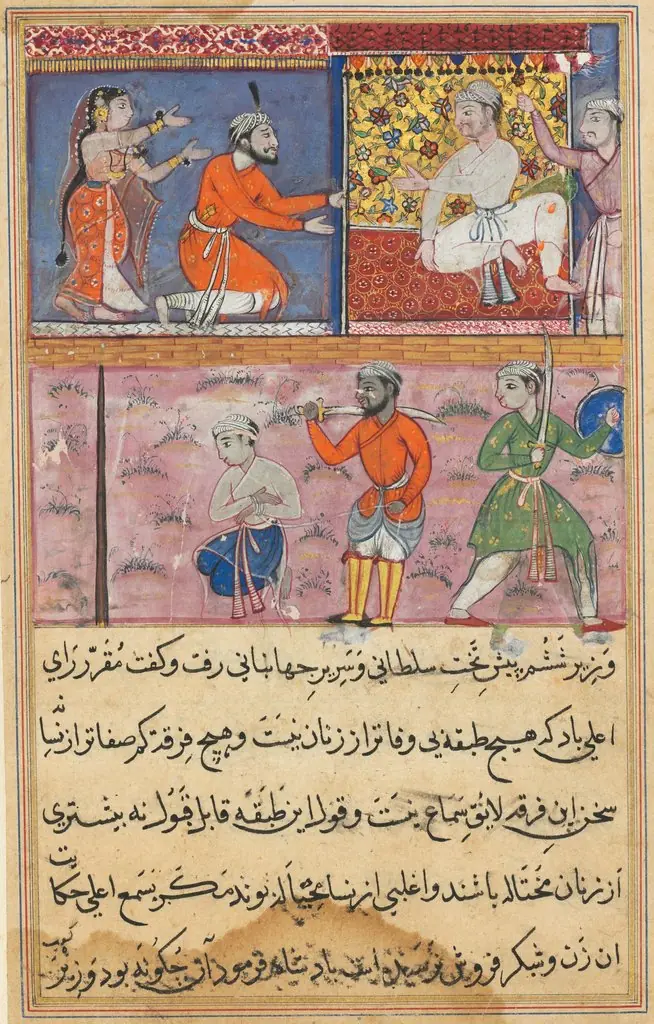 The prince sent back to the place of execution for the sixth time, from a Tuti-nama (Tales of a Parrot): Eighth Night
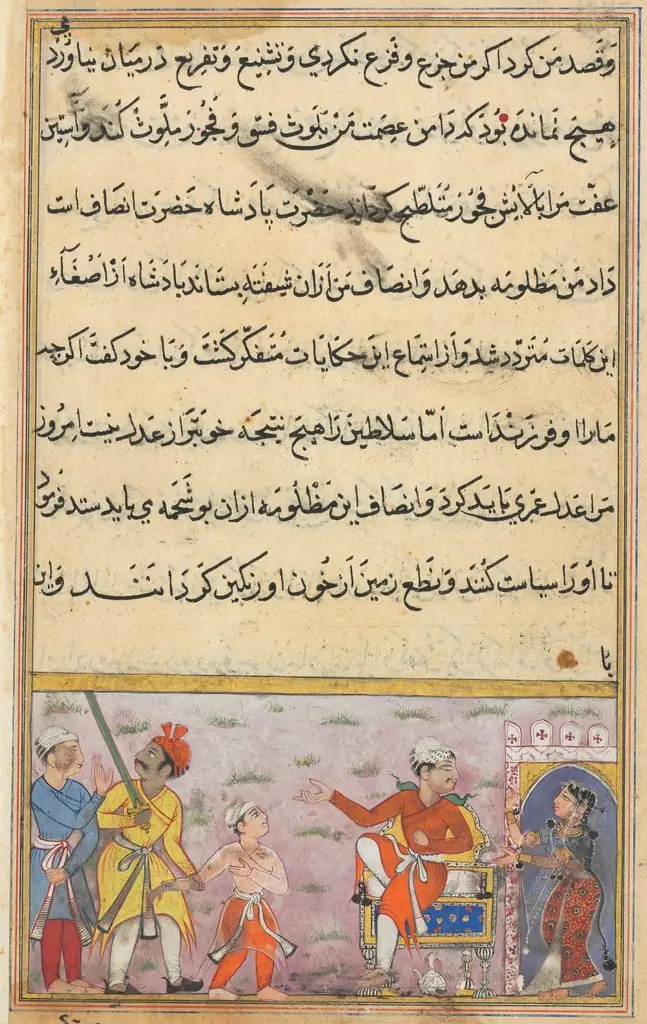 The prince being taken away for execution on the false complaint of the handmaiden, from a Tuti-nama (Tales of a Parrot): Eighth Night
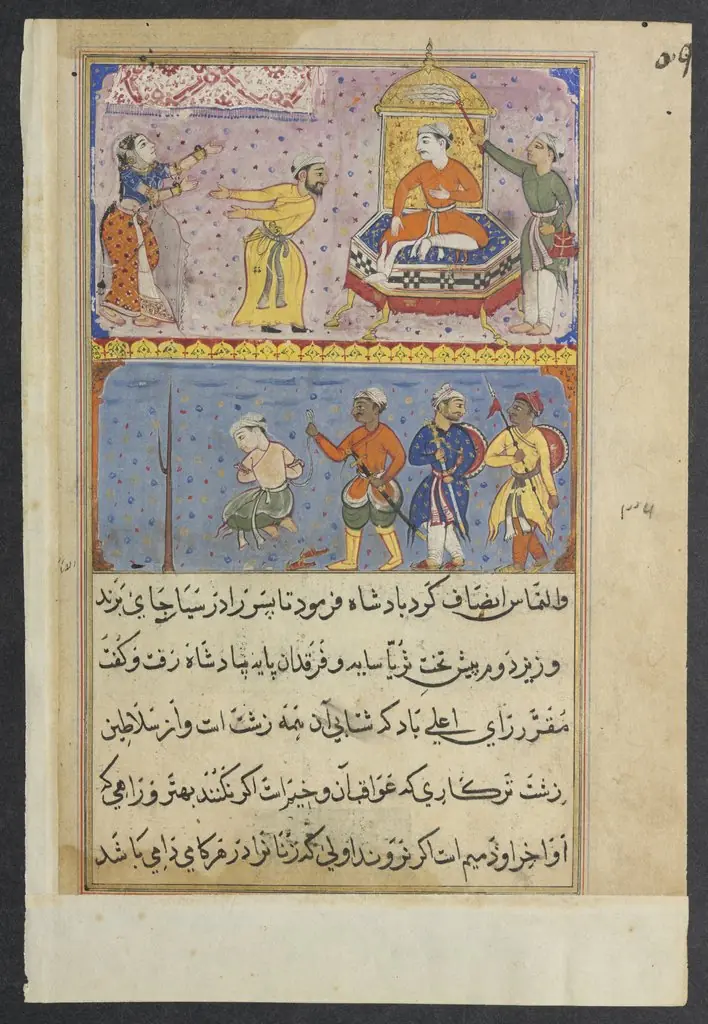 The prince, once reprieved, is returned to the palace of execution a second time on the plea of the king’s handmaiden, from a Tuti-nama (Tales of a Parrot): Eighth Night
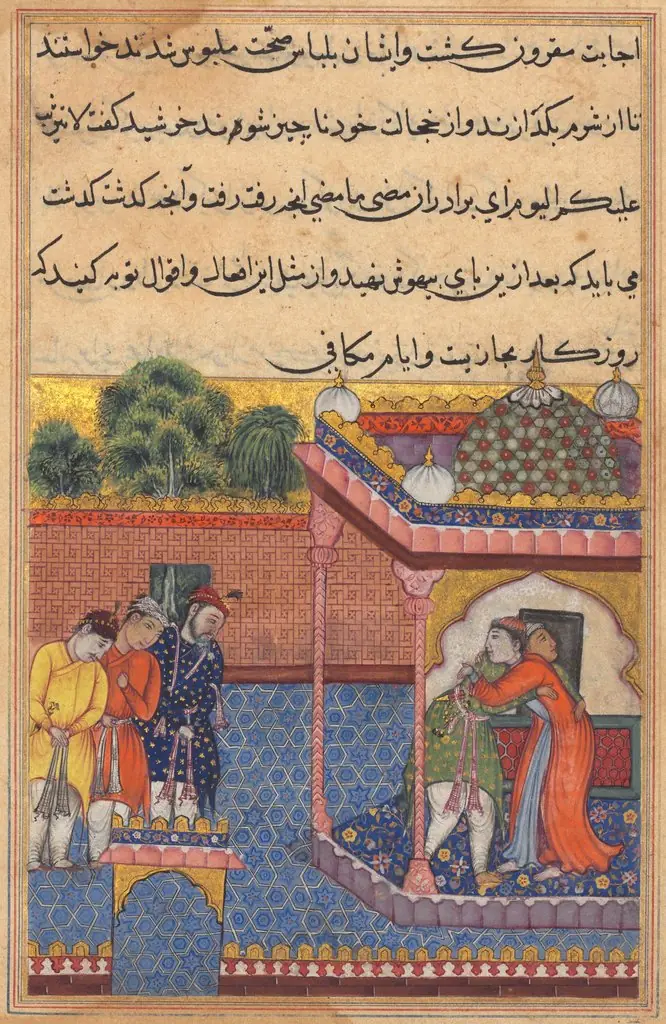 Khurshid reunited with her husband Utarid, from a Tuti-nama (Tales of a Parrot): Thirty-second Night
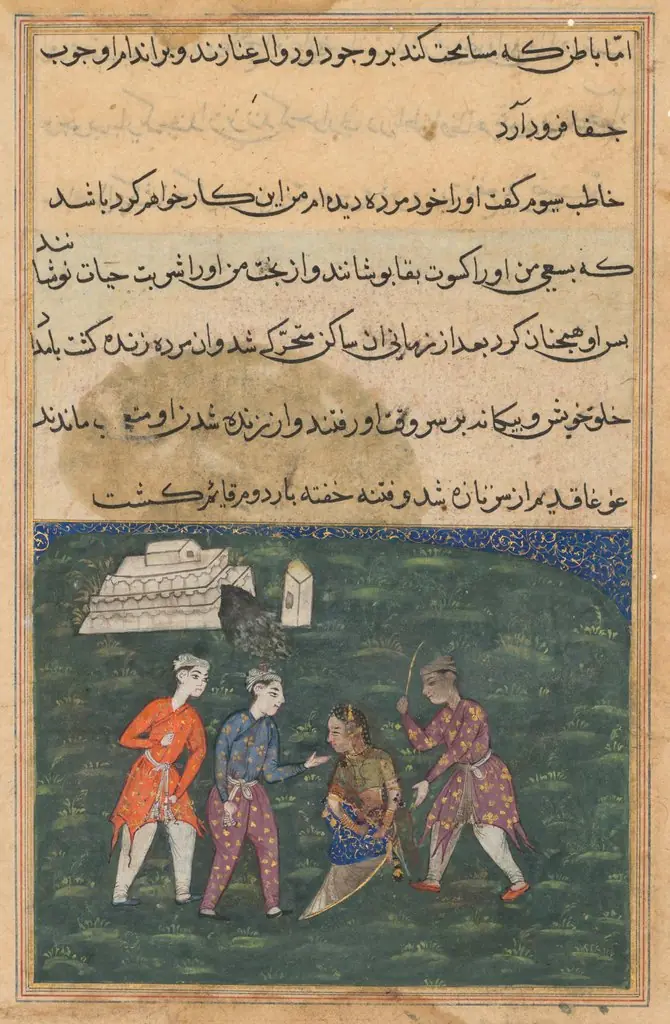 The third suitor strikes the devotee’s daughter and thus restores her to life, from a Tuti-nama (Tales of a Parrot): Twentieth Night
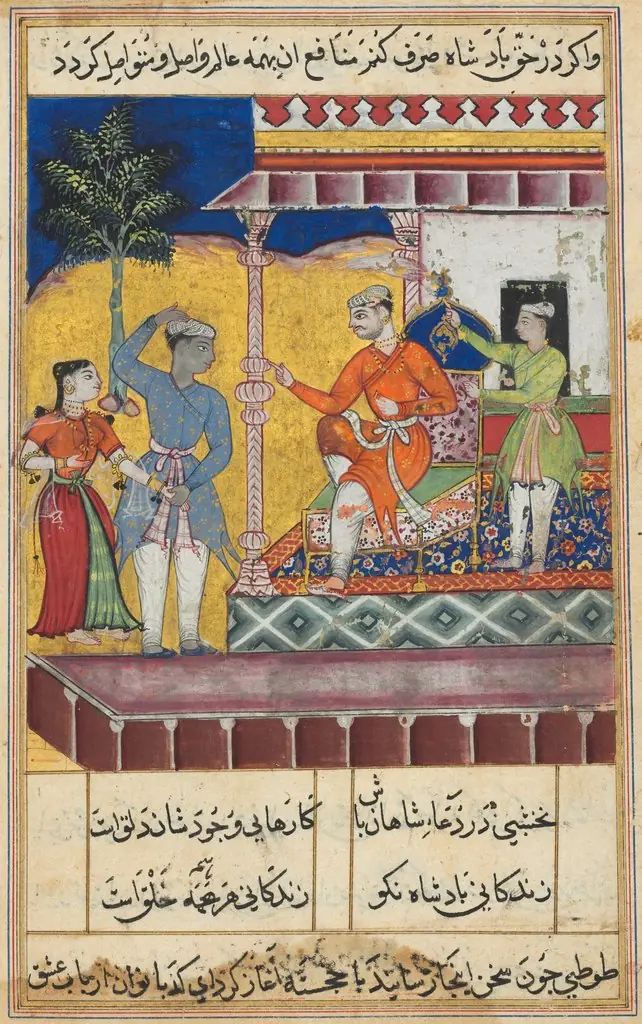 The rejuvenated old man and the daughter of the king of the jinns take leave of the King of Kings, from a Tuti-nama (Tales of a Parrot): Seventh Night
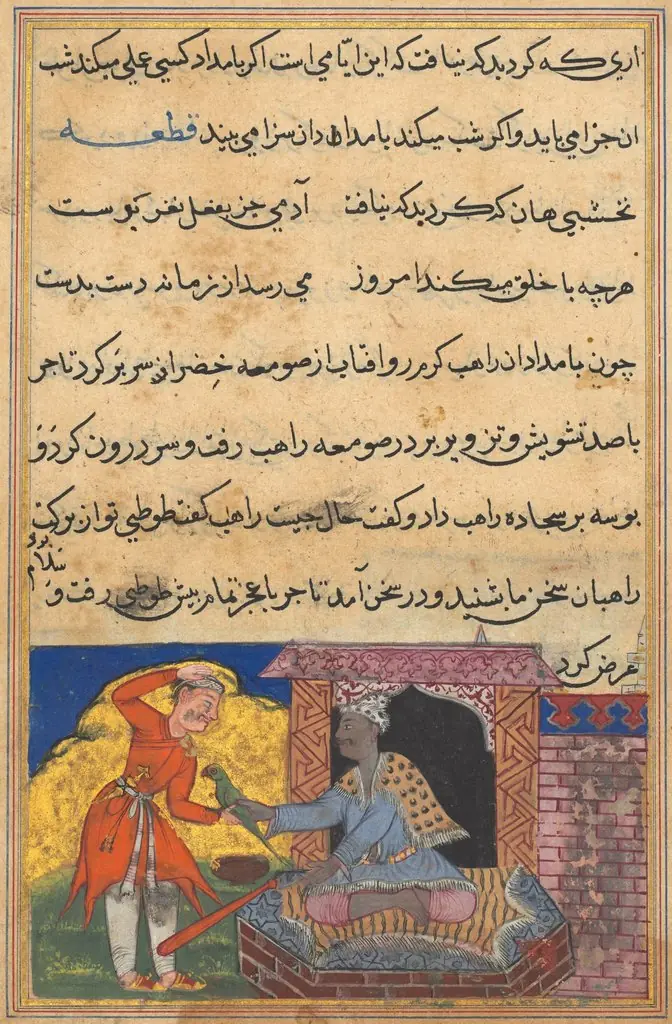 The monk returns the magic parrot to its rightful owner, the merchant, from a Tuti-nama (Tales of a Parrot): Tenth Night
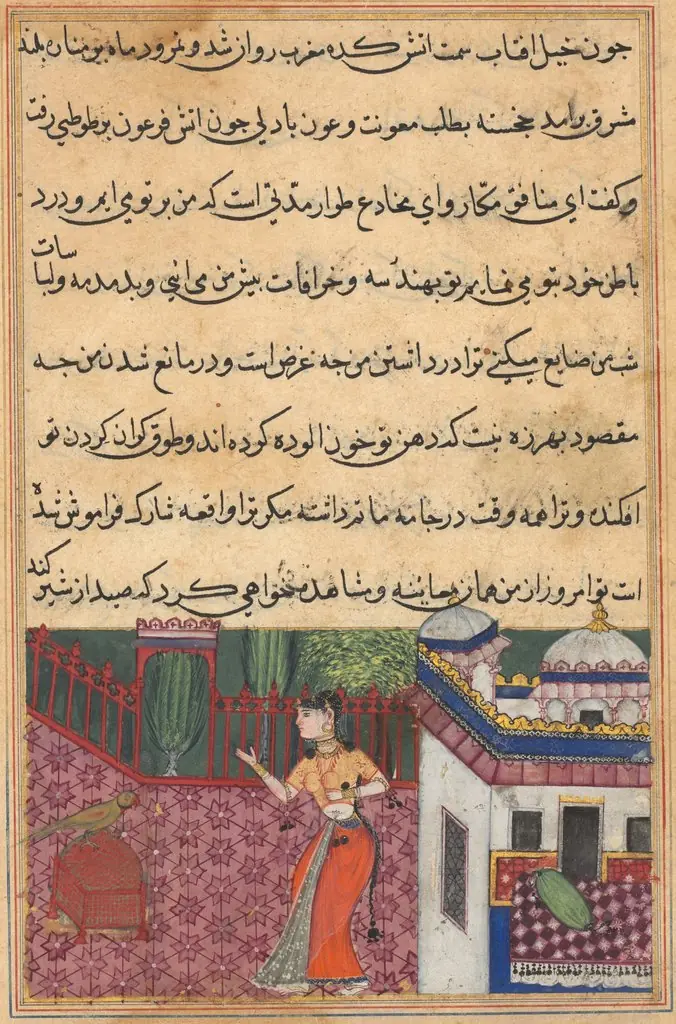 The parrot addresses Khujasta at the beginning of the thirty-third night, from a Tuti-nama (Tales of a Parrot)
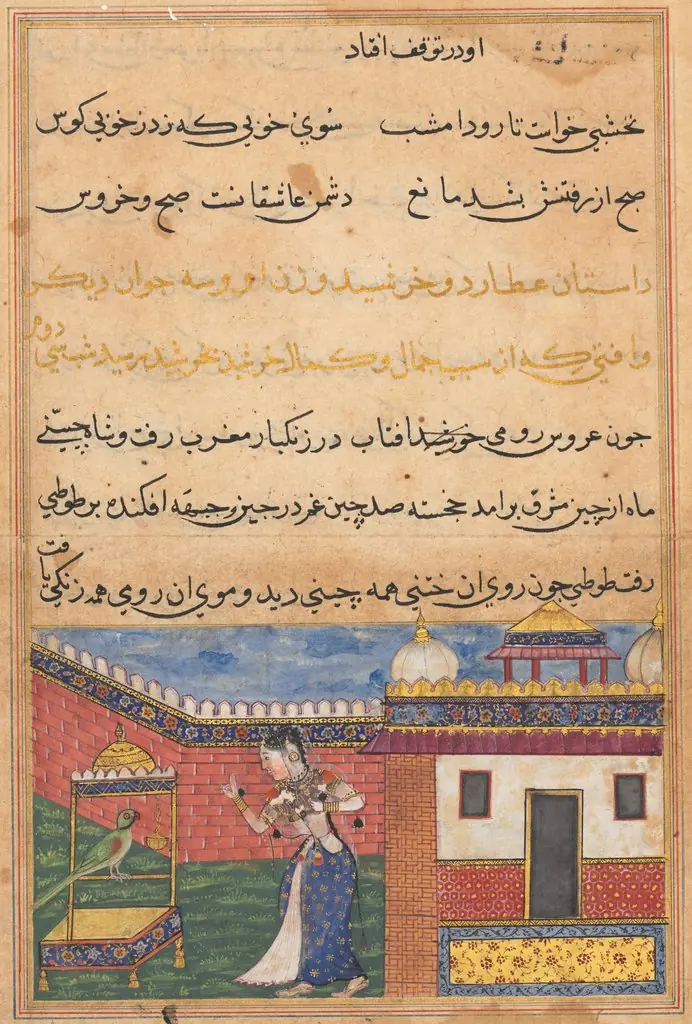 The parrot addresses Khujasta at the beginning of the thirty-second night, from a Tuti-nama (Tales of a Parrot)
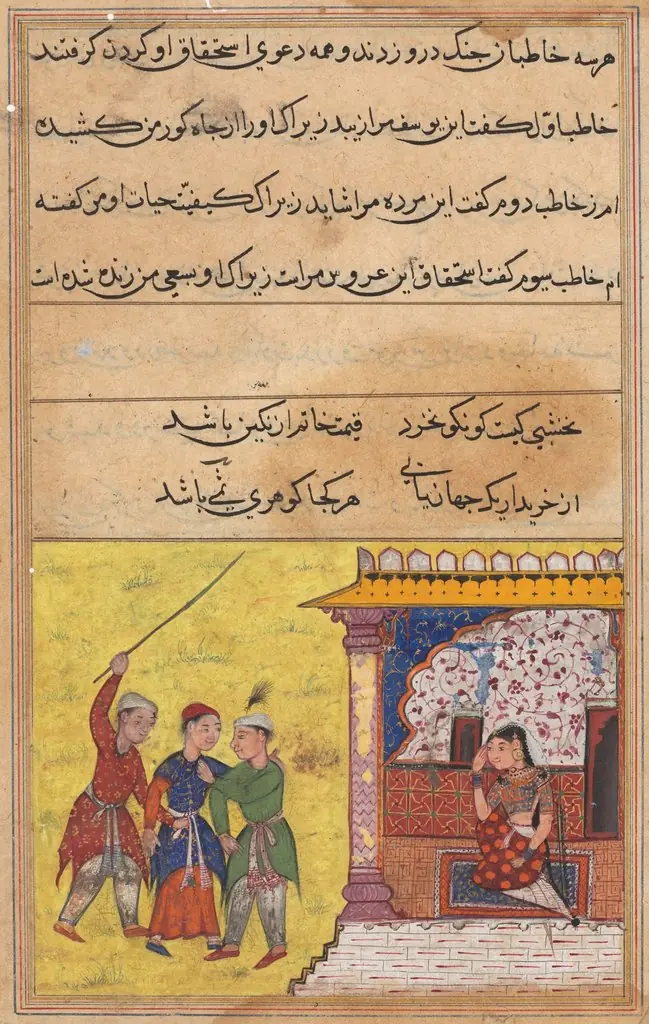 The three suitors again begin to quarrel among themselves for the hand of the devotee’s daughter, from a Tuti-nama (Tales of a Parrot): Twentieth Night
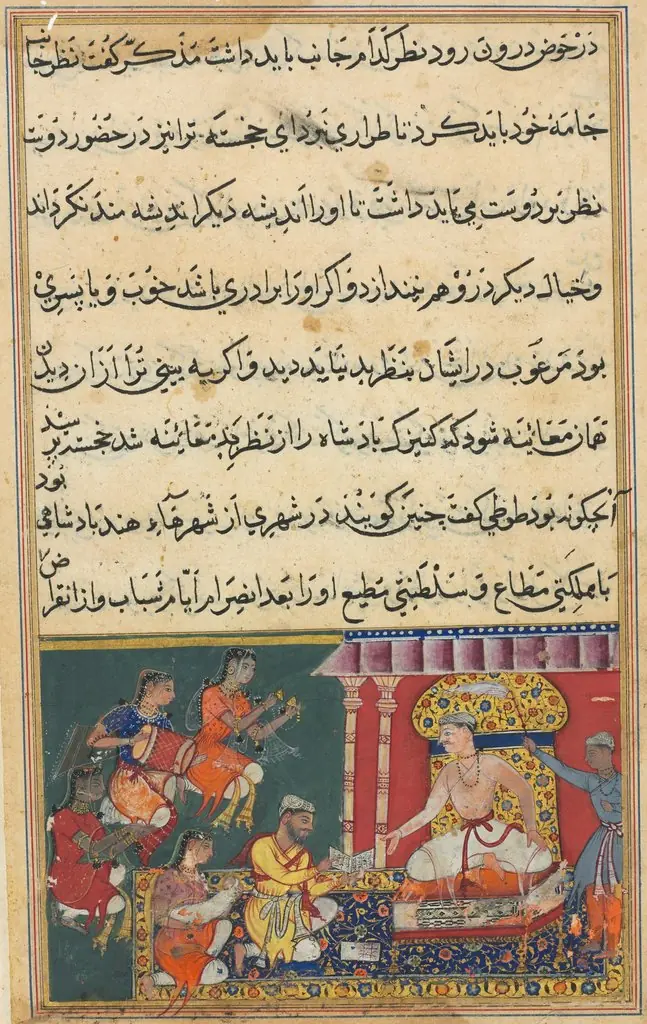 The astrologer predicts a calamity for the newly born prince in his thirteenth year, but one which he would be able to overcome, from a Tuti-nama (Tales of a Parrot): Eighth Night
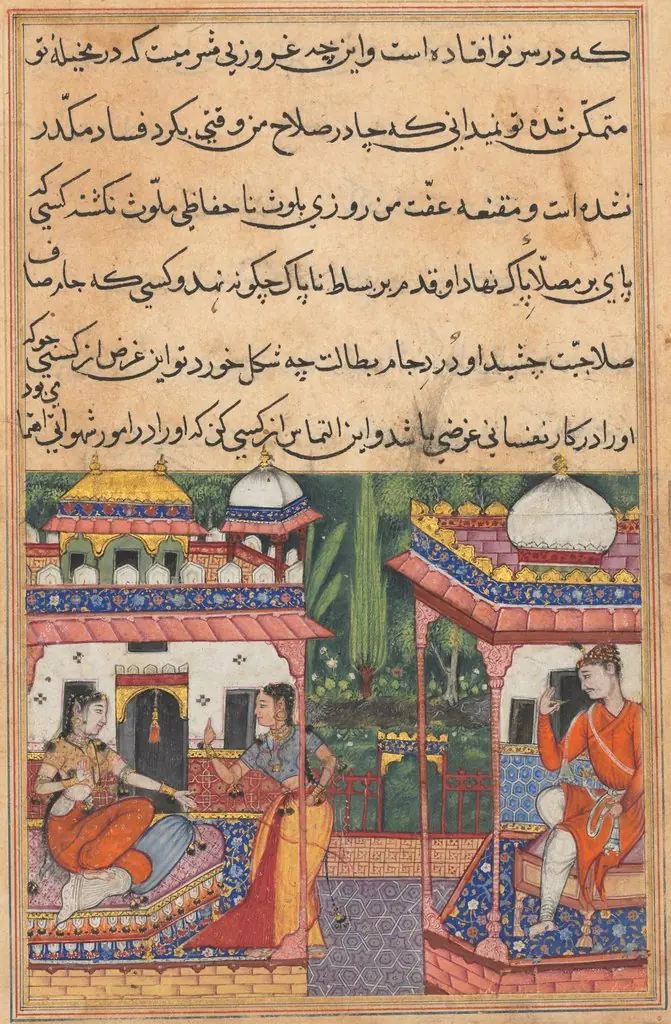 Kaiwan sends a message of love to Khurshid, wife of his brother Utarid who is away on a journey, from a Tuti-nama (Tales of a Parrot): Thirty-second Night
 The Parrot Addresses Khujasta at the Beginning of the Twenty-sixth Night, from a Tuti-nama (Tales of a Parrot)
 Page from Tales of a Parrot (Tuti-nama): text page