Artwork
The two couples reach a foreign city where they make their home, from a Tuti-nama (Tales of a Parrot): Thirty-third Night
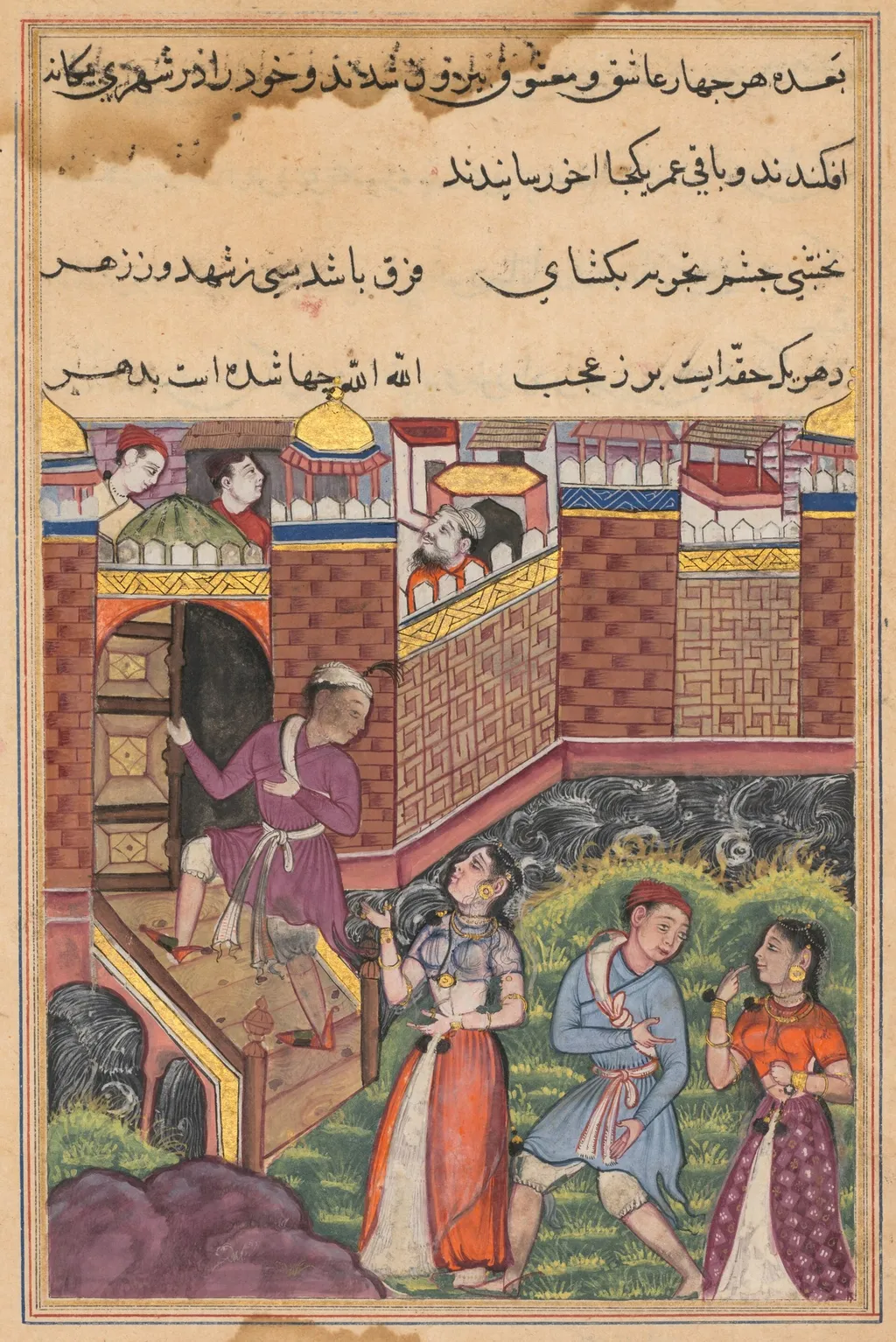
The two couples reach a foreign city where they make their home, from a Tuti-nama (Tales of a Parrot): Thirty-third Night is an unspecified painting. It dates from 1560 and is held in the collection of the Cleveland Museum of Art. The work illustrates a narrative episode from the Persian illustrated manuscript known as the Tuti‑nama, or "Tales of a Parrot.
About this work
Subject & Meaning
The miniature depicts two couples arriving in a foreign city, establishing a domestic life as part of the thirty-third night narrative of the Tuti-nama.
The miniature depicts two couples arriving in a foreign city, establishing a domestic life as part of the thirty-third night narrative of the Tuti-nama. The scene illustrates themes of migration, settlement, and the domestic sphere within a Mughal artistic tradition. The foreign city is not named, emphasizing symbolic rather than literal geography.
The couples’ arrival and home-making represent social integration and the continuity of personal and cultural narratives within an imperial context. The work belongs to the Mughal painting tradition, reflecting Persianate storytelling adapted into Indian court aesthetics. The composition focuses on narrative progression rather than individual character study, using spatial arrangement to convey the passage of time and the establishment of a new domestic order.
History & Provenance
The painting illustrates the thirty-third night of the Tuti-nama and is dated to 1560. It was produced in the Mughal Empire by an unknown artist as part of the manuscript tradition. It is classified as a painting and forms one of the illustrations in the Tuti-nama (Tales of a Parrot) series.
The work entered the Cleveland Museum of Art’s collection in 1962, receiving the accession number 1962.279.222.b, and remains housed there. No earlier ownership or commission details are recorded in the available sources.
Context
The painting originates from the Mughal Empire and is dated 1560, reflecting the period in which it was created. It is part of the Cleveland Museum of Art's collection, where it is catalogued as an example of Mughal miniature painting. The work illustrates a narrative scene from the Tuti-nama, a 16th-century Persian illustrated manuscript, and demonstrates the cross-cultural artistic exchanges that characterized the Mughal court's patronage of manuscript illumination.
Scholars have examined its stylistic features in relation to other illustrated manuscripts from the same era, situating it within the broader tradition of Indian miniature painting.
Legacy
Later reception of this miniature painting has been shaped by its inclusion in the Cleveland Museum of Art's collection and by scholarly discussions of Mughal book arts. The work is cited in art‑historical surveys of 16th‑century Persian narrative painting, influencing how contemporary scholars interpret visual storytelling in cross‑cultural manuscripts. Its legacy is discussed in museum publications that trace the development of illustrated Persian literature from the Tuti‑nama tradition.
Overview
The work illustrates a narrative episode from the Persian illustrated manuscript known as the Tuti‑nama, or "Tales of a Parrot." In this particular scene, four figures, two men and two women, are gathered outside a brick structure with arched windows and a domed roof, suggesting a settled urban setting.
Technique & Style
Rendered in bright, flat pigments, the painting relies on bold color blocks rather than chiaroscuro to model form. The figures are outlined with clear lines, and the background features stylized trees and a dark, undulating area that may represent water or shadow, typical of Persian miniature conventions that prioritize decorative pattern over realistic depth.
Artist & collection

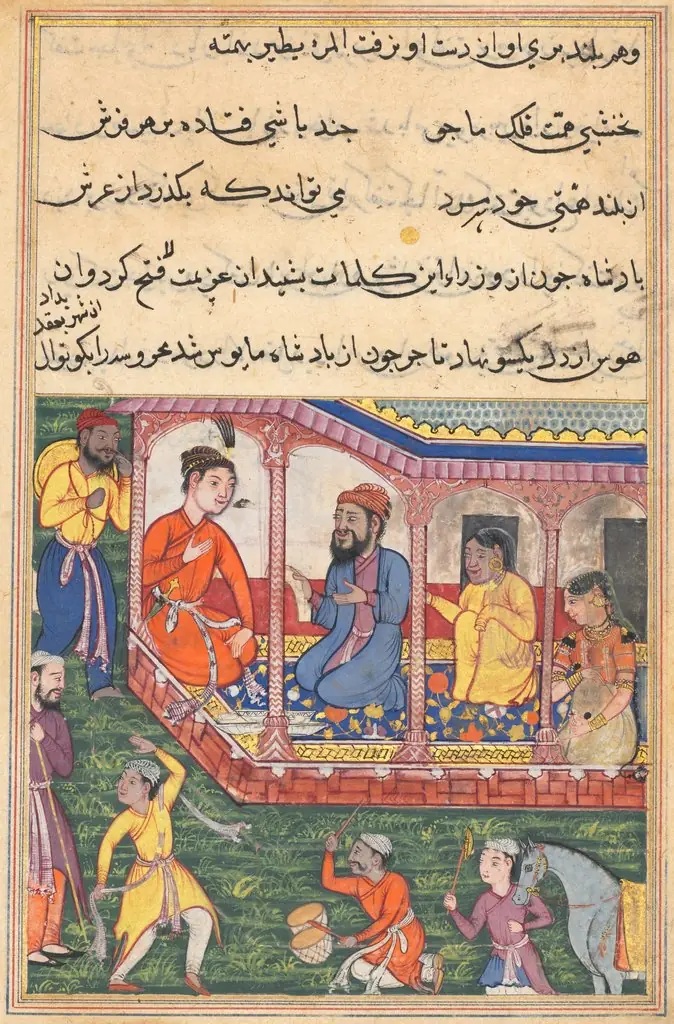
- Mahrusa’s marriage to the prefect of the city, from a Tuti-nama (Tales of a Parrot): Thirty-sixth Night
 The two couples reach a foreign city where they make their home, from a Tuti-nama (Tales of a Parrot): Thirty-third Night
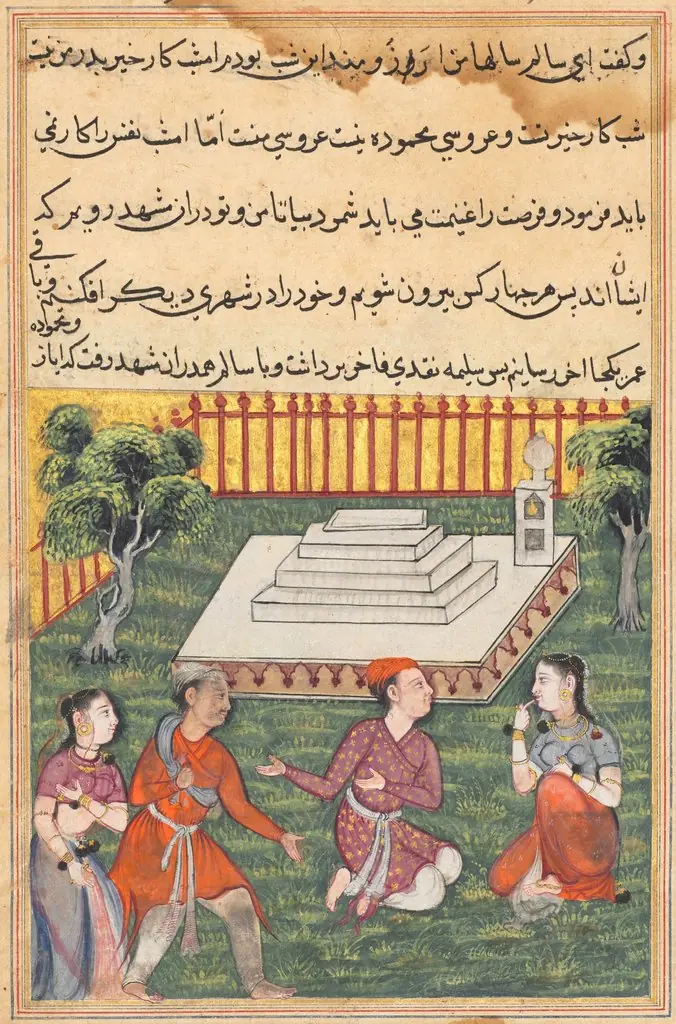 Salim and Salima return to Ayaz and Mahmuda in the sanctuary, from a Tuti-nama (Tales of a Parrot): Thirty-third Night
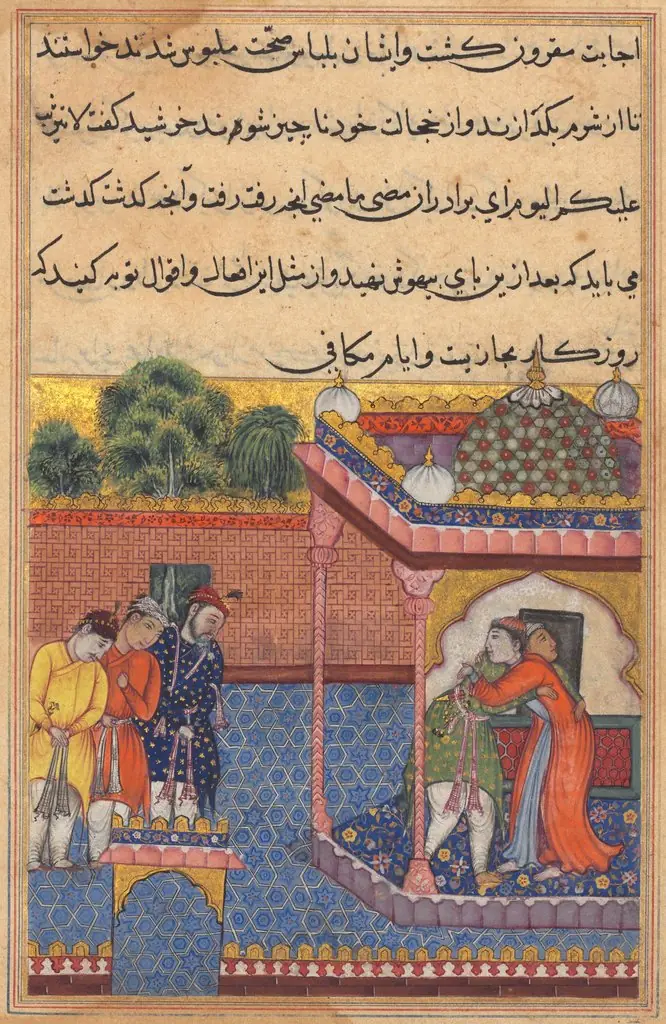 Khurshid reunited with her husband Utarid, from a Tuti-nama (Tales of a Parrot): Thirty-second Night
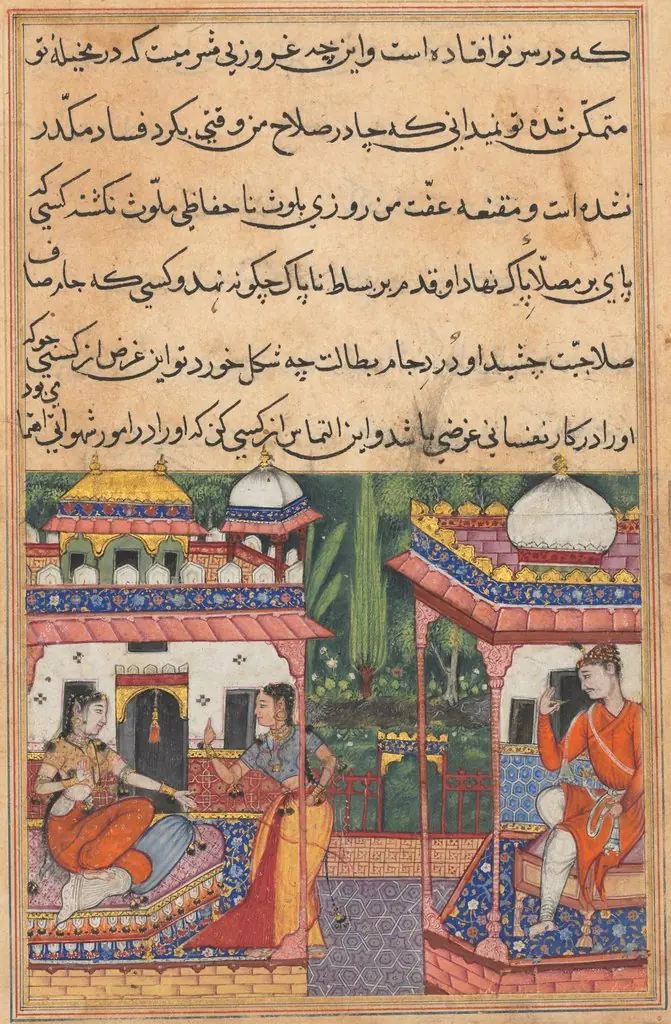 Kaiwan sends a message of love to Khurshid, wife of his brother Utarid who is away on a journey, from a Tuti-nama (Tales of a Parrot): Thirty-second Night
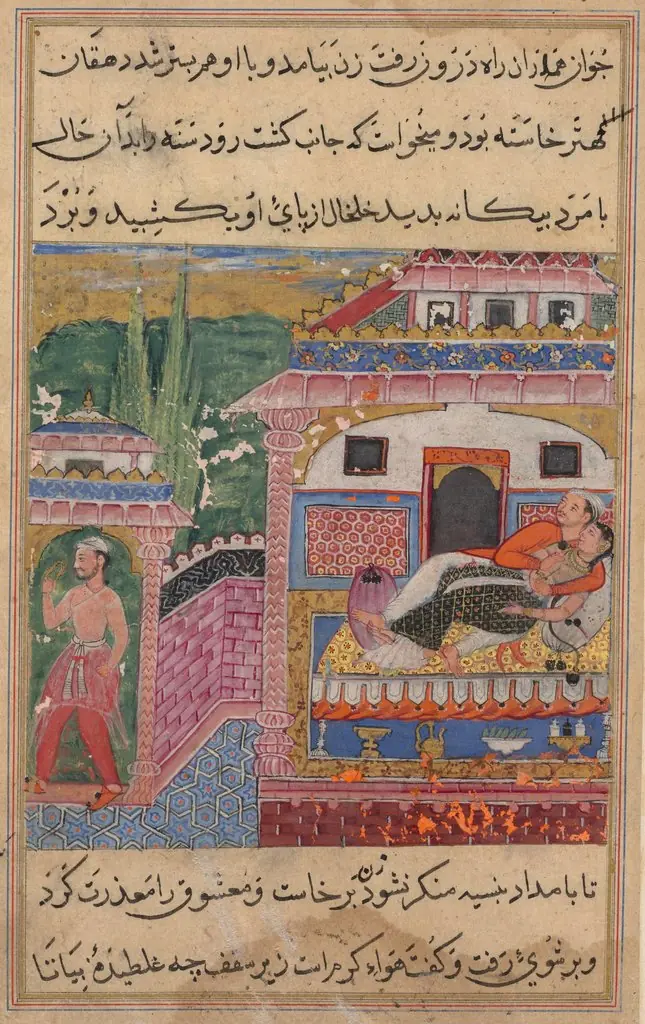 The deceitful wife persuades her husband to sleep in the same place where she had previously slept with her lover, from a Tuti-nama (Tales of a Parrot): Eighth Night
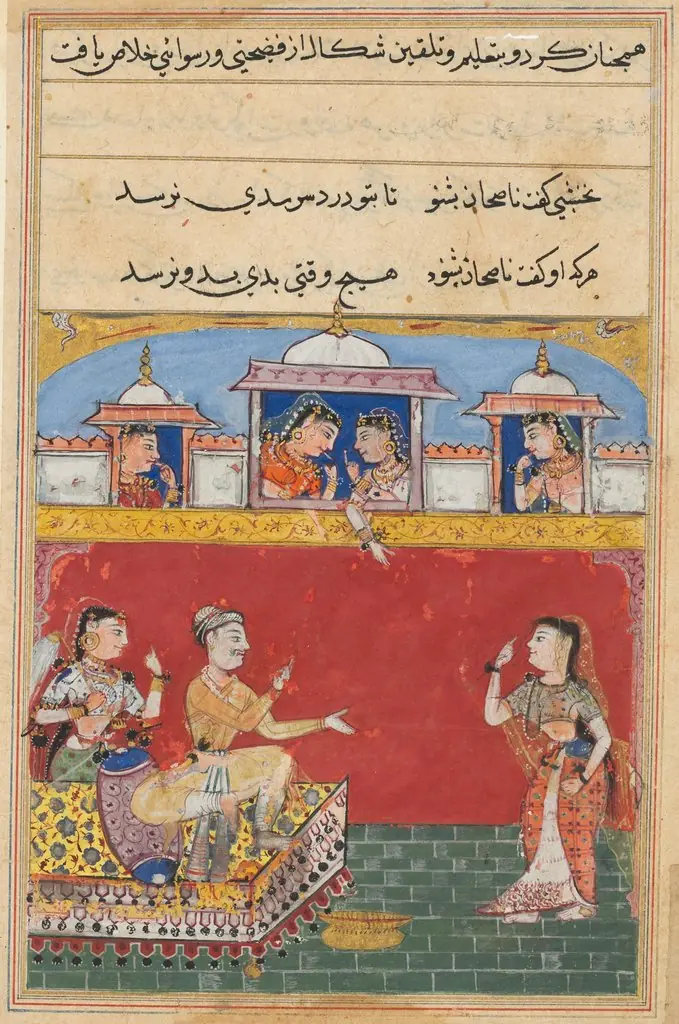 The daughter-in-law returns from her misadventure, feigning insanity, from a Tuti-nama (Tales of a Parrot): Sixteenth Night
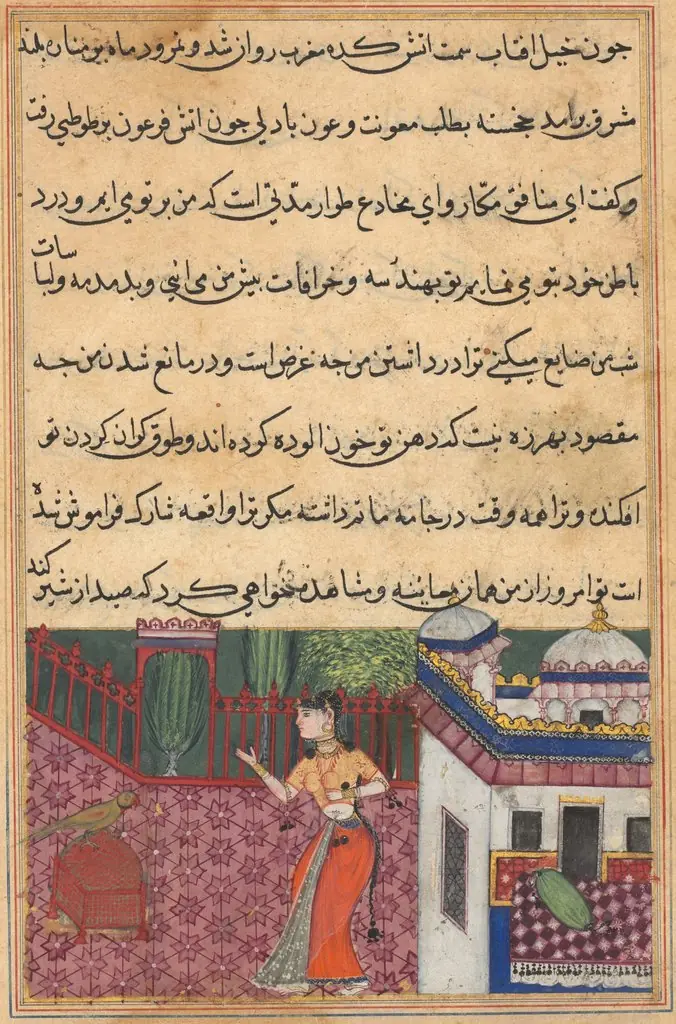 The parrot addresses Khujasta at the beginning of the thirty-third night, from a Tuti-nama (Tales of a Parrot)
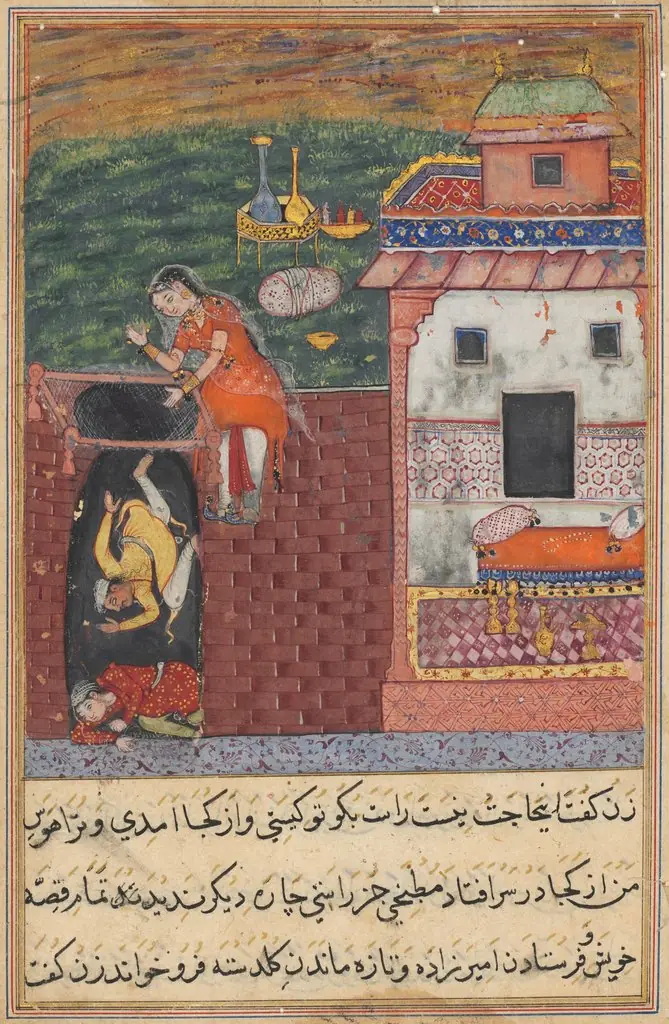 The two cooks, who attempt to seduce the warrior’s loyal wife, are trapped by her in a cellar, from a Tuti-nama (Tales of a Parrot): Fourth Night
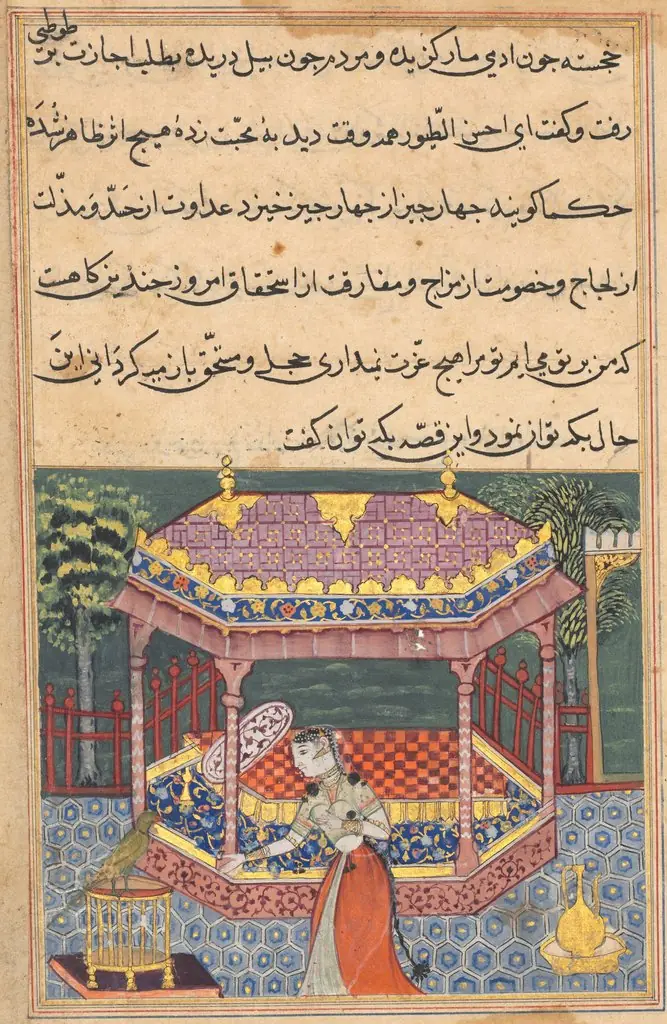 The parrot addresses Khujasta at the beginning of the thirty-seventh night, from a Tuti-nama (Tales of a Parrot)
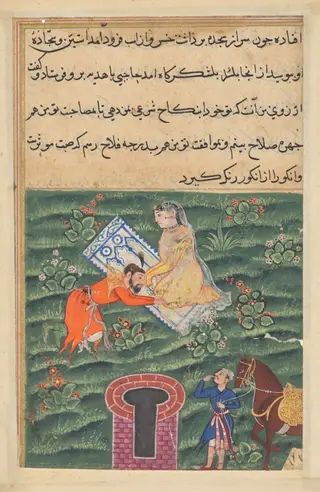 Khusrau, the King of Kings, pays homage to the pious daughter of Khassa, from a Tuti-nama (Tales of a Parrot): Fifty-first Night
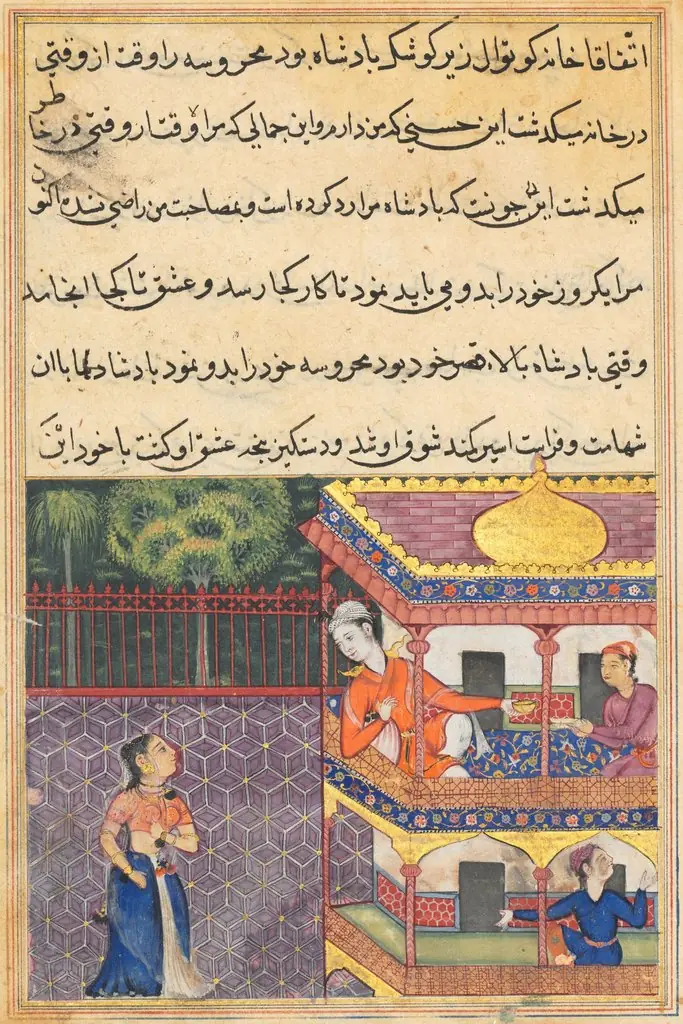 The king of Zabul sees Mahrusa from his palace balcony, from a Tuti-nama (Tales of a Parrot): Thirty-sixth Night
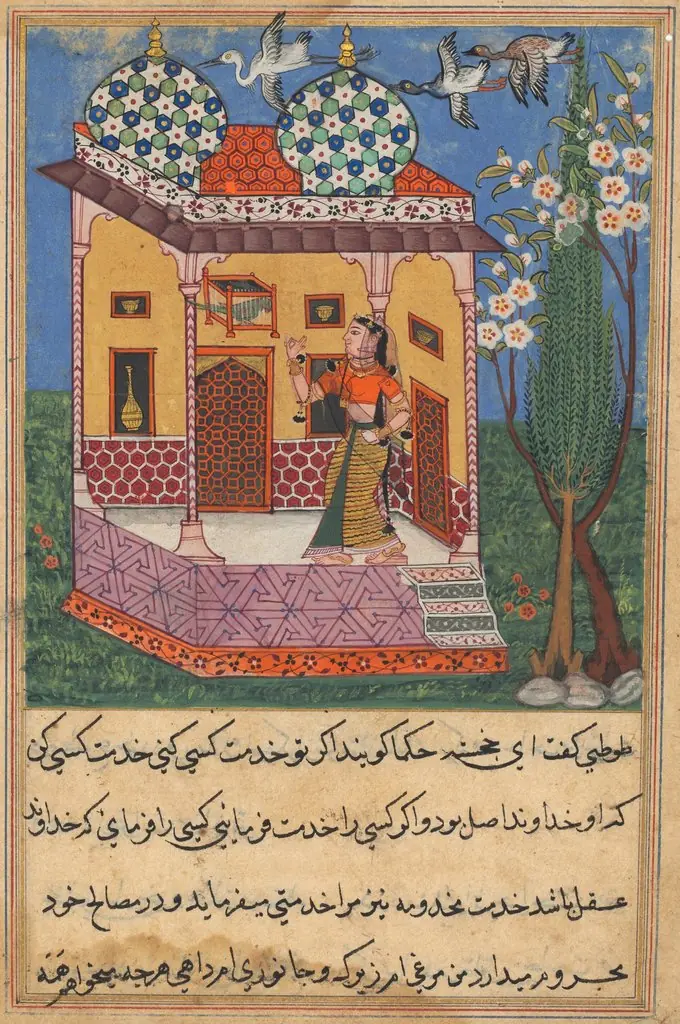 The Parrot Addresses Khujasta at the Beginning of the Twenty-sixth Night, from a Tuti-nama (Tales of a Parrot)
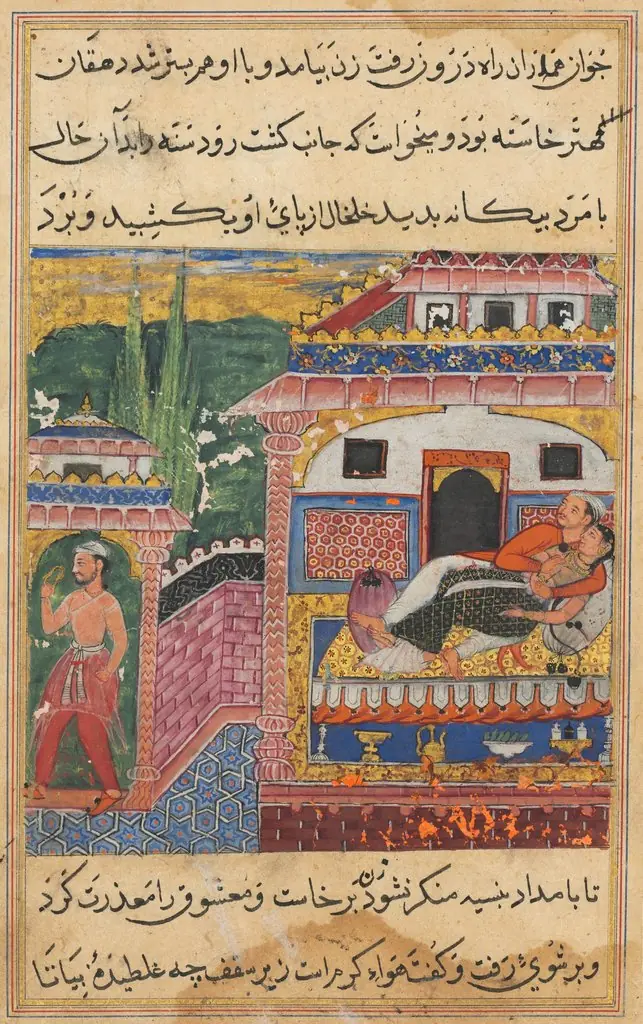 The farmer, father of the son with the deceitful wife, steals away with her anklet while she is in bed with her lover, from a Tuti-nama (Tales of a Parrot): Eighth Night
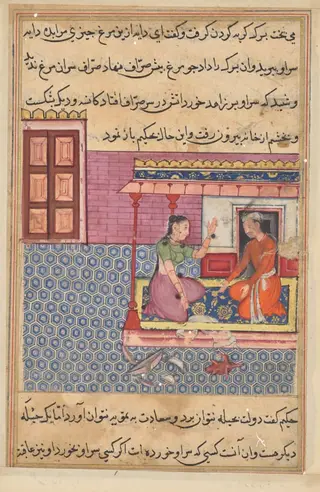 The pious man’s wife offers the seven-colored bird as food to her lover, but not finding its head, he breaks the pot and bowl in anger, from a Tuti-nama (Tales of a Parrot): Fifty-second Night
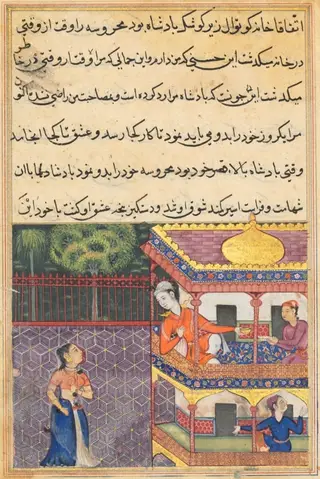 The king of Zabul sees Mahrusa from his palace balcony, from a Tuti-nama (Tales of a Parrot): Thirty-sixth Night
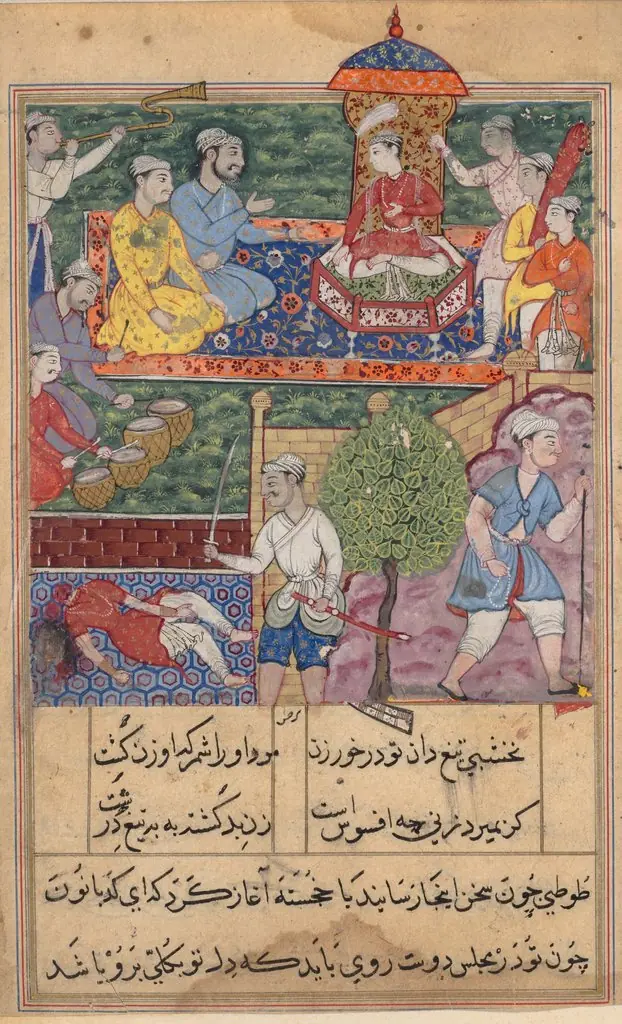 Page from Tales of a Parrot (Tuti-nama): text page
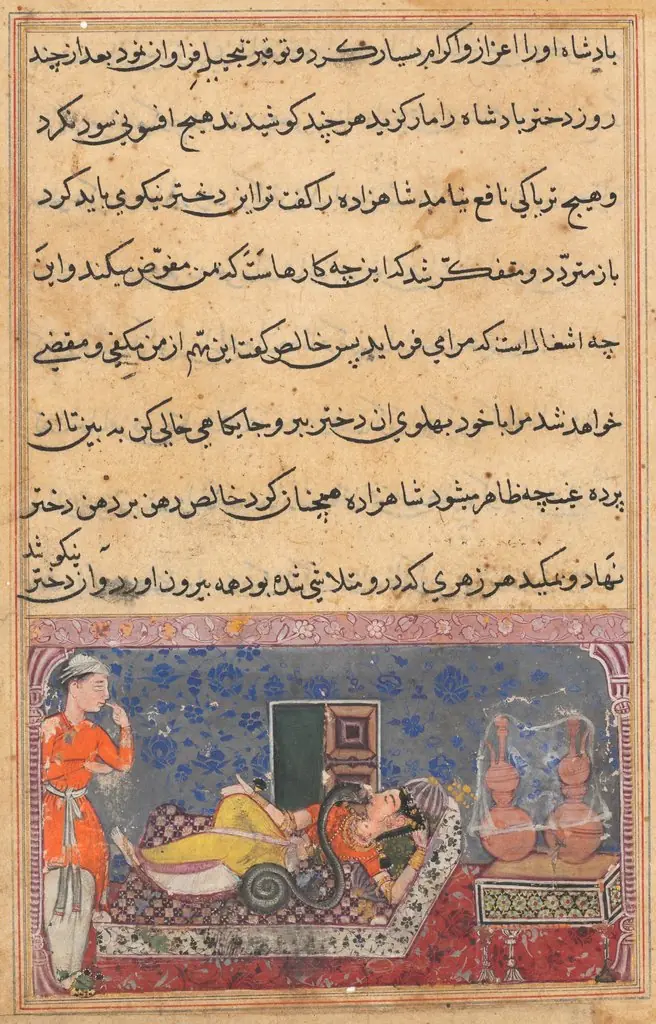 Khalis repays the prince for his kindness by changing into a snake and sucking the poison from the king’s daughter, from a Tuti-nama (Tales of a Parrot): Eighteenth Night