Artwork
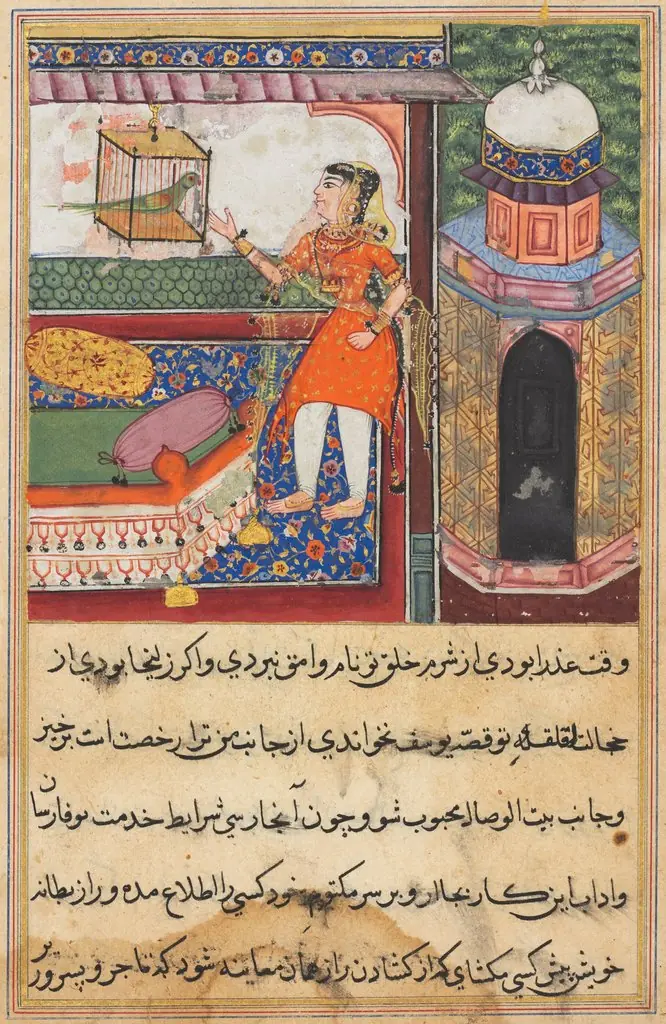
The Parrot Addresses Khujasta at the Beginning of the Twenty-sixth Night, from a Tuti-nama (Tales of a Parrot)
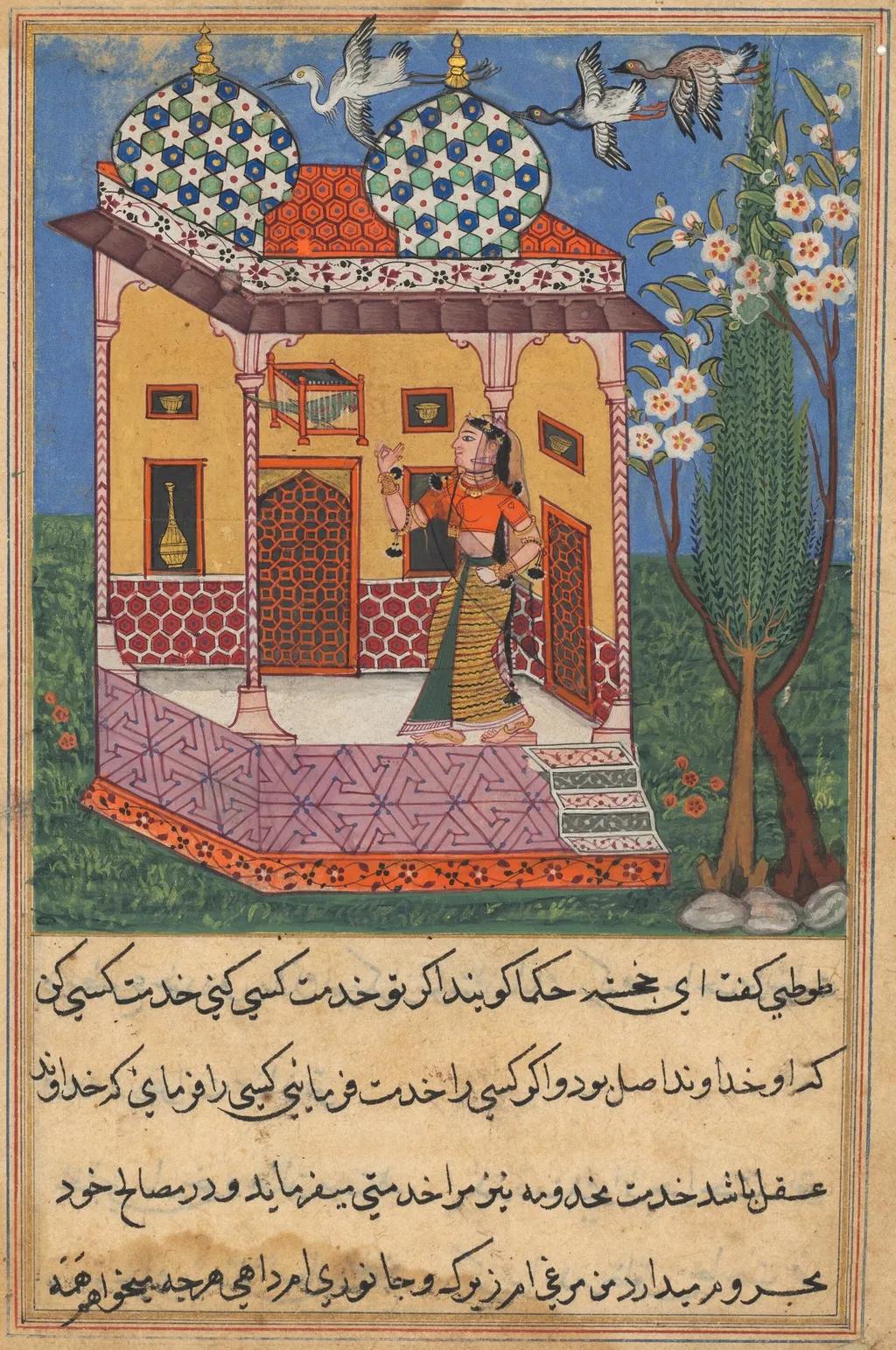
The Parrot Addresses Khujasta at the Beginning of the Twenty-sixth Night, from a Tuti-nama (Tales of a Parrot) is an unspecified painting. It dates from 1560 and is held in the collection of the Cleveland Museum of Art. The work illustrates a female figure positioned before a domed structure, her orange garment contrasting with a long skirt.
About this work
Technique & Style
The work is a manuscript illustration created on paper using opaque watercolor, ink, and gold, applied with the fine brushwork characteristic of early Mughal painting. It is executed on a rectangular paper support typical of Persianate manuscript production, with gold accents and a garden-like setting suggested through delicate detail. The composition frames the parrot addressing Khujasta in a shallow pictorial space, employing a stylized naturalism in the bird's plumage and the figure's flowing robes, while the narrative moment is conveyed through gesture and symbolic floral motifs.
The handling of line and color reflects the synthesis of Persian and indigenous Indian idioms that characterizes the Tuti-nama produced under early Mughal patronage.
History & Provenance
The painting comes from a dispersed copy of the Tuti-nama (Tales of a Parrot) and is held in the collection of the Cleveland Museum of Art, catalogued under accession number 1962.279.179.b. The available sources do not document a specific exhibition history for the folio beyond its place within the museum's holdings of Indian manuscript painting.
Overview
The work illustrates a female figure positioned before a domed structure, her orange garment contrasting with a long skirt. She raises her right hand while clutching a dark object in her left. Above, a blue sky is traversed by birds, and the building’s balcony is defined by a railing, establishing a layered spatial composition.
Subject & Meaning
The scene likely derives from a narrative episode in a Tuti‑nama, a collection of parrot tales, wherein the parrot addresses a character named Khujasta during the twenty‑sixth night. The woman’s gesture and the held object suggest an interaction central to the story’s dialogue.
Context
Tuti‑nama illustrations traditionally blend Persian literary themes with regional visual motifs. The architectural elements, domed roof and balcony, reflect a cultural setting associated with the tale’s origin, situating the narrative within a recognizable domestic or ceremonial space.
Legacy
As an example of narrative painting linked to literary manuscripts, the piece demonstrates how visual art was used to complement and interpret storytelling traditions, informing contemporary understandings of cross‑media expression in the region’s artistic heritage.
Artist & collection

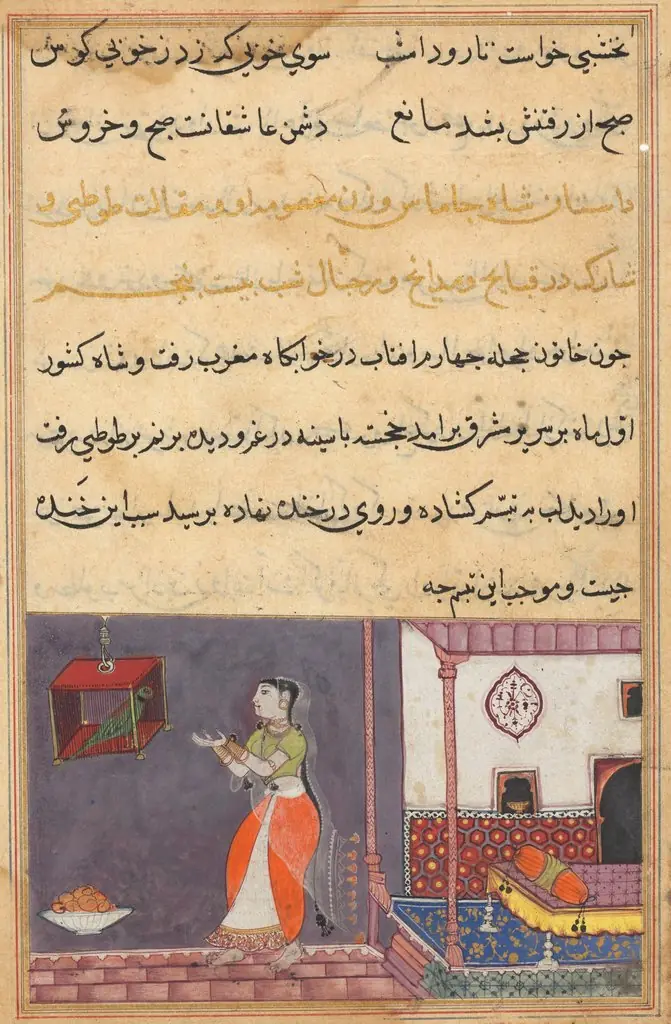
- The Parrot Addresses Khujasta at the Beginning of the Twenty-fifth Night, from a Tuti-nama (Tales of a Parrot)
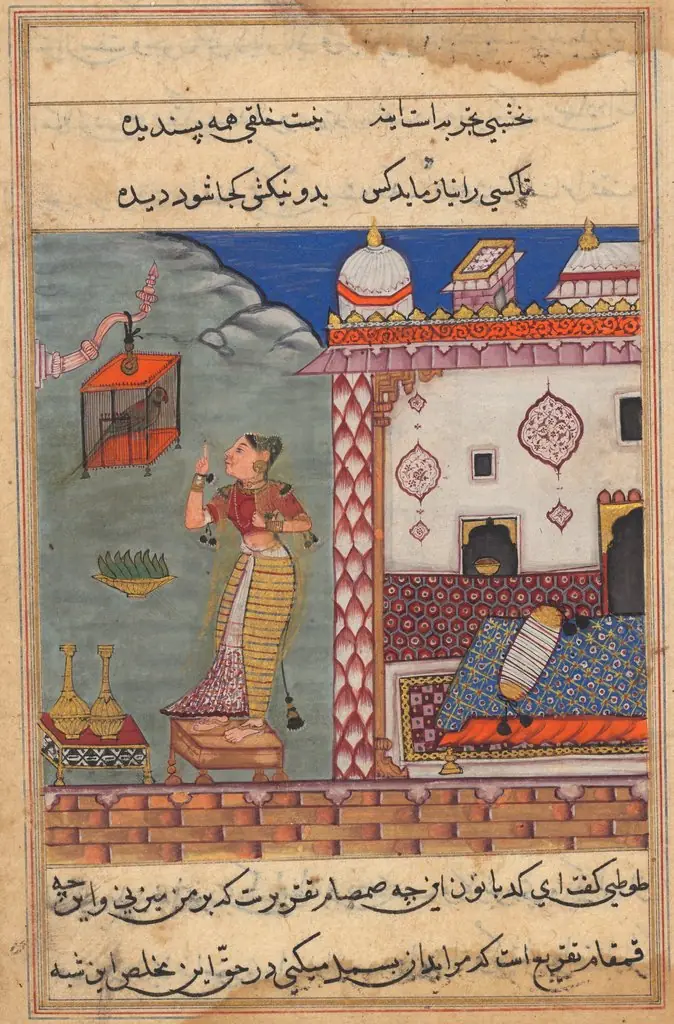 The Parrot Addresses Khujasta at the Beginning of the Twenty-seventh Night, form a Tuti-nama (Tales of a Parrot)
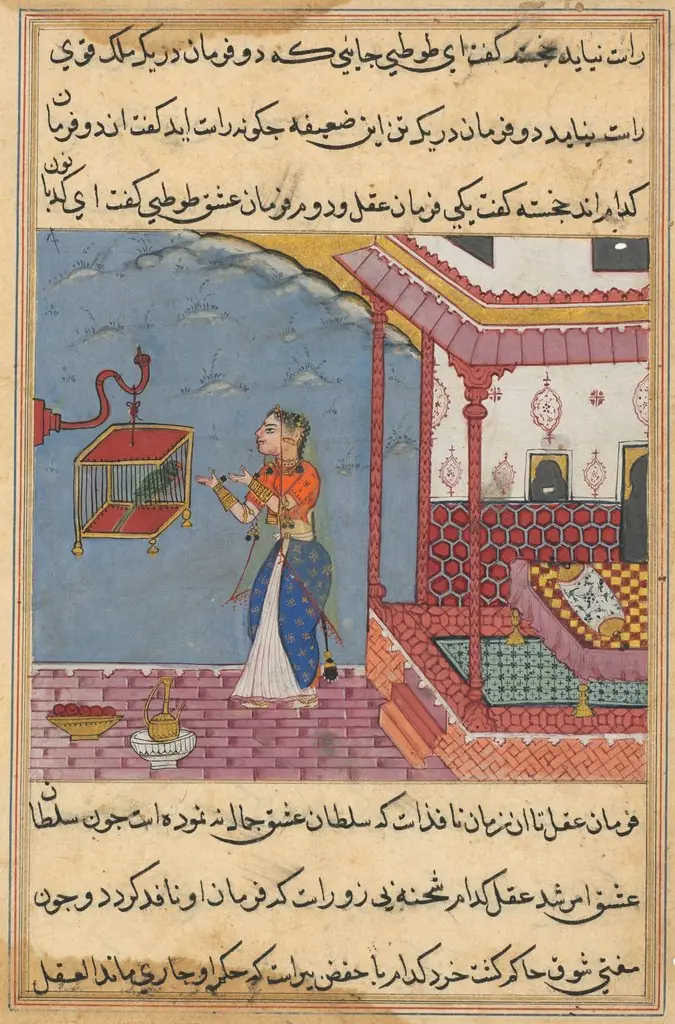 The Parrot Addresses Khujasta at the Beginning of the Twenty-Fourth Night, from a Tuti-nama (Tales of a Parrot)
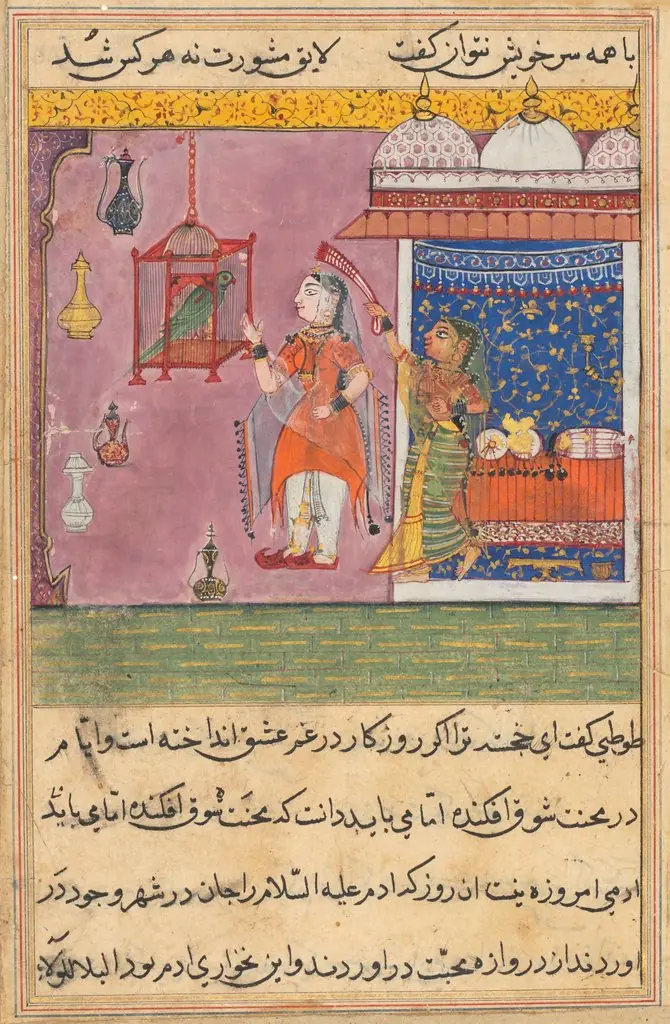 The Parrot Addresses Khujasta at the Beginning of the Nineteenth Night, from a Tuti-nama (Tales of a Parrot)
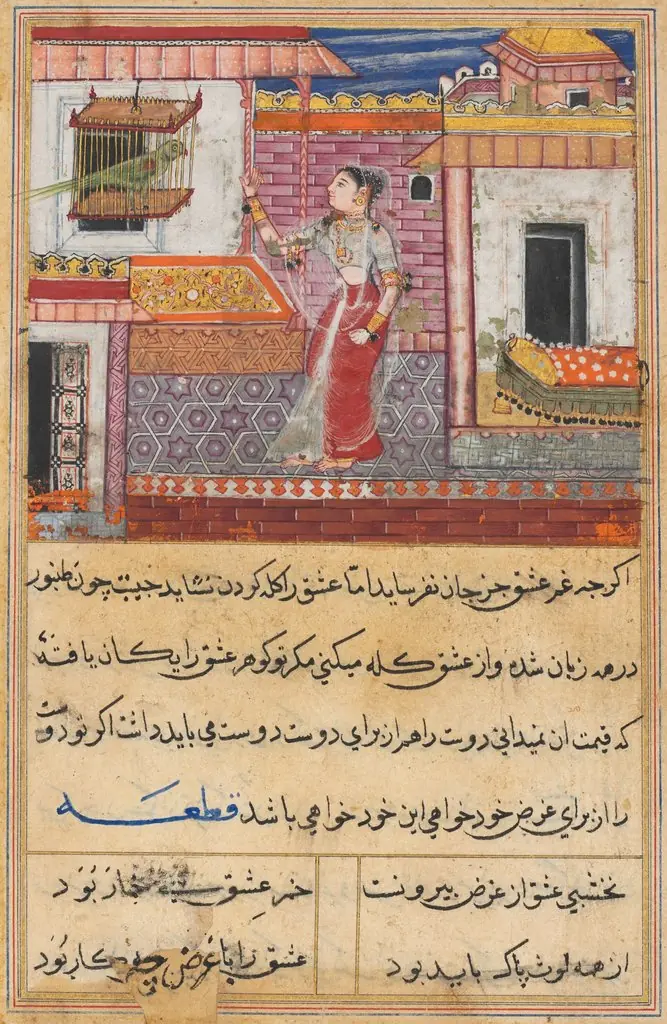 The Parrot Addresses Khujasta at the Beginning of the Thirteenth Night, from a Tuti-nama (Tales of a Parrot)
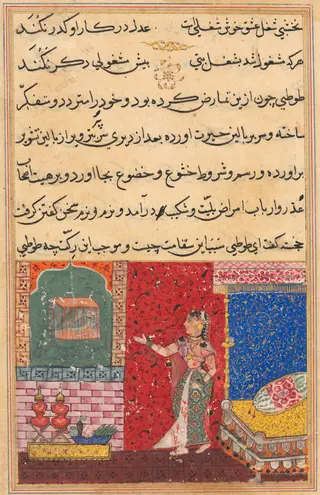 The Parrot Addresses Khujasta at the Beginning of the Fifteenth Night, from a Tuti-nama (Tales of a Parrot)
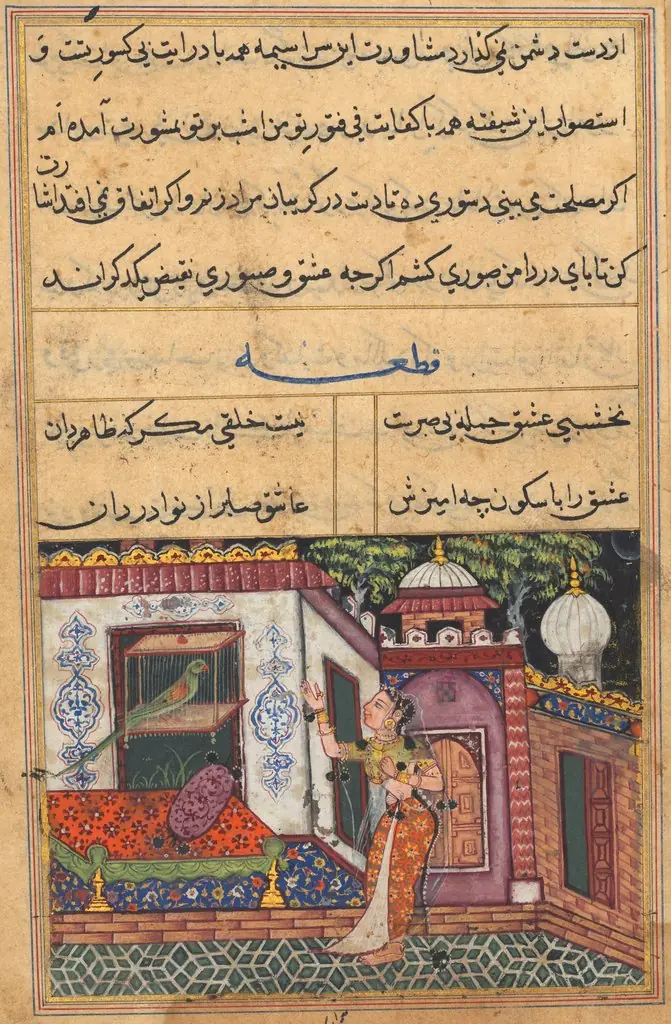 The Parrot Addresses Khujasta at the Beginning of the Eleventh Night, from a Tuti-nama (Tales of a Parrot)
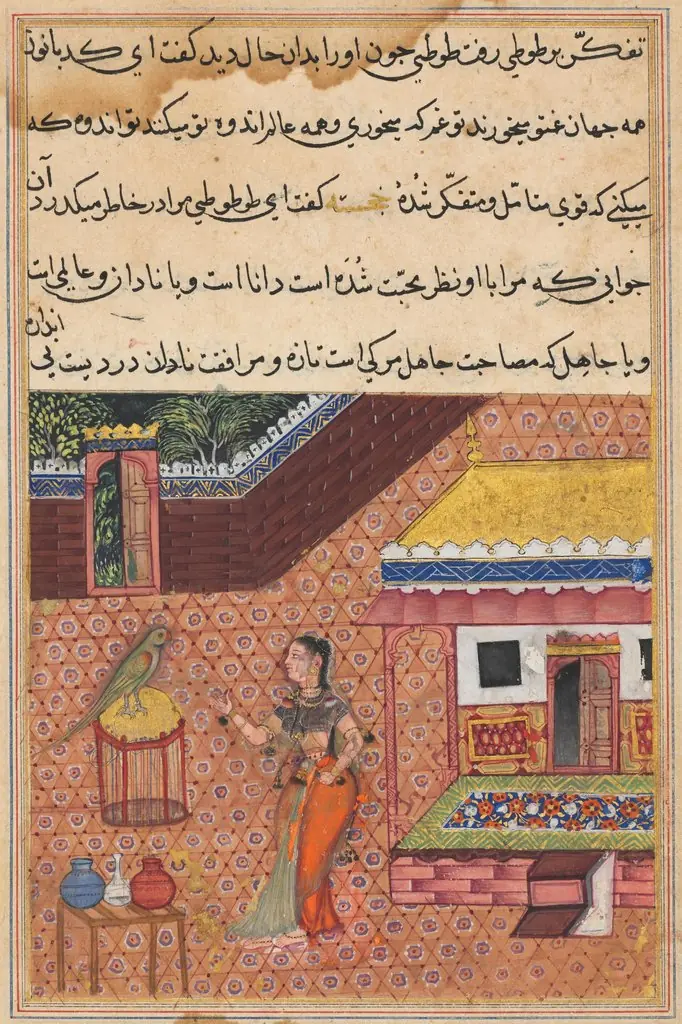 The parrot addresses Khujasta at the beginning of the thirty-fourth night, from a Tuti-nama (Tales of a Parrot)
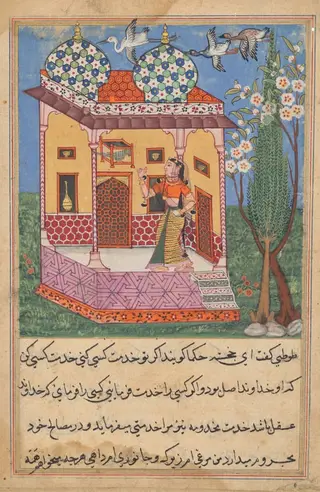 The Parrot Addresses Khujasta at the Beginning of the Twenty-sixth Night, from a Tuti-nama (Tales of a Parrot)
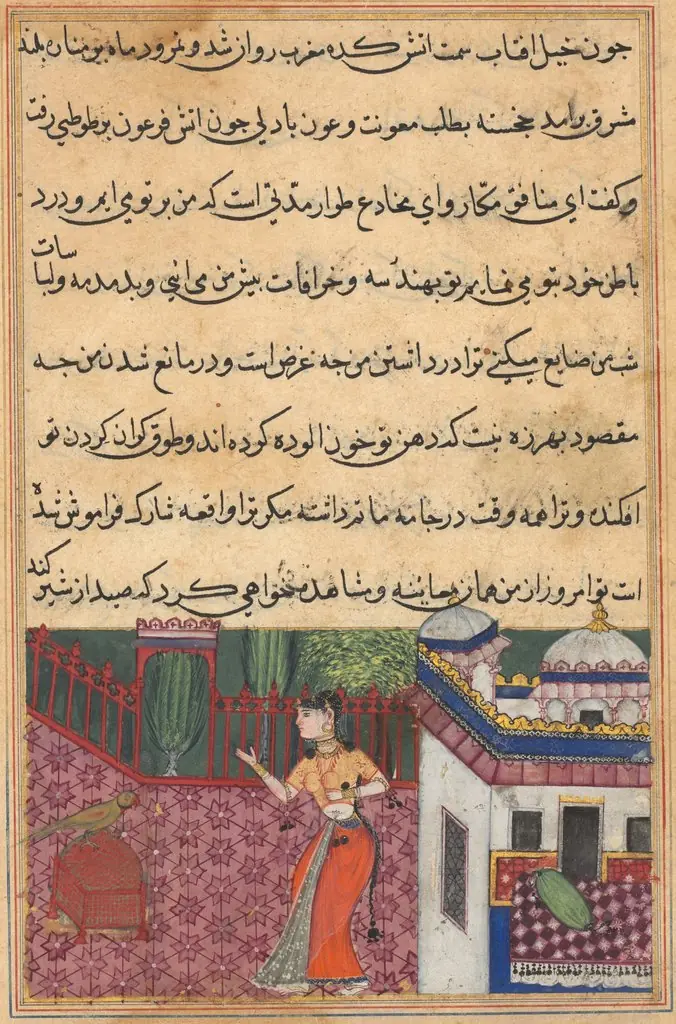 The parrot addresses Khujasta at the beginning of the thirty-third night, from a Tuti-nama (Tales of a Parrot)
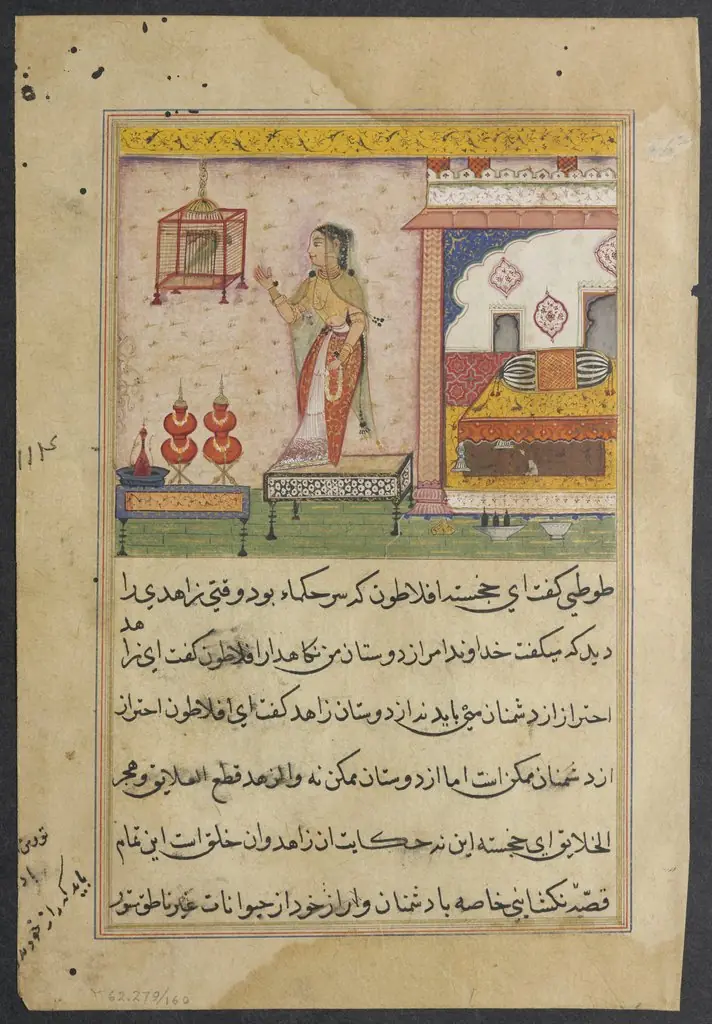 The Parrot Addresses Khujasta at the Beginning of the Twenty-third Night, from a Tuti-nama (Tales of a Parrot)
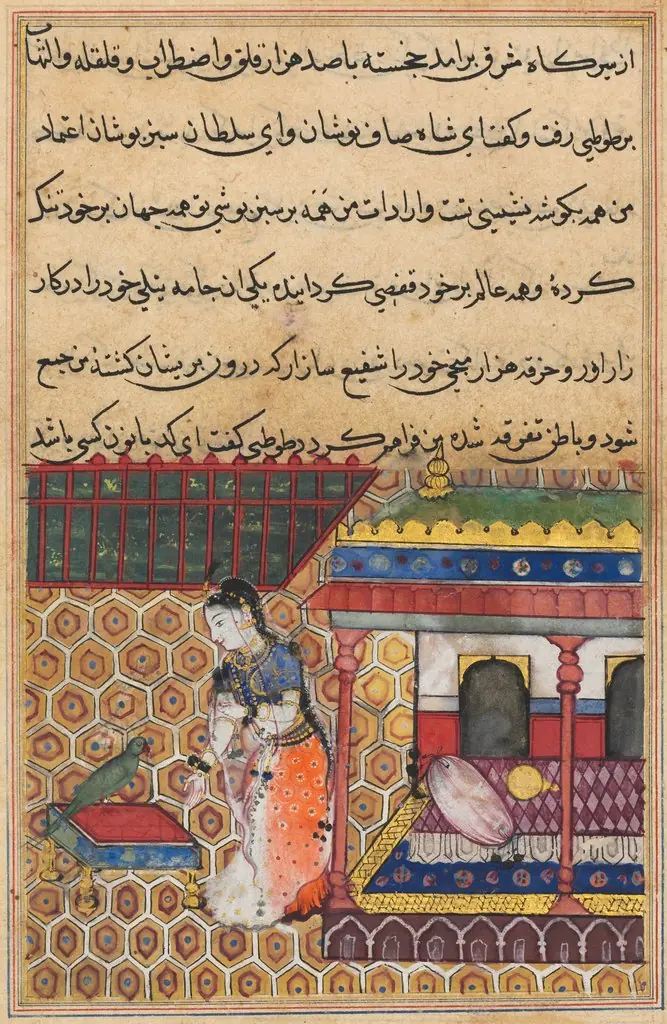 The parrot addresses Khujasta at the beginning of the thirty-eighth night, from a Tuti-nama (Tales of a Parrot)
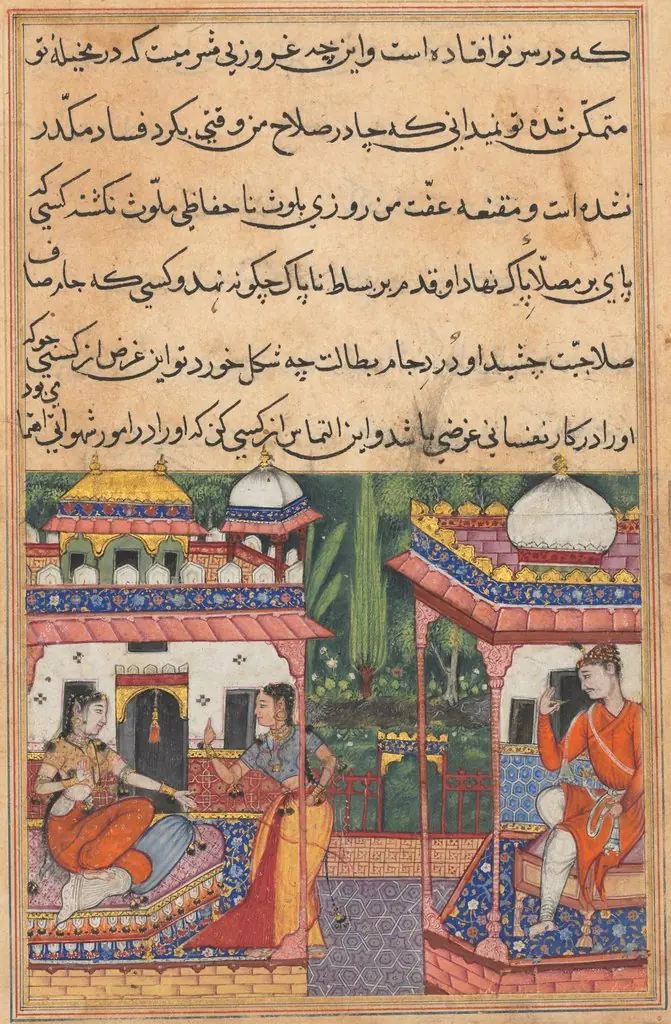 Kaiwan sends a message of love to Khurshid, wife of his brother Utarid who is away on a journey, from a Tuti-nama (Tales of a Parrot): Thirty-second Night
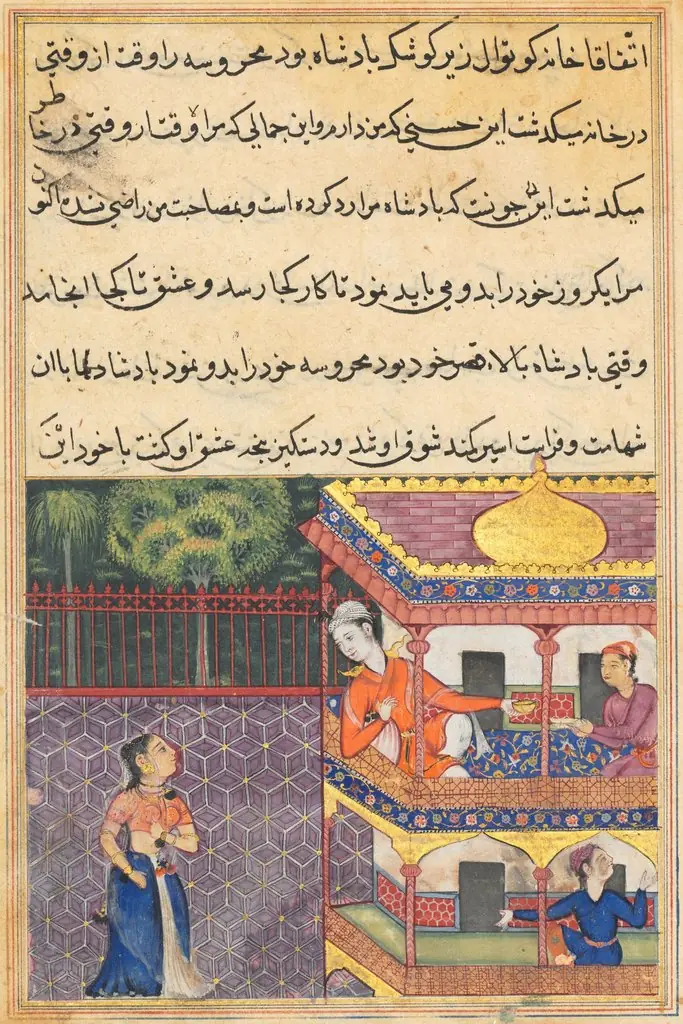 The king of Zabul sees Mahrusa from his palace balcony, from a Tuti-nama (Tales of a Parrot): Thirty-sixth Night
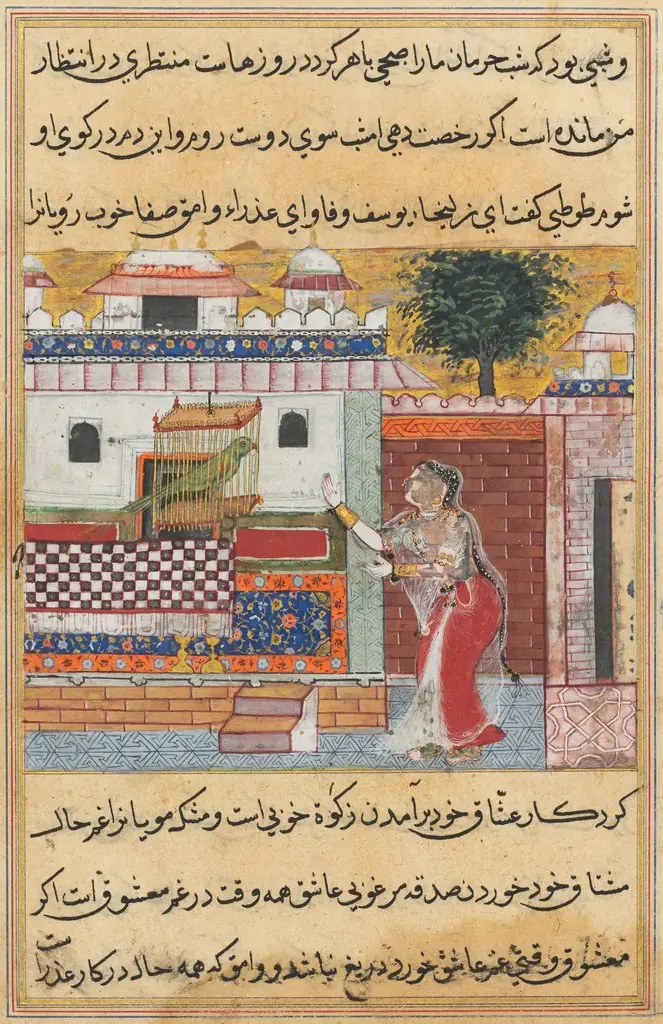 The Parrot Addresses Khujasta at the Beginning of the Twelfth Night, from a Tuti-nama (Tales of a Parrot)
 The Parrot Addresses Khujasta at the Beginning of the Tenth Night, from a Tuti-nama (Tales of a Parrot)