Artwork
The two cooks, who attempt to seduce the warrior’s loyal wife, are trapped by her in a cellar, from a Tuti-nama (Tales of a Parrot): Fourth Night
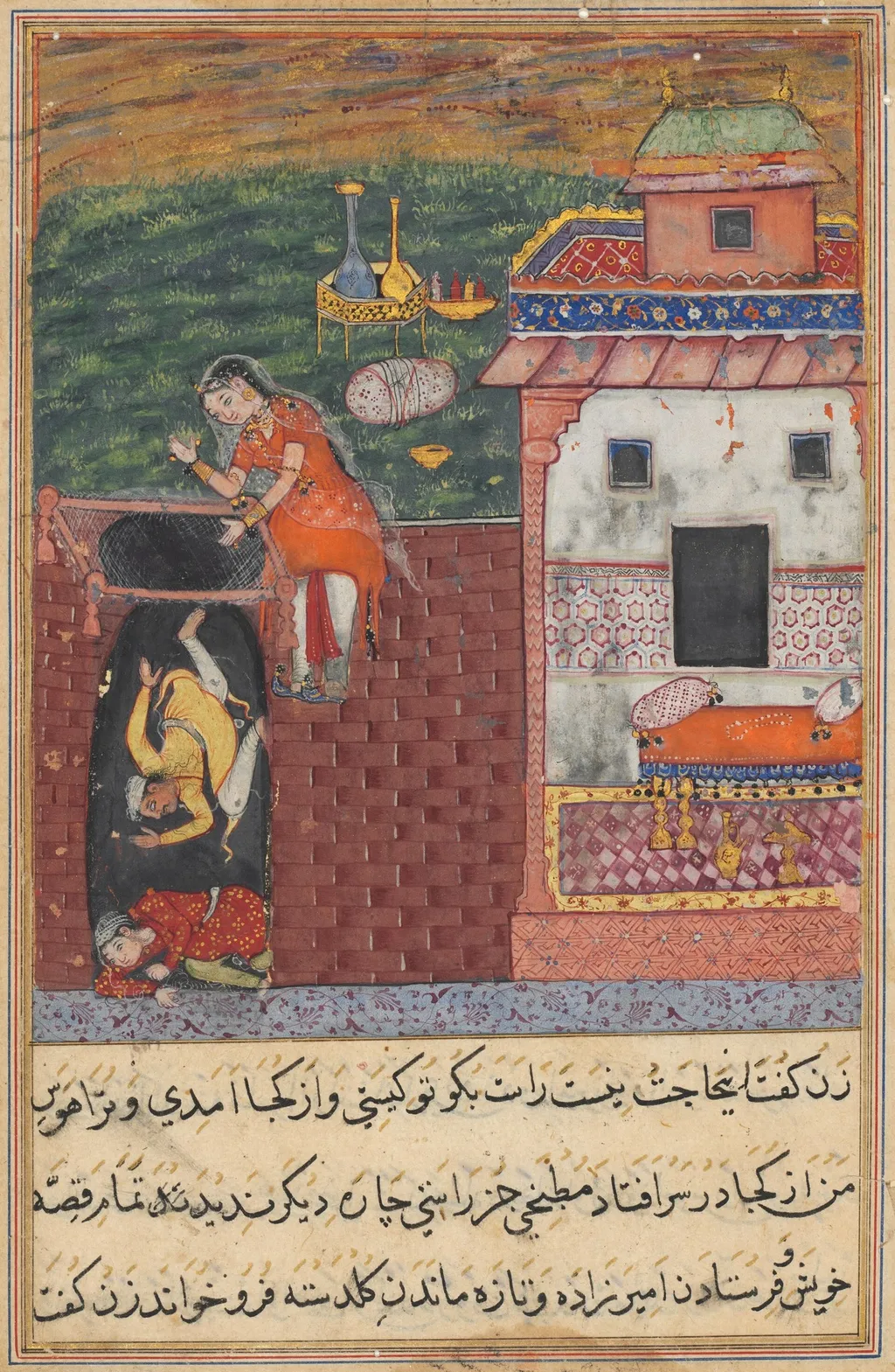
The two cooks, who attempt to seduce the warrior’s loyal wife, are trapped by her in a cellar, from a Tuti-nama (Tales of a Parrot): Fourth Night is an unspecified painting. It dates from 1560 and is held in the collection of the Cleveland Museum of Art.
About this work
Subject & Meaning
The scene functions as a narrative vignette from the fourth night of the Tuti-nama, emphasizing themes of virtue and cunning within a Mughal artistic context.
The miniature depicts two cooks attempting to seduce a warrior’s loyal wife, who subsequently traps them in a cellar, illustrating a moral lesson about fidelity and the consequences of deceit. The scene functions as a narrative vignette from the fourth night of the Tuti-nama, emphasizing themes of virtue and cunning within a Mughal artistic context.
Iconographically, the figures are rendered in traditional Persian miniature style, with the cellar setting underscoring confinement and the triumph of moral resolve. Symbolically, the cooks represent temptation while the wife’s decisive action embodies protective loyalty, together reinforcing didactic messages about marital fidelity.
The work’s meaning derives from its role in the broader Tuti-nama manuscript, where such episodes serve as cautionary tales, using visual storytelling to convey ethical teachings within the cultural milieu of 16th-century Mughal India.
History & Provenance
The painting was created in 1560 within the Mughal Empire, as part of the illustrated manuscript known as the Tuti-nama (Tales of a Parrot). It is classified as a painting and depicts a scene from the Fourth Night of that text, in which two cooks attempting to seduce a warrior's loyal wife are trapped by her in a cellar.
The work is now held in the collection of the Cleveland Museum of Art, where it is catalogued under the accession number 1962.279.29.a. The artist who produced the folio is not identified in the available records.
The painting is held in the collection of the Cleveland Museum of Art. It is catalogued under the inventory number 1962.279.29.a, as indicated by its Wikidata identifier. The work was created in 1560 within the Mughal Empire and subsequently entered the Cleveland Museum of Art's holdings.
No exhibition history is documented in the available sources.
Context
The painting depicting the two cooks trapped by the warrior’s loyal wife is part of the Tuti-nama manuscript tradition, an illustrated Persian work produced during the Mughal period. Executed in 1560, it exemplifies the narrative miniatures that accompanied the Persian literary cycle, blending storytelling with courtly aesthetics. The work is housed in the Cleveland Museum of Art, which documents its provenance and collection status, underscoring its significance within the corpus of Indian subcontinent painting.
Scholarship on this folio emphasizes its role within the broader Tuti-nama cycle, highlighting how visual narrative in Mughal manuscripts reflects social dynamics and literary adaptation. The artist, attributed to an anonymous workshop, remains part of ongoing studies into anonymous Mughal painters whose contributions shaped regional artistic identity.
The piece is situated within the Cleveland Museum of Art’s collection, which contextualizes its display alongside other Persian miniature works, reinforcing its reception as both a literary illustration and a technical achievement in composition and color.
Overview
The work illustrates a moment from the fourth night of the Persian narrative collection Tuti‑nama, in which a faithful wife confronts two cooks who have tried to seduce her. She stands atop a brick ledge, looking down into a dim cellar where the cooks are caught, their bodies twisted in attempts to escape or surrender.
Technique & Style
The artist employs a strong chiaroscuro scheme, allowing the light from above to illuminate the wife's figure and the intricate patterns of her dress and jewelry, while the cellar recedes into deep shadow. Fine detailing in textiles and the brickwork demonstrates a meticulous approach to texture and surface.
Artist & collection

- The two cooks, who attempt to seduce the warrior’s loyal wife, are trapped by her in a cellar, from a Tuti-nama (Tales of a Parrot): Fourth Night
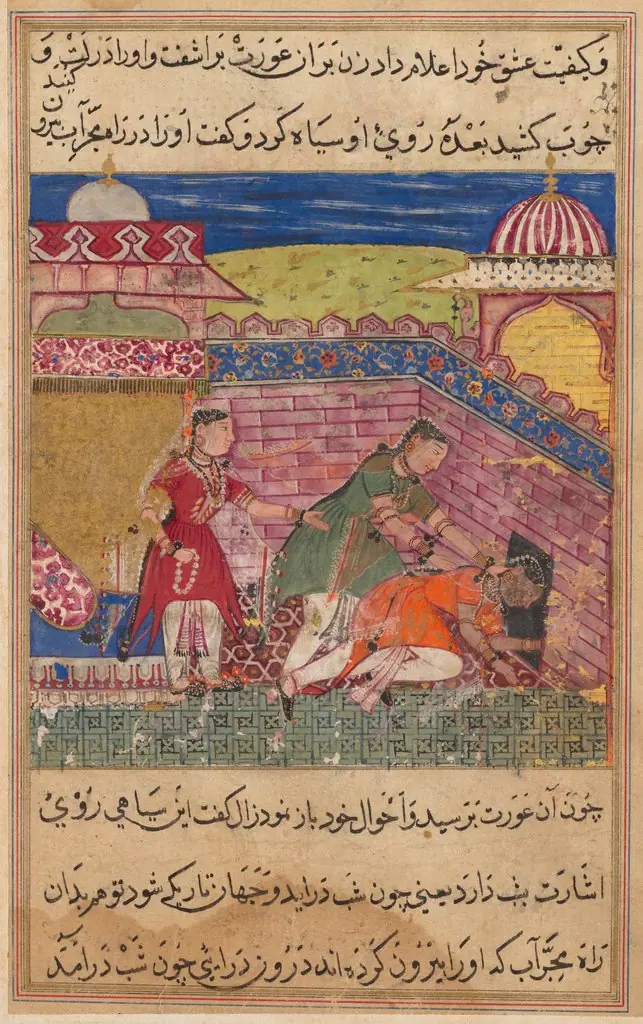 The deceitful wife ejects the procuress after blackening her face, from a Tuti-nama (Tales of a Parrot): Eighth Night
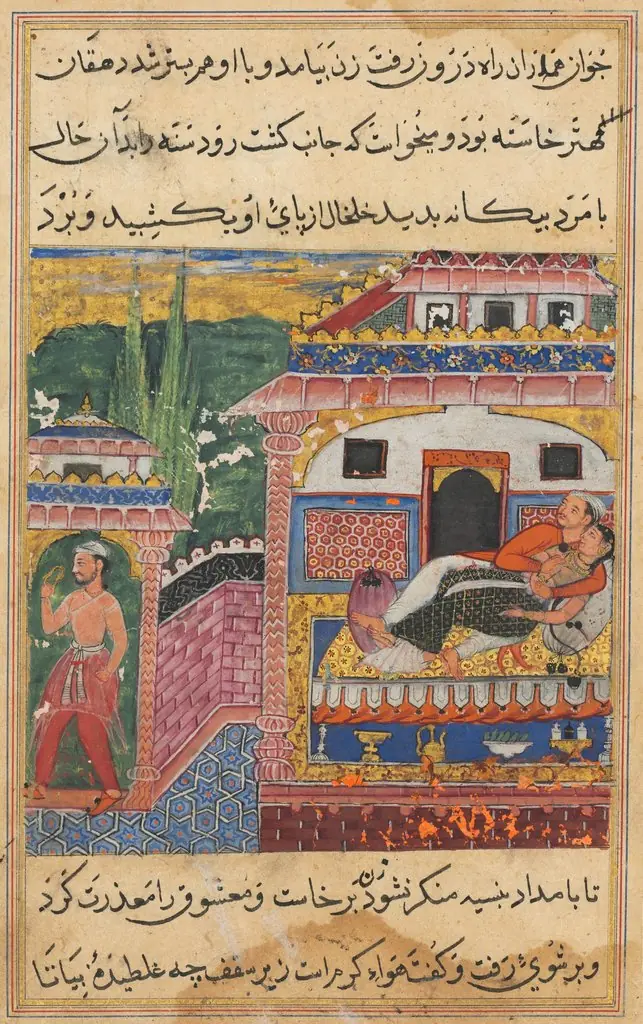 The farmer, father of the son with the deceitful wife, steals away with her anklet while she is in bed with her lover, from a Tuti-nama (Tales of a Parrot): Eighth Night
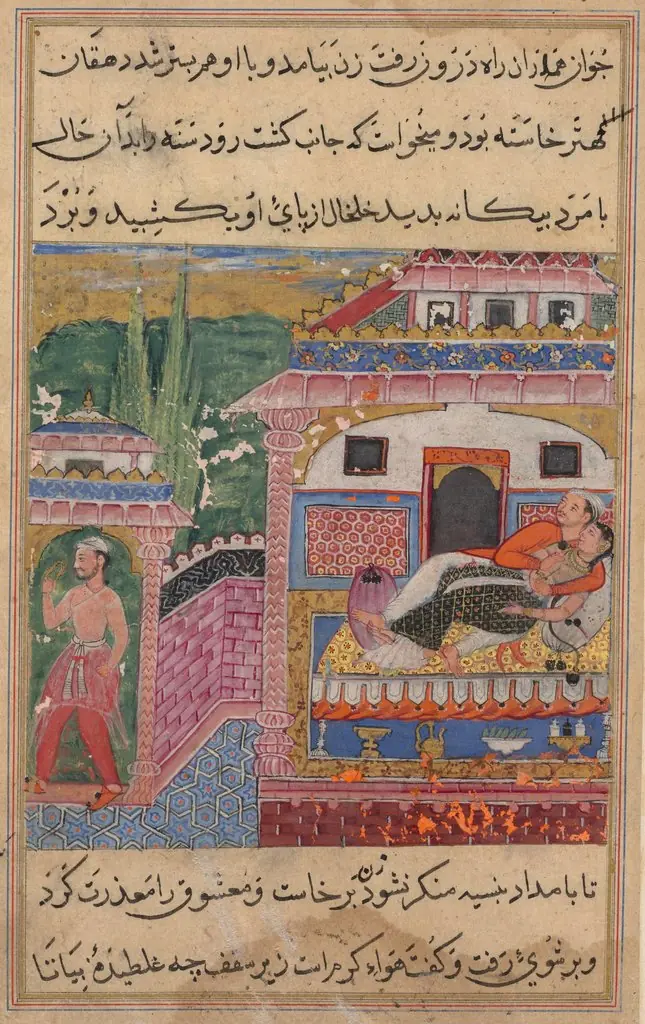 The deceitful wife persuades her husband to sleep in the same place where she had previously slept with her lover, from a Tuti-nama (Tales of a Parrot): Eighth Night
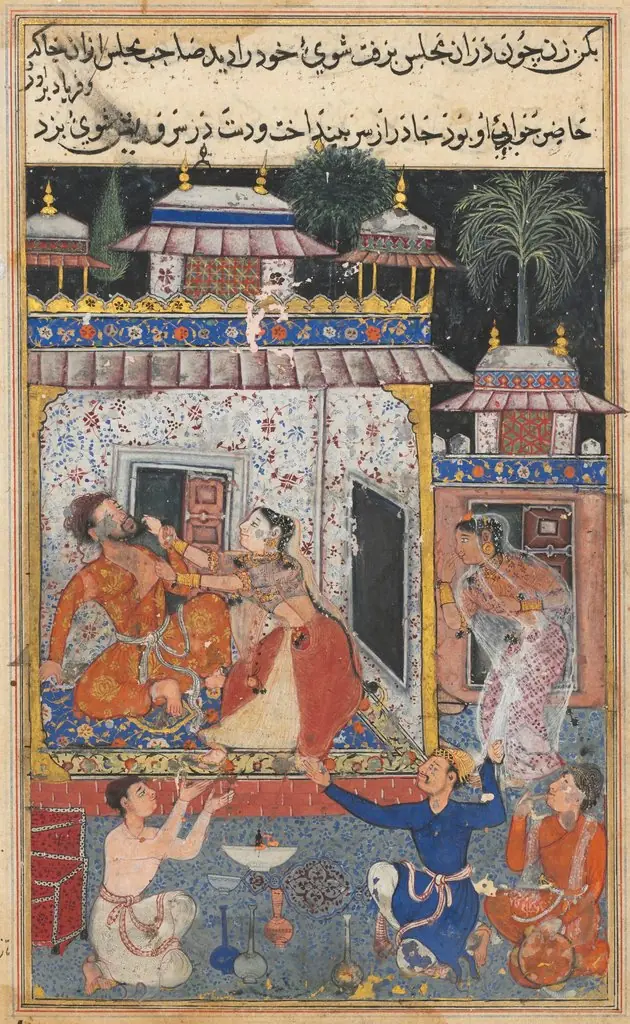 The deceitful wife assaults her erring husband, from a Tuti-nama (Tales of a Parrot): Eighth Night
 The pious man’s wife offers the seven-colored bird as food to her lover, but not finding its head, he breaks the pot and bowl in anger, from a Tuti-nama (Tales of a Parrot): Fifty-second Night
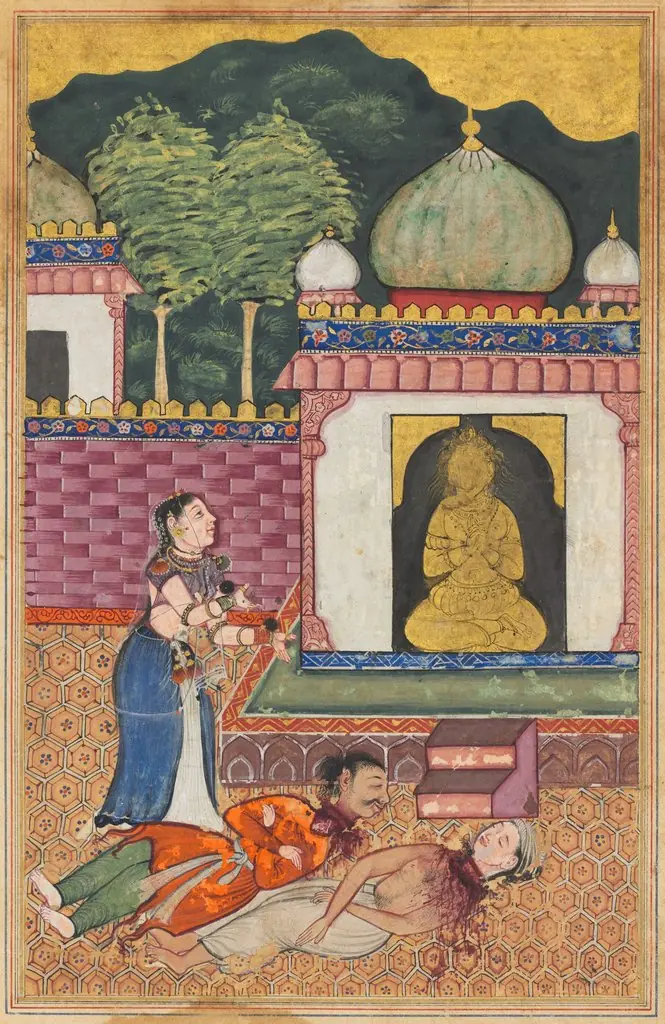 The princess discovers the dead bodies, with heads severed, of her husband and his Brahman friend, from a Tuti-nama (Tales of a Parrot): Thirty-fourth Night
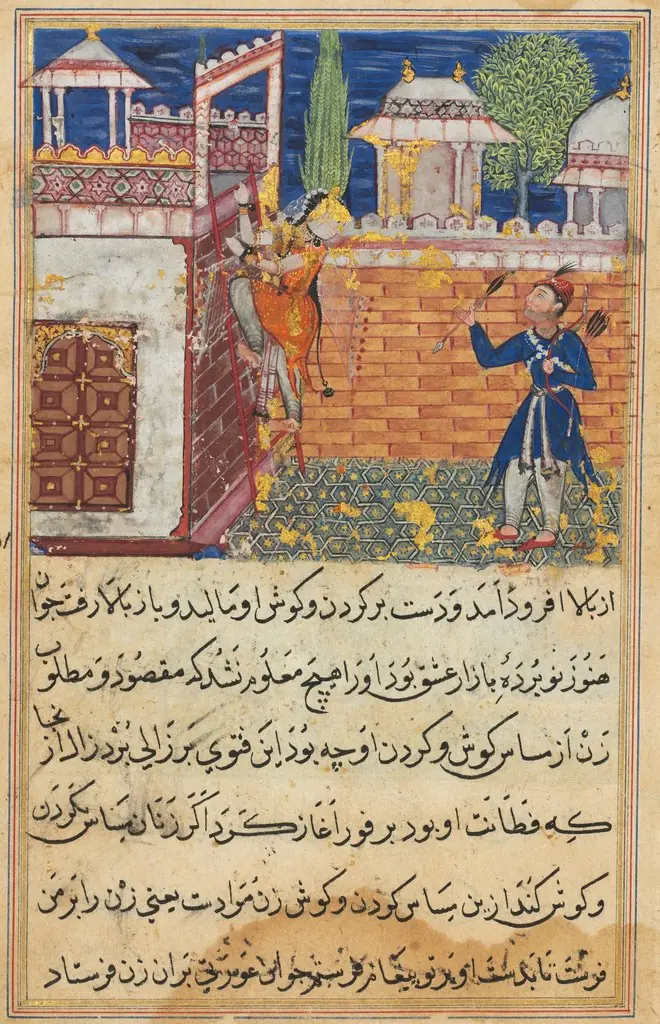 The deceitful wife returns to her terrace after caressing her lover, from a Tuti-nama (Tales of a Parrot): Eighth Night
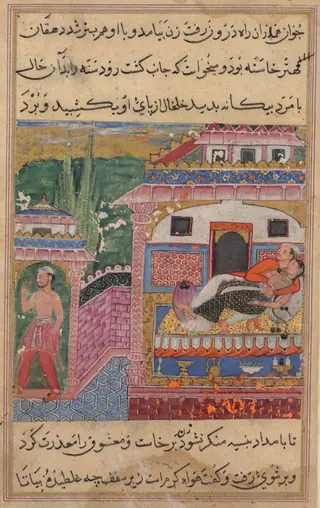 The farmer, father of the son with the deceitful wife, steals away with her anklet while she is in bed with her lover, from a Tuti-nama (Tales of a Parrot): Eighth Night
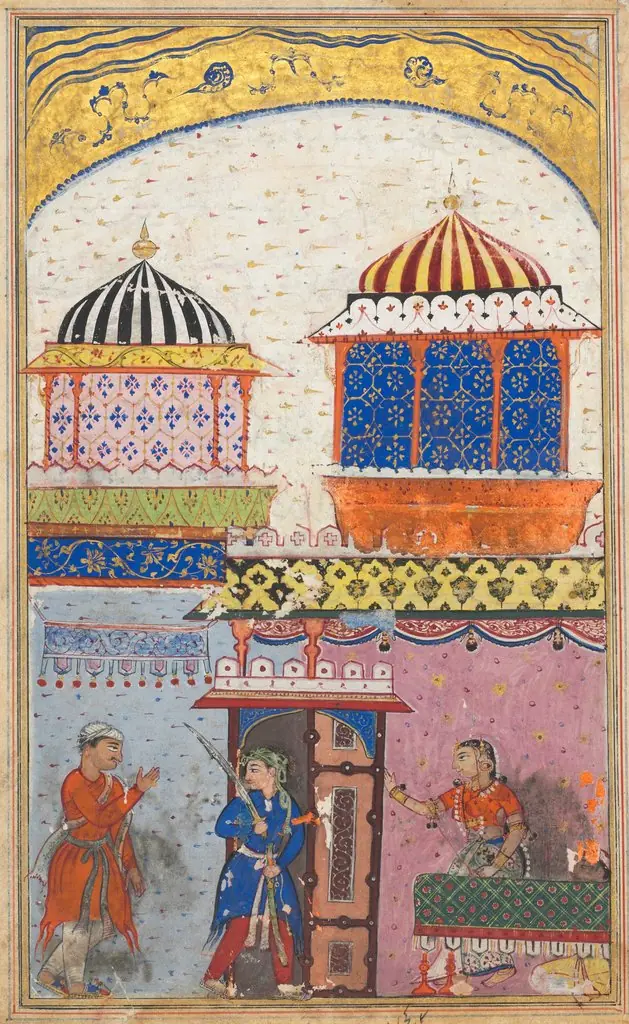 A woman asks her lover to leave her house, brandishing his sword and feigning rage in order to deceive her husband who has just arrived, from a Tuti-nama (Tales of a Parrot): Eighth Night
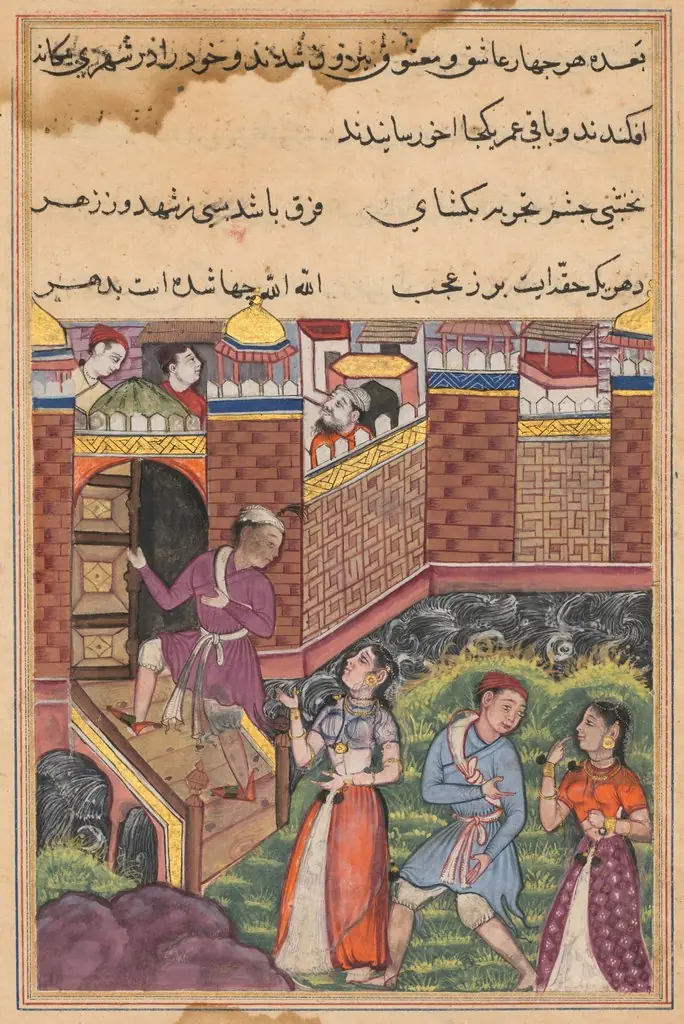 The two couples reach a foreign city where they make their home, from a Tuti-nama (Tales of a Parrot): Thirty-third Night
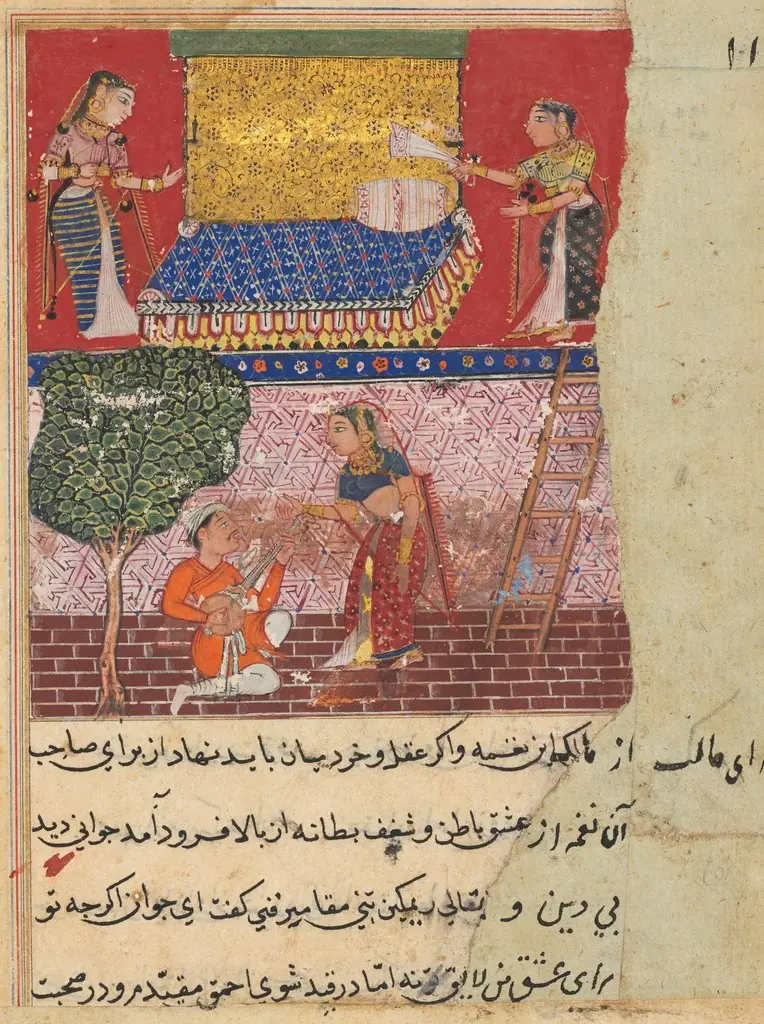 The daughter-in-law of the king of Banaras, charmed by the music of a vagabond, comes down to meet him, from a Tuti-nama (Tales of a Parrot): Sixteenth Night
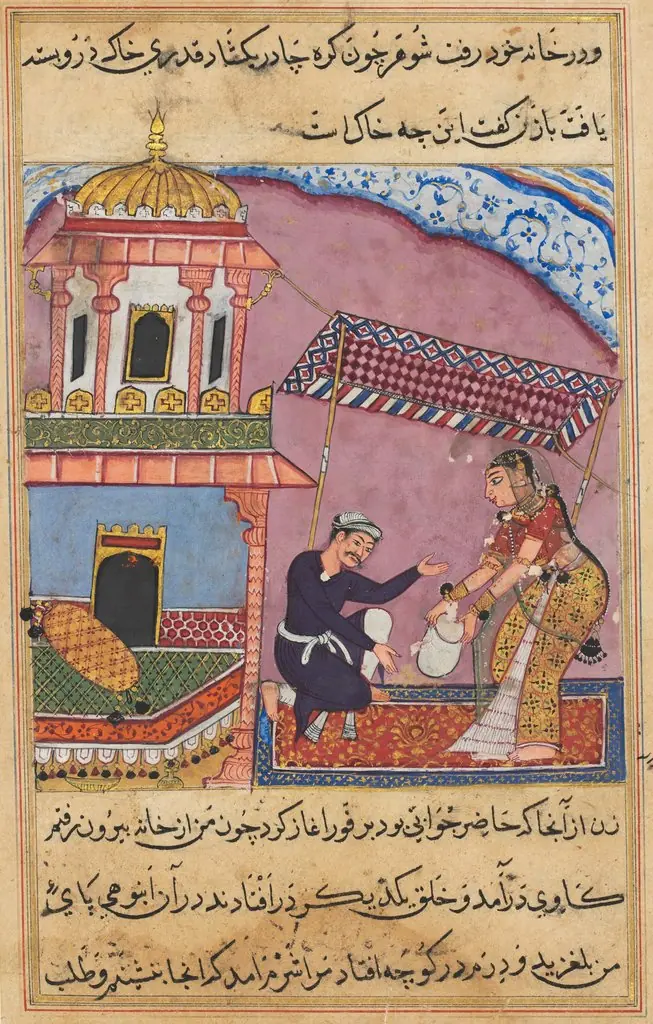 The husband berates his wife for purchasing gravel instead of sugar, from a Tuti-nama (Tales of a Parrot): Eighth Night
 The Parrot Addresses Khujasta at the Beginning of the Twenty-seventh Night, form a Tuti-nama (Tales of a Parrot)
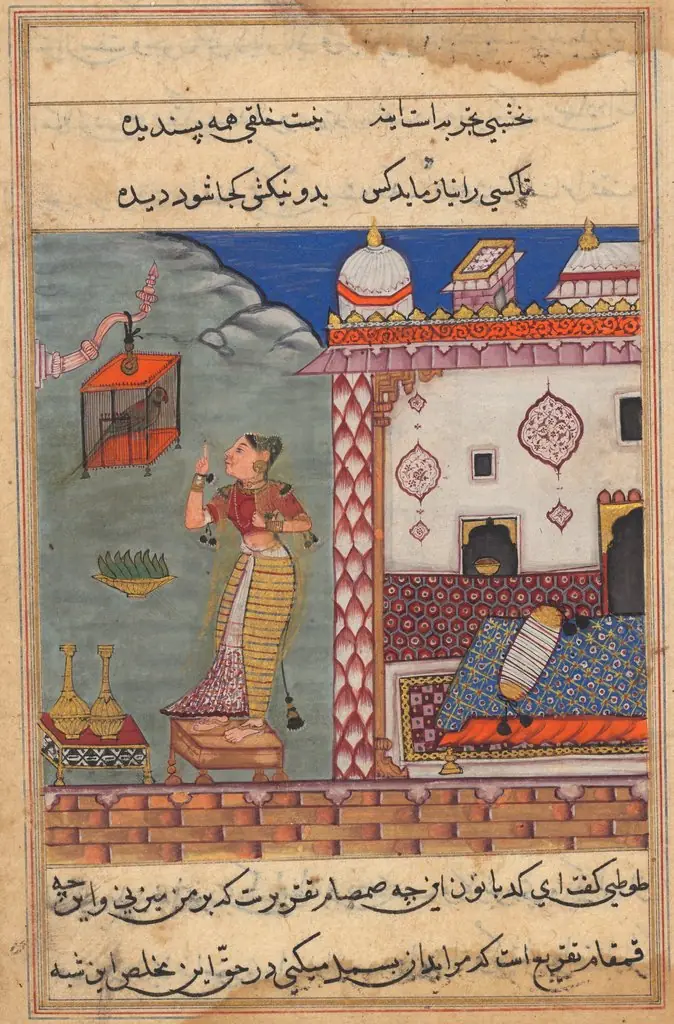 The Parrot Addresses Khujasta at the Beginning of the Twenty-seventh Night, form a Tuti-nama (Tales of a Parrot)
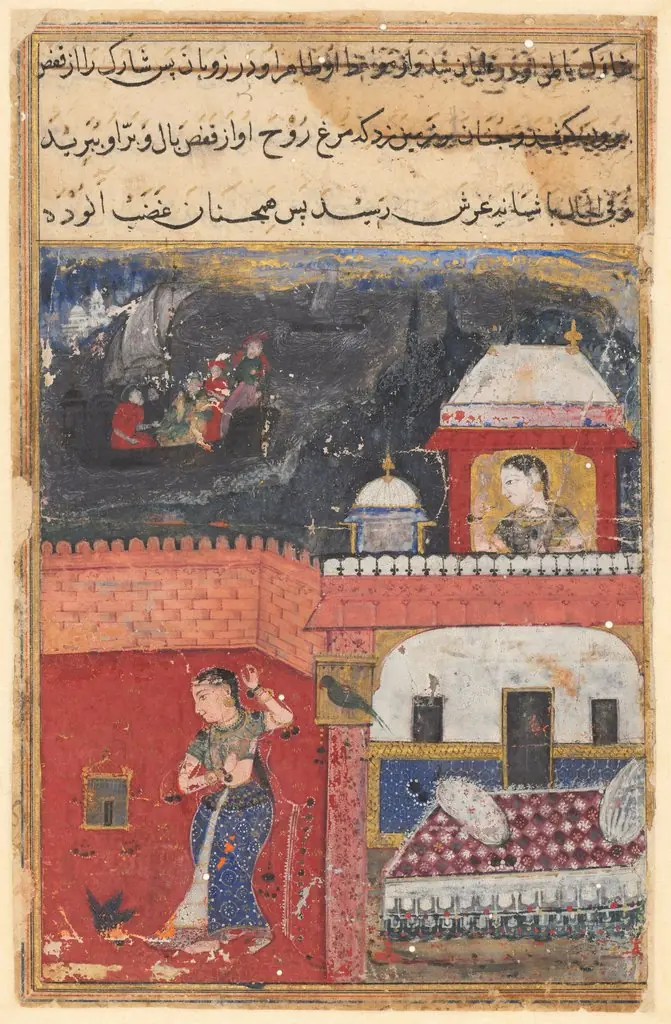 Khujasta kills the pet mynah who advises her not to be unfaithful to Maymun, her husband, from a Tuti-nama (Tales of the Parrot): First Night
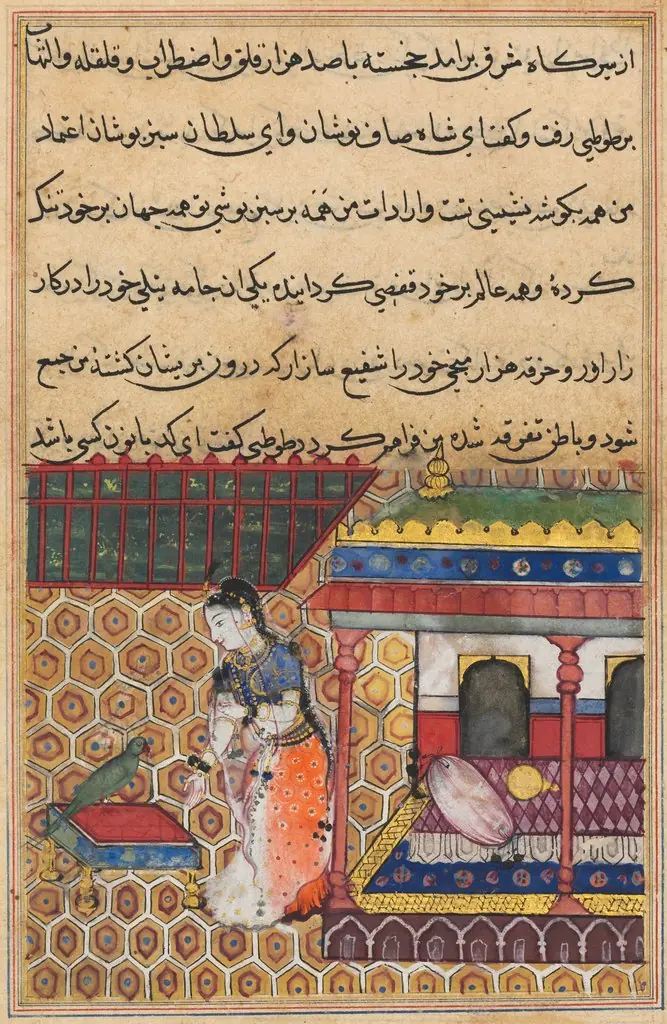 The parrot addresses Khujasta at the beginning of the thirty-eighth night, from a Tuti-nama (Tales of a Parrot)
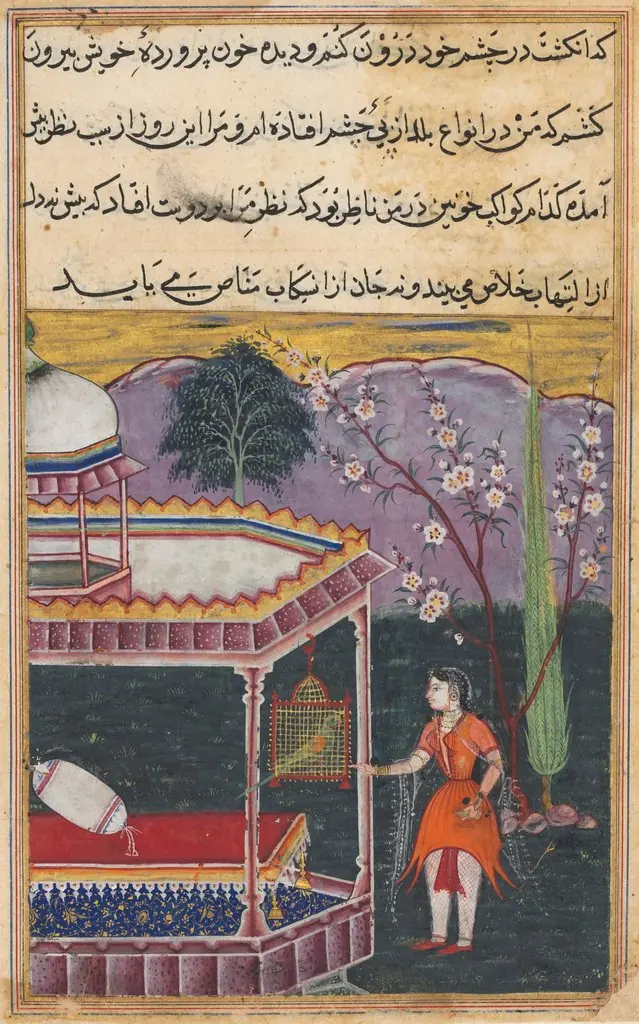 The Parrot Addresses Khujasta at the Beginning of the Eighth Night, from a Tuti-nama (Tales of a Parrot)