Artwork
Thirty-Six Poetic Immortals of the Buddhist Clergy
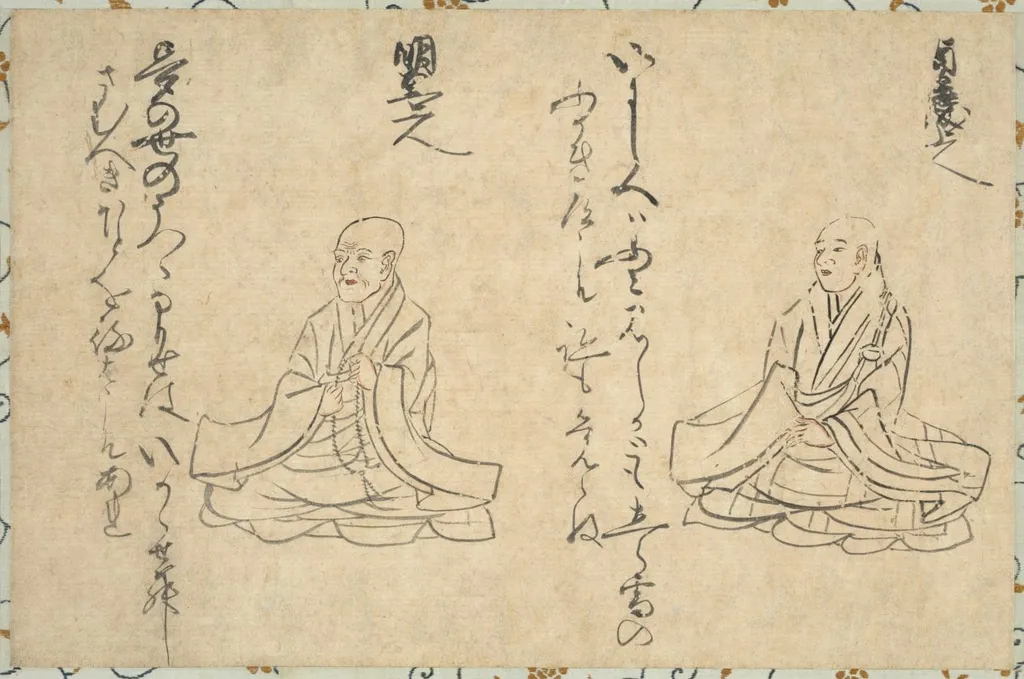
Thirty-Six Poetic Immortals of the Buddhist Clergy is an unspecified painting by the Joseon dynasty painting artist Unknown. It dates from 1446 and is held in the collection of the Cleveland Museum of Art.
- Accession no.
- 1985.88
- Credit line
- Mr. and Mrs. William H. Marlatt Fund
About this work
You see two monks in black robes sitting on the floor, brushes in hand, with tiny poems floating above their heads like speech bubbles.
You see two monks in black robes sitting on the floor, brushes in hand, with tiny poems floating above their heads like speech bubbles.
This is the last piece of a long scroll that once showed 36 monk-poets. The scroll was copied from a book made by another monk just before he died. The poems are waka, short, 31-syllable verses about nature or longing.
If you like quiet portraits with words, look up japan, muromachi period (1392–1573).
Overview
This fragment is the concluding portion of a Japanese handscroll that originally displayed thirty-six monk‑poets, each accompanied by a waka poem. The surviving segment shows two seated monks holding brushes, with their verses rendered as floating text above their heads.
Subject & Meaning
The figures represent the eminent Buddhist monks Jōkei (1155–1212) and Myōe (1173–1232), both celebrated for their literary contributions. Their inclusion underscores the tradition of linking religious devotion with poetic expression, a practice that highlighted the spiritual and aesthetic dimensions of monastic life.
Technique & Style
Rendered in ink on paper, the scroll follows the conventional format of Muromachi‑period portraiture, employing delicate line work to delineate the monks’ robes and gestures. The poems are inscribed in a stylised script that appears to hover above the subjects, creating a visual dialogue between image and text.
History & Provenance
The scroll is based on a selection compiled by the monk Eikai (1278–1347) of Kashūji temple, created in the year of his death. The earlier portion of the scroll is held by the Tokyo National Museum, while this terminal fragment resides in a separate collection, preserving the original sequence of thirty‑six monk‑poets.
Context
Portrait scrolls of poet‑monks formed a recognized genre in medieval Japan, reflecting the courtly appreciation of waka and the Buddhist belief that poetry could convey enlightenment. The work belongs to the broader Muromachi period (1392–1573), a time when such devotional art flourished.
Artist & collection









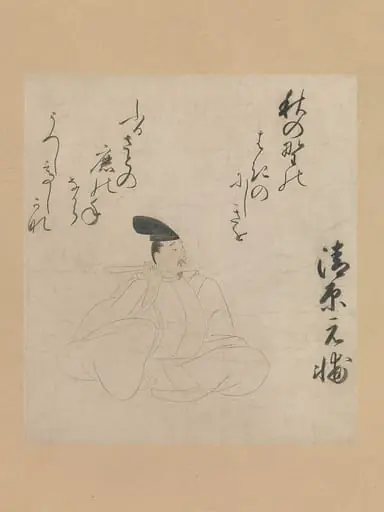
- 清原元輔 「為重本 時代不同歌合絵巻」 断簡 |The Poet Kiyohara Motosuke, from the “Tameshige Version” of Thirty-six Poetic Immortals (Tameshige-bon Jidai fudō utawase emaki)
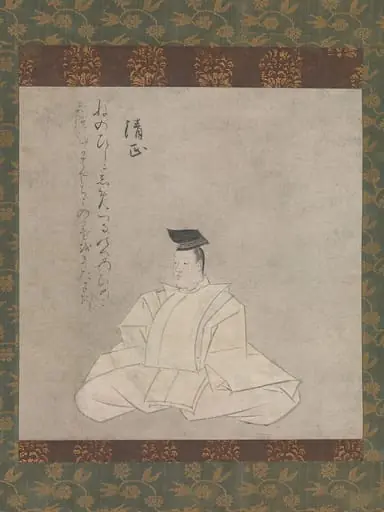 藤原清忠 「業兼本 時代不同歌合絵巻」 断簡|The Poet Fujiwara Kiyotada, from the “Narikane Version” of Thirty-six Poetic Immortals
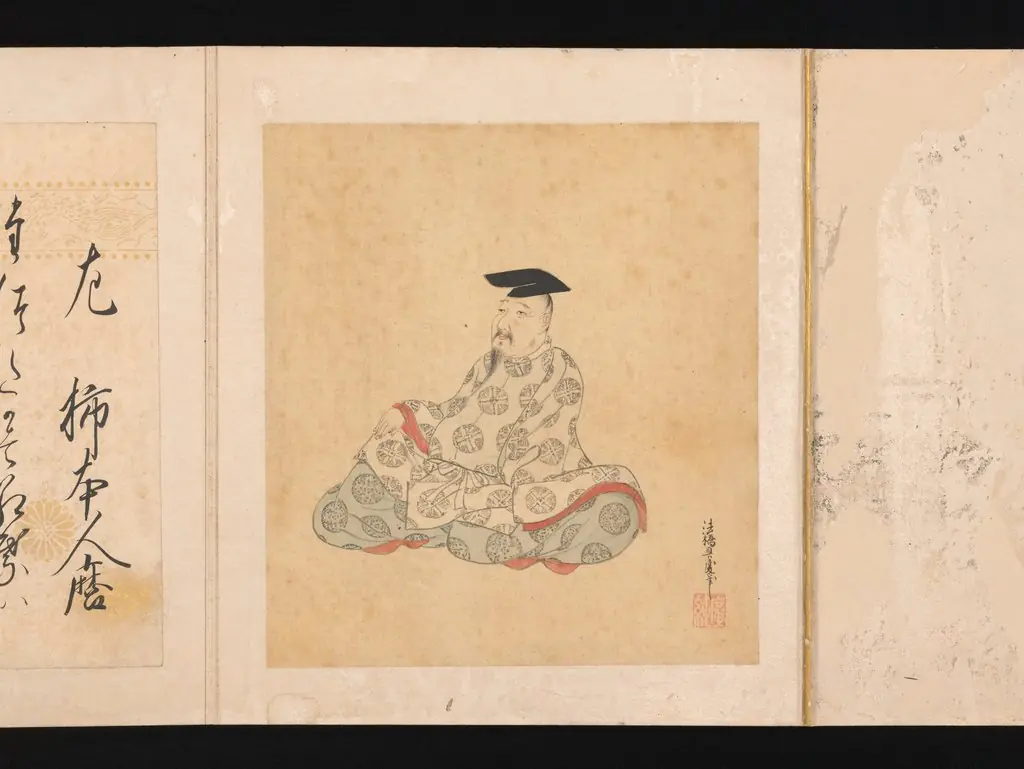 Portraits and Poems of the Thirty-six Poetic Immortals (Sanjūrokkasen)
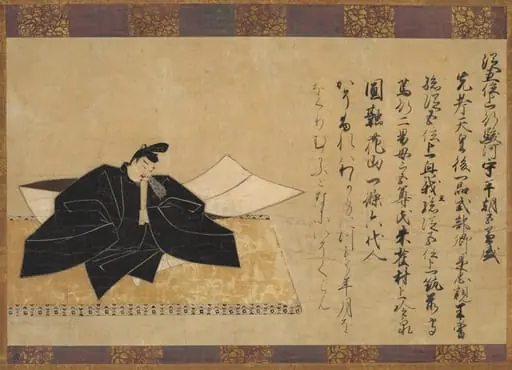 Taira no Kanemori of the Thirty-Six Poetic Immortals
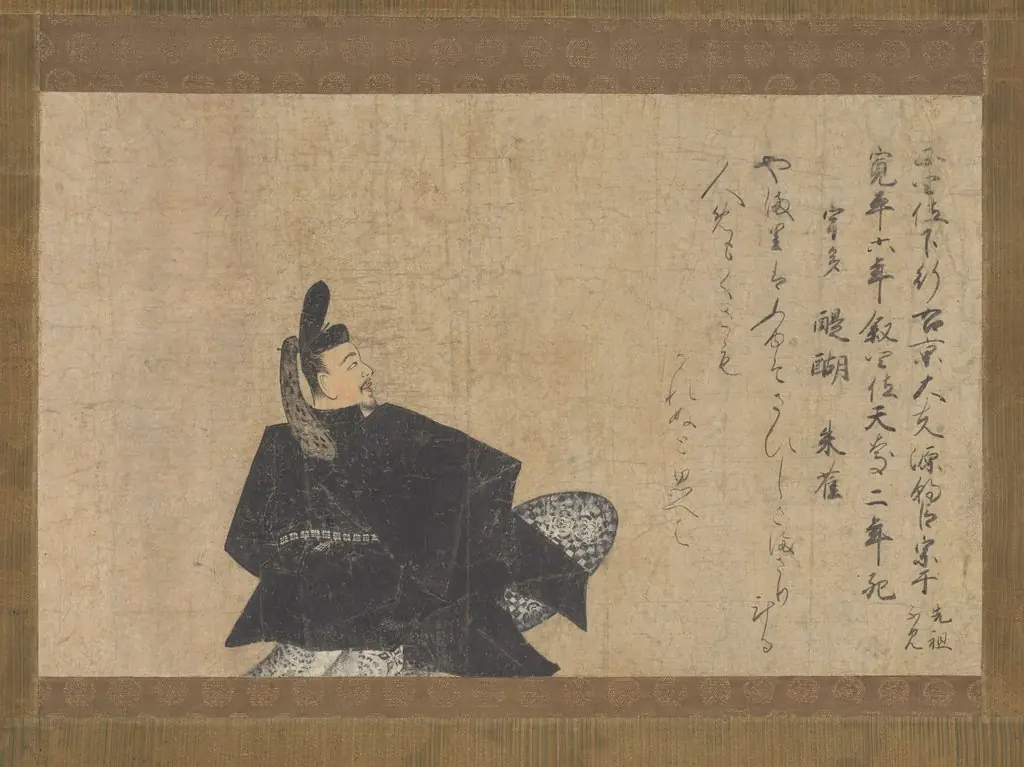 Minamoto no Muneyuki, from the “Fujifusa Version” of Thirty-six Poetic Immortals (Fujifusa-bon Sanjūrokkasen emaki)
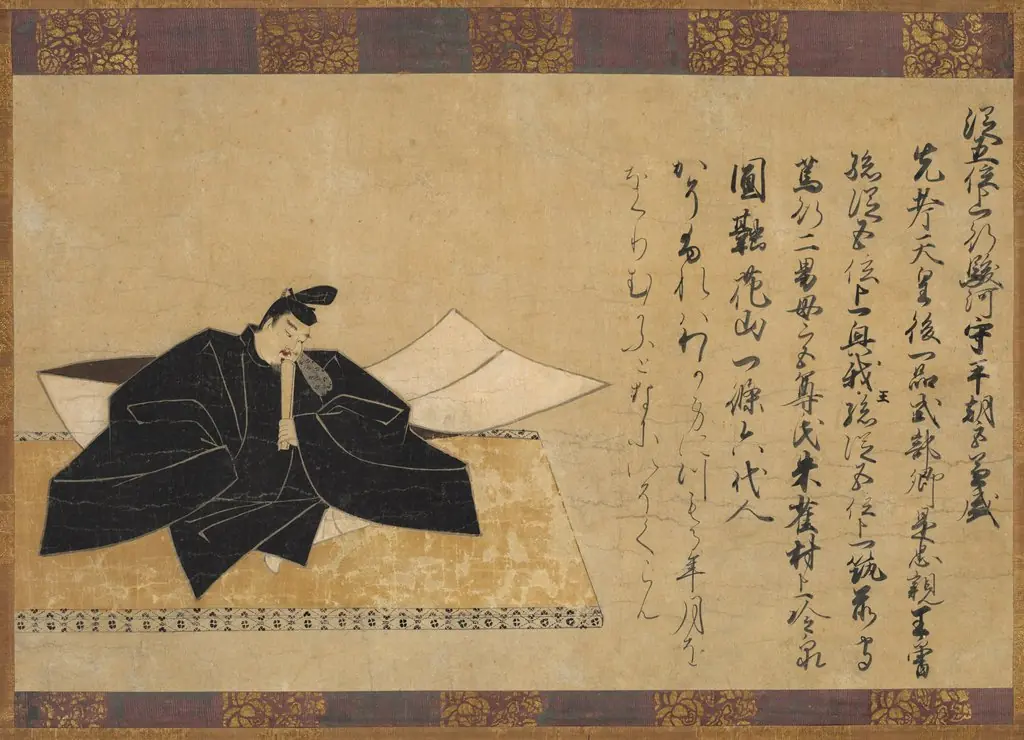 Taira no Kanemori of the Thirty-six Poetic Immortals