Artwork
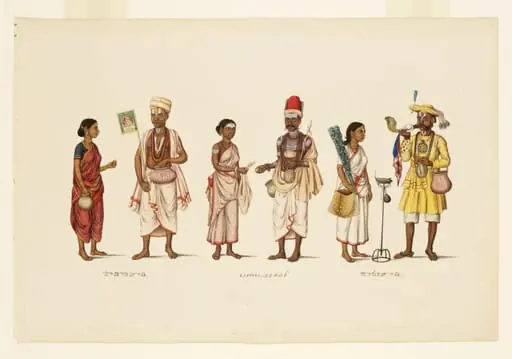
Three South Indian couples
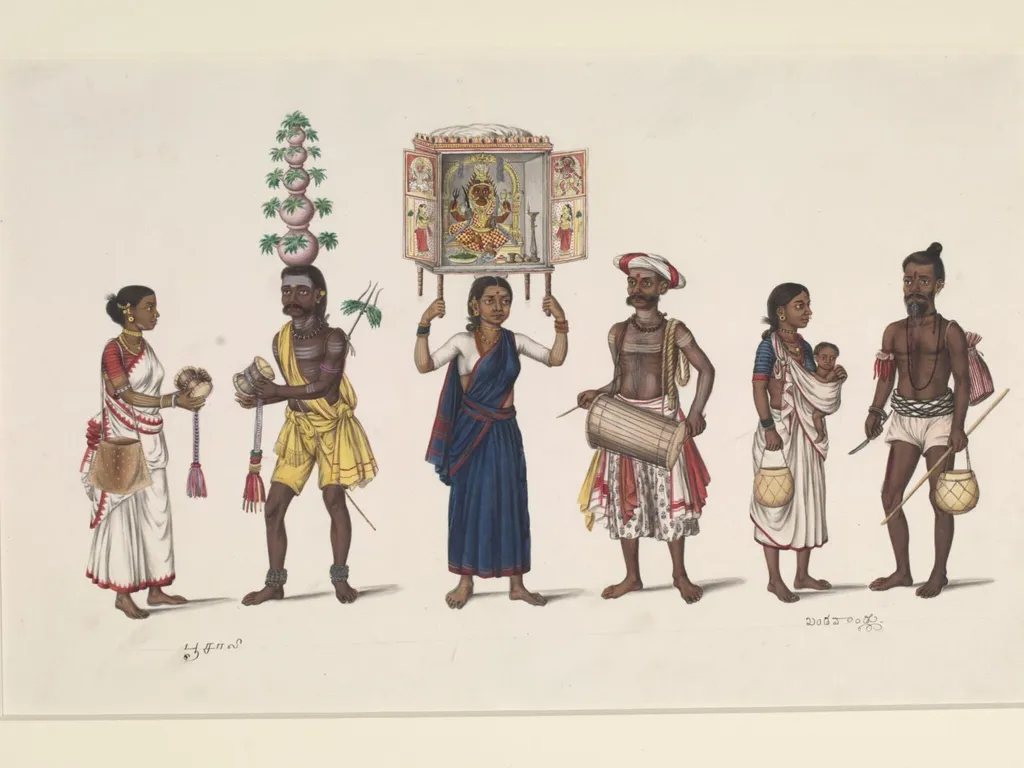
Three South Indian couples is a paint painting by the Romanticist artist Unknown. It dates from 1830 and is held in the collection of the Victoria and Albert Museum.
About this work
Overview
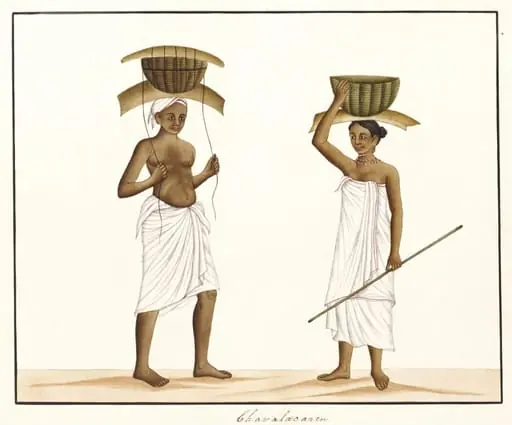
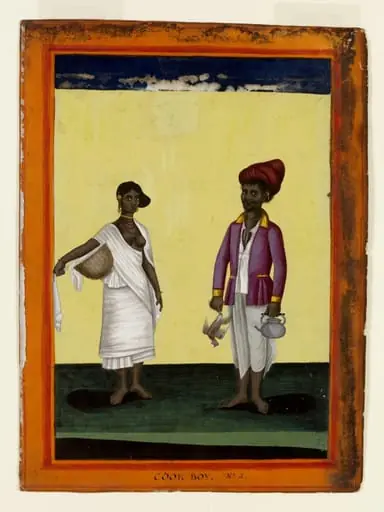
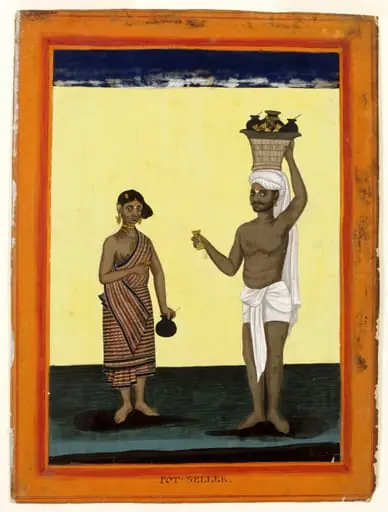
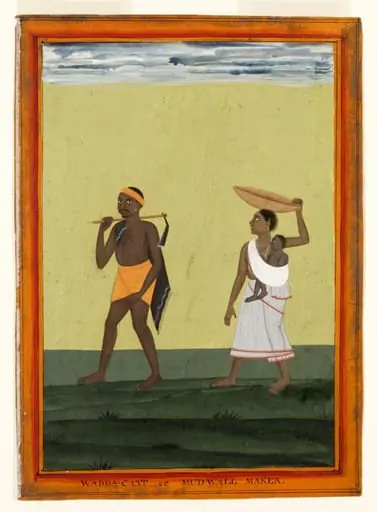
This painting, titled 'Three South Indian couples', is an example of Company painting, a style produced by Indian artists for British patrons. It is one of 30 folios depicting various scenes and occupations.
Subject & Meaning
The painting depicts three couples, likely religious mendicants, each with distinct attire and objects. The man with pots on his head is a devotee of a goddess associated with infectious diseases, such as Shitala or Mariyamma.
Technique & Style
The painting employs chiaroscuro, a technique using strong contrasts between light and dark to create a sense of volume.
Context
The work is part of a larger volume documenting castes, occupations, and processional scenes, reflecting the British interest in Indian culture during this period.
Artist & collection