Artwork
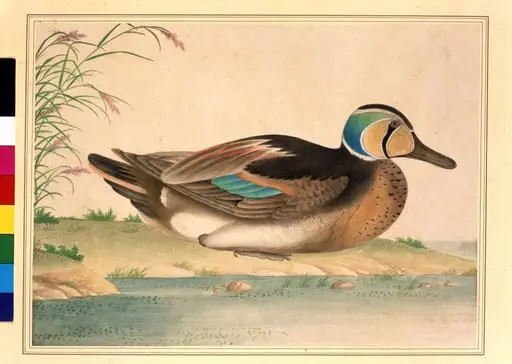
Tufted Duck
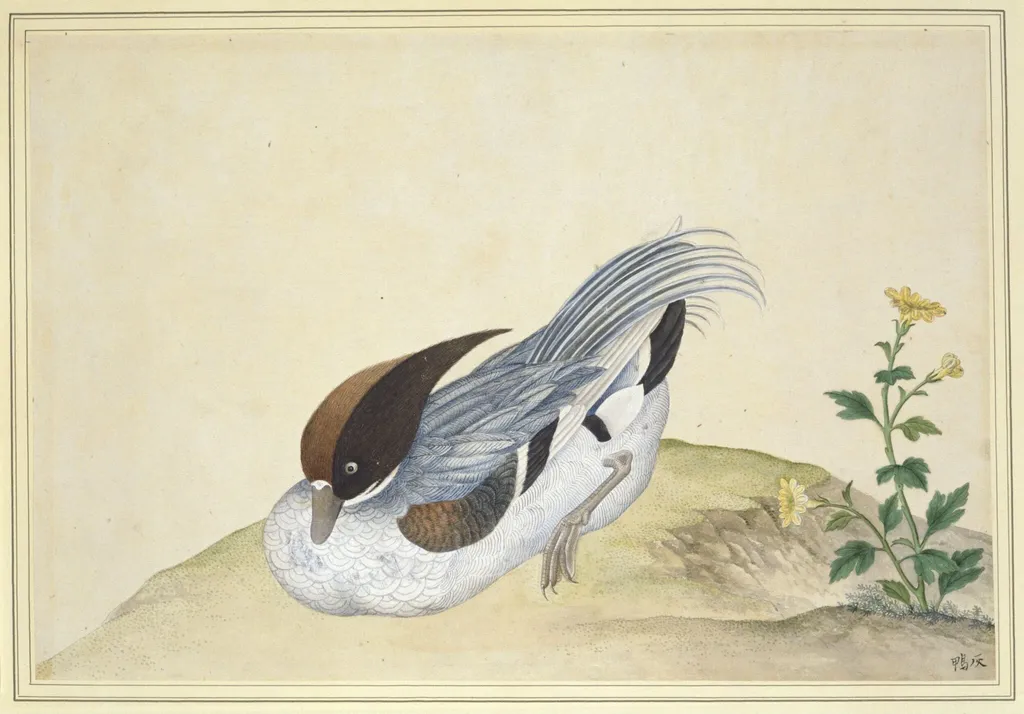
Tufted Duck is a paint painting by the Patna School of Painting artist Unknown. It dates from 1800 and is held in the collection of the Victoria and Albert Museum.
About this work
If this bird catches your eye, look up the Victoria and Albert Museum to see more of these Chinese export paintings.
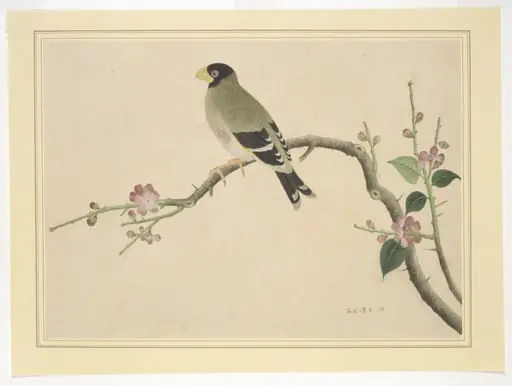
This painting shows a male tufted duck in bright breeding colors. His black head glistens with a white stripe and tuft. The background is plain cream, so the bird stands out.
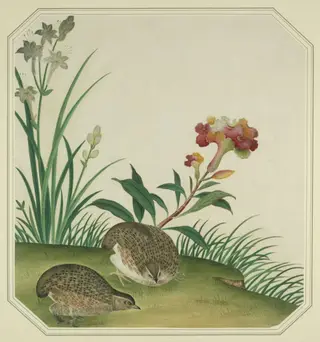
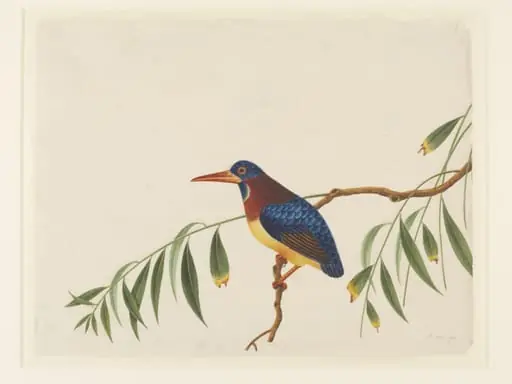
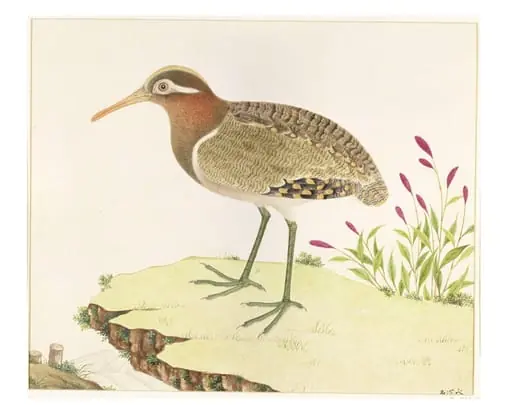
The duck was painted in Canton, China, for European buyers. Merchants sold these pictures to travelers who wanted souvenirs. Most were made between 1780 and 1830.
If this bird catches your eye, look up the Victoria and Albert Museum to see more of these Chinese export paintings.
Overview
This oil painting depicts a male tufted duck, rendered in vivid detail against a neutral cream background. Created in Canton during the late 18th or early 19th century, it was produced for the European export market. Such works were part of a broader trade in Chinese-made souvenirs, tailored to Western tastes and interests in natural history.
Subject & Meaning
The tufted duck, shown in its breeding plumage with glossy black feathers and a distinctive crest, was selected for its striking appearance. For European travelers, such images served as tangible records of exotic wildlife encountered abroad. The bird’s isolation on the canvas emphasizes its novelty, reflecting a period when foreign species fascinated naturalists and collectors alike.
Technique & Style
Executed in water-based pigments on paper or silk, the painting employs fine brushwork to capture the duck’s iridescent feathers and precise anatomical details. The background is deliberately minimal, allowing the subject to dominate. This approach reflects a blend of Chinese artistic conventions with European expectations of naturalistic representation.
History & Provenance
Produced in Canton between 1780 and 1830, the painting emerged during the height of the Canton System, when European traders were restricted to this single port for commerce. Local artists adapted their output to meet demand from British and other Western visitors, creating a distinct genre of export art that circulated widely across Europe.
Context
During this period, European interest in natural history expanded beyond scientific circles to include the general public. Bird specimens and their painted likenesses became popular collectibles, often brought home as mementos of overseas journeys. Chinese artists responded by specializing in these subjects, contributing to a transnational visual culture.
Legacy
These export paintings remain valuable for understanding cross-cultural exchange in the age of global trade. They document how Chinese artisans accommodated foreign aesthetics while maintaining their own technical traditions. Today, collections such as the Victoria and Albert Museum preserve these works as artifacts of early globalization and shared curiosity about the natural world.
Artist & collection