Artwork
Untitled
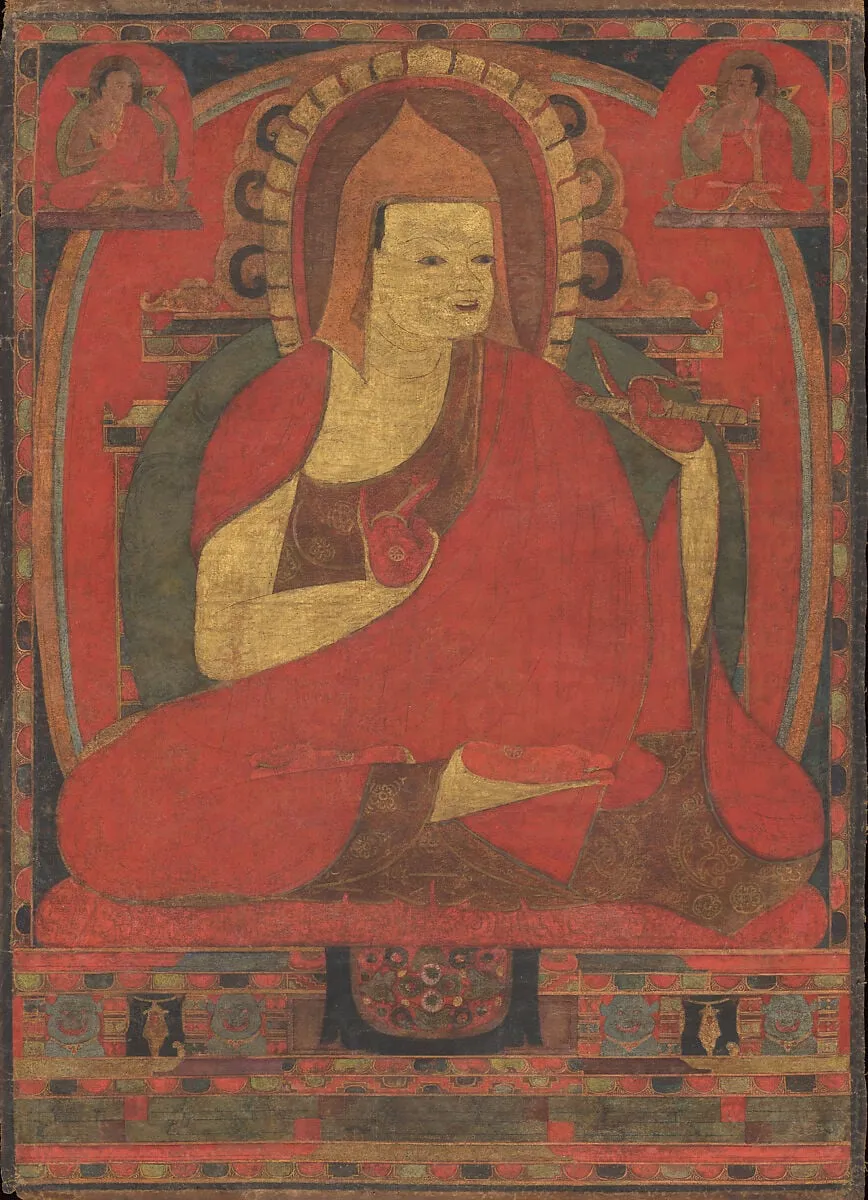
Untitled is a distemper painting. It dates from 1125 and is held in the collection of the Metropolitan Museum of Art.
About this work
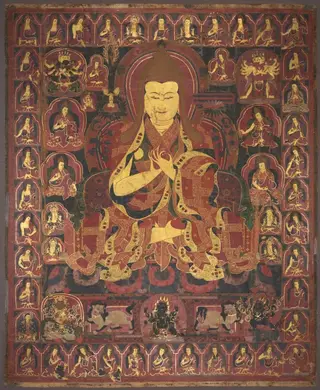
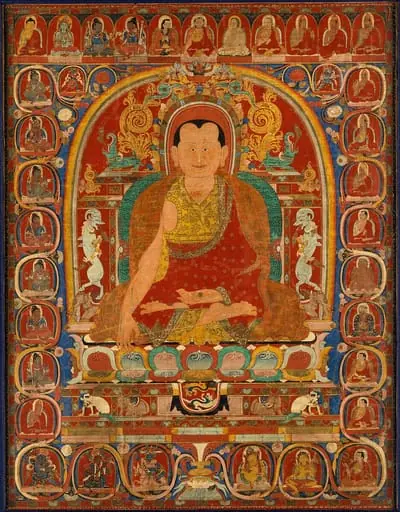
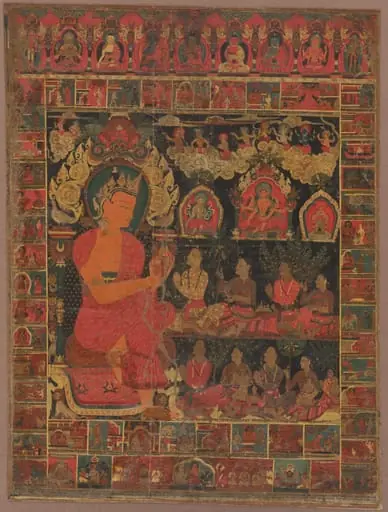
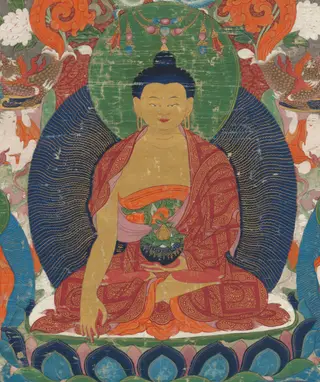
A monk in red robes sits cross-legged against gold, hands resting in his lap, eyes half-closed and lips parted as if to speak. Made in Tibet around 1125, the gold was meant to glow like divine light in candlelit temples. His crooked nose and uneven ears feel drawn from a real person.
Subject & Meaning
The work's iconography centers on the representation of this religious individual, utilizing the genre of portraiture to capture his likeness.
Created in 1125, this distemper and gold painting on cloth functions as a portrait depicting a male figure identified specifically as a monk. The work's iconography centers on the representation of this religious individual, utilizing the genre of portraiture to capture his likeness. While the specific identity of the sitter remains unknown due to the anonymous nature of the artist, the visual subject is clearly defined as a man within a monastic context.
The combination of gold and distemper suggests a formal approach to rendering the figure, emphasizing his status or spiritual role through the chosen medium and genre conventions of the period.
Technique & Style
Created in 1125, this anonymous portrait is executed in distemper and gold applied directly onto a cloth support. The work represents a monastic figure, depicted as a man and monk, utilizing traditional pigment and metallic leaf techniques characteristic of its period. The composition functions as a formal portrait, emphasizing the subject's identity through the contrast of the painted figure against the textile ground.
While the specific handling details and current physical condition are not elaborated in the available records, the medium of distemper on fabric suggests a specific approach to surface texture and durability distinct from panel or canvas painting. The piece remains part of the Metropolitan Museum of Art's collection, preserving these stylistic and material attributes from the early twelfth century.
History & Provenance
The work titled Untitled was produced in 1125 by an anonymous painter using distemper with gold pigment applied to cloth, a technique documented in its internal catalogue entry. Its subject is a monk depicted alongside a man, reflecting a portrait genre. The painting was created as part of an unidentified commission, though no patron is recorded.
Following its execution, the piece entered the collection of the Metropolitan Museum of Art, where it remains on view. The museum’s records confirm the work’s inception date of 1125‑01‑01 and its attribution to an unnamed artist, establishing a clear provenance from creation to present ownership.
The work titled Untitled, an anonymous portrait of a monk dating to 1125, is held in the collection of the Metropolitan Museum of Art. While the specific inventory or accession number is not detailed in the available records, the institution serves as both the current location and custodian of the piece. The provided sources confirm the painting's presence within the museum's holdings but do not list specific past exhibitions or a detailed exhibition history for this particular object.
Context
Dated to 1125, the work is an early medieval portrait rendered in distemper with gold leaf on cloth. The anonymous painter’s composition portrays both a monk and a man, emphasizing contemplative dignity. Classified as a portrait within the genre, the piece is part of the Metropolitan Museum of Art’s collection, situating it within scholarly discussions of early European portraiture. Its survival offers a rare glimpse into 12th‑century visual culture and informs studies of devotional imagery.
Overview
This untitled painting, crafted over eight centuries ago in Tibet, depicts a monk in a meditative pose. Executed with distemper and gold on cloth, the artwork presents a figure seated cross-legged against a luminous golden ground. The composition emphasizes a sense of tranquility, with the monk's half-closed eyes and slightly parted lips suggesting a moment of inner contemplation. Its ancient origins place it within a rich tradition of Himalayan art.
Artist & collection