Artwork
Mahavira's Initiation Tonsure, Folio 37 (verso), from a Kalpa-sutra
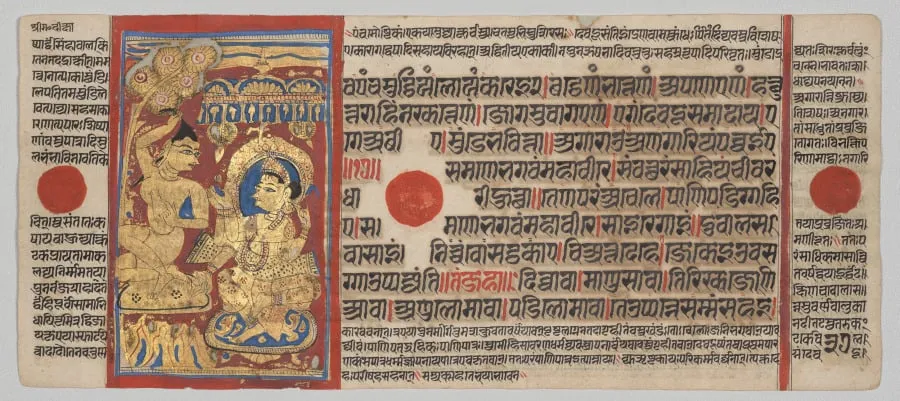
Mahavira's Initiation Tonsure, Folio 37 (verso), from a Kalpa-sutra is an unspecified painting by the Renaissance artist Unknown. It dates from 1488 and is held in the collection of the Cleveland Museum of Art.
- Accession no.
- 1932.119.37.b
- Credit line
- Edward L. Whittemore Fund
About this work
This painting shows a moment from Jain tradition: Mahavira, a spiritual leader, giving up his royal life.
You see a prince pulling out his own hair in fistfuls under a tree. Gods watch from above.
This painting shows a moment from Jain tradition: Mahavira, a spiritual leader, giving up his royal life. The artist made his muscles tense to show how hard it is to let go. No one knows who painted it, but the style comes from Gujarat in the late 1400s.
If you like this, look up more about western india, gujarat, last quarter of the 15th century.
Overview
Mahavira's Initiation Tonsure, Folio 37 (verso), depicts a pivotal moment in Jain tradition where Mahavira renounces his princely life for spiritual enlightenment. The painting shows Mahavira pulling out his hair in a wooded setting, observed by divine figures.
Subject & Meaning
The scene illustrates Mahavira's extreme self-mortification as he removes his hair in five handfuls under an ashoka tree, symbolizing his transition from prince to ascetic in pursuit of omniscience and liberation. Indra, king of the gods, witnesses and praises this act from a lower plane.
Technique & Style
Characterized by dynamic line drawings and a vibrant color palette, the painting features pigments derived from lapis lazuli, vermilion, and gold. The tense musculature of Mahavira highlights the physical and emotional effort of his act.
History & Provenance
Attributed stylistically to late 15th-century Gujarat, the artist remains anonymous. The work is part of a Kalpa-sutra manuscript, a Jain religious text.
Context
Created in western India during the last quarter of the 15th century, this folio reflects the religious and artistic traditions of Gujarat at the time, blending spiritual narrative with regional aesthetic practices.
Legacy
As part of a Kalpa-sutra manuscript, this painting contributes to the visual and religious heritage of Jainism, illustrating key teachings through vivid, expressive art.
Artist & collection









- Ritual Bath of Mahavira, Folio 31 (recto), from a Kalpa-sutra
 Mahavira in the Realm of Liberation (Nirvana), Folio 43 (verso), from a Kalpa-sutra
 Mahavira Gives Away his Possessions, Folio 35 (verso), from a Kalpa-sutra
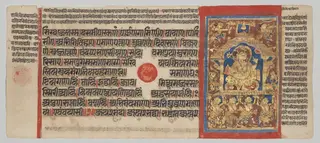 Mahavira Rides in His Initiation Palanquin, Folio 36 (recto), from a Kalpa-sutra
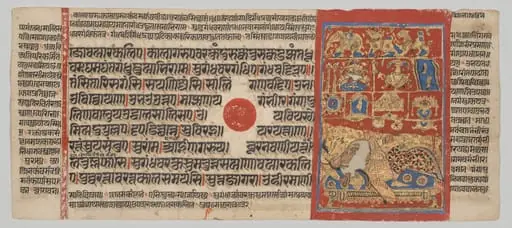 The Fourteen Dreams of Queen Trishala, folio 14 (recto), from a Kalpa-sutra
 Text, Folio 37 (recto), from a Kalpa-sutra
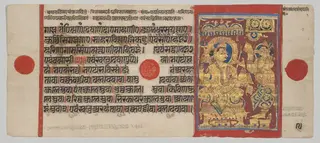 Indra Commands Harinaigameshin to Transfer the Embryo of Mahavira, Folio 9 (verso), from a Kalpa-sutra
 Text, Folio 31 (verso), from a Kalpa-sutra
 Birth of Mahavira, folio 30 (verso), from a Kalpa-sutra
 Indra Venerates the Embryo of Mahavira, Folio 7 (recto), from a Kalpa-sutra