Artwork
Untitled
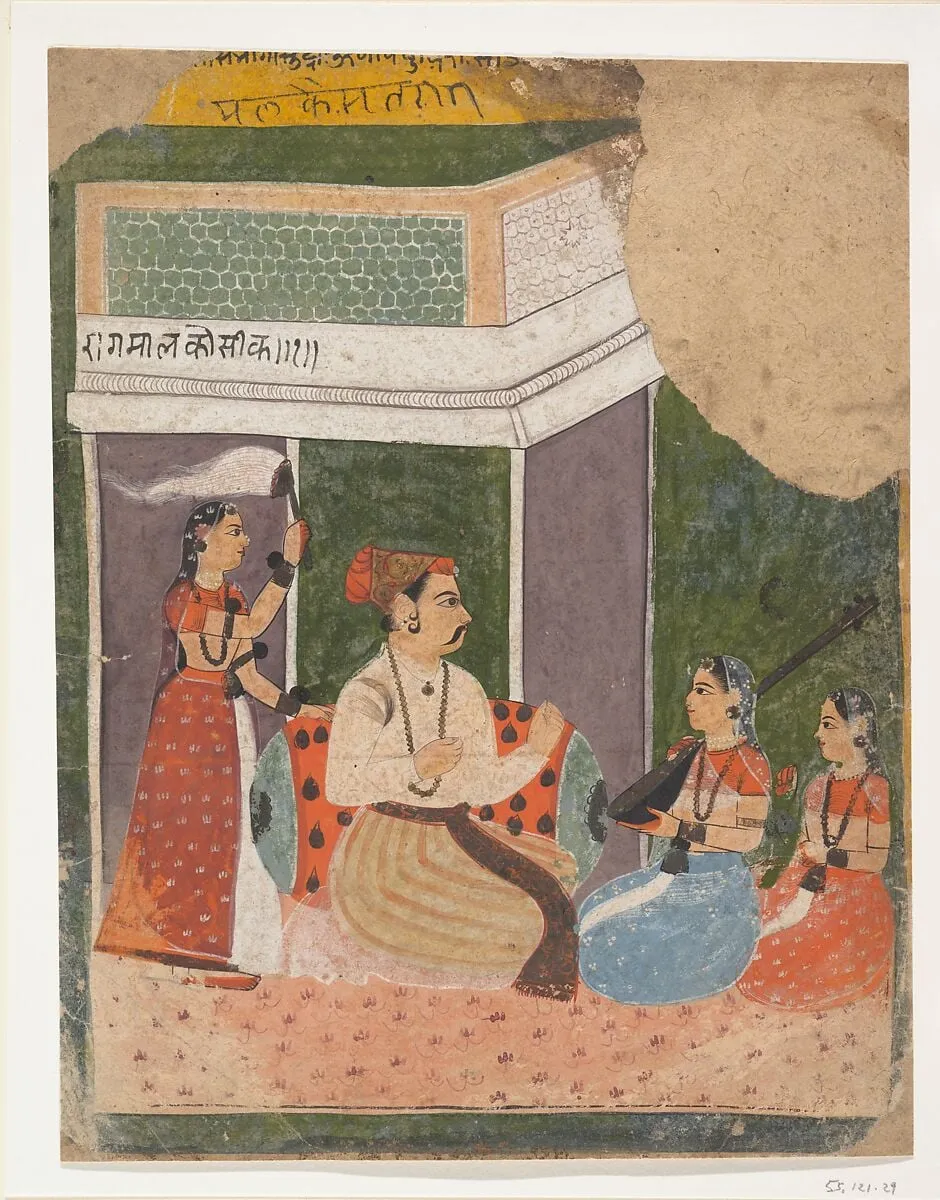
Untitled is a watercolor painting. It dates from 1645 and is held in the collection of the Metropolitan Museum of Art.
About this work
Subject & Meaning
No further specific iconographic program or deeper symbolic meaning is documented for this particular work beyond its representation of these elements.
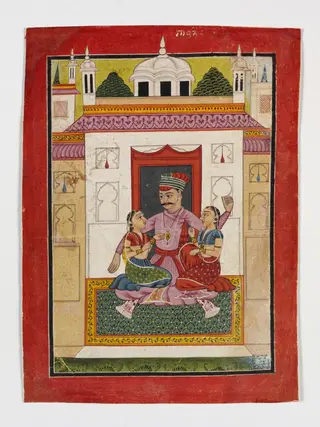
The work depicts a genre scene featuring a man, a woman, and a musical instrument. Created in 1645 in India, the painting presents these figures without a specific identified narrative context in the available records. The inclusion of the musical instrument alongside the two human figures suggests a focus on leisure, entertainment, or courtly interaction typical of the period's genre painting traditions.
No further specific iconographic program or deeper symbolic meaning is documented for this particular work beyond its representation of these elements.
Technique & Style
The work, dated 1645, is executed in ink with opaque watercolor on paper, a support typical of Indian painting practice of the mid-17th century. Its dimensions measure 26.4 cm in height by 20.3 cm in width, as recorded in the Metropolitan Museum of Art catalogue. The composition portrays a man accompanied by a musical instrument alongside a woman, fitting the genre-scene classification noted for this anonymous work.
As a painting attributed to an anonymous Indian painter, the piece demonstrates a restrained use of line and subtle tonal modelling within the ink-wash medium, while the opaque watercolor adds localised colour accents.
History & Provenance
The painting was created in 1645 in India by an anonymous artist using ink and opaque watercolor on paper. It depicts a man with a musical instrument alongside a woman. The work is currently held in the collection of the Metropolitan Museum of Art. No further details about commissioning, ownership transfers, or exhibition history are recorded in the available documentation.
Overview
This untitled 17th-century painting from Rajasthan, rendered in ink and opaque watercolor on paper, depicts a musical gathering. It features two women and a man surrounded by instruments, capturing a moment of shared musical performance. The work reflects the artistic conventions of its time and place, emphasizing the atmosphere and emotional resonance over strict naturalism.
Context
Originating from 17th-century Rajasthan, this painting exemplifies the artistic production fostered by the region's royal courts. Artists in these courts often created works that celebrated daily life, courtly activities, and spiritual themes. This piece, with its focus on an intimate musical session, offers insight into the cultural pursuits and patronage that characterized Rajput painting during this period.
Artist & collection

 Untitled
 Pancham Raga
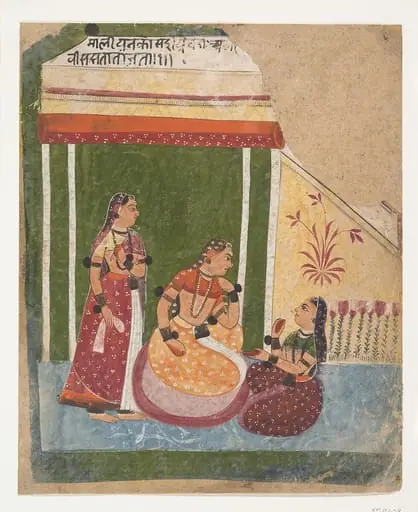 Untitled
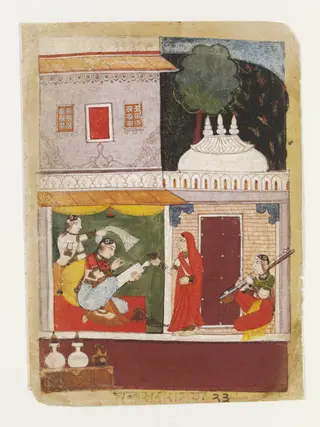 Dhanasri Ragini
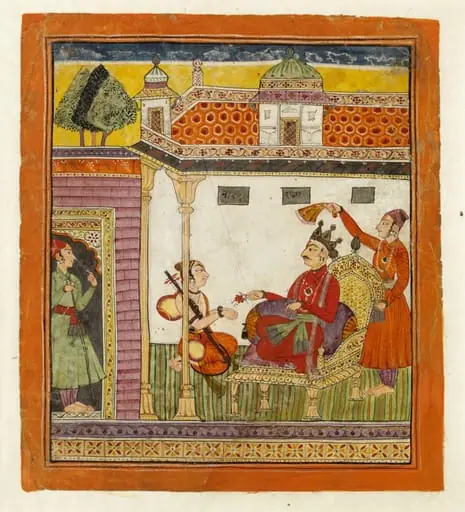 Mangala Raga
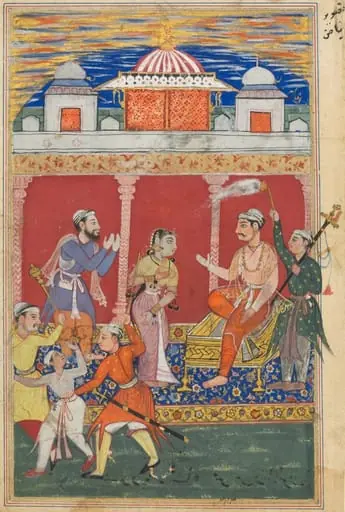 The prince’s ordeal continues, he is ordered away to be executed for the fifth time, from a Tuti-nama (Tales of a Parrot): Eighth Night
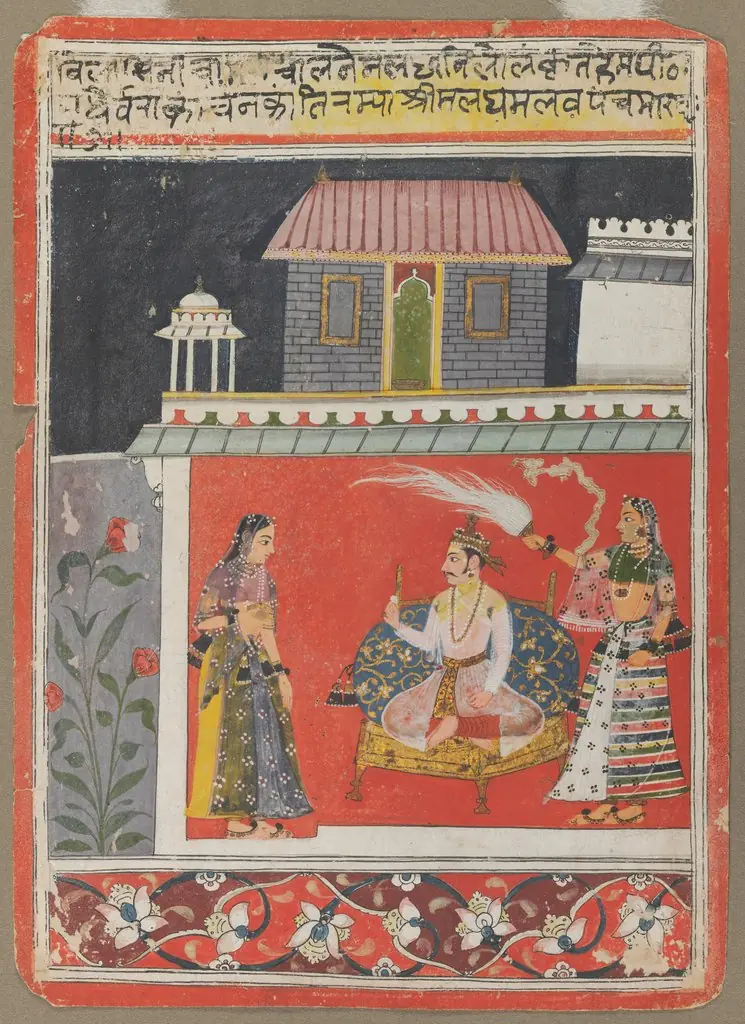 Pancham Raga
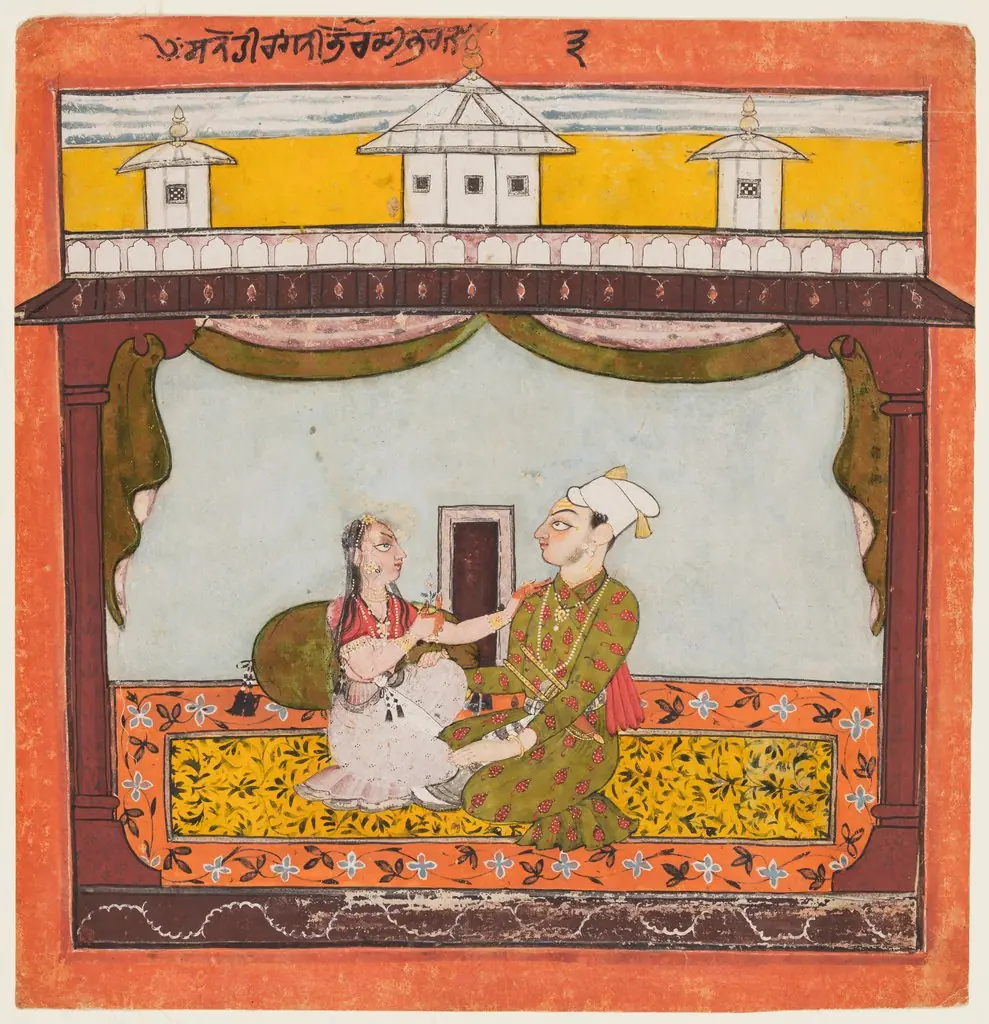 King and Queen in Zenana: Sandehi Ragini, Wife of Bhairava, from the “Second Basohli Ragamala"
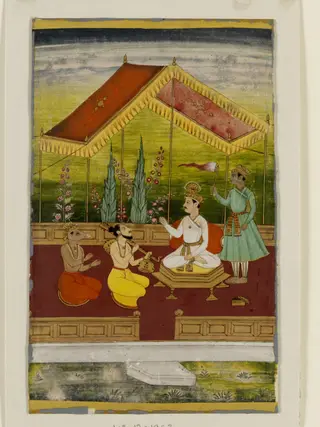 Sri Raga
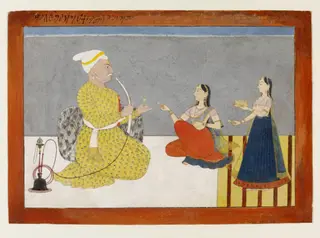 Raja Ugar Singh
 Vinoda Raga
- Untitled