Artwork
Untitled
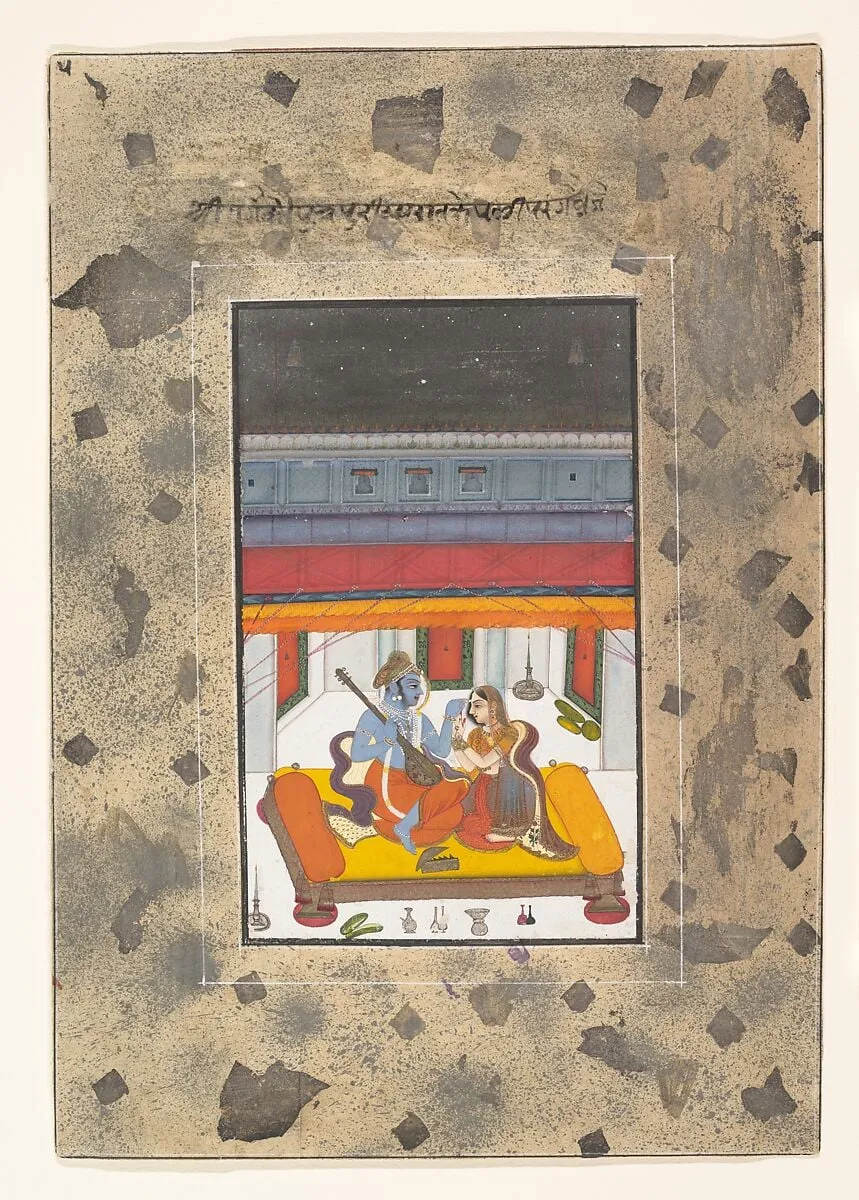
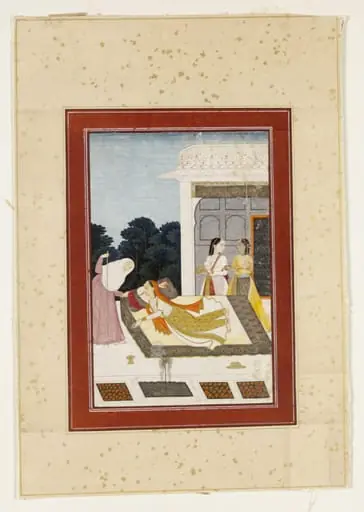
Untitled is a watercolor painting. It dates from 1760 and is held in the collection of the Metropolitan Museum of Art.
About this work
Subject & Meaning
The presence of the lute and the intimate setting on the couch serve as key symbolic elements defining the narrative context of the scene.
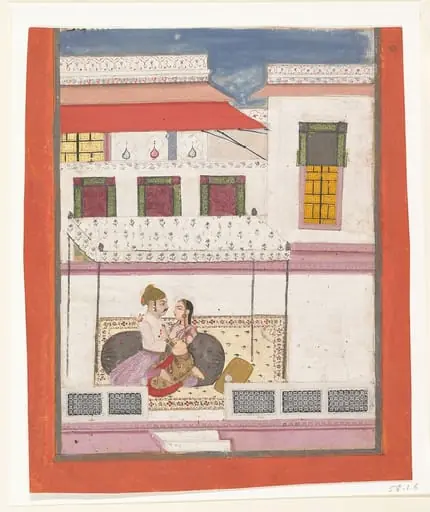
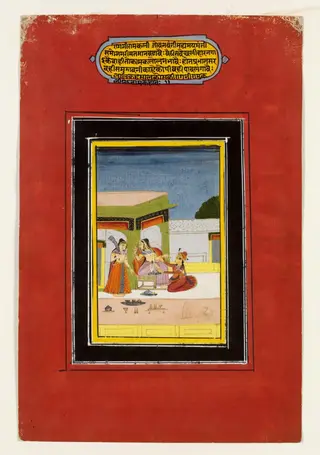
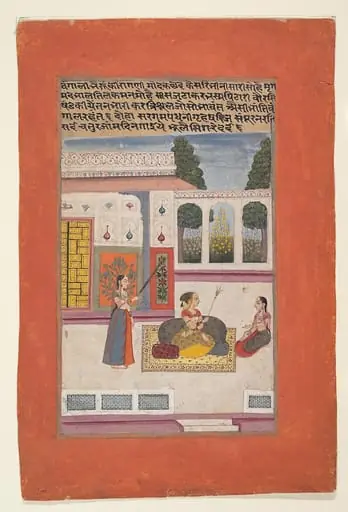
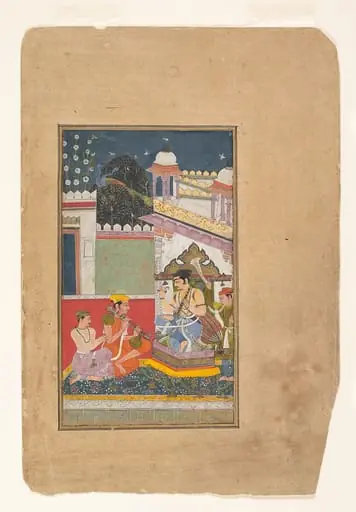
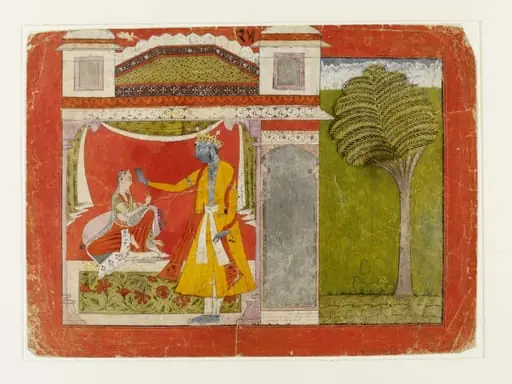
Created in India around 1760, this religious painting depicts the divine couple Krishna and Rādhā seated together on a couch. The composition includes a lute, an instrument frequently associated with Krishna's musical allure, alongside the figures of the deities and an additional woman. As an example of Indian religious art, the work utilizes iconography centered on these specific mythological figures to represent themes of divine love and devotion.
The presence of the lute and the intimate setting on the couch serve as key symbolic elements defining the narrative context of the scene.
Technique & Style
The work is executed in ink, opaque watercolor and silver pigment on a paper support, measuring approximately 20.2 cm by 12.4 cm and dated to 1760. It belongs to the religious genre and portrays Krishna and Rādhā seated on a couch while a woman plays a lute, a composition recorded in both the internal catalogue and the Metropolitan Museum of Art’s collection record (MET 1978.540.4). The delicate handling of line and the subtle use of silver highlight a devotional aesthetic typical of Indian miniature traditions of the period.
As a paper-based painting in the Met’s collection, it is preserved under standard climate control but retains the fragility associated with thin paper supports.
History & Provenance
The work is dated to 1760 based on internal curatorial records and the Metropolitan Museum’s accession file, which aligns with its stylistic placement in late eighteenth-century Pahari painting traditions. The artist remains anonymous, consistent with the conventions of the period and region. The painting entered the Metropolitan Museum of Art in 1978 as part of an acquisition (accession no. 1978.540.4), where it has been catalogued under the title Untitled.
Its depiction of Krishna and Rādhā on a couch with a lute situates it within the Guler or Kangra schools, reinforcing a mid-to-late eighteenth-century creation context.
Legacy
The painting, though unsigned, entered the Metropolitan Museum of Art and is catalogued as a 1760 example of Indian religious art depicting Krishna, Rādhā, a couch, a lute and a woman. Its presence in a major museum has made it a frequent reference in studies of 18th‑century devotional imagery and in surveys of cross‑media compositions that blend ink, watercolor and silver. Scholars cite it when examining the spread of Krishna‑Rādhā iconography beyond temple walls and when analyzing the use of silver in paper artworks, establishing its role in shaping later interpretations of devotional painting.
Overview
This untitled painting, rendered in ink, opaque watercolor, and silver on paper, depicts a serene domestic scene. A woman in a red sari plays a lute while reclining against a bolster. Behind her, a man in blue plays a flute, observed by another woman.
Details such as their jewelry and the couch are highlighted with luminous gold leaf, adding richness to the composition.
Context
This painting exemplifies a trend in Indian art where divine beings were portrayed in relatable, human contexts. Artists of the period frequently utilized media such as ink, watercolor, and silver to bridge the gap between the sacred and the mundane. By depicting figures like Krishna and Radha as if they were neighbors sharing a quiet, musical interlude, these works fostered a more personal and immediate connection to spiritual narratives.
Artist & collection