Artwork
Untitled
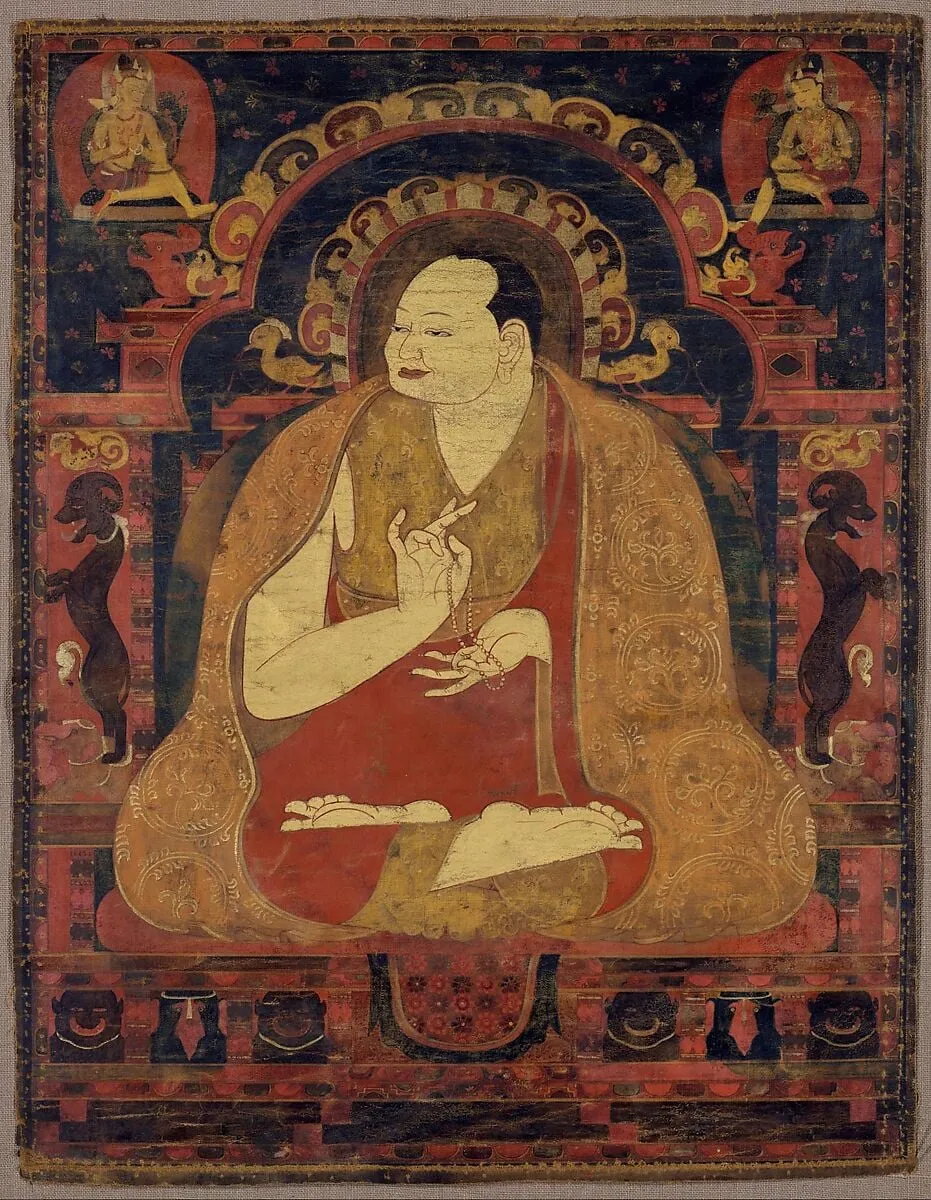
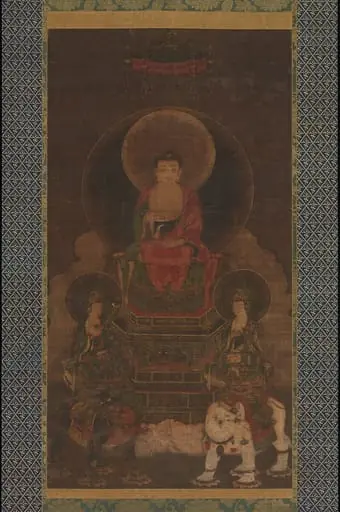
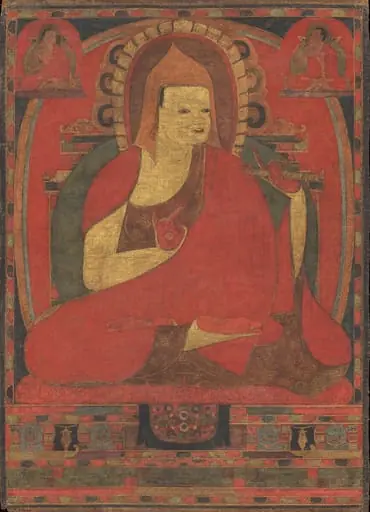
Untitled is a distemper painting. It dates from 1087 and is held in the collection of the Metropolitan Museum of Art.
About this work
Overview
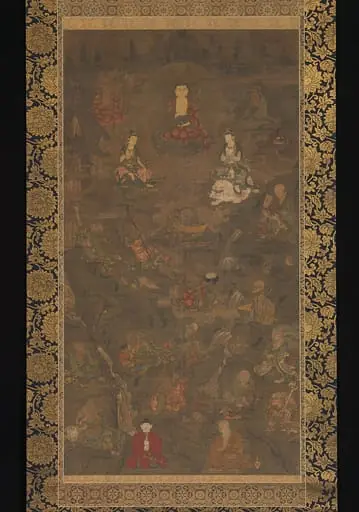
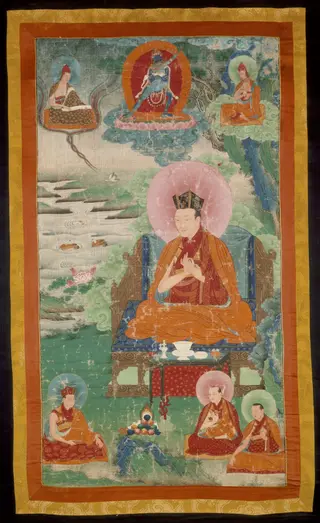
This small, untitled thangka, painted in distemper on cloth, depicts an enthroned Buddhist lama.
This small, untitled thangka, painted in distemper on cloth, depicts an enthroned Buddhist lama. Measuring 46.4 by 36.2 centimeters, the artwork is considered a foundational example in Tibetan art history. While the identity of the central figure remains a subject of scholarly discussion, the painting is recognized for introducing compositional elements that would become characteristic of later Kadampa portraiture. Its early date and stylistic innovations mark it as a significant surviving work.
Subject & Meaning
The central figure is an enthroned lama, seated in a yogic posture, holding a rosary before his chest in a gesture of extending blessings. He wears a saffron vest adorned with gold sprigs, a dark red robe, and a saffron mantle patterned with stylized flowers. The throne is surmounted by an elaborate torana supported by lions, flanked by rearing leogryphs on elephants.
Two bodhisattvas mirroring the lama's gesture appear in the upper corners. While long assumed to portray Dromton, the lama's monastic attire contradicts Dromton's known lay status, leaving his specific identity unresolved.
History & Provenance
An inscription on the reverse of this thangka provides crucial historical context. It states that Chen Nga Tshultrim Bar (1038–1108) personally placed the image on the eastern wall of his residence, likely in the last quarter of the 11th century. As a prominent disciple of Dromton and part of Atisha's direct lineage, Chen Nga Tshultrim Bar's connection to the work links it to a pivotal period in Tibetan Buddhism's revitalization.
Technique & Style
Executed in distemper on cloth, this small painting showcases an early example of Tibetan thangka artistry. The composition centers on the enthroned lama, whose monastic robes are rendered with intricate patterns. The elaborate throne features a torana arch, supported by lions, while mythical leogryphs mounted on elephants flank the structure.
The precise rendering of details, from the lama's rosary to the stylized floral motifs on his mantle, reflects the developing visual language of the period.
Legacy
Art historians consider this thangka a pivotal work for its role in establishing visual conventions. It is among the earliest surviving Tibetan paintings to introduce compositional motifs that subsequently became standard in Kadampa portraiture. These elements, including the specific arrangement of the enthroned lama, architectural surrounds, and flanking divine figures, provided a template for depicting revered teachers and spiritual leaders in later generations of Tibetan Buddhist art.
Artist & collection

 Untitled
 Untitled
 Untitled
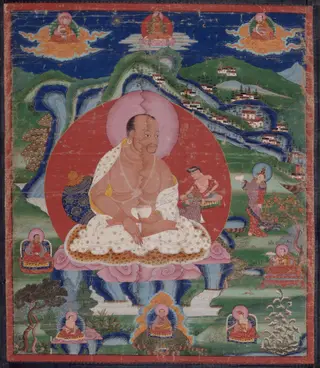 Padma Dorje (1128-88) as a Mahasiddha (Great Adept) and Lamas
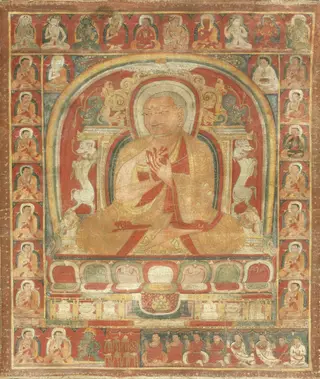 An Abbot and His Lineage
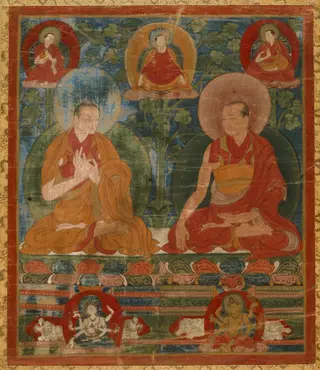 Sakyasri and the Lostsawa of Trophu
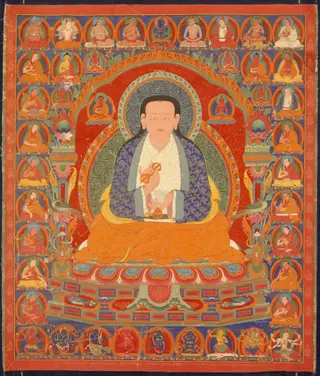 Sonam Tsemo (1142-1182) and His Lineage
 Mandara (pantheon)
 Votive initiation card (tsakali) with preaching Buddha Shakyamuni
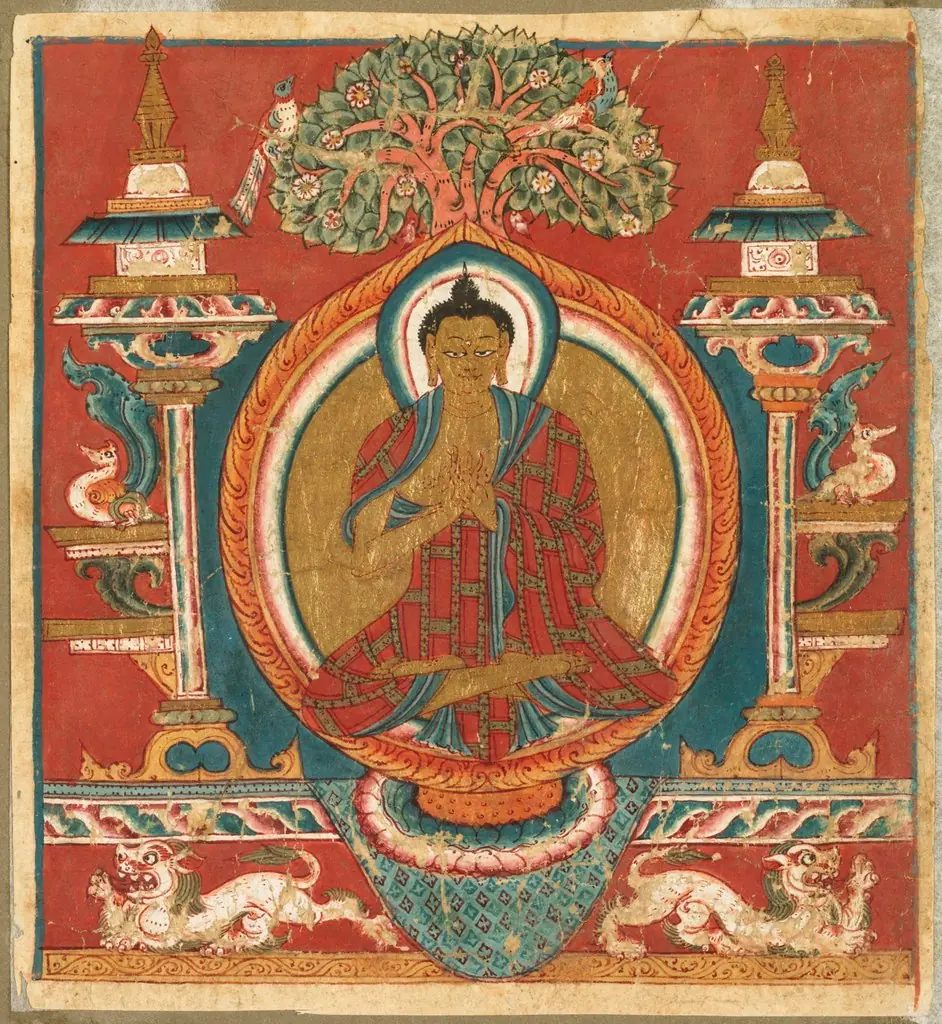 Preaching Sakyamuni
 The Fifth Karmapa, Dezhin Shegpa (1384-1415)
- Milarepa on Mount Kailash