Artwork
Vamana being blessed by King Bali
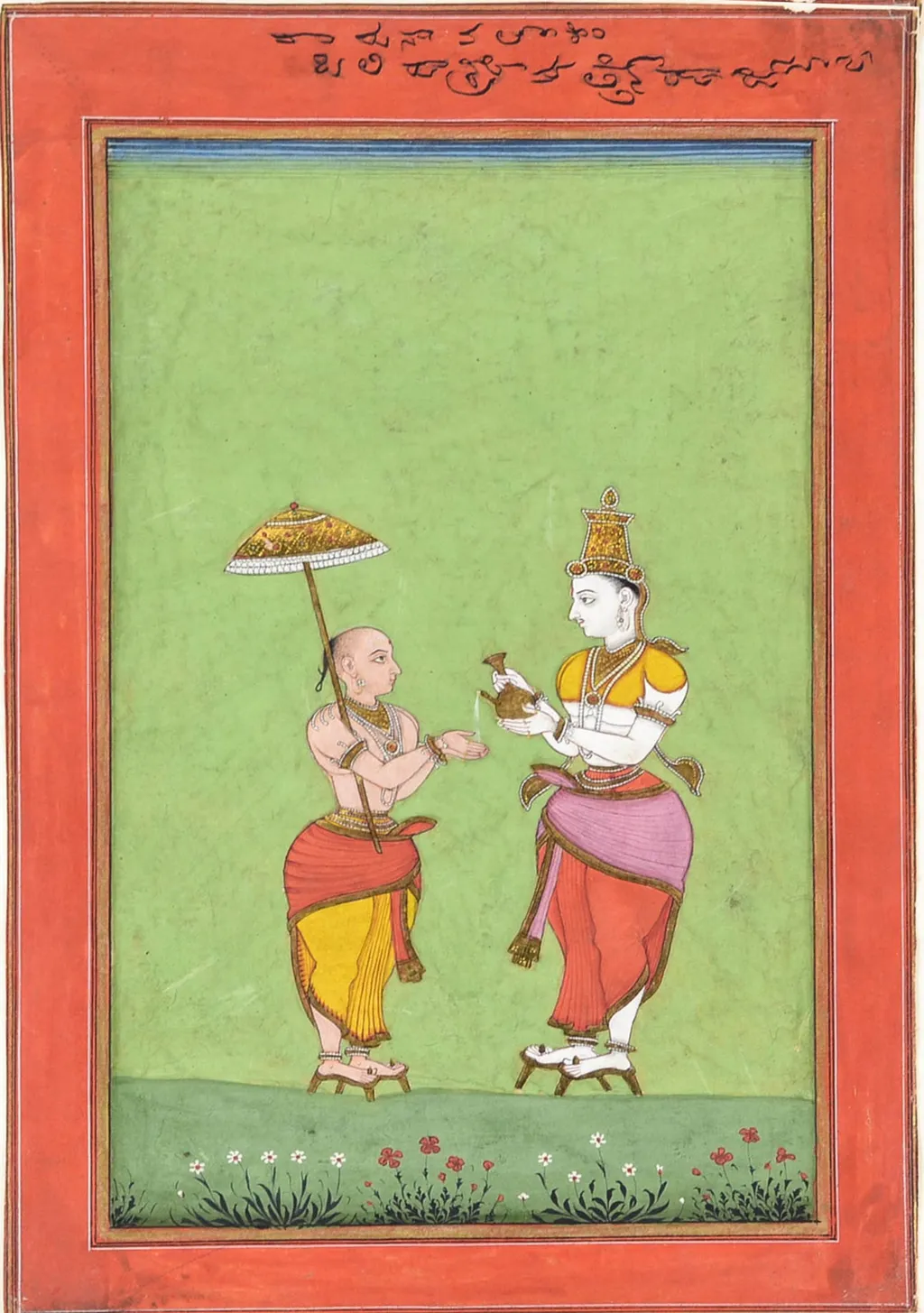
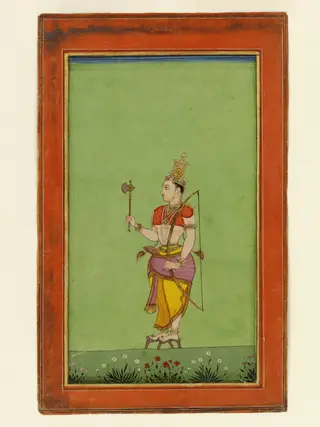
Vamana being blessed by King Bali is an unspecified painting. It dates from 1792 and is held in the collection of the Metropolitan Museum of Art. This painting illustrates a narrative moment featuring two distinct figures.
About this work
Subject & Meaning
The painting dated 1784 depicts the Hindu myth in which the dwarf avatar Vamana receives a blessing from the demon‑king Bali; the composition includes a regal figure, an ewer, and a youthful man identified as Vamana, as recorded in the work’s catalog entry. The presence of the ewer denotes a ritual offering, while the interaction between the king and the divine figure illustrates the narrative of humility and divine favor within the Vamana‑Bali legend.
History & Provenance
The painting 'Vamana being blessed by King Bali,' created in 1784 by an anonymous Indian artist, is held in the collection of the Metropolitan Museum of Art.
This painting entered the collection of the Metropolitan Museum of Art in New York in 1985, where it is currently held (accession no. 1985.361). It was created in India in 1784, as indicated by its documented inception date. The work is attributed to an anonymous painter and depicts the scene of Vamana receiving a blessing from King Bali, a subject drawn from Hindu mythology. No further details regarding the original commission or earlier ownership history are recorded in the available sources.
The painting 'Vamana being blessed by King Bali,' created in 1784 by an anonymous Indian artist, is held in the collection of the Metropolitan Museum of Art. While the provided records confirm the work's location within this institution and its inception date, they do not specify a unique inventory or accession number. Furthermore, the available sources contain no information regarding the artwork's exhibition history, limiting the provenance record to its current institutional custody.
Context
The painting titled Vamana being blessed by King Bali, dated 1784 and classified as a painting, was created in India by an anonymous artist. It portrays the mythological moment of Vamana receiving blessings from King Bali, accompanied by a king and an ewer. The work entered the collection of the Metropolitan Museum of Art, underscoring its significance within 18th‑century Indian devotional art and providing a key example for scholarship on Indian miniature painting and mythological subjects. Its provenance and date make it an important reference point for understanding artistic practices in pre‑colonial India.
Overview
This painting illustrates a narrative moment featuring two distinct figures. Titled "Vamana being blessed by King Bali," the artwork is executed in a style characteristic of Indian or Southeast Asian artistic traditions. The composition is straightforward, presenting the interaction between the two central characters against a simple backdrop, framed by a red border.
Technique & Style
The artwork employs a clear, illustrative style, typical of regional painting traditions. The two figures are rendered with distinct attributes, set against a plain light green background that emphasizes their interaction. Vibrant colors, such as the red, yellow, and pink of the dhotis and top, define the garments. A prominent red border frames the entire composition, containing the scene within its visual boundaries.
Artist & collection

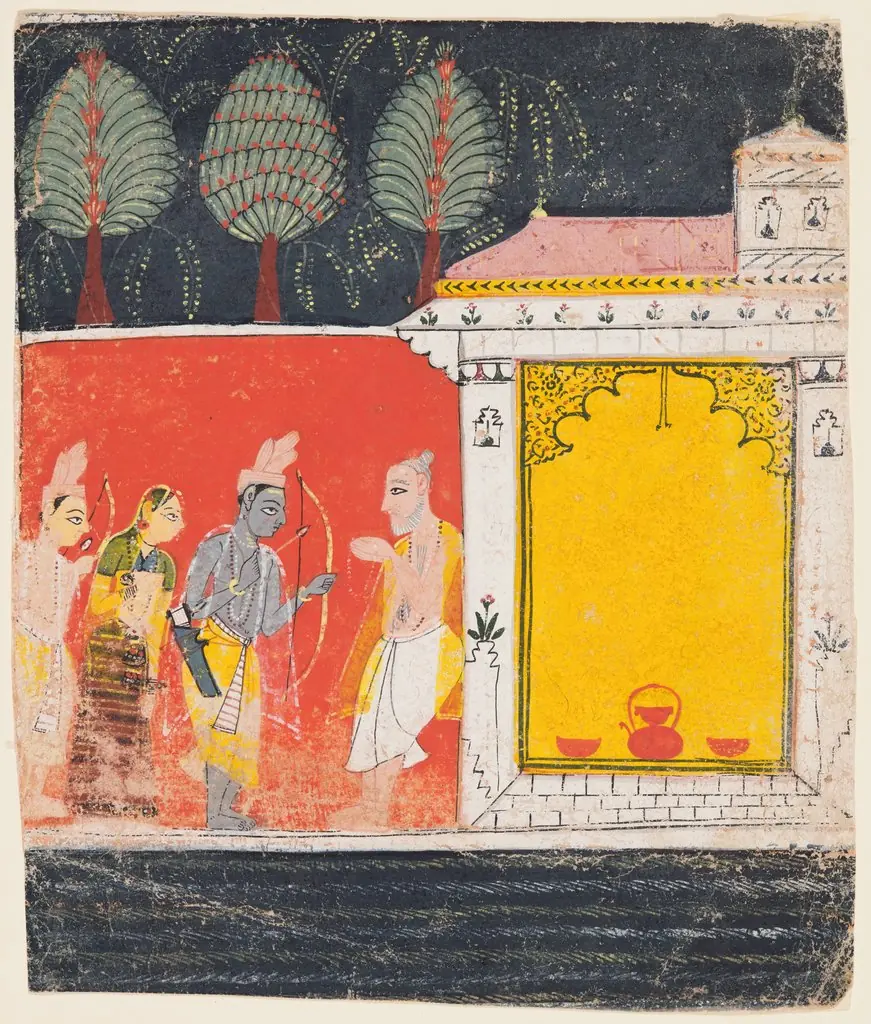
- Rama, Sita, and Lakshmana visit the hermitage of the sage Bharadvaja at Prayaga, from Chapter 48 of the Ayodhya Kanda (Book of Ayodhya) of a Ramayana (Rama’s Journey)
 Krishna and Radha
 Krishna and Kansa
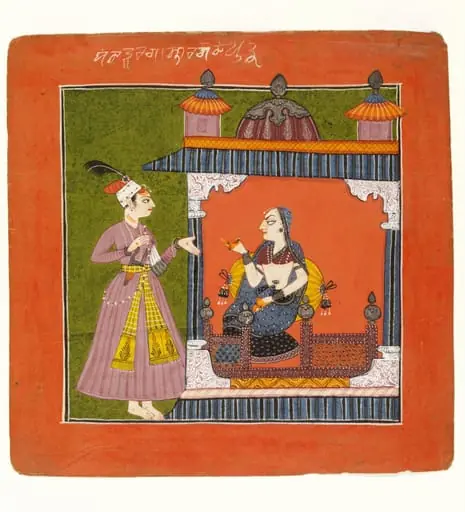 Achanda Raga
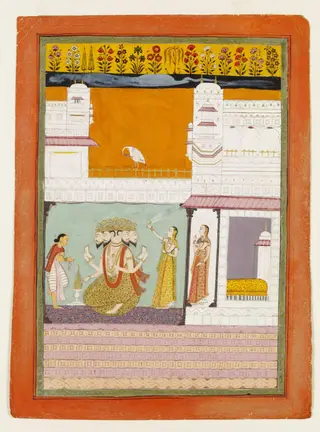 Brahma
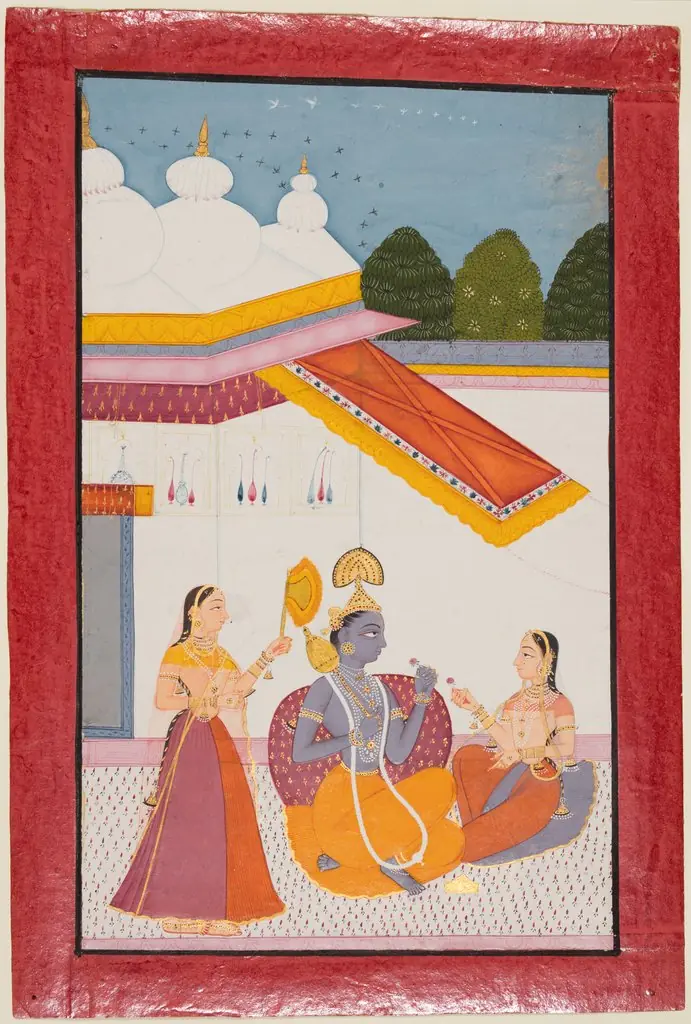 Krishna Under a Canopy
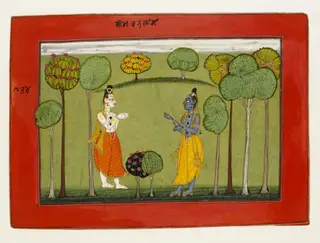 Rama and Lakshman
 Untitled
 Raja Ajmer Chand of Bilaspur
 Sri Nathji
 Krishna with Guru in Palace Scene
 Parasurama, the sixth avatar of Vishnu