Artwork
Verloren zoon
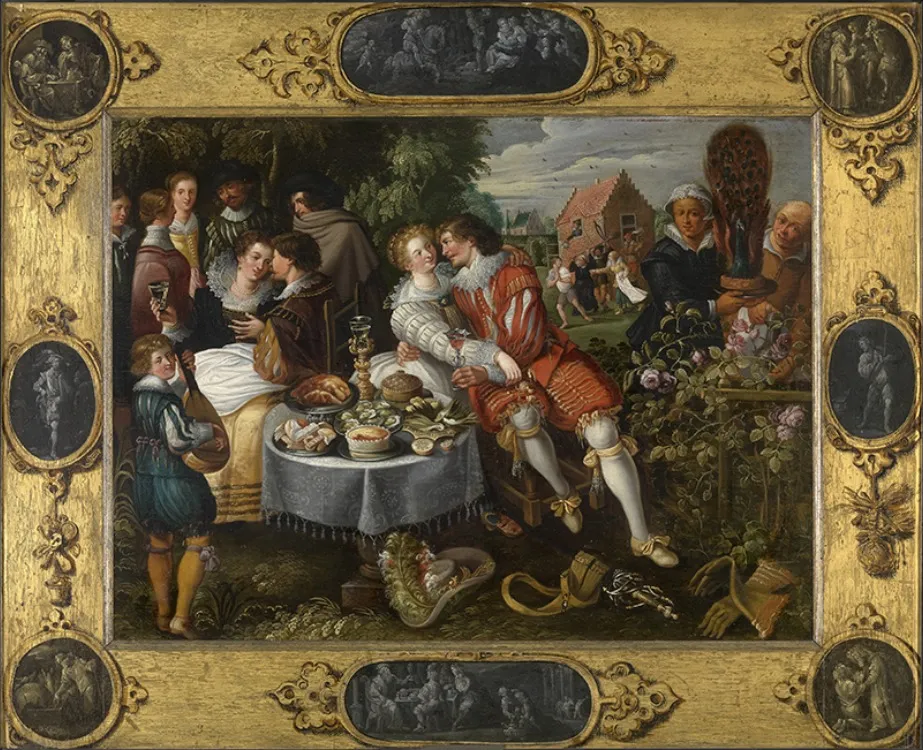
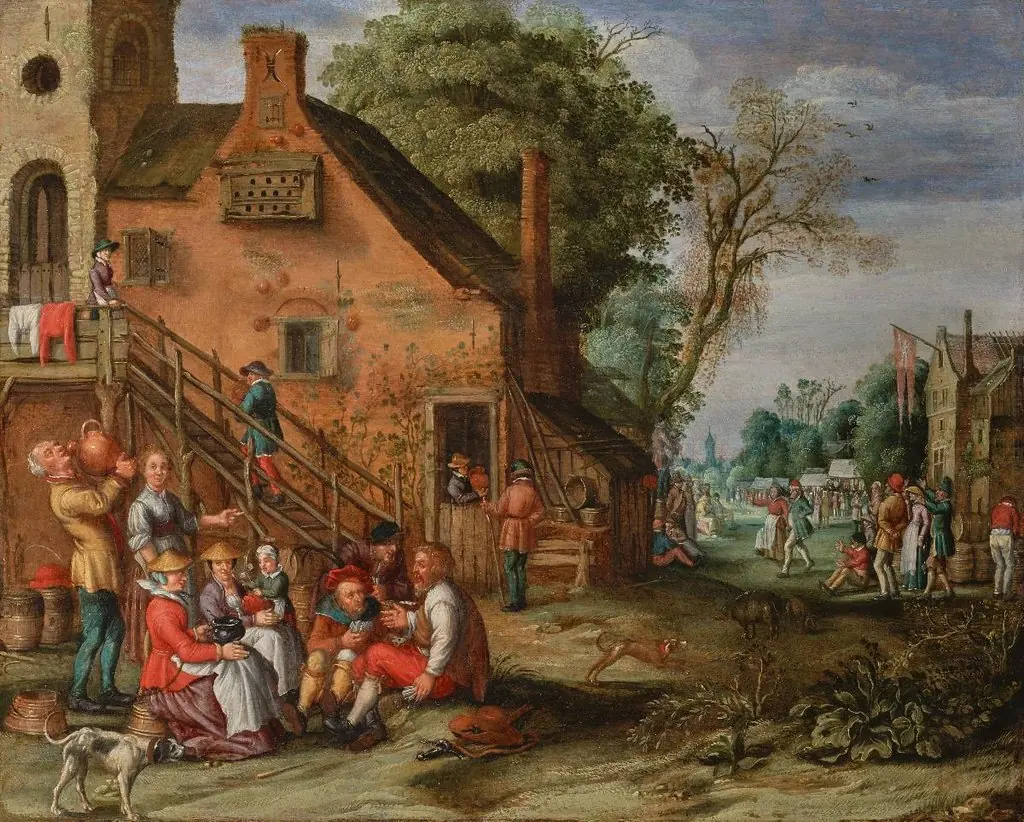
Verloren zoon is an oil painting by the Early Baroque Italian artist Unknown. It dates from 1601 and is held in the collection of the Groeningemuseum.
About this work
Subject & Meaning
These symbols are drawn from the religious genre of early 17th-century Southern Netherlands art, as documented in the Groeningemuseum’s collection description.
The painting portrays the Parable of the Prodigal Son, a biblical narrative of a son’s return after squandering his inheritance. Iconographic elements include a house, a glove, a musician, a bird, and a table, each reinforcing themes of repentance and forgiveness. These symbols are drawn from the religious genre of early 17th-century Southern Netherlands art, as documented in the Groeningemuseum’s collection description.
The work measures 55.8 cm in height and 75.8 cm in width, reflecting its original panel dimensions.
The subject draws directly from the Parable of the Prodigal Son, a story emphasizing divine mercy and redemption, which aligns with the religious context of its creation in 1601.
Technique & Style
Verloren zoon is an oil painting executed on panel, classified within the religious genre and dated to 1601. The work measures 55.8 cm in height by 75.8 cm in width, a horizontal format suited to its narrative scope. Its pictorial content encompasses a range of motifs associated with the Parable of the Prodigal Son, including a house, a table, a glove, a musician, and a bird, indicating a densely populated compositional field.
Stylistically, the painting reflects the idiom of an anonymous master from the Southern Netherlands active in the first half of the seventeenth century, consistent with Flemish narrative traditions of the period. The handling of multiple figures and domestic detail within a single panel points to a careful, descriptive approach typical of small-scale cabinet pictures produced in Bruges and its hinterland at the turn of the seventeenth century.
History & Provenance
The painting was created in 1601, as indicated by both the internal record and the Wikidata entry, which situates it within the early 17th century in the Southern Netherlands. The work depicts the Parable of the Prodigal Son and is attributed to an anonymous master active during this period.
The painting is currently held in the collection of the Groeningemuseum in Bruges, Belgium. Its dimensions are recorded as 55.8 cm in height by 75.8 cm in width, and it is executed in oil on panel.
Legacy
The painting's attribution to a follower of Pieter Bruegel the Elder has shaped its scholarly reception, with the Groeningemuseum in Bruges preserving it as a key example of early 17th-century anonymous religious art from the Southern Netherlands. Its visual narrative of the Prodigal Son has informed studies on Baroque-era didactic painting and the symbolic use of domestic objects like gloves and birds in moral allegory.
Overview
The oil painting titled Verloren zoon portrays an animated outdoor gathering. A group of figures, dressed in ornate clothing, surrounds a table laden with food and drink, suggesting a festive occasion. In the distance, a modest house and trees frame the scene, situating the event in a rural landscape. The overall composition conveys a sense of conviviality and warmth.
Context
Although specific details about the artist are not provided, the work aligns with 19th‑century genre scenes that celebrate everyday life and regional customs. The emphasis on elaborate dress and a countryside setting reflects a nostalgic interest in rural festivities, a common motif among painters who sought to document social rituals of their time.
Artist & collection









- Esther, Ahasuerus, and Haman
 Esther, Ahasuerus, and Haman
 Elegant company dining in the open air
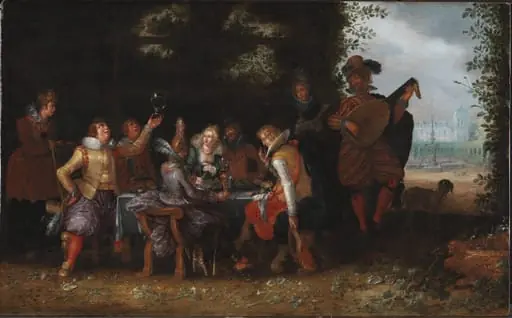 Christ Healing at the Pool of Bethesda
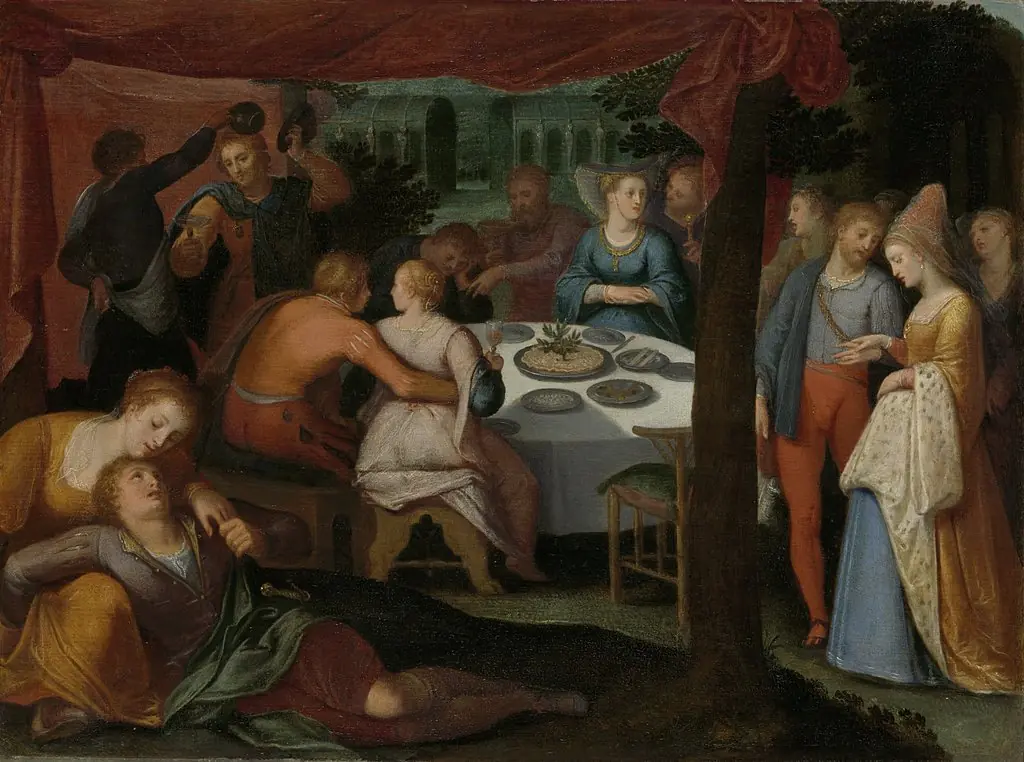 Evening Meal in the Woods
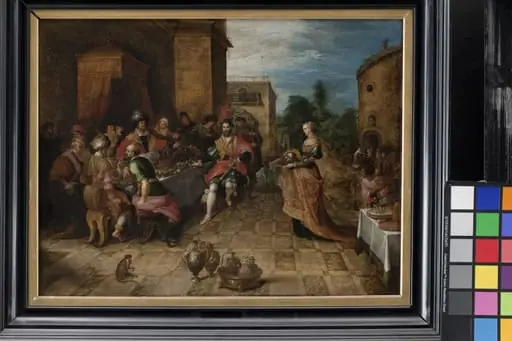 The Banquet of Herod. Salome Presents the Head of John the Baptist
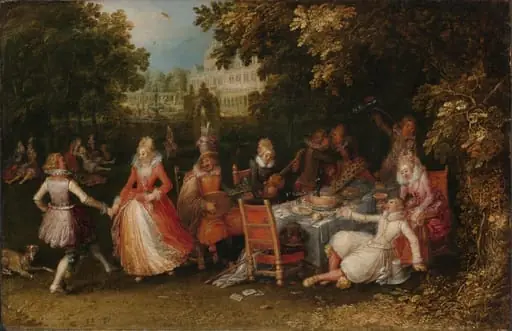 The Fête Champêtre
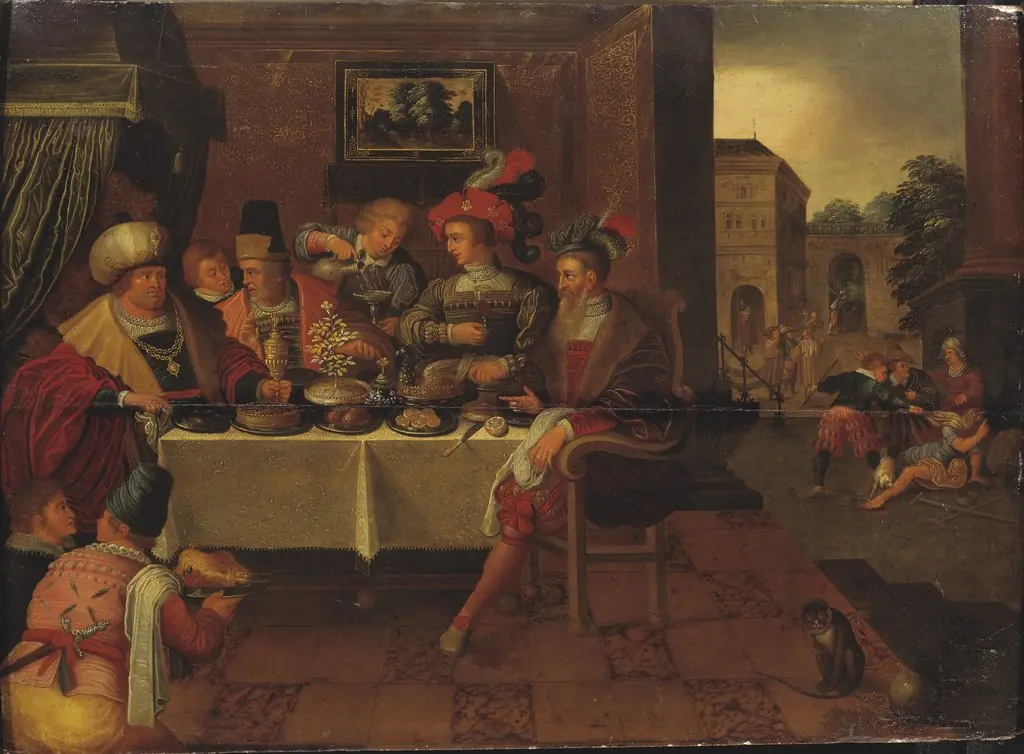 The Rich Man and Lazarus
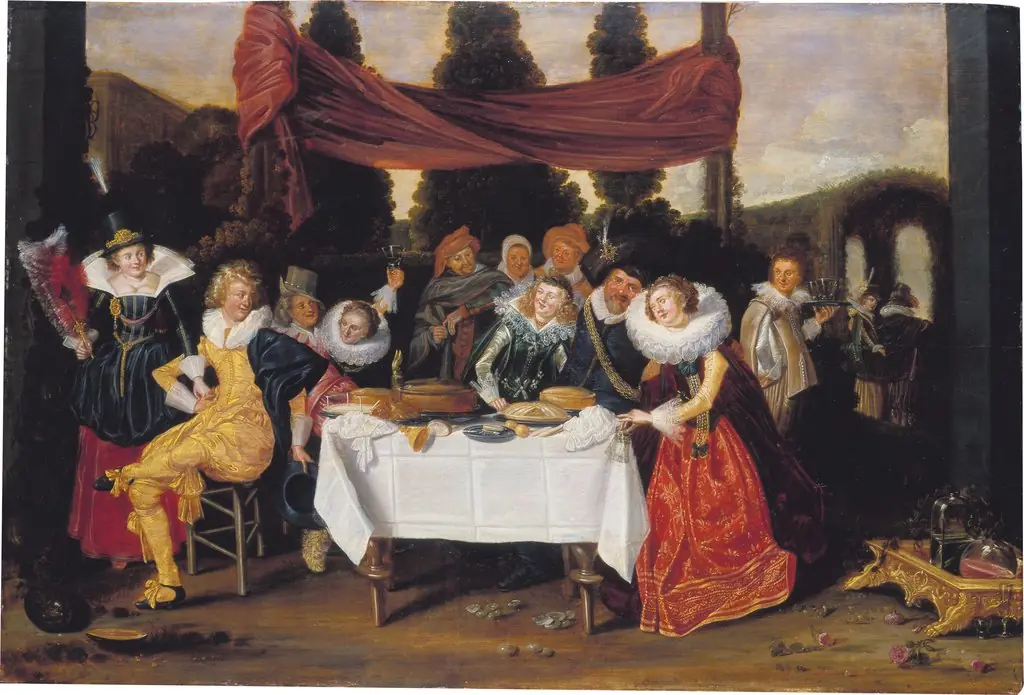 Merry Company
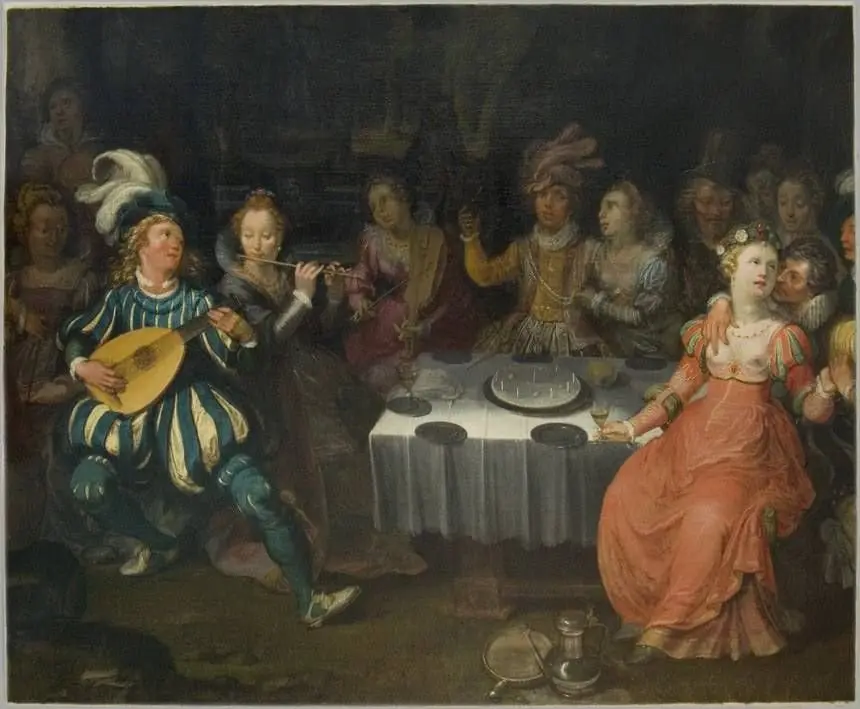 Amusing Company
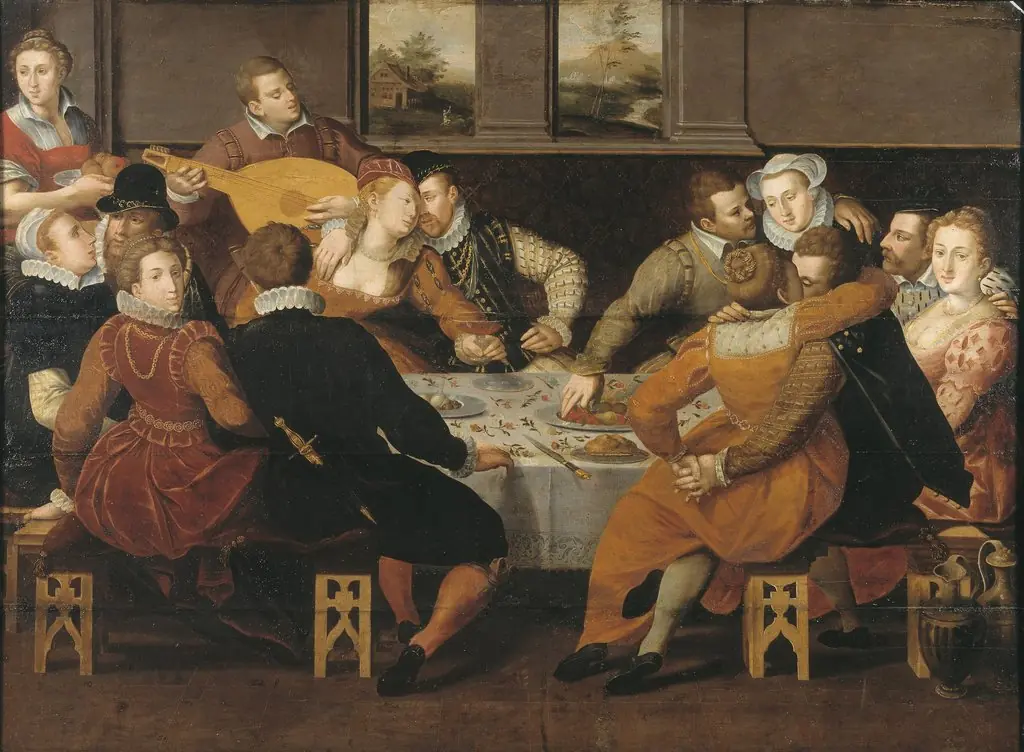 Sinful Mankind Surprised by the Day of Judgment
 Frühling