Artwork
View of the Rock at Trichinopoly
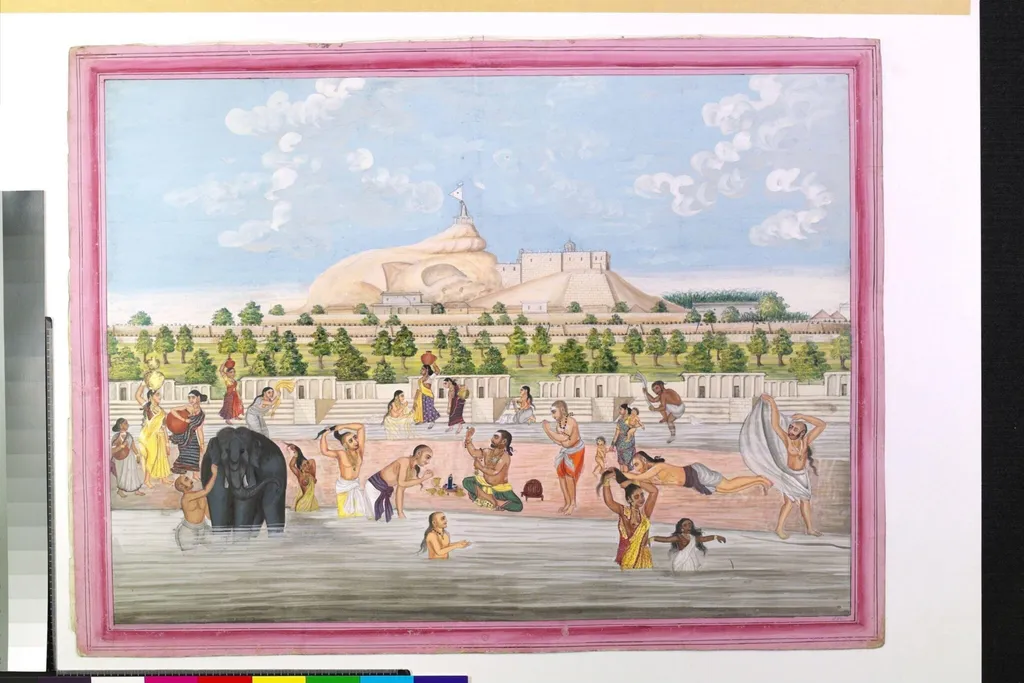
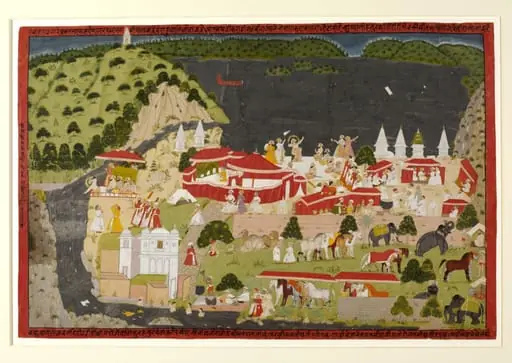
View of the Rock at Trichinopoly is a paint painting by the Romanticist artist Unknown. It dates from 1800 and is held in the collection of the Victoria and Albert Museum. The work is one of a ten‑panel series portraying regional festivals.
About this work
Overview
The work is one of a ten‑panel series portraying regional festivals. It captures a bustling riverside near a prominent rocky hill crowned by a temple, with figures engaged in bathing, laundry, and ritual activity. An elephant stands at the water’s edge, while a small dog paddles nearby, adding a touch of everyday life to the ceremonial setting.
Subject & Meaning
The scene illustrates communal purification rites along the Cauvery River, where participants cleanse themselves, wash garments, and perform puja. The mixture of clothed women in bright saris and partially undressed figures reflects varied social roles and the informal, festive atmosphere of the gathering, suggesting a blend of religious devotion and communal recreation.
Technique & Style
Soft, fluffy clouds and a line of trees frame the composition, while the use of color differentiates textiles, skin tones, and the river’s reflective surface.
Rendered in a detailed, narrative style, the painting balances expansive landscape with close‑up human activity. Soft, fluffy clouds and a line of trees frame the composition, while the use of color differentiates textiles, skin tones, and the river’s reflective surface. The inclusion of minute details, such as a fan‑holding figure and a swimming dog, demonstrates the artist’s observational precision.
History & Provenance
Created as part of a commissioned series of ten festival scenes, the piece likely originated in the early nineteenth century for a patron interested in documenting South Indian customs. The series was later acquired by a European collection, eventually entering the holdings of a major museum where it is displayed alongside related works from the same program.
Context
The painted hilltop temple corresponds to an actual landmark in Trichinopoly, anchoring the composition in a recognizable geographic locale. By juxtaposing the sacred structure with lively, secular activity, the work reflects the intertwined nature of religious observance and daily life in the region during the period.
Artist & collection









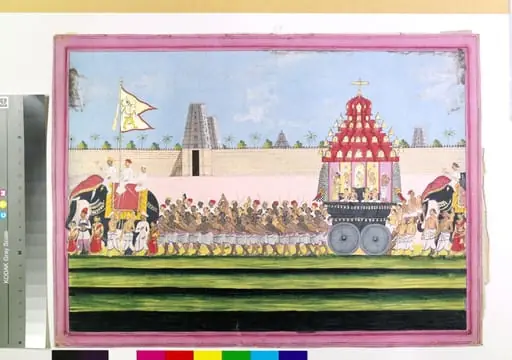 Procession with festival car
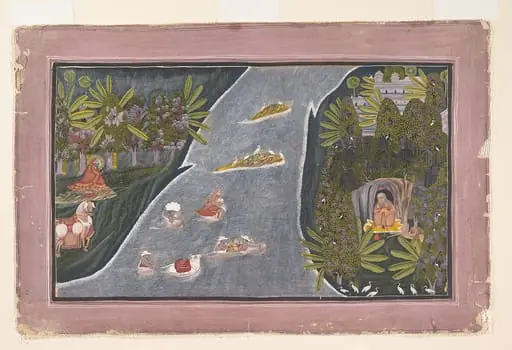 Untitled
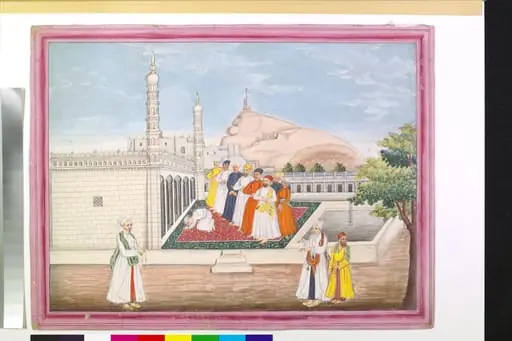
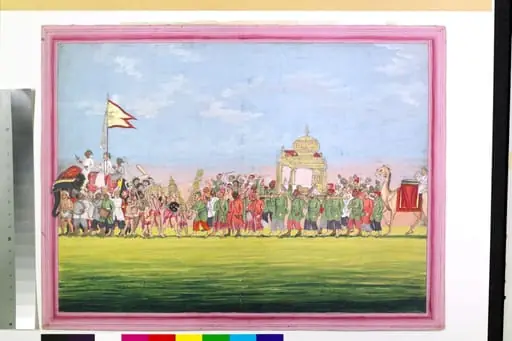 Muslim festival scene
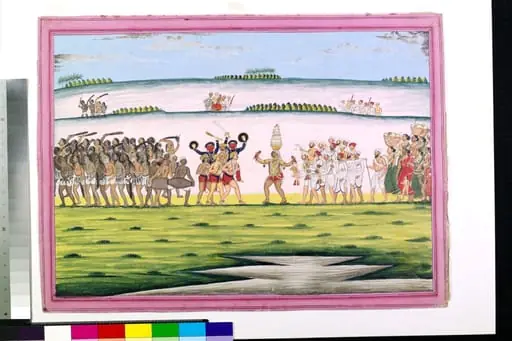 The smallpox ceremony
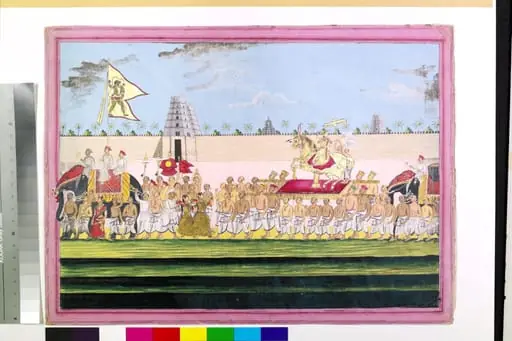 Gold Figure of Ranganata
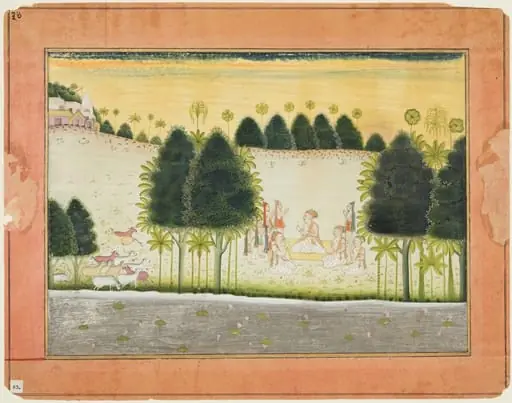 Nanda and the Elders in Council with the Cowherds, from a Bhagavata Purana
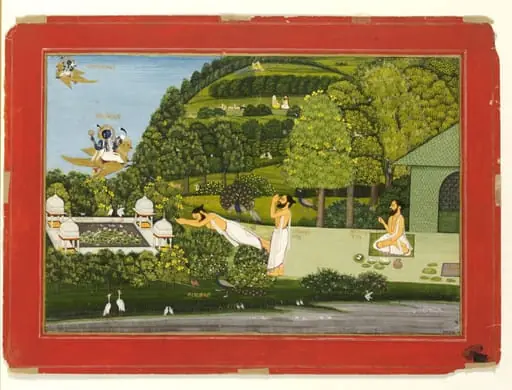 A yogi worshipping Vishnu on Garuda
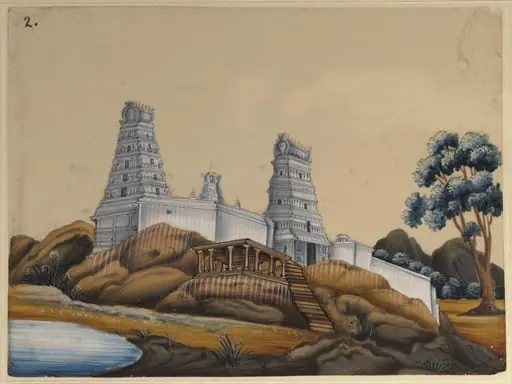 One of sixteen paintings of unidentified South Indian temples.
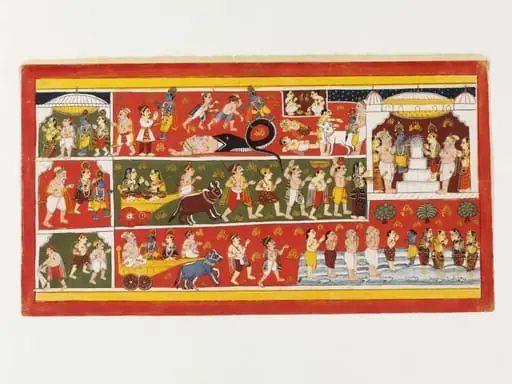 Krishna and Nanda
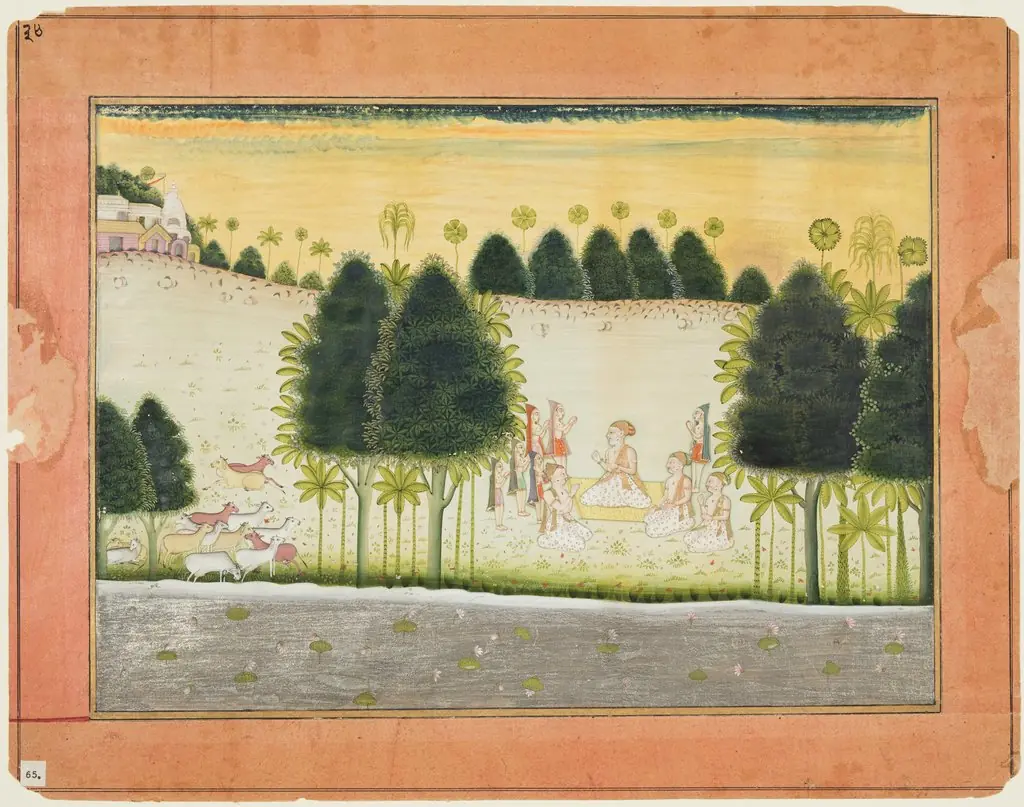 Nanda and the Elders in Council with the Cowherds, from a Bhagavata Purana
 Maharana Sangram Singh
- Prayers at the mosque