Artwork
Virgin and Child in an Apse
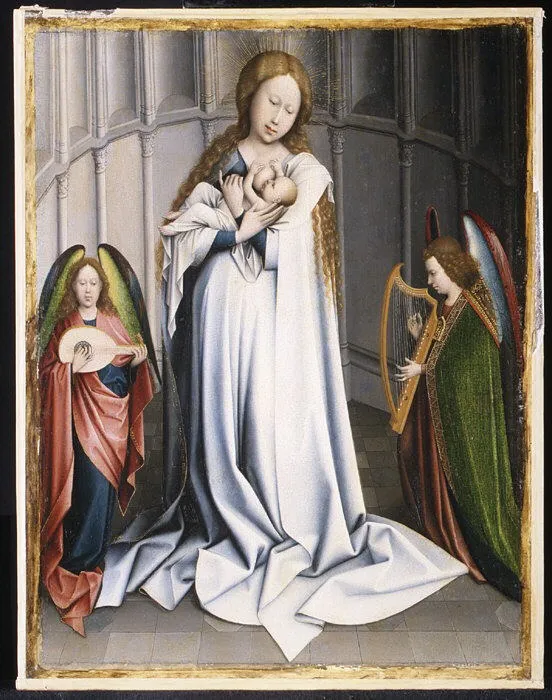
Virgin and Child in an Apse is an oil painting. It dates from 1500 and is held in the collection of the Metropolitan Museum of Art.
About this work
Subject & Meaning
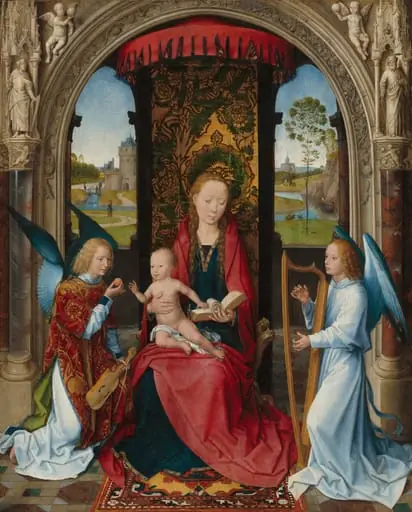
The painting's primary subject is the Nursing Madonna, depicting the Virgin Mary breastfeeding the Christ Child within an interior architectural setting.
The painting's primary subject is the Nursing Madonna, depicting the Virgin Mary breastfeeding the Christ Child within an interior architectural setting. This intimate maternal portrayal emphasizes the human nature of Christ and the Virgin's nurturing role. The iconography is enriched by the inclusion of angels and musical instruments, specifically a harp and a lute.
These instruments carry deep symbolic resonance in Marian iconography, often alluding to the harmony of the cosmos, the Psalms, and Mary's role as the vessel of the Incarnation. Set within an apse, the architectural framework further elevates the figures, visually associating the domestic, maternal act of nursing with sacred, altar-like space, thereby merging themes of human motherhood with divine significance.
Technique & Style
Virgin and Child in an Apse is an oil painting on canvas, reflecting the Early Netherlandish tradition of the late 15th to early 16th century. The work measures 45.1 by 34.3 centimeters and is attributed to a follower or copyist of Robert Campin. Executed in oil paint, the medium allows for meticulous detail and subtle gradations of light, characteristic of Flemish technique.
The composition features finely rendered textures, particularly in the drapery of the Virgin’s garments and the delicate depiction of musical instruments, such as the harp and lute. The handling exhibits precise brushwork, with careful attention to spatial depth within the architectural apse setting. Condition details remain unspecified, though the use of oil on canvas suggests potential vulnerabilities to craquelure or paint loss over time.
History & Provenance
Virgin and Child in an Apse is dated to circa 1500 and was produced in Flanders as a canvas oil painting that copies a composition by Robert Campin. The work entered the collection of the Metropolitan Museum of Art, where it is currently housed; earlier owners are not recorded in the available sources. No specific commission is documented, but its creation as a Netherlandish‑style devotional panel reflects the workshop practice of reproducing Campin’s popular Madonna and Child motifs in the early sixteenth century.
Context
The Virgin and Child in an Apse, dated 1500, exemplifies Early Netherlandish devotional painting through its meticulous oil‑on‑canvas execution and intimate interior setting. As a copy after Robert Campin, the work reflects the workshop traditions of early sixteenth‑century Flanders and the broader circulation of devotional imagery. Its iconography centers on a Nursing Madonna, depicting the Christ Child breastfeeding amid angels, a harp, and a lute, a motif that scholars have linked to evolving notions of maternal devotion.
The painting’s inclusion in the Metropolitan Museum of Art underscores its recognition within contemporary scholarship and highlights its significance within the trajectory of Northern Renaissance art.
Overview
"Virgin and Child in an Apse" is an oil painting that portrays a central female figure tenderly holding an infant. The setting is an architectural space reminiscent of a church interior, featuring tall, arched windows and dark stone floors. Two additional figures are positioned behind the main pair: one plays a harp, while the other holds a luminous orb. The artwork presents a familiar religious theme through its composition and imagery.
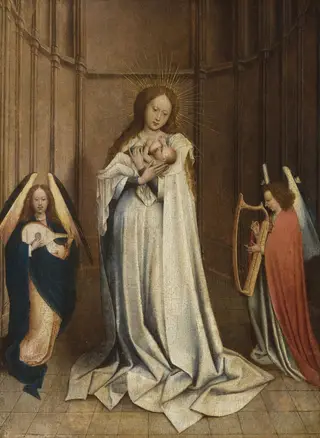
Artist & collection

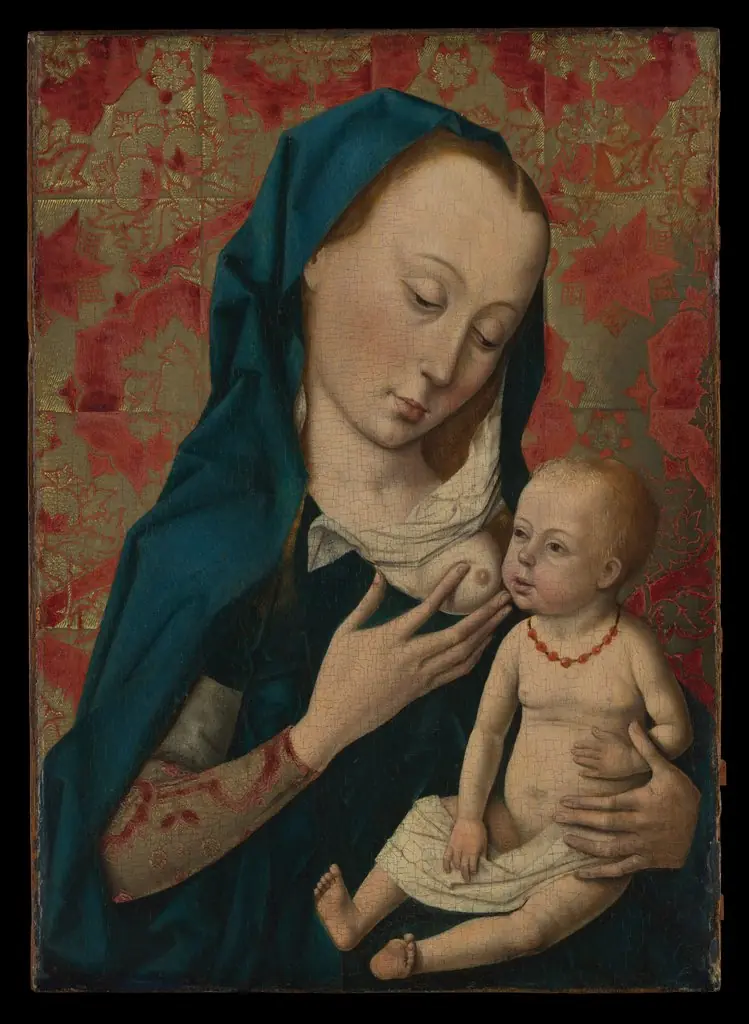 Virgin and Child
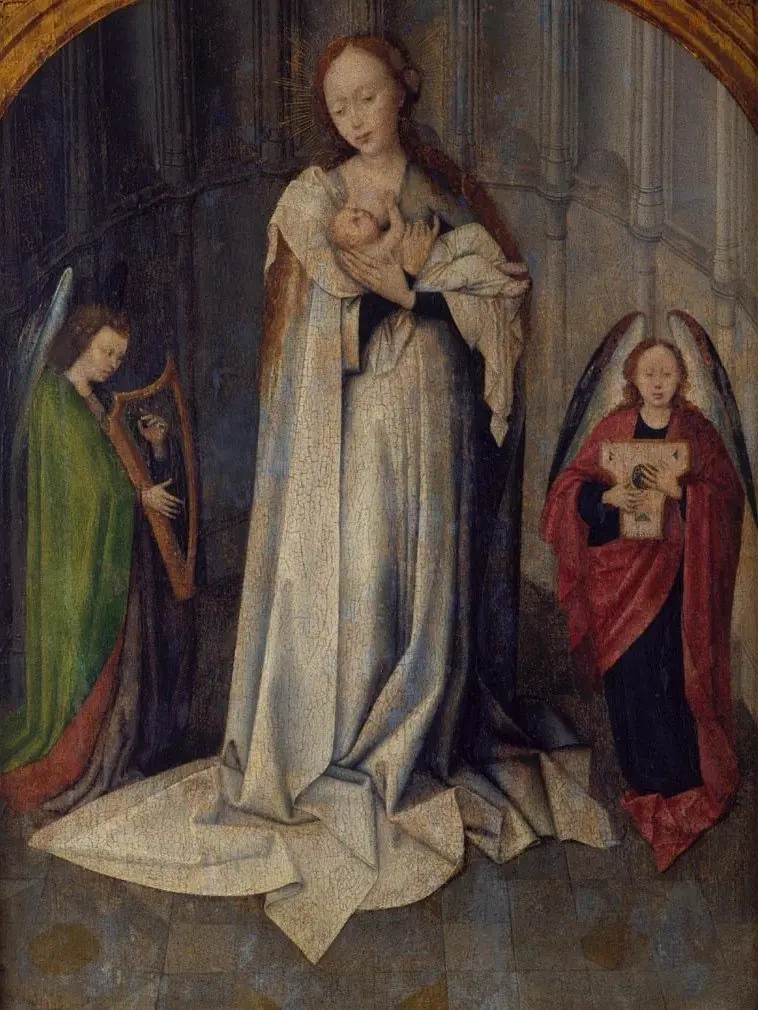 Virgin and Child with Musician Angels
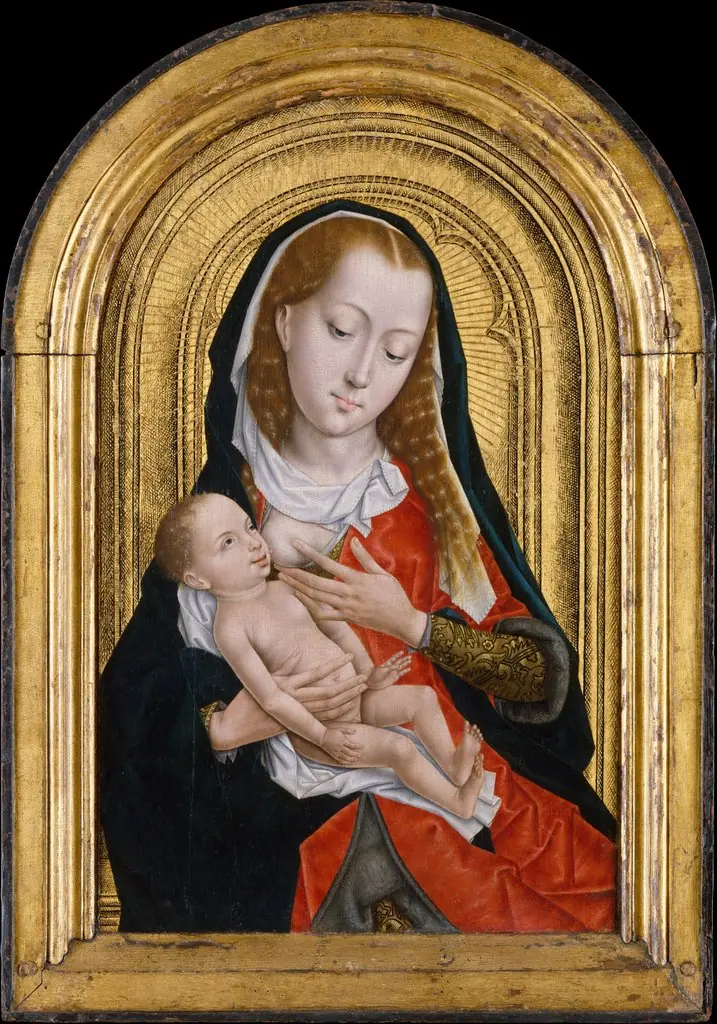 Virgin and Child
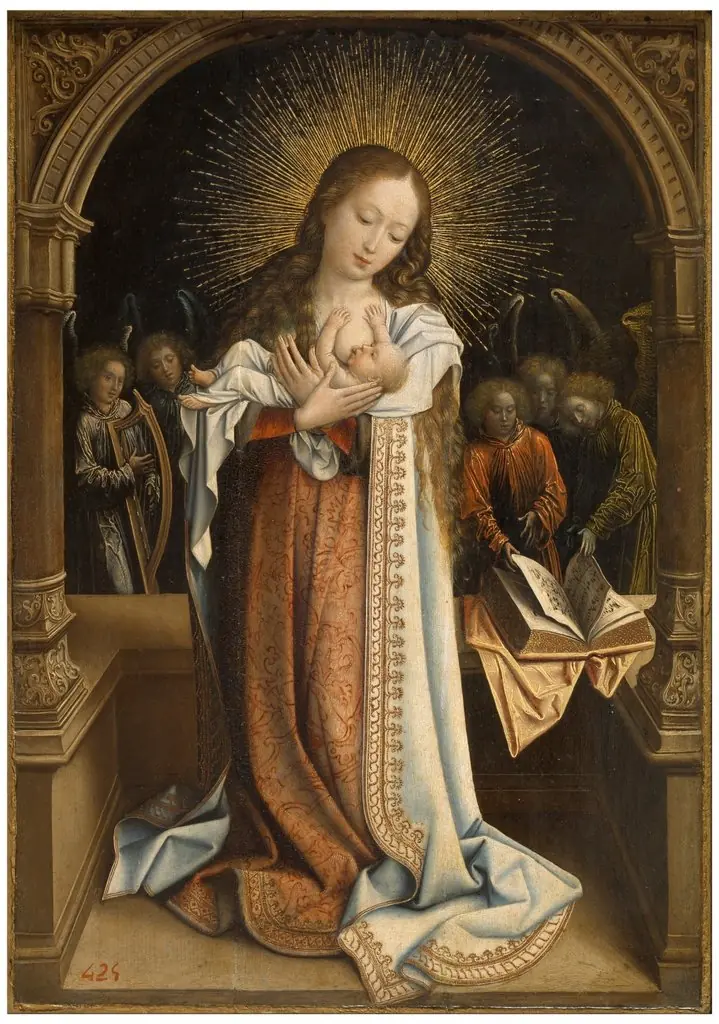 The Virgin Nursing the Child
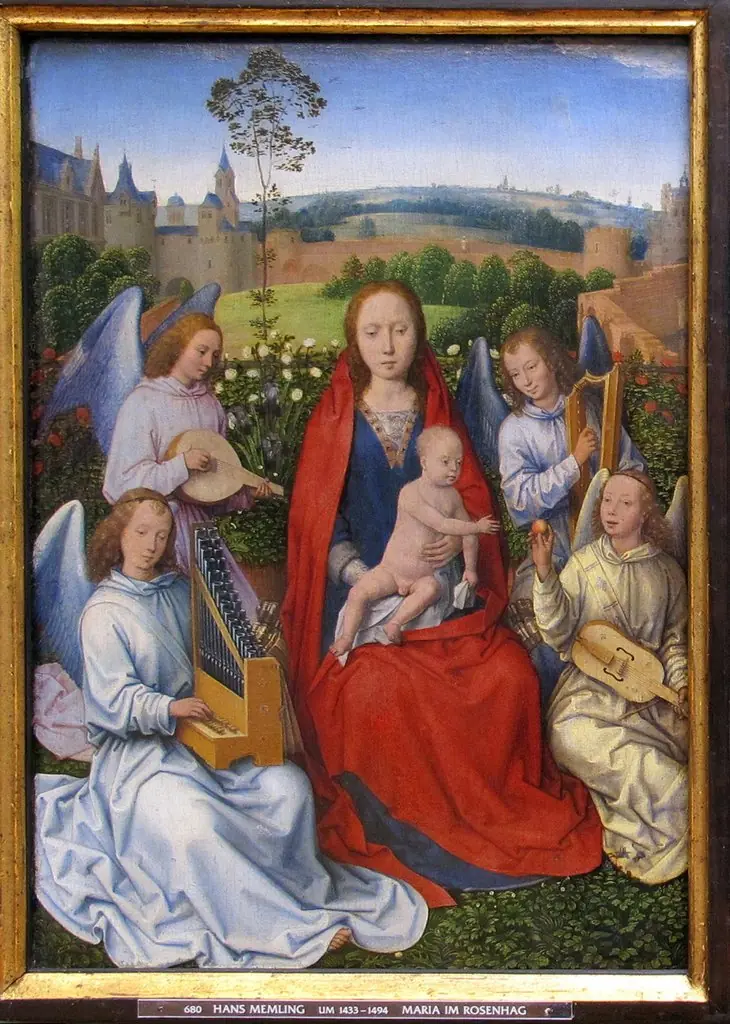 Madonna of the Rose Bower
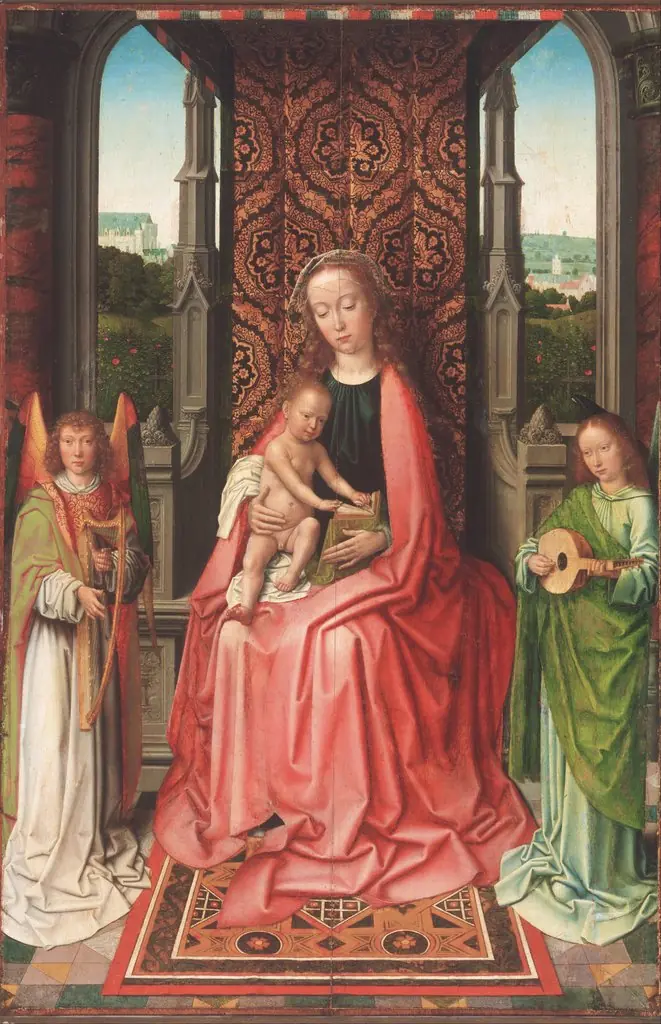 Enthroned Virgin and Child, with Angels
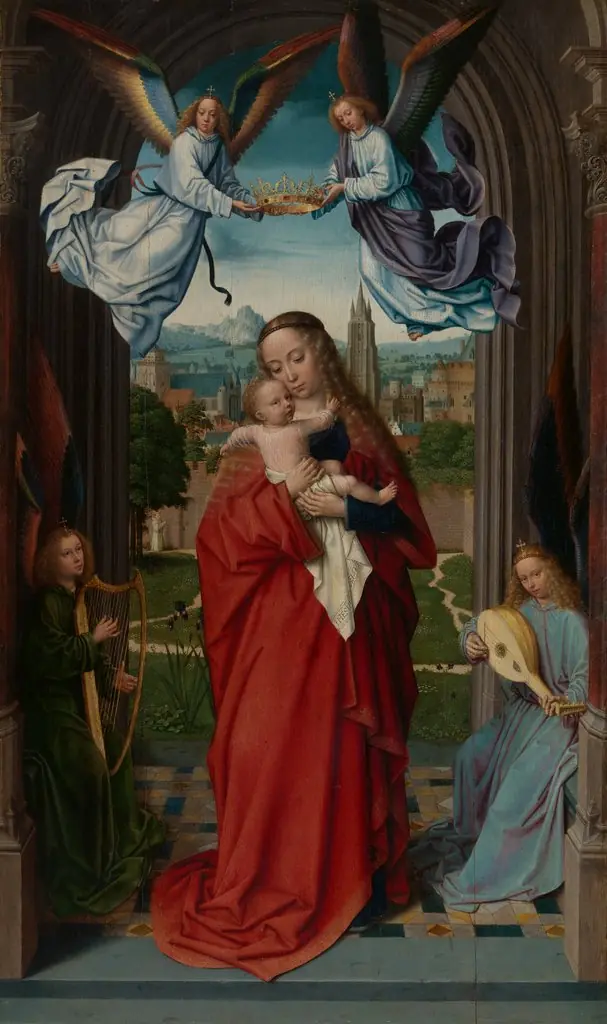 Virgin and Child with Four Angels
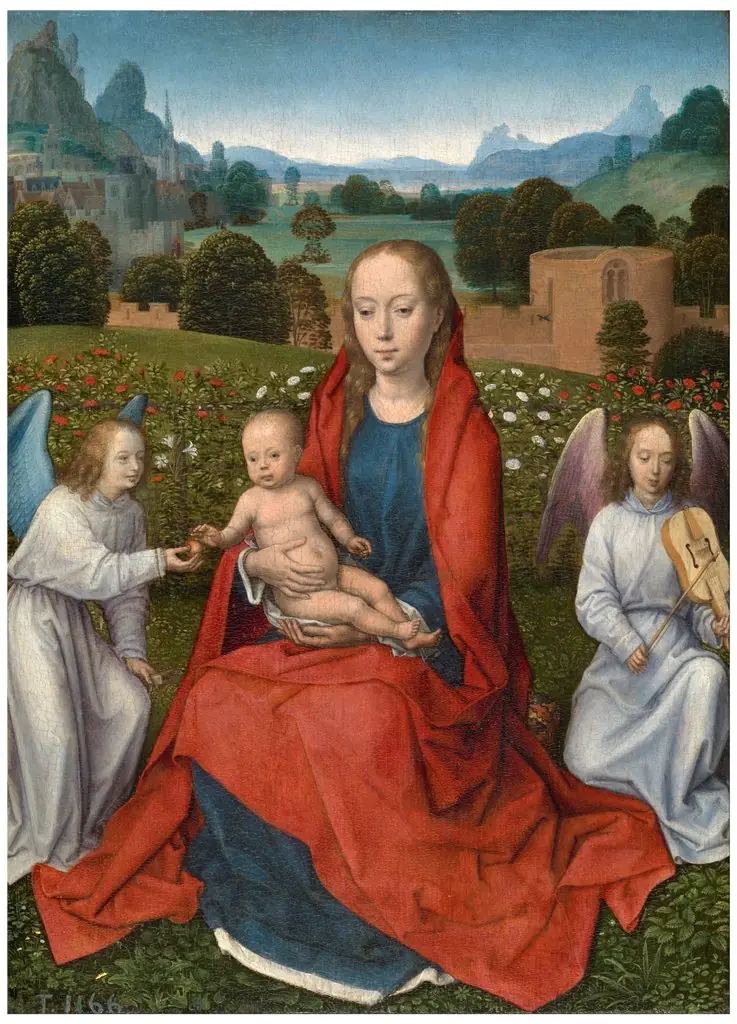 Virgin and Child with two angels
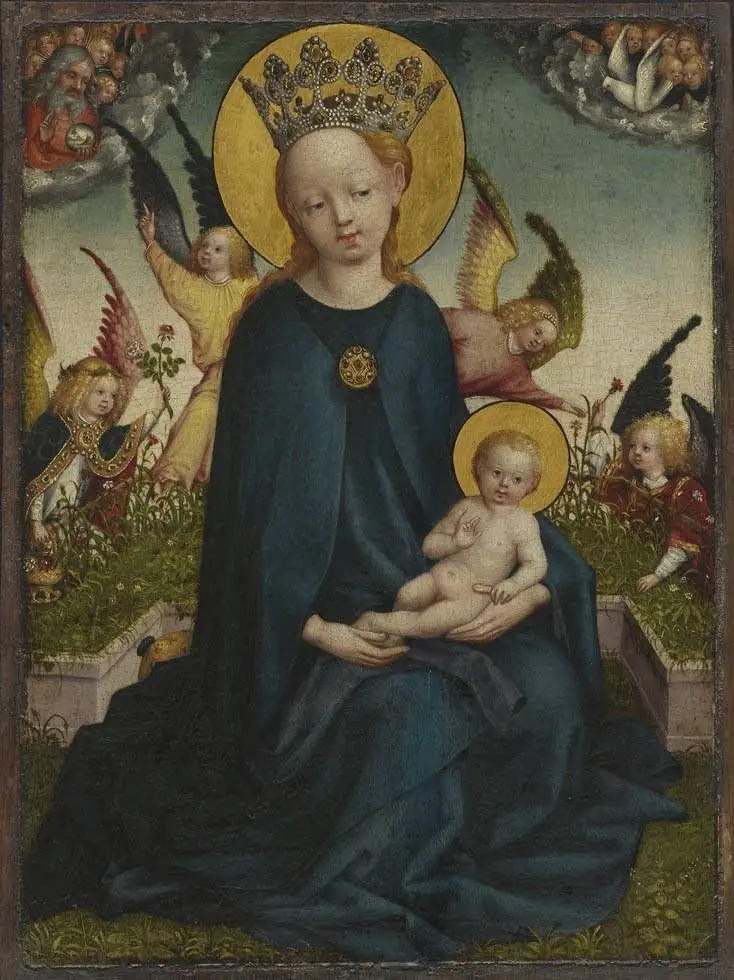 Mary with the Christ-child next to a plant trough
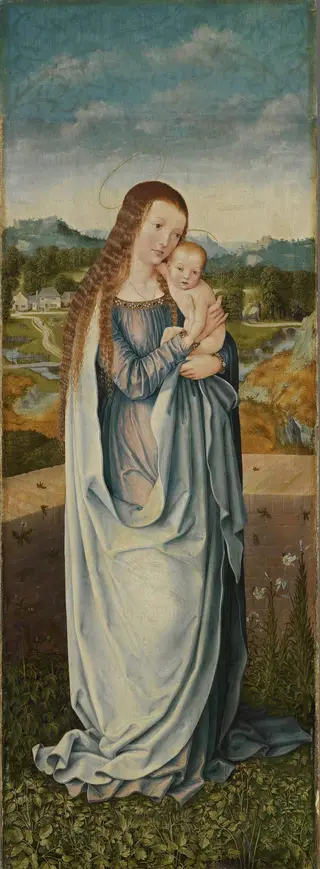 Universitätsaltar: Maria mit dem Kind Rückseite: Hl. Christophorus
 Madonna and Child with Angels
- Virgin and Child, with Two Angels in an Apse