Artwork
Vishnu as a child
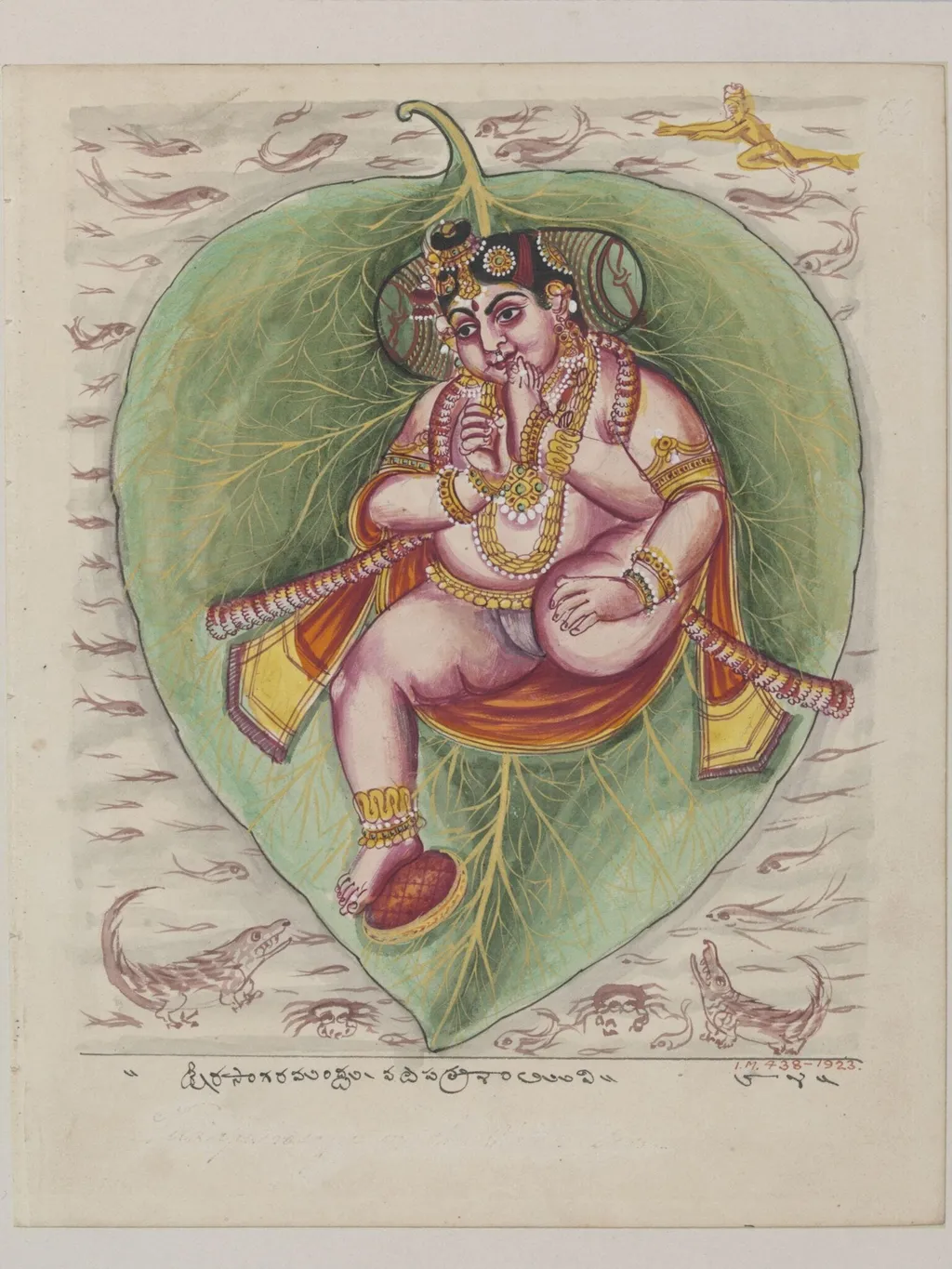
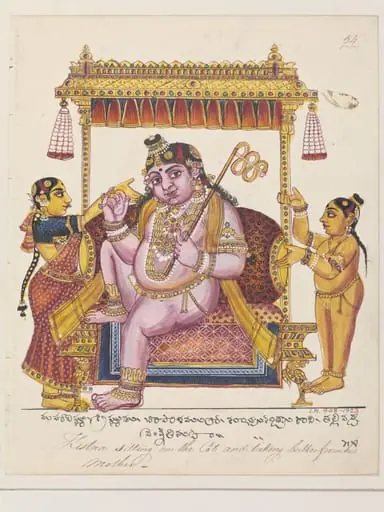
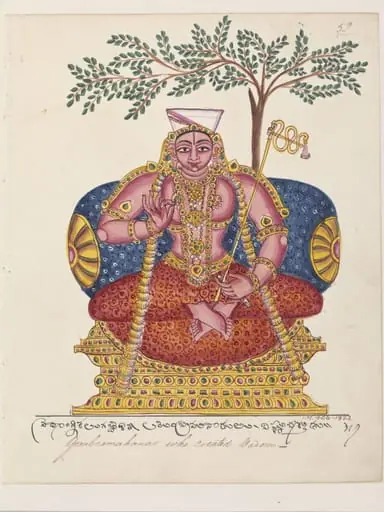
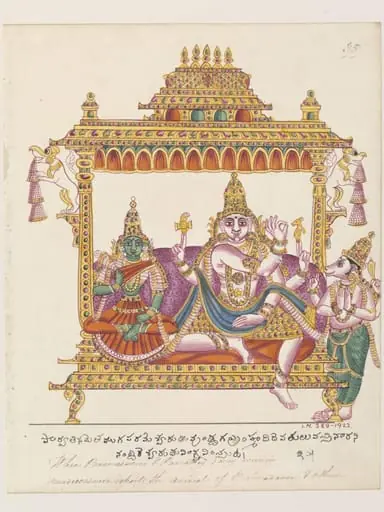
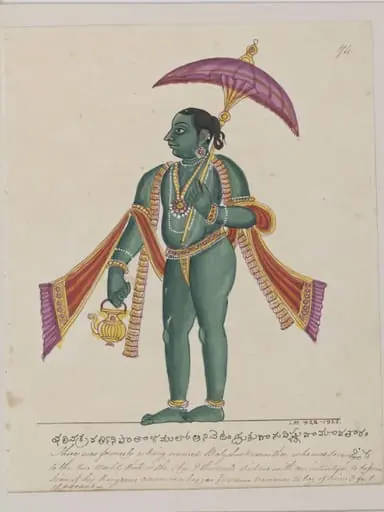
Vishnu as a child is a paint painting by the Romanticist artist Unknown. It dates from 1825 and is held in the collection of the Victoria and Albert Museum. This small-scale painting portrays the Hindu deity Vishnu in childhood form, reclining on a large banyan leaf adrift in water.
About this work
Overview
This small-scale painting portrays the Hindu deity Vishnu in childhood form, reclining on a large banyan leaf adrift in water.
This small-scale painting portrays the Hindu deity Vishnu in childhood form, reclining on a large banyan leaf adrift in water. Part of a series of one hundred devotional images from South India, the scene captures a moment of quiet divine repose. The child’s posture, one foot raised to the mouth, echoes traditional iconography of Vishnu’s infantile manifestations, rendered with delicate precision and symbolic intent.
Subject & Meaning
The image reflects a lesser-known episode in Vishnu’s mythology, where he is depicted as a child in a state of serene self-contemplation. Sucking his toe symbolizes inner focus and cosmic self-sufficiency, a gesture tied to early divine awareness. The floating leaf and surrounding fish suggest the primordial waters of creation, reinforcing Vishnu’s role as sustainer of the universe even in infancy.
Technique & Style
The artist employs fine brushwork to render intricate gold jewelry and the leaf’s veined surface, contrasting with the muted, fluid tones of the fish. Color is used sparingly but effectively: the leaf’s vibrant green and yellow veins anchor the composition, while the fish’s gradations of brown and gray imply motion without disrupting stillness. Light is subtly modeled to suggest depth, enhancing the illusion of water and air.
History & Provenance
The painting belongs to a documented series of devotional illustrations produced in South India, likely for private worship or temple use. Such series were often compiled by regional workshops under patronage from local elites or religious institutions. While the exact origin and date remain unconfirmed, stylistic elements align with late 17th- to early 18th-century traditions of Tamil or Kannada miniature painting.
Context
In South Indian devotional culture, childhood forms of deities were especially valued for their accessibility and symbolic purity. Depictions of infant Vishnu, often shown in natural settings, emphasized divine presence within the everyday world. This image aligns with broader trends in Bhakti-era art, where intimacy and emotional resonance replaced grandeur in religious representation.
Legacy
Though not widely exhibited, this work contributes to a sustained tradition of depicting Vishnu’s early life in miniature painting. Its quiet composition and symbolic detail influenced later regional styles, preserving a visual language that connected theological concepts with intimate, naturalistic scenes. The series as a whole remains a key resource for understanding devotional aesthetics in pre-colonial South India.
Artist & collection