Artwork
Vishnu, Sesha, Indra and Demons in Sea of Eternity
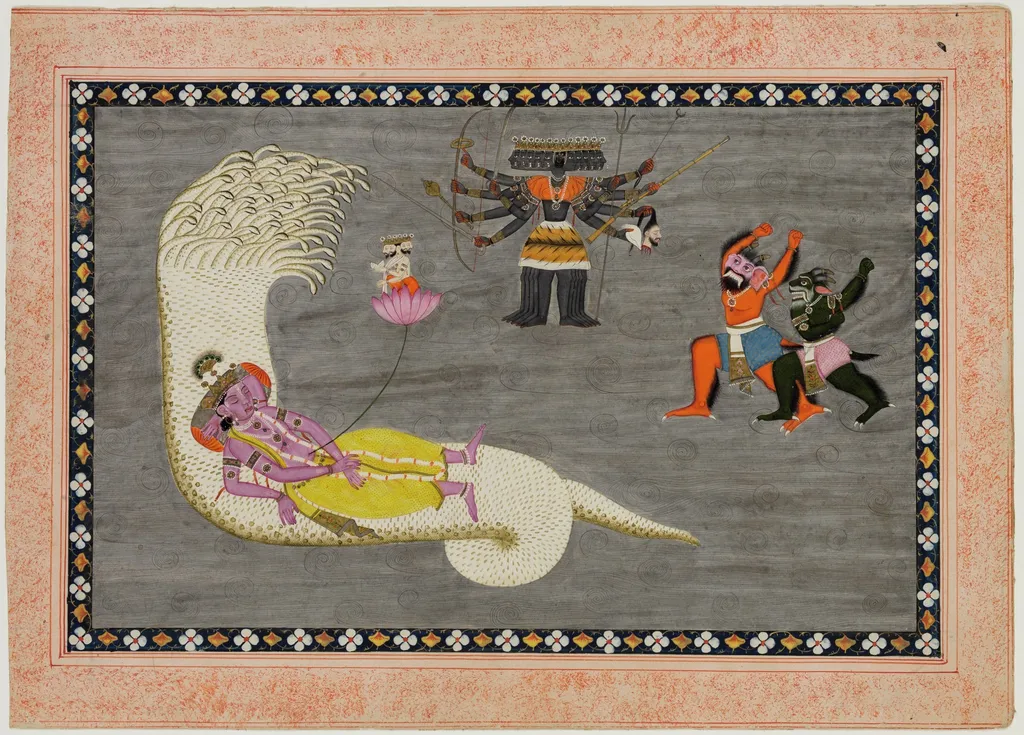
Vishnu, Sesha, Indra and Demons in Sea of Eternity is an unspecified painting by the Patna School of Painting artist Unknown. It dates from 1800 and is held in the collection of the Detroit Institute of Arts. This painting depicts a scene from Hindu cosmology, centering on Vishnu reclining on the cosmic serpent Sesha amid the primordial ocean.
About this work
Overview
This painting depicts a scene from Hindu cosmology, centering on Vishnu reclining on the cosmic serpent Sesha amid the primordial ocean.
This painting depicts a scene from Hindu cosmology, centering on Vishnu reclining on the cosmic serpent Sesha amid the primordial ocean. The composition follows the conventions of Indian miniature painting, with rich pigments, fine linework, and flattened spatial depth. Figures are arranged hierarchically, emphasizing divine presence over naturalistic perspective, while the background’s muted tones isolate the divine actors in a timeless realm.
Subject & Meaning
Vishnu, identified by his purple skin and ornate crown, rests upon Sesha, the multi-hooded serpent symbolizing eternity and cosmic support. Above him, Indra rides a celestial creature, likely representing his role as king of the gods. Below, two demons engage in combat, suggesting the perpetual struggle between divine order and chaotic forces. The scene encapsulates the cyclical nature of creation and preservation in Hindu thought.
Technique & Style
Executed in the Indian miniature tradition, the work employs mineral pigments and fine brushwork to render intricate details in garments, jewelry, and serpent scales. Colors are saturated yet controlled, with gold and orange accents contrasting against gray and deep tones. The lack of perspective and the emphasis on symbolic form reflect devotional rather than naturalistic aims, typical of regional courtly painting styles.
History & Provenance
The painting likely originated in a Rajput or Pahari court workshop during the 17th or 18th century, a period when illustrated Hindu epics were commissioned by royal patrons. Its preservation suggests it was part of a manuscript or album intended for private devotion or courtly display. No definitive record of its early ownership exists, but its style aligns with works from the Punjab Hills or Mewar regions.
Context
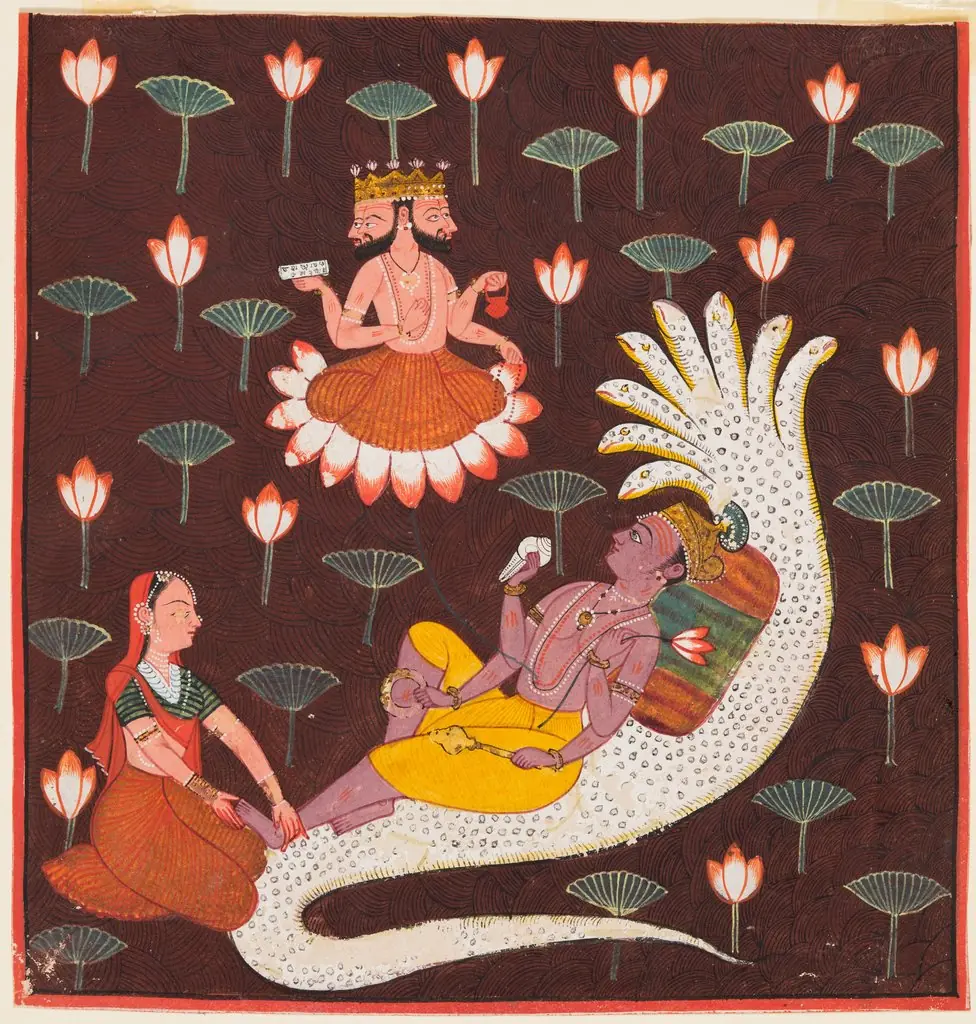
Depictions of Vishnu on Sesha were common in devotional art, symbolizing the divine resting between cosmic cycles. Indra’s presence reinforces the hierarchy of deities, while the battling demons may reference mythological episodes like the churning of the ocean. Such imagery served both spiritual instruction and aesthetic pleasure, bridging religious narrative with elite artistic patronage in pre-colonial India.
Legacy
This painting exemplifies how Hindu cosmological themes were visually codified in regional schools, influencing later traditions of religious illustration. Its preservation offers insight into how mythological narratives were sustained through visual culture, even as political landscapes shifted. The stylistic choices continue to inform contemporary interpretations of classical Indian iconography.
Artist & collection









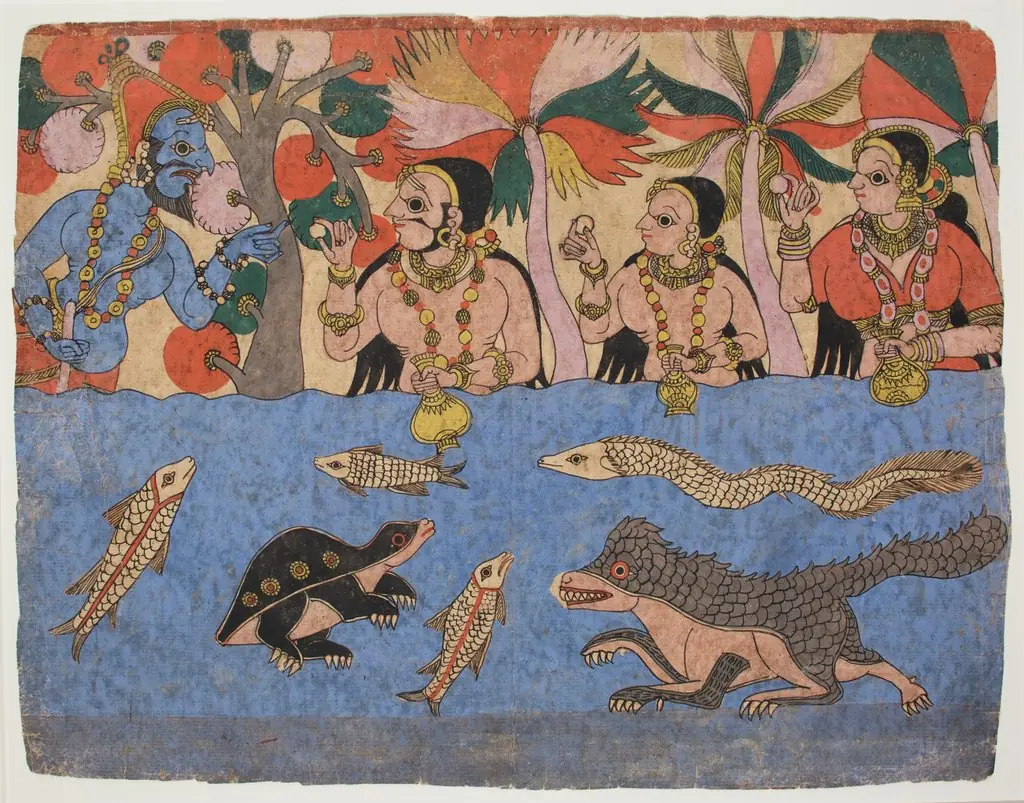 Scene from the Ramayana
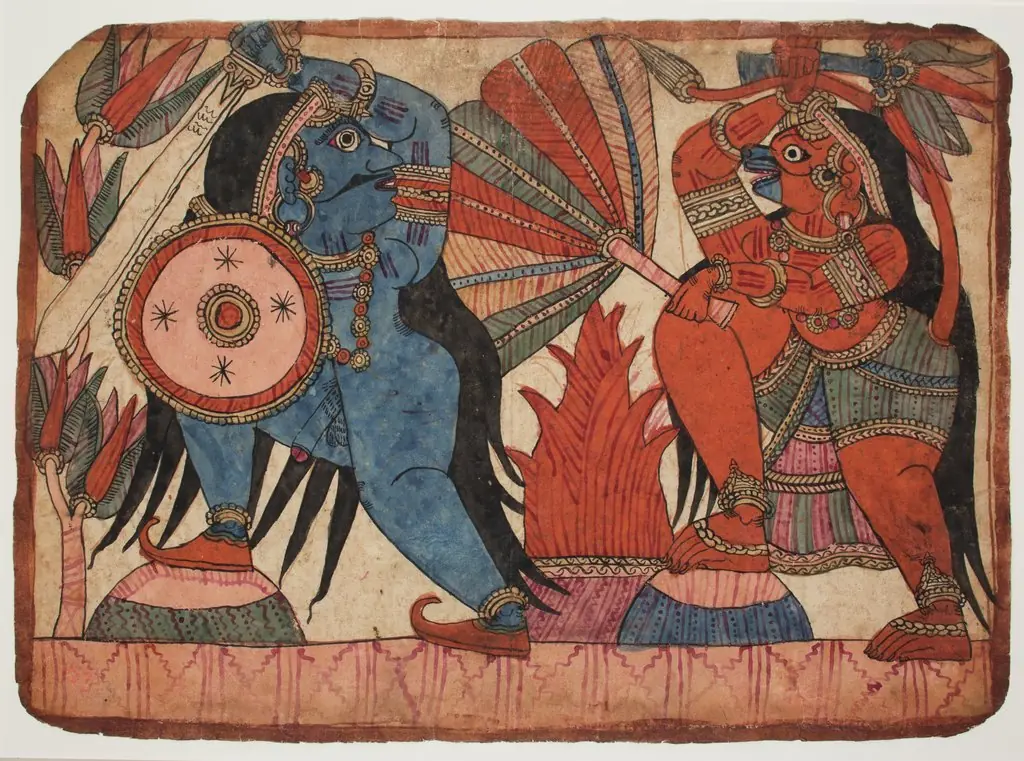 Scene from the Ramayana
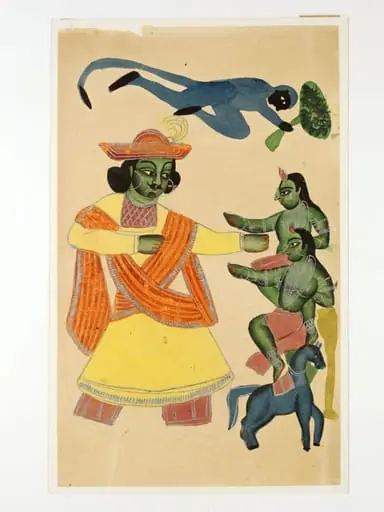 Rama, Kusha and Lava
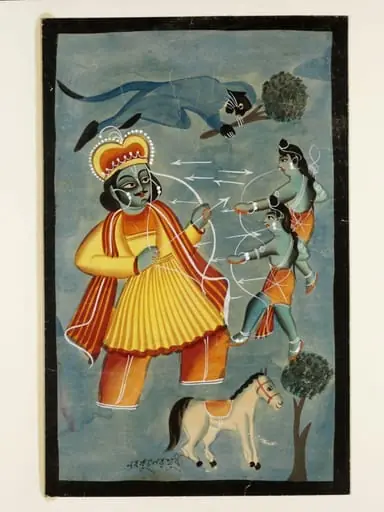 Rama, Lava and Kusha
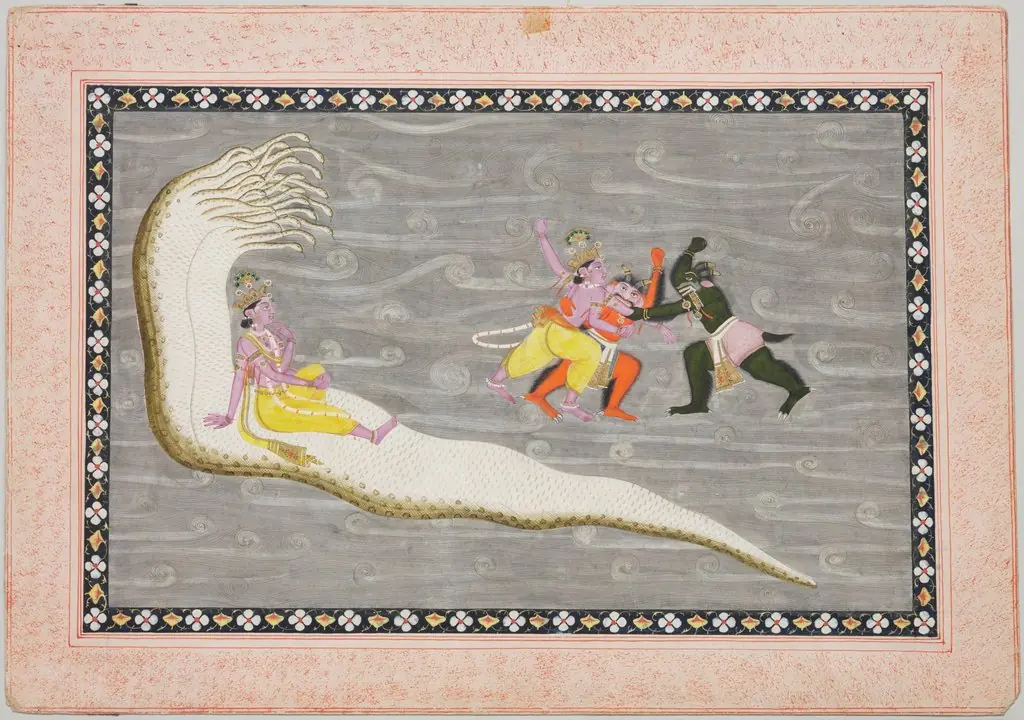 Vishnu on Serpent Shesha and Vishnu Battling Demons Madhu and Kaitabha
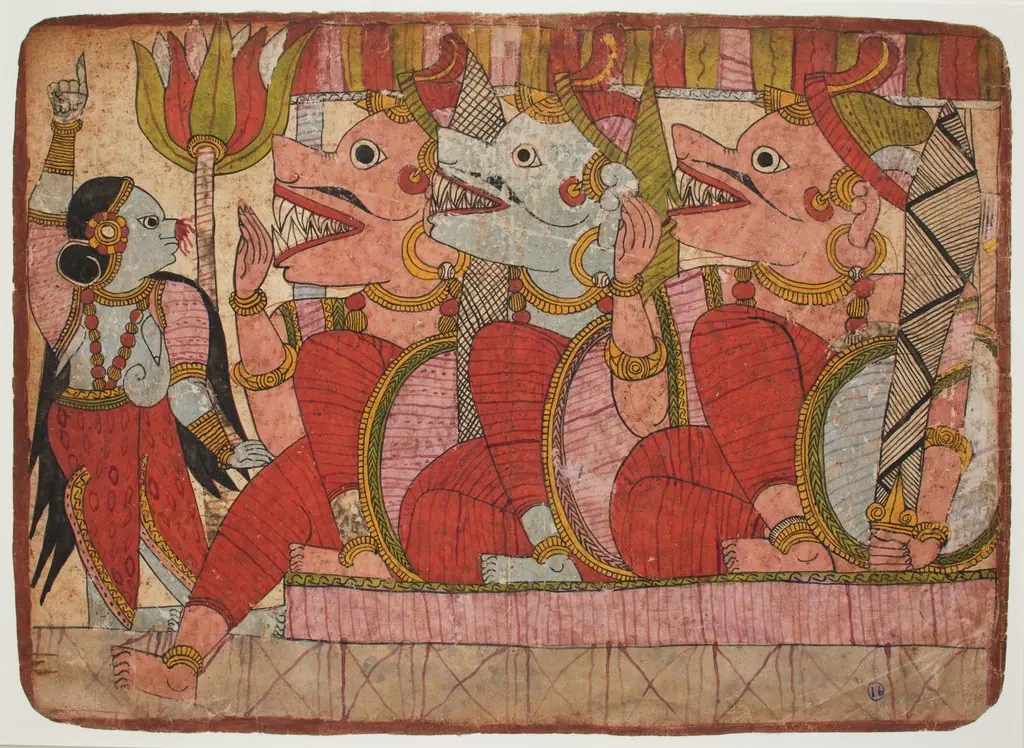 Scene from the Ramayana
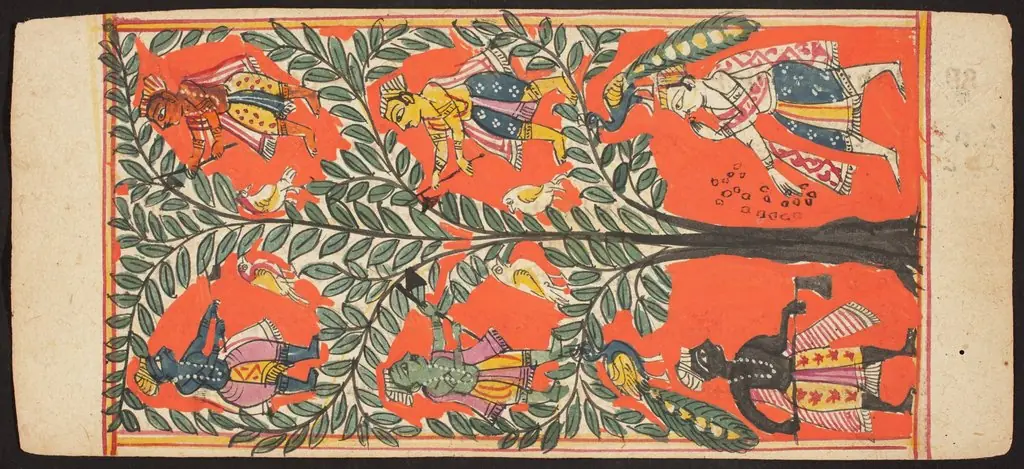 Tantric Manuscript "Sangrahani Sutra"
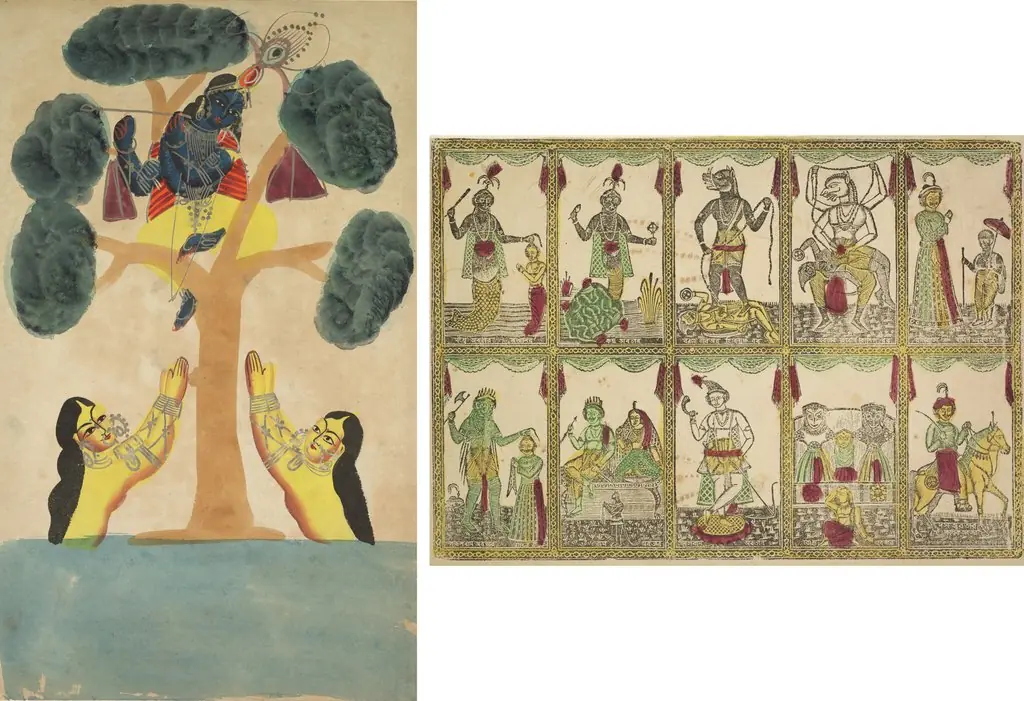 Leaf from a Kalighat album: Krishna Steals the Clothes of the Cowgirls (Gopis) (recto); Das Avataras, Ten Incarnations of Vishnu (verso)
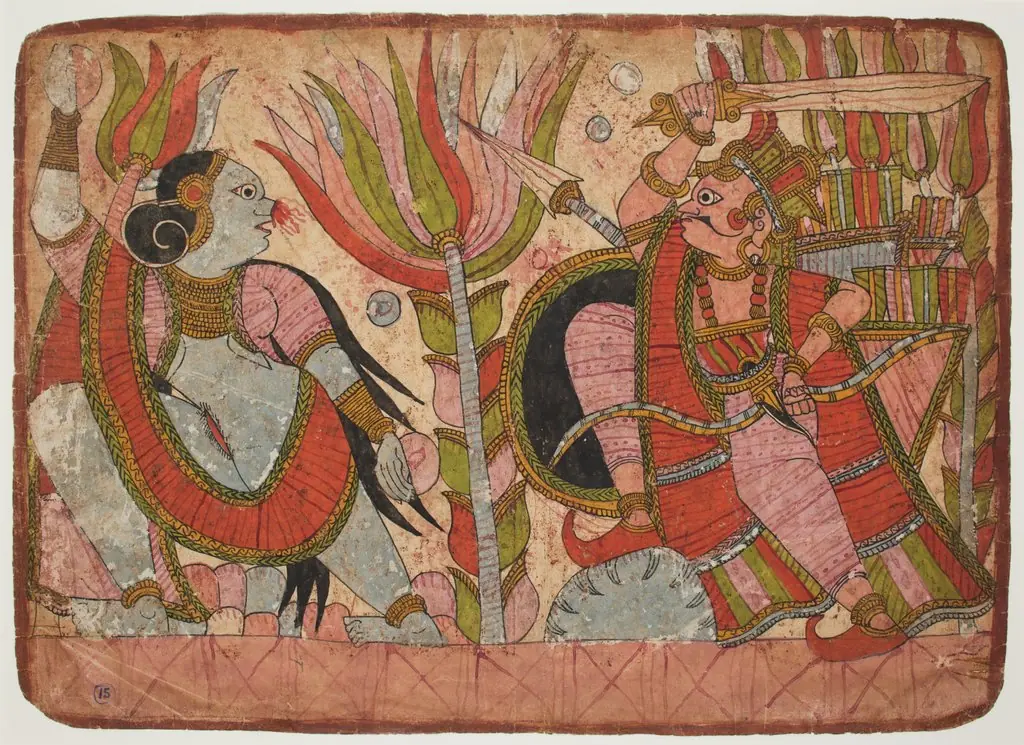 Scene from the Ramayana