Artwork
Votive offering dedicated to the Lord of the Encino
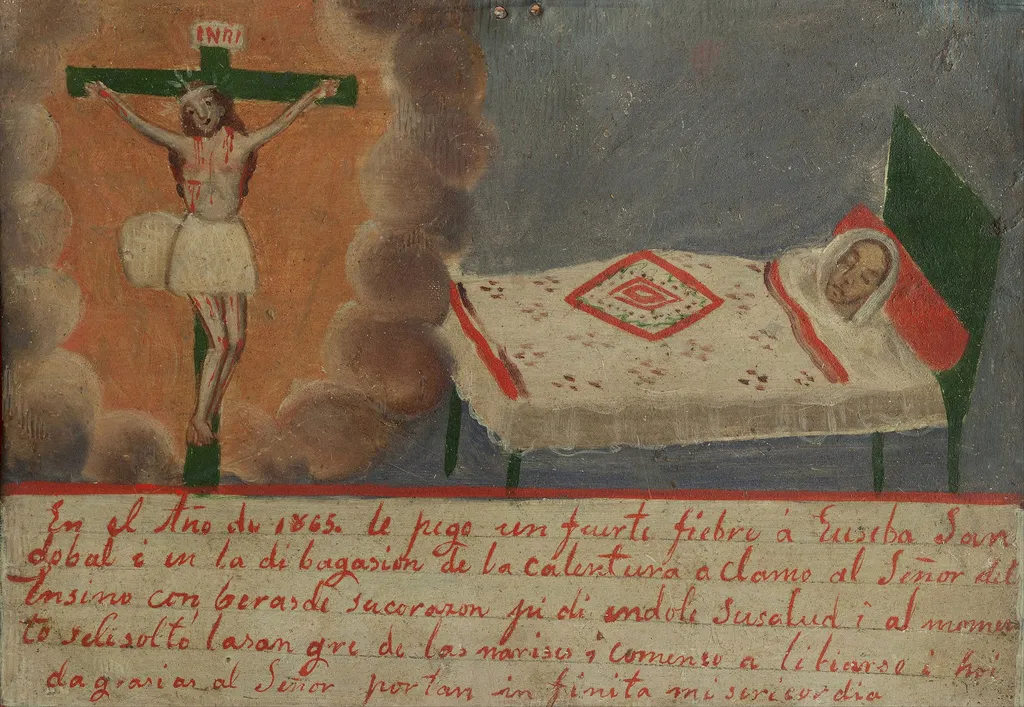
Votive offering dedicated to the Lord of the Encino is an oil painting by the Mexican Casta Painting artist Unknown. It dates from 1865 and is held in the collection of the Frida Kahlo Museum.
About this work
Overview
The work is a copper panel painting titled Votive offering dedicated to the Lord of the Encino.
The work is a copper panel painting titled Votive offering dedicated to the Lord of the Encino. It presents a dual scene: on the left a crucified figure bearing a green cross marked with the inscription “INRI,” clothed only in a white loincloth and stained with blood; on the right a reclining figure lies on a bed, covered by a white blanket and resting on a red pillow. A handwritten Spanish note appears at the bottom of the panel.
Subject & Meaning
The composition juxtaposes the suffering of the crucified Christ with a mortal figure in repose, suggesting a devotional appeal for intercession or gratitude. The presence of the votive inscription and the intimate bedside setting indicate a personal plea or thanksgiving directed to the “Lord of the Encino,” a localized title for the divine, typical of folk religious practices.
Technique & Style
Executed on a copper substrate, the painting employs flat areas of color, predominantly green, red, and white, outlined with bold, unmodulated lines. The folk‑art aesthetic is evident in its straightforward rendering, lack of perspective, and emphasis on symbolic rather than naturalistic detail. The use of copper provides a luminous surface that enhances the vivid hues.
Context
Such votive panels were common in rural Mexican and Southwestern devotional traditions, where artisans created inexpensive, portable images for personal shrines. The handwritten Spanish caption reinforces its function as a specific offering, likely commissioned by an individual or family seeking protection or expressing gratitude to the local patron deity known as the Lord of the Encino.
Artist & collection









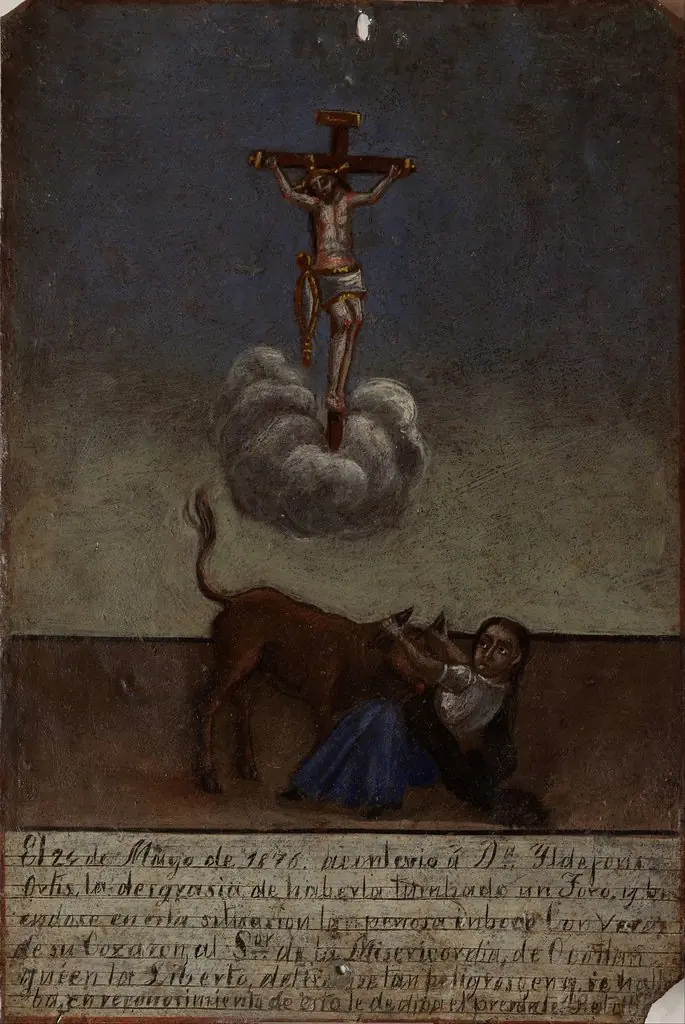
- Votive offering dedicated to the Lord of Mercy
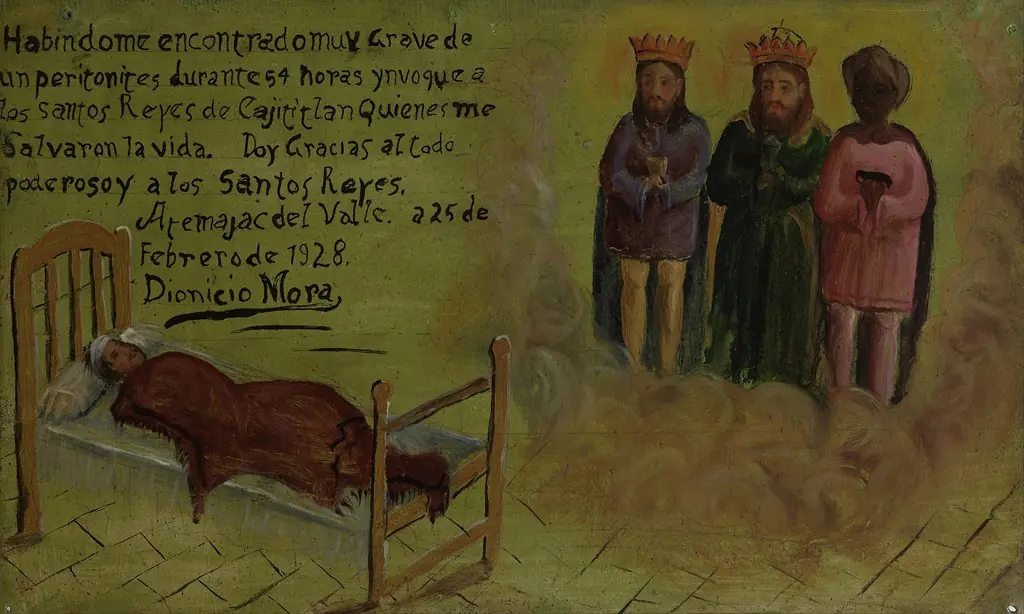 Votive offering dedicated to the Three Wisdom Kings
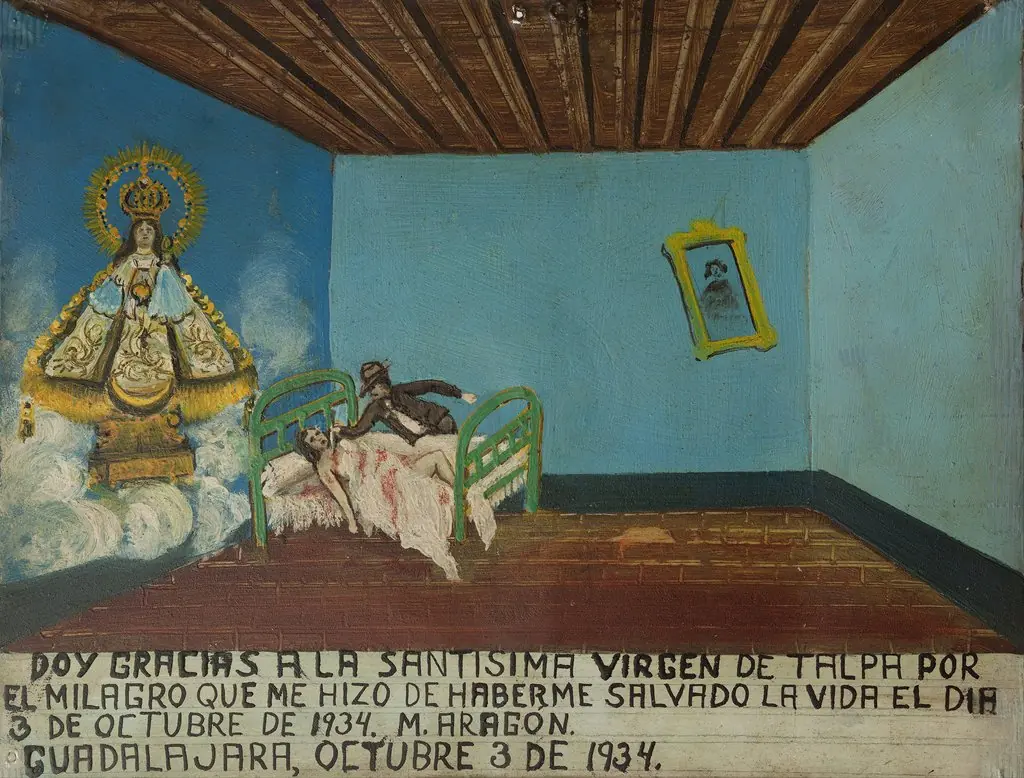 Votive offering dedicated to the Virgin of Talpa
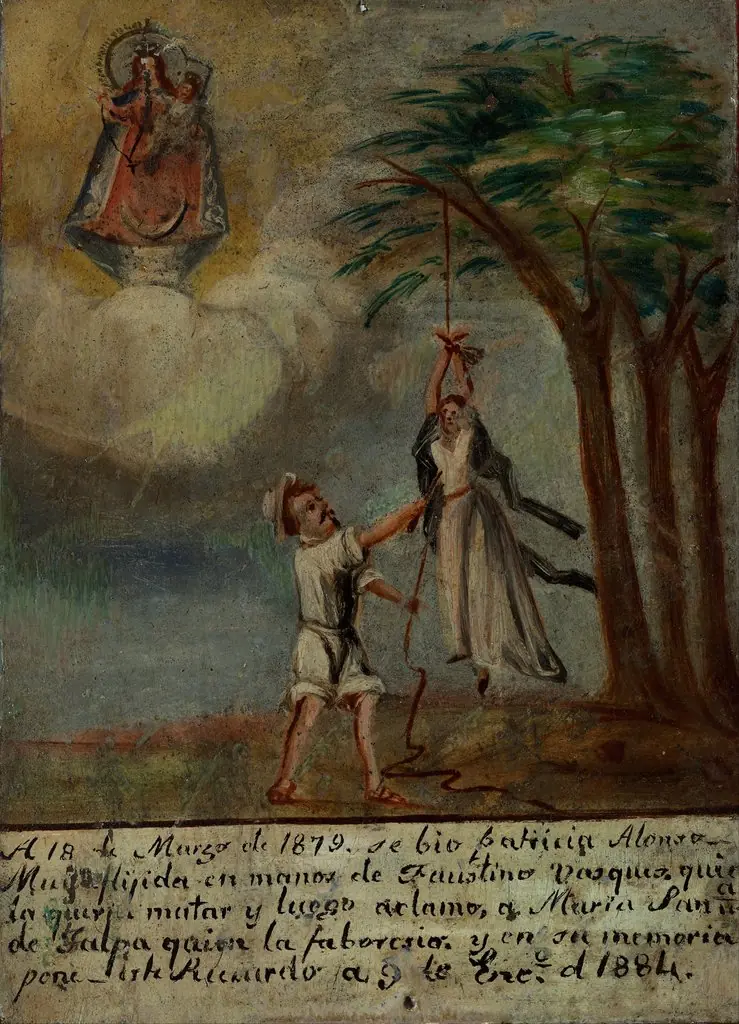 Votive offering dedicated to the Virgin of Talpa
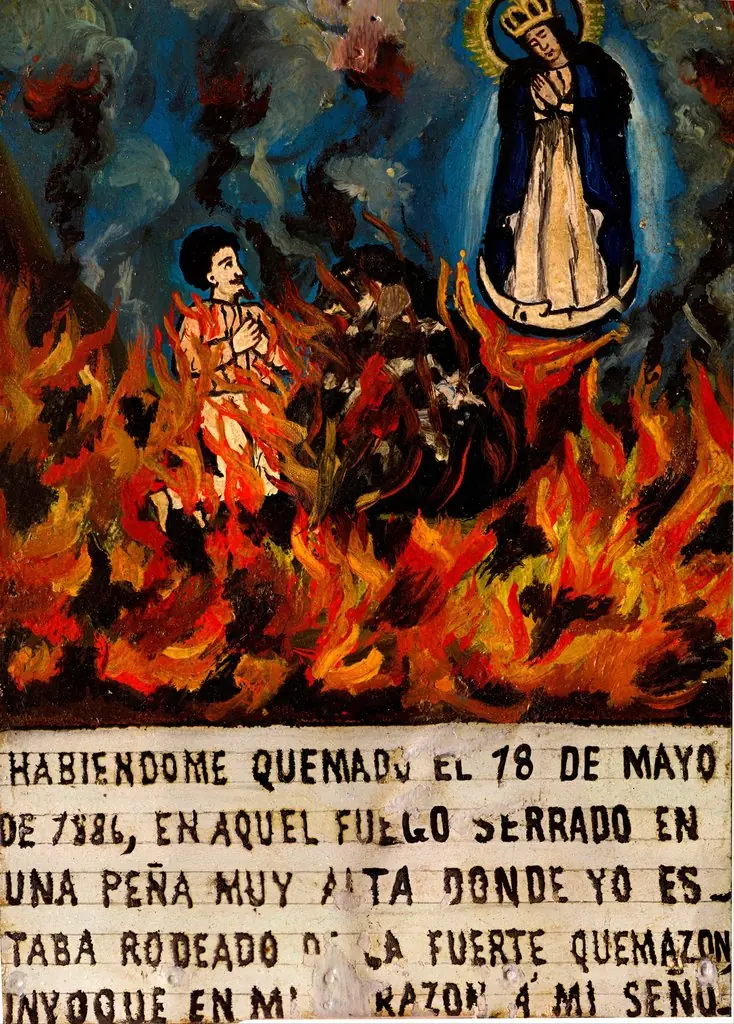 Votive offering dedicated to Our Lady of Solitude
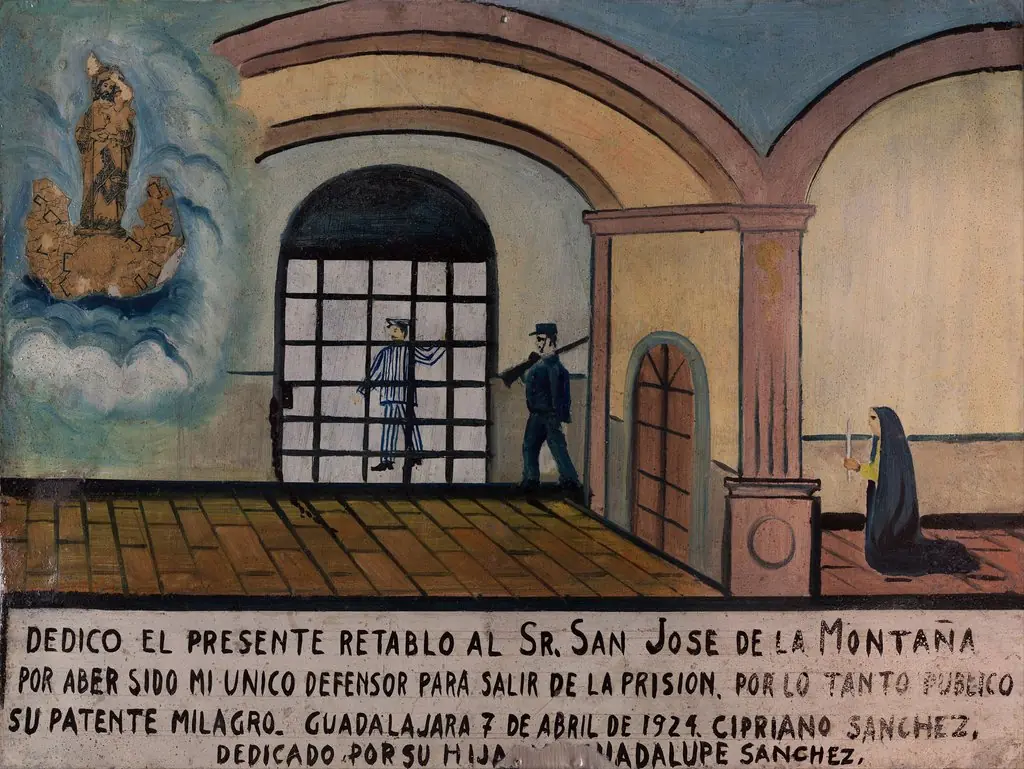 Votive ofering dedicated to Lord Saint Joseph
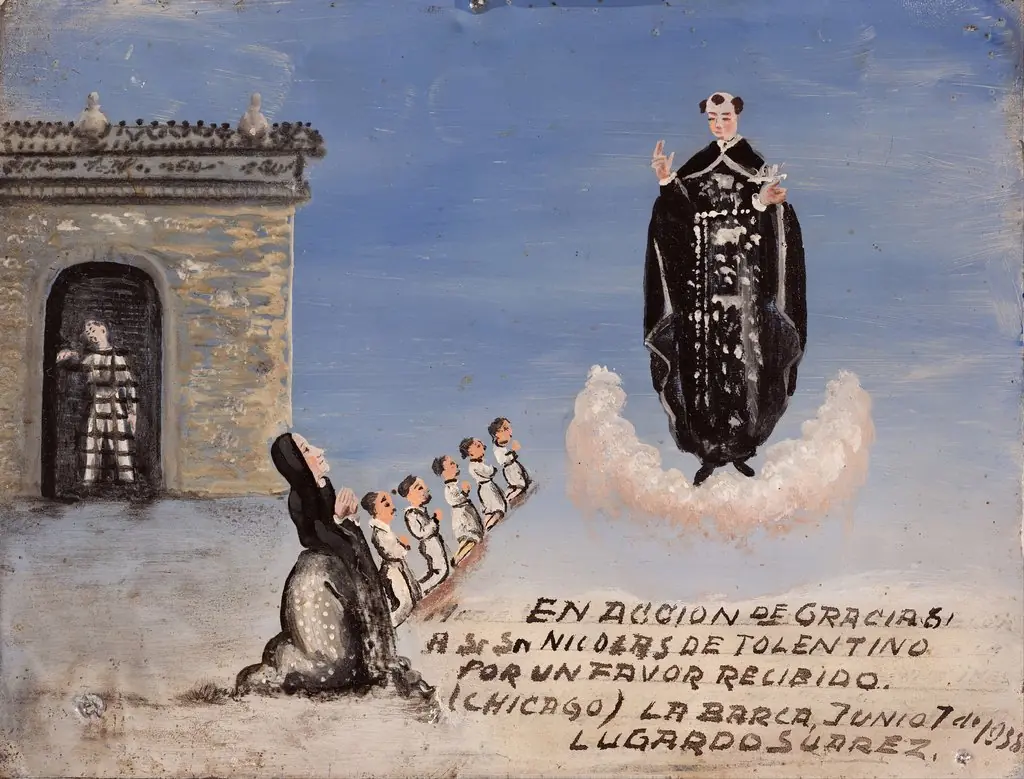 Votive offering dedicated to San Nicolás de Tolentino
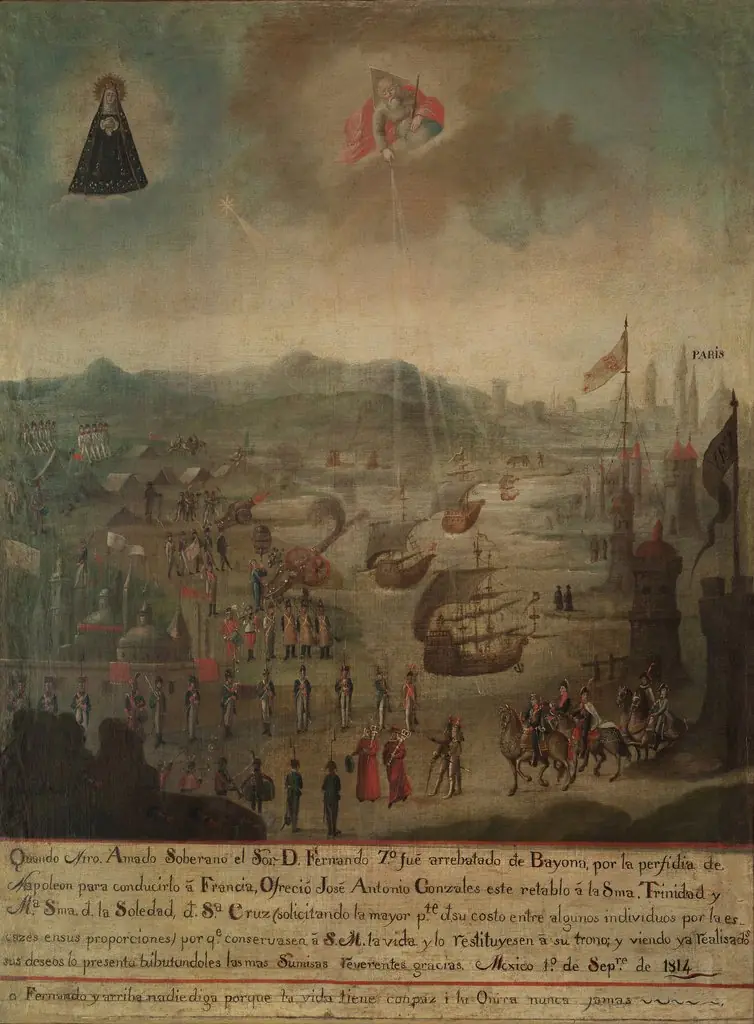 Votive offering dedicated to Our Lady of Solitude