Artwork
Votive offering dedicated to Our Lady of Solitude
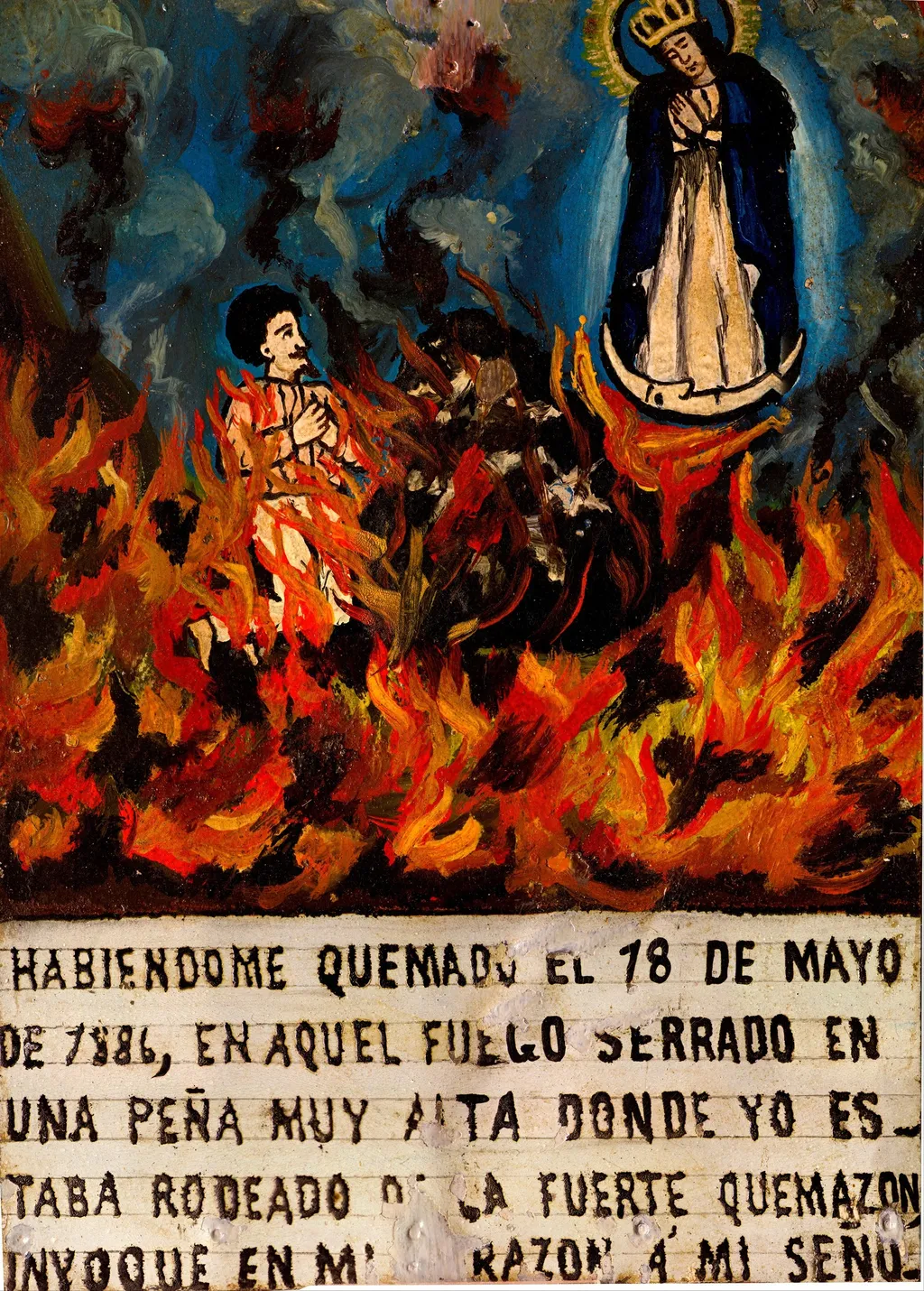
Votive offering dedicated to Our Lady of Solitude is an oil painting by the Naïve art artist Unknown. It dates from 1894 and is held in the collection of the Frida Kahlo Museum. This small copper painting functions as a devotional object, offered in gratitude or supplication to Our Lady of Solitude.
About this work
Overview
The contrast between the torment below and the calm above underscores the painting’s purpose: to visualize divine intervention in moments of crisis.
This small copper painting functions as a devotional object, offered in gratitude or supplication to Our Lady of Solitude. Executed in tempera or oil on a metal support, it depicts a supplicant engulfed in fire, praying beneath the Virgin Mary, who hovers above in a serene, luminous form. The contrast between the torment below and the calm above underscores the painting’s purpose: to visualize divine intervention in moments of crisis.
Subject & Meaning
The figure in the lower left, clad in a white robe and clasping his hands, represents a petitioner enduring physical suffering, symbolized by surrounding flames. Above him, the Virgin Mary, dressed in blue and white with a golden halo, embodies mercy and protection. The composition suggests a moment of spiritual rescue, her presence signifies divine attention, transforming the flames from pure destruction into a trial overcome through faith.
Technique & Style
The artist employed a restrained palette of warm reds and oranges for the fire, balanced against the cool blues and grays of the Virgin’s robes and the dark background. Subtle gradations create depth without full chiaroscuro, focusing attention on the figures. The copper support enhances luminosity, allowing light to reflect subtly through thin layers of pigment, reinforcing the sacred contrast between earthly suffering and heavenly grace.
History & Provenance
As a votive offering, this work likely originated in a Spanish or Latin American devotional context, where such paintings were commissioned after survival from fire, illness, or disaster. Its copper support suggests a durable, portable format, suitable for private devotion or display in a chapel. Exact provenance is undocumented, but its iconography aligns with 17th- to 18th-century traditions of ex-voto art.
Context
Votive paintings like this were common in Catholic communities, serving as tangible expressions of gratitude or plea. The cult of Our Lady of Solitude, particularly strong in Spain and its colonies, emphasized Mary’s grief and compassion during Christ’s Passion. Depicting her amid flames reflects a belief in her power to intercede during life-threatening trials, making this object both personal and culturally embedded in popular piety.
Legacy
Though not widely known outside regional devotional traditions, this work exemplifies the quiet persistence of folk religious art in the face of institutional dominance. Its simplicity and emotional directness preserve a voice often absent from grander ecclesiastical commissions. Such objects remain vital to understanding how ordinary believers engaged with the sacred in daily life.
Artist & collection









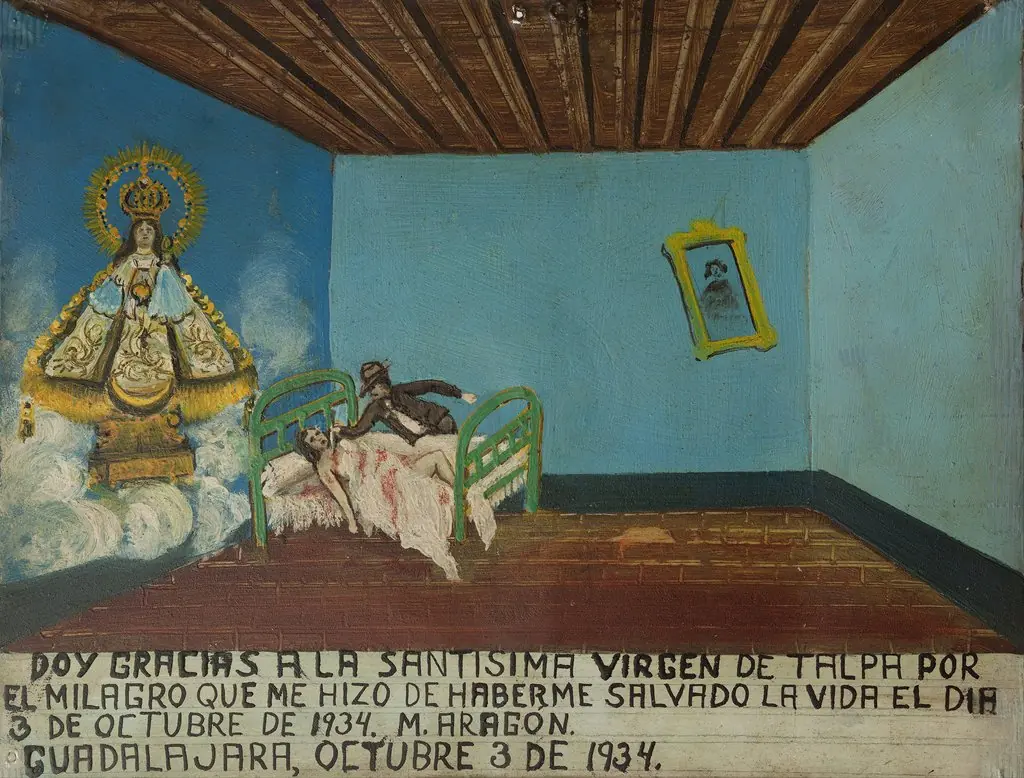
- Votive offering dedicated to the Virgin of Talpa
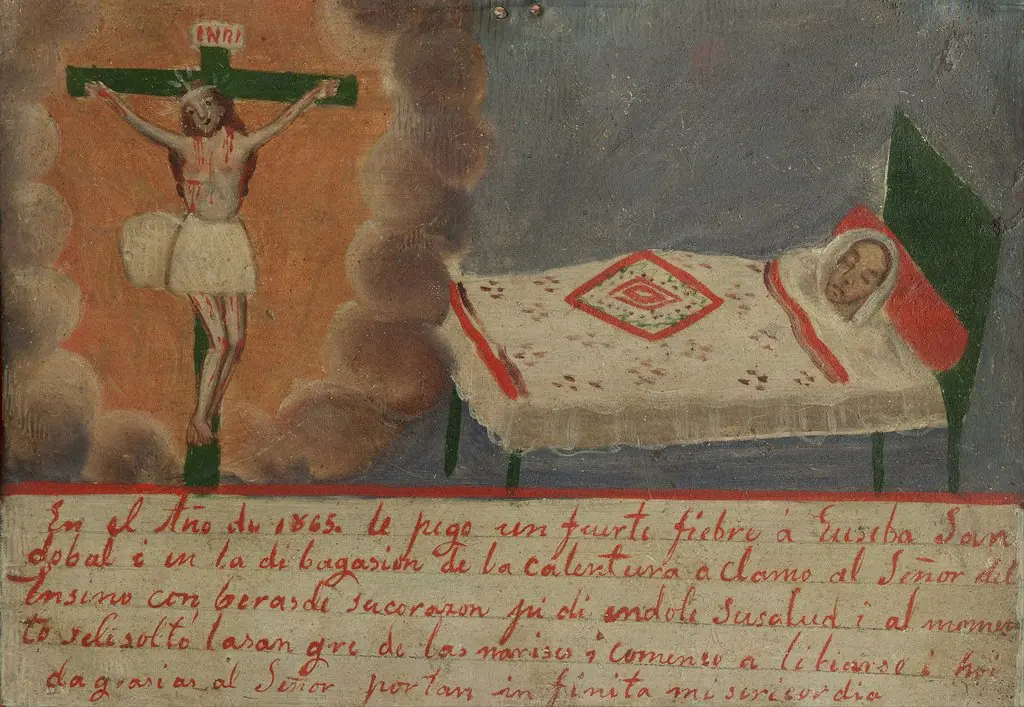 Votive offering dedicated to the Lord of the Encino
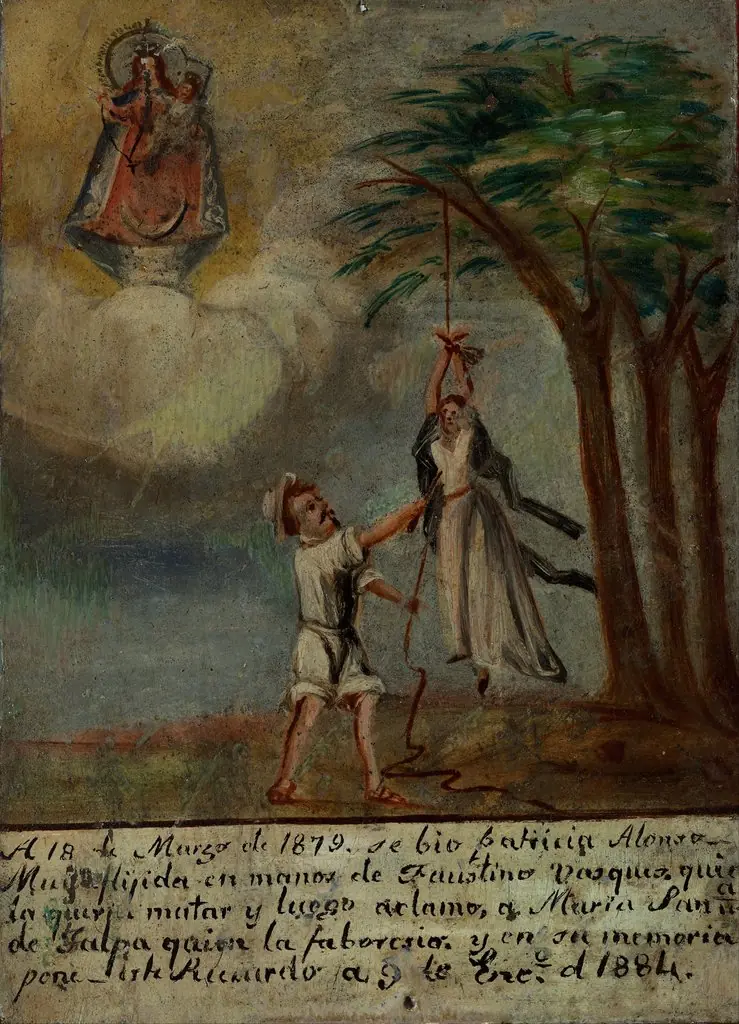 Votive offering dedicated to the Virgin of Talpa
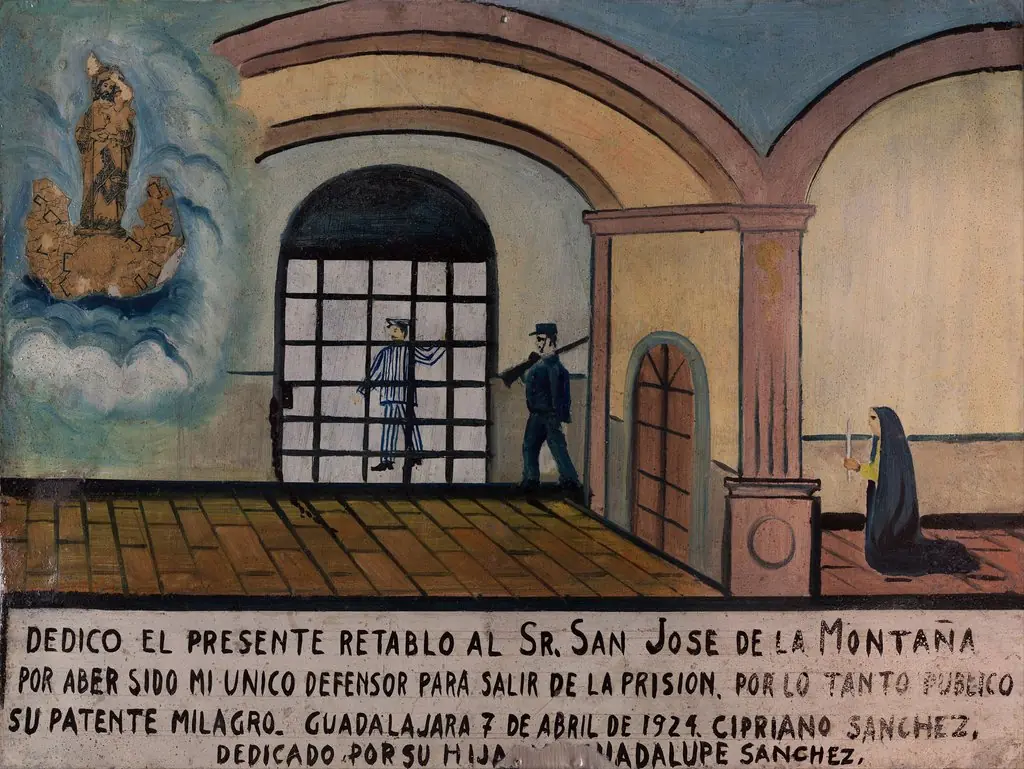 Votive ofering dedicated to Lord Saint Joseph
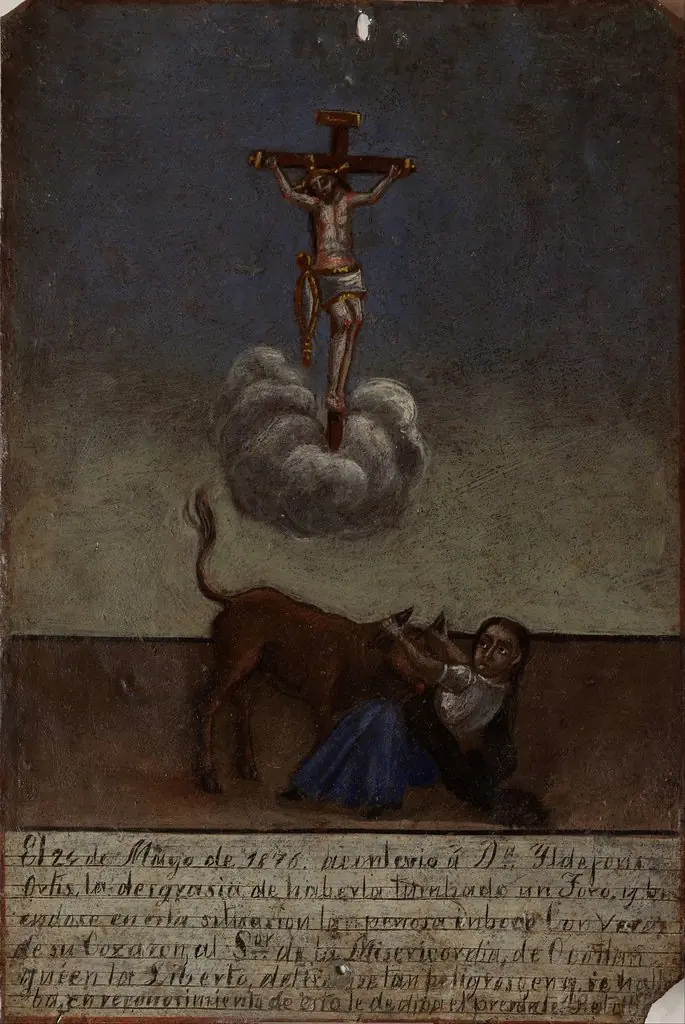 Votive offering dedicated to the Lord of Mercy
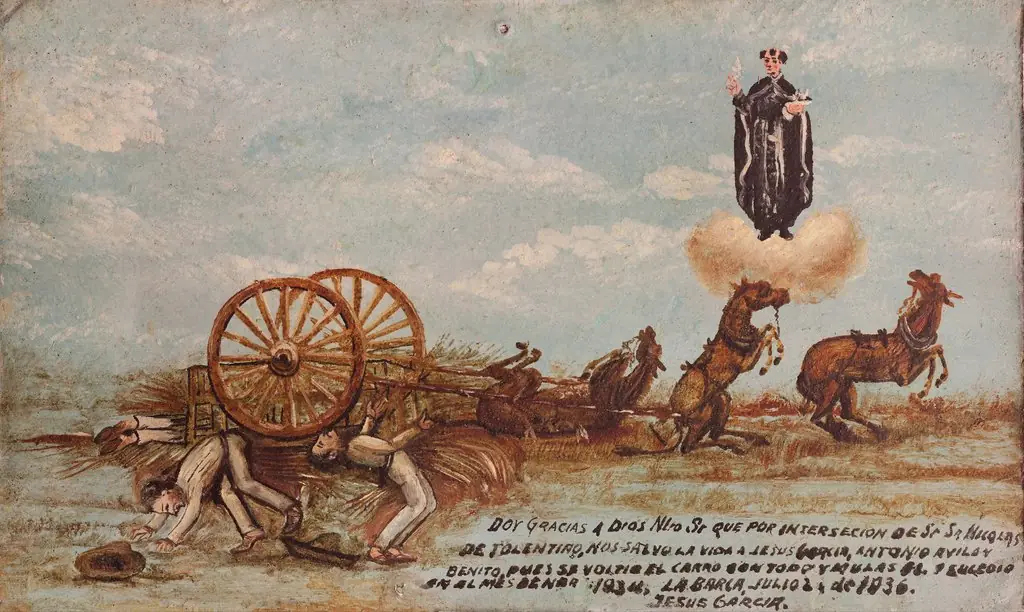 Votive offering dedicated to San Nicolás de Tolentino
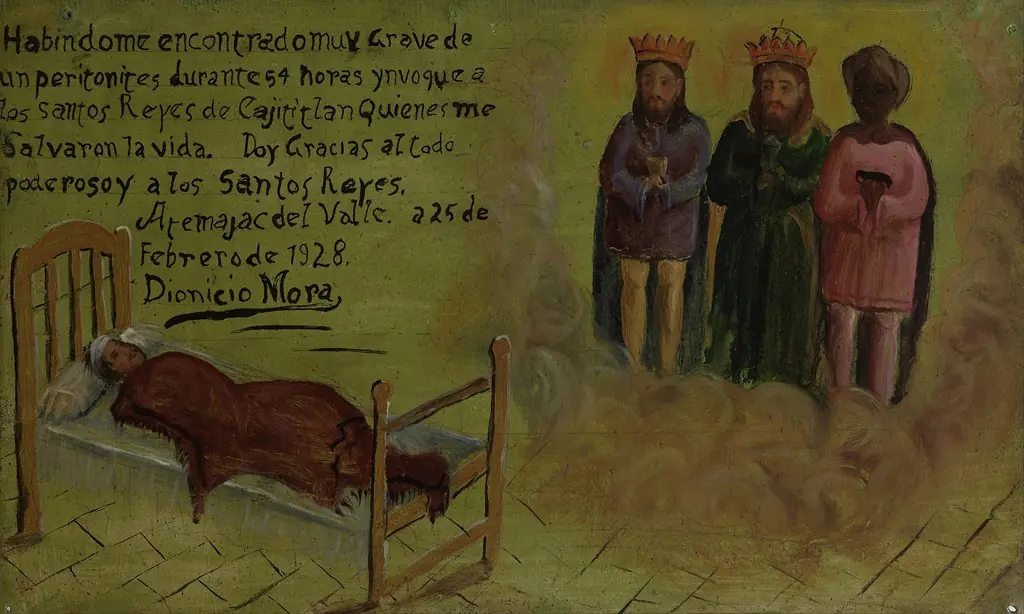 Votive offering dedicated to the Three Wisdom Kings
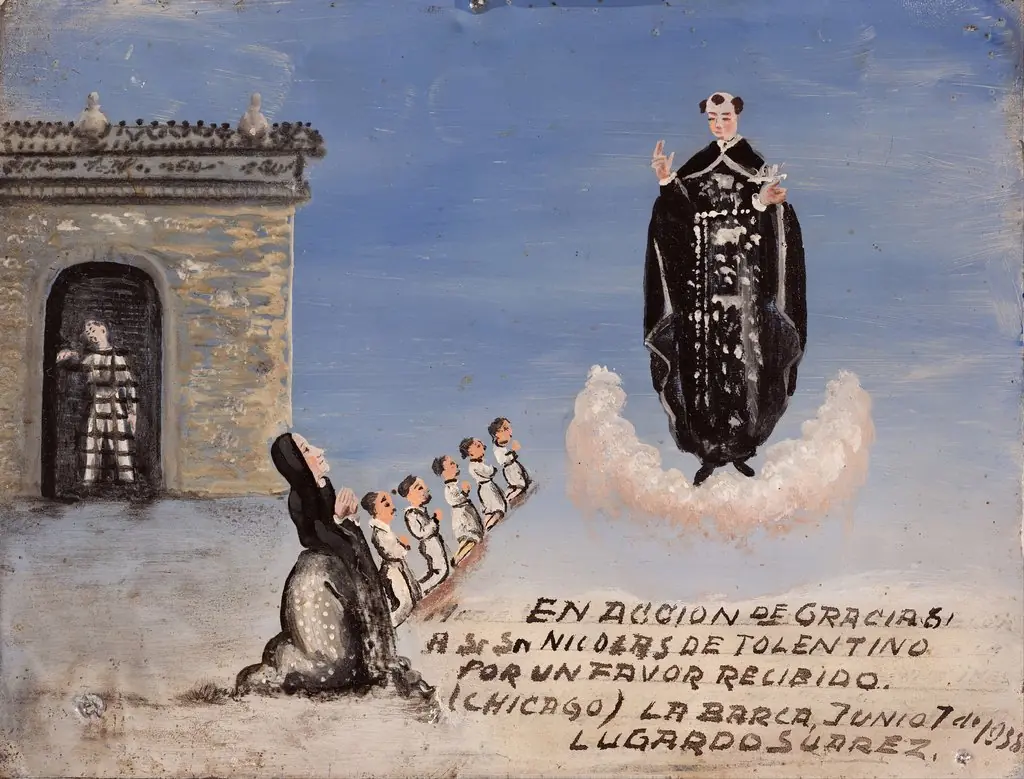 Votive offering dedicated to San Nicolás de Tolentino
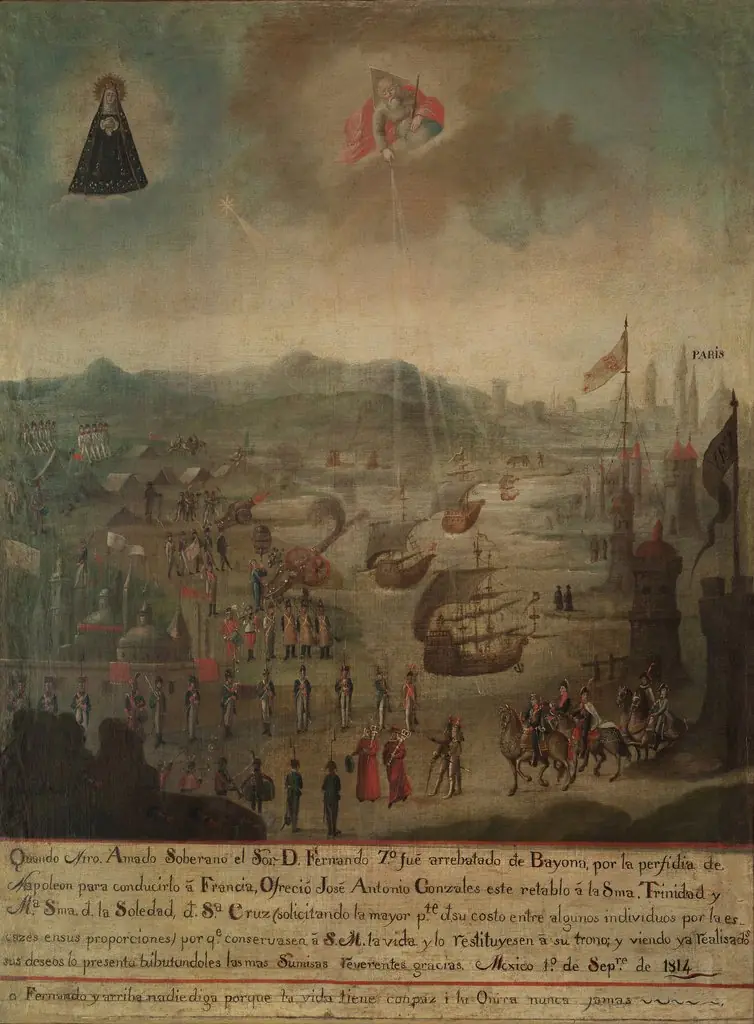 Votive offering dedicated to Our Lady of Solitude