Artwork
White-Robed Guanyin with Hanshan and Shide
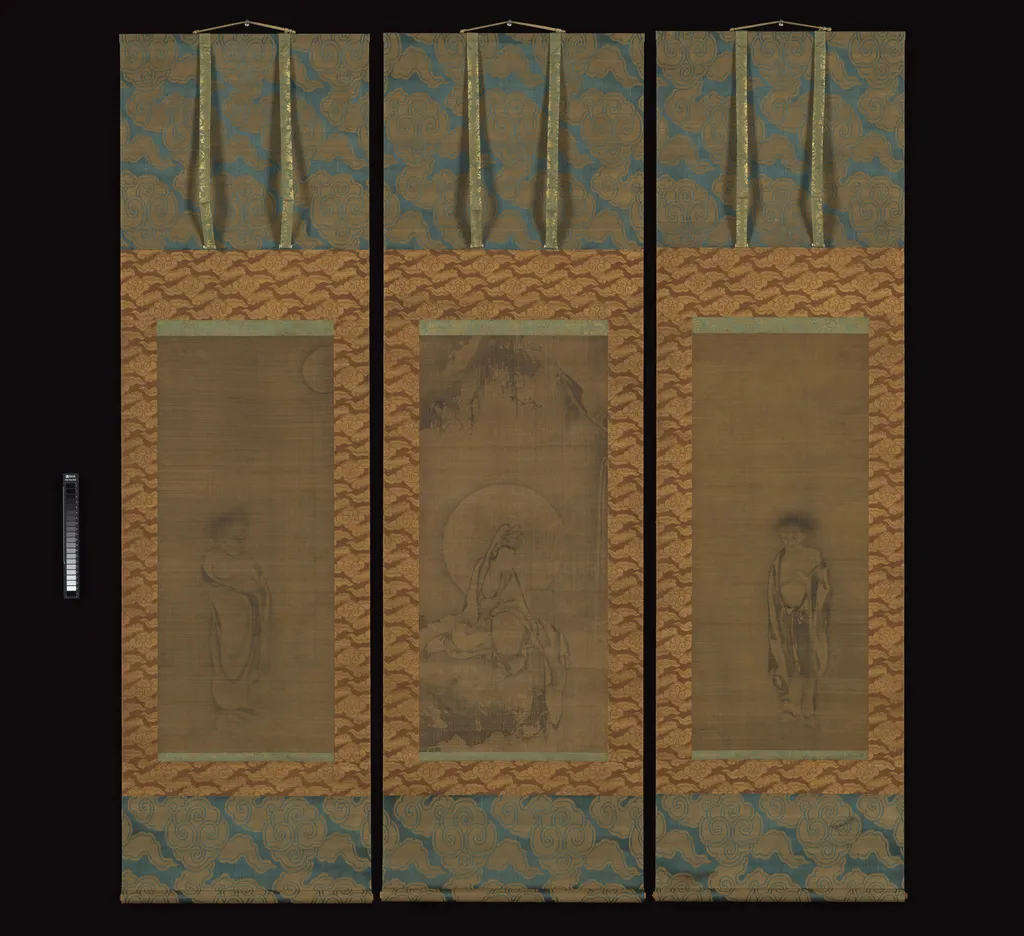
White-Robed Guanyin with Hanshan and Shide is an unspecified painting. It dates from 1349 and is held in the collection of the Metropolitan Museum of Art.
About this work
History & Provenance
The work was part of the exhibition "Chinese Painting and Calligraphy from the T'ang Dynasty to the Present" at the Metropolitan Museum of Art in 1975.
The work titled White-Robed Guanyin with Hanshan and Shide was created in 1349 in Japan. It is classified as a painting and was produced by an unidentified artist. The artwork entered the collection of the Metropolitan Museum of Art, where it remains on view today.
The painting White-Robed Guanyin with Hanshan and Shide is held by the Metropolitan Museum of Art in New York. It entered the museum's collection in 1945 with accession number 45.100.2. The work was part of the exhibition "Chinese Painting and Calligraphy from the T'ang Dynasty to the Present" at the Metropolitan Museum of Art in 1975.
Overview
The work depicts a tranquil tableau centered on a female figure clad in a white robe, seated upon a rock amid verdant foliage. Flanking her are two male companions, one standing and the other seated, each dressed in modest robes. A luminous moon forms a backdrop, while the surrounding landscape is rendered in muted tones that set off the vivid greens and earth tones of the figures and vegetation.
Subject & Meaning
The central woman represents Guanyin, the Buddhist bodhisattva of compassion, rendered in a serene white garment that underscores her purity. The two attendants are traditionally identified as the Chan poets Hanshan and Shide, whose presence evokes themes of spiritual friendship and the harmony between enlightenment and rustic simplicity.
Technique & Style
The painter employs gentle, flowing brushwork and a restrained palette, allowing soft gradients of light and shadow to model the faces and drapery. Delicate line work defines the forms, while the contrast between the luminous moon and the subdued background creates depth, contributing to an overall atmosphere of calm contemplation.
Context
Works featuring Guanyin accompanied by Hanshan and Shide belong to a longstanding iconographic tradition in East Asian Buddhist art, wherein the trio symbolizes the union of compassion, poetic insight, and lay devotion. The composition’s emphasis on natural surroundings reflects the Daoist‑influenced appreciation for harmony between humanity and the natural world.
Artist & collection

 鳥山石燕筆 「翁」図|The Auspicious Noh Dance "Okina"
 Untitled
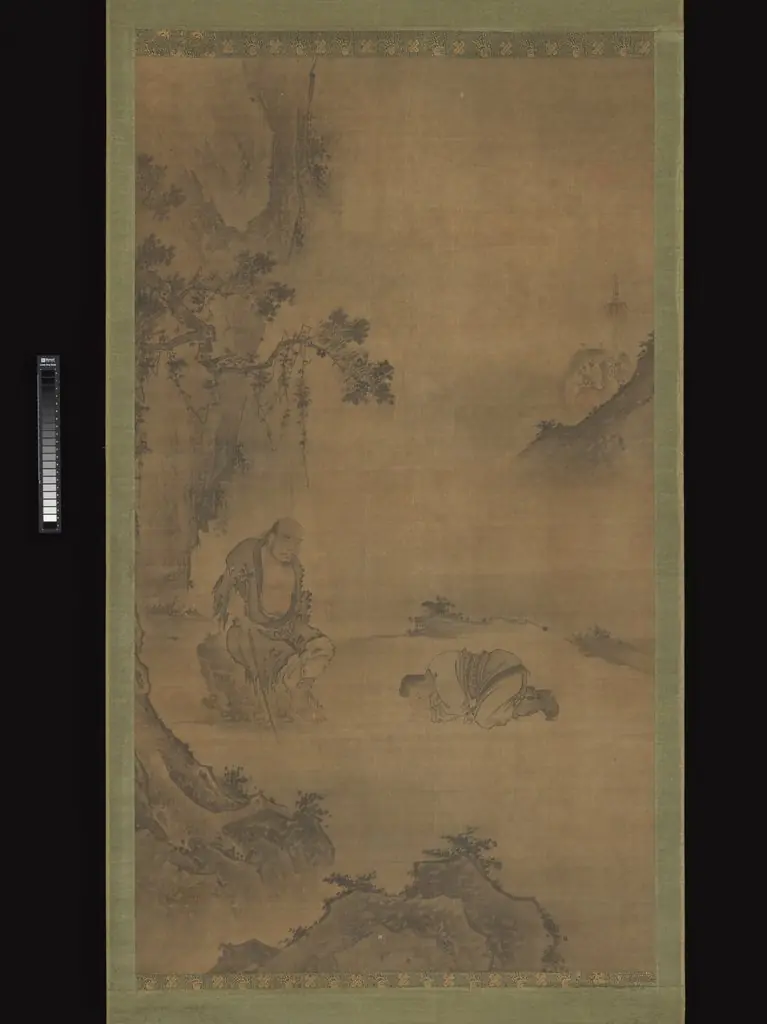 Daoist immortal Li Tieguai receiving a visitor
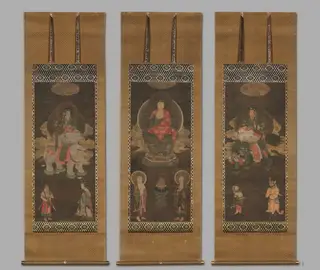 Shakyamuni Triad: Buddha Attended by Manjushri and Samantabhadra
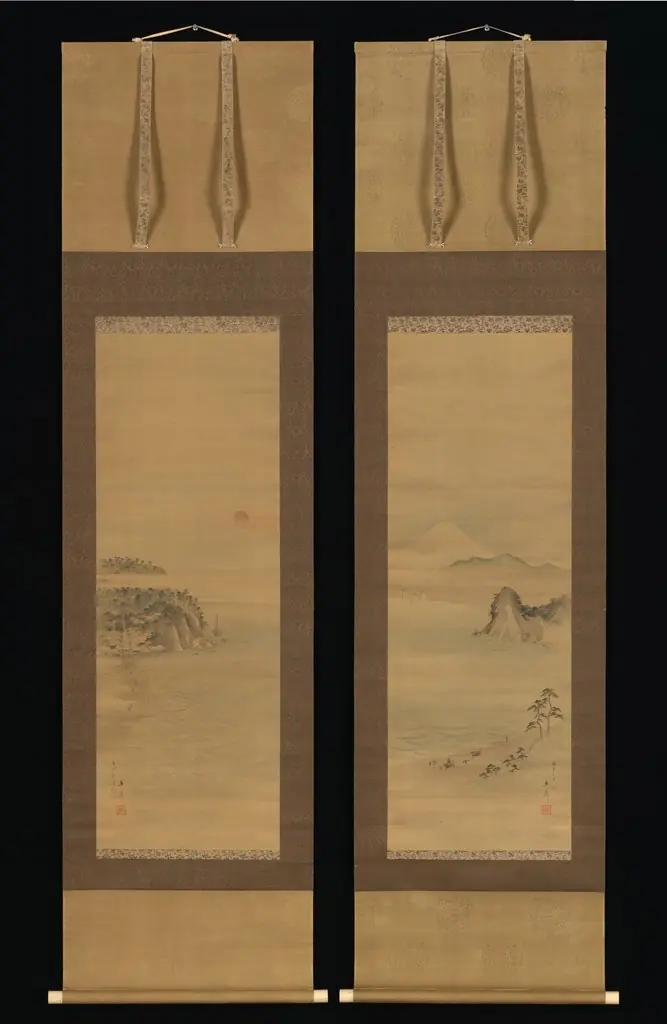 Shichirigahama and Enoshima
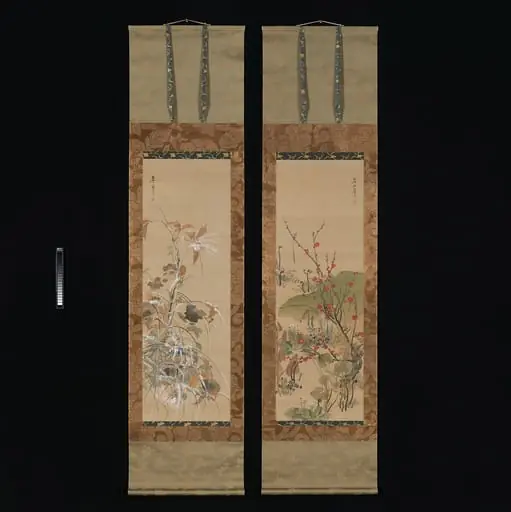 池田孤邨筆 四季花鳥画|Flowers and Birds of the Four Seasons
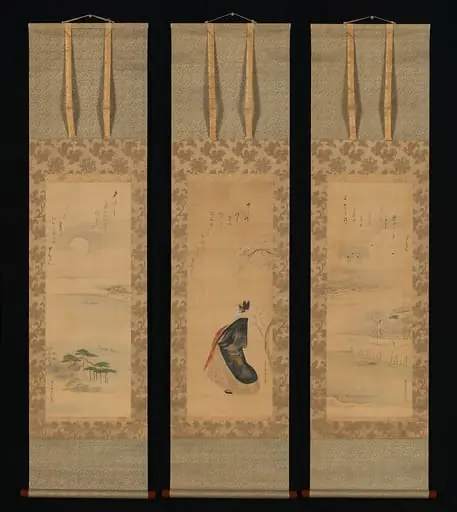 蜀山人(大田 南畝)賛 雪・月・花図 |Snow, Moon, and Cherry Blossoms (Yoshiwara in Three Seasons)
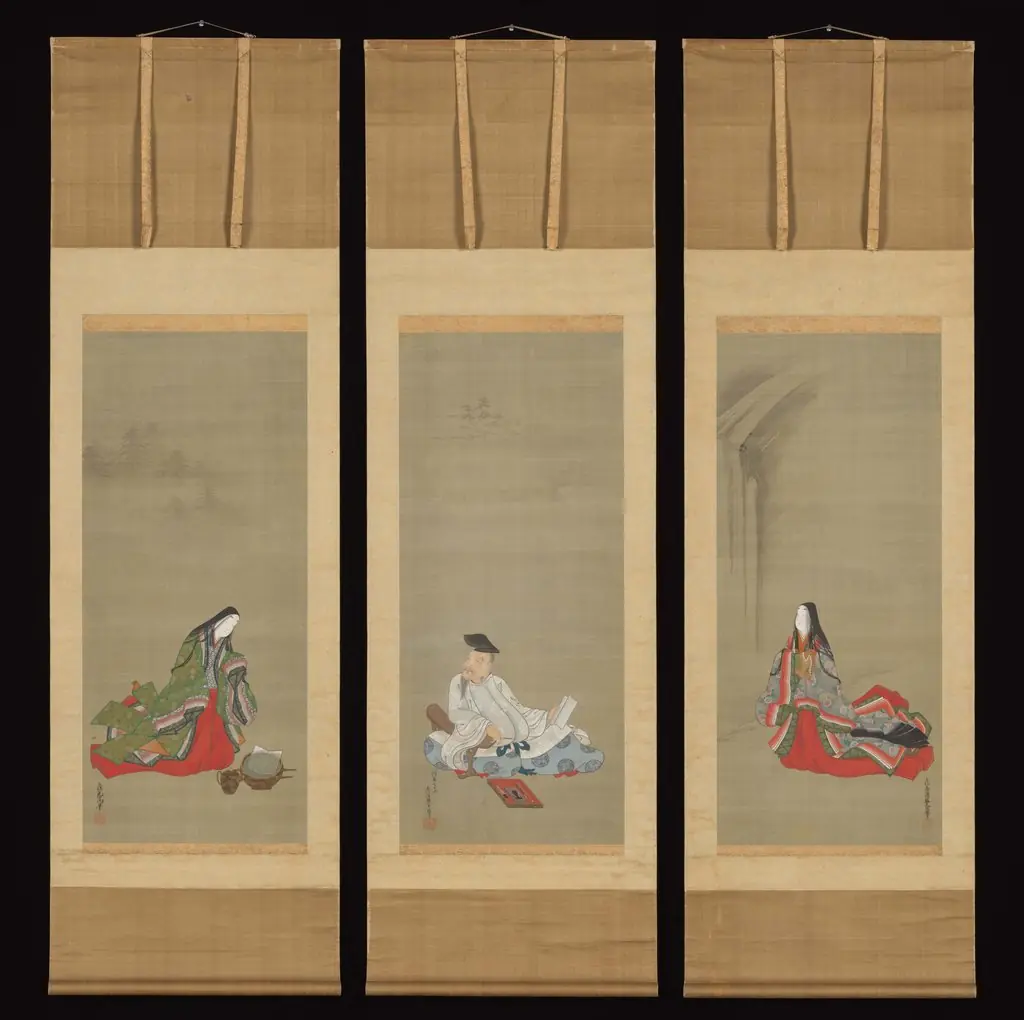 Portraits of Three Famous Poets: Hitomaro (M) ・Ise (R) ・Komachi (L)
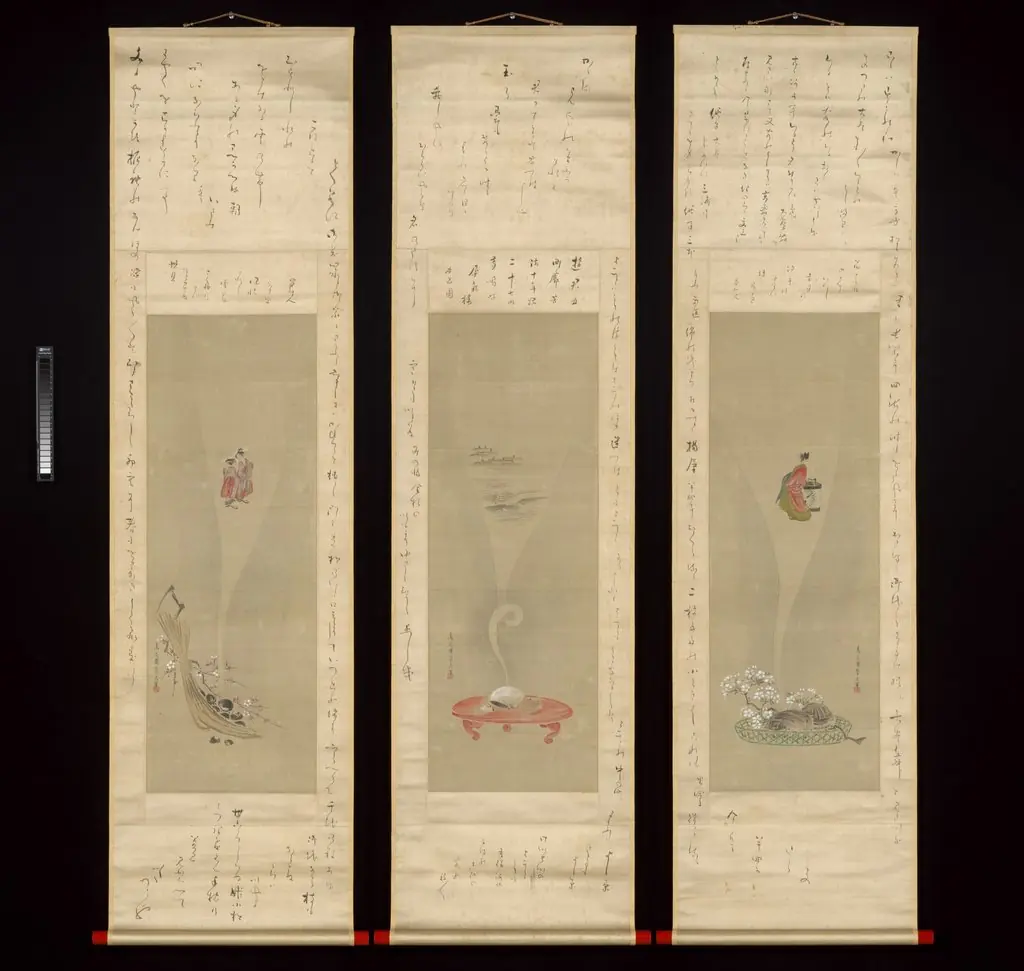 Shellfish and Apparitions of the Yoshiwara Pleasure Quarter
 狩野常信筆 楊貴妃吹笛図|Yang Guifei Playing a Flute