Artwork
Shakyamuni Triad: Buddha Attended by Manjushri and Samantabhadra
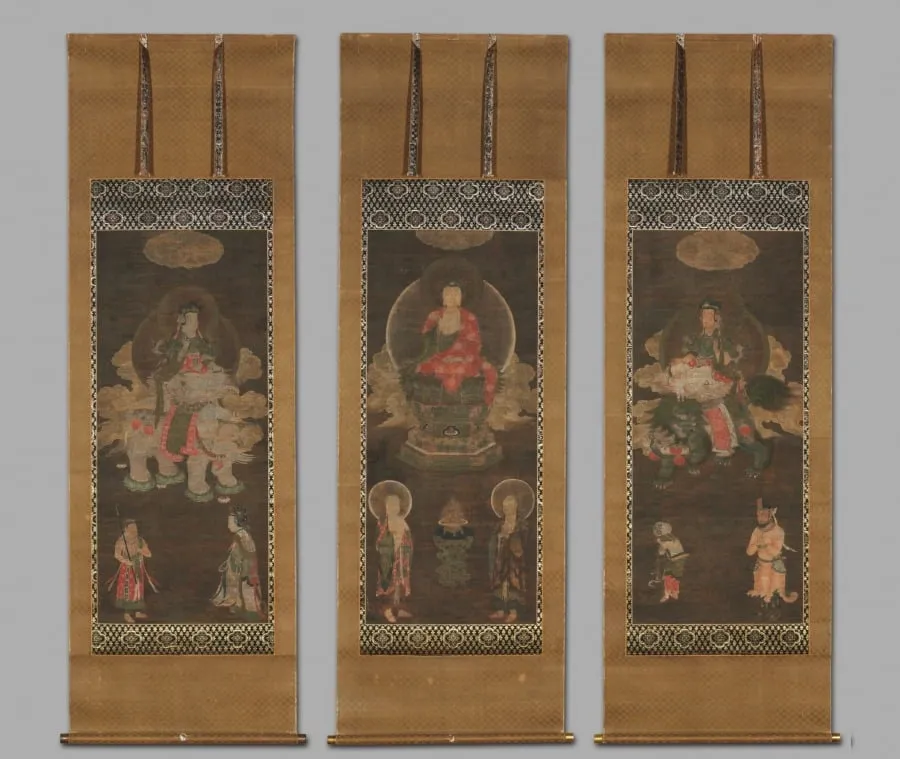
Shakyamuni Triad: Buddha Attended by Manjushri and Samantabhadra is an unspecified painting by the Ming dynasty painting artist Unknown. It dates from 1304 and is held in the collection of the Cleveland Museum of Art.
- Accession no.
- 2009.342
- Credit line
- Purchase from the J. H. Wade Fund
About this work
Below them, smaller people kneel or stand, some look like foreigners, others like monks.
You see a tall scroll with three golden figures on clouds: a calm Buddha in the center, a bodhisattva on a lion to his left, and another on an elephant to his right. Below them, smaller people kneel or stand, some look like foreigners, others like monks.
This painting comes from a time when Buddhist art in China was rare. The way the clouds wrap around the figures makes them feel like they’re floating. The details in the robes and faces show careful work, even if we don’t know who made it.
If you like this, look up more from the Yuan dynasty (1271-1368).
Overview
The work is a three‑panel scroll painting from the Yuan period, portraying the historical Buddha Shakyamuni together with two attendant bodhisattvas. The central figure sits serenely, while Manjushri, the bodhisattva of wisdom, appears on a lion to the left and Samantabhadra, the bodhisattva of universal virtue, rides an elephant on the right. The composition is set against a cloudscape that unifies the divine trio.
Subject & Meaning
The scene illustrates a passage from the Lotus Sutra, a Mahayana scripture that shaped Buddhist belief across East Asia. The central sermon is attended by the two bodhisattvas, symbolizing wisdom and compassionate activity, while a group of lay and monastic figures below, two disciples, two foreigners, a boy with topknots, and a female worshiper, represent seekers drawn to the teaching.
Technique & Style
Executed on silk, the painting employs delicate brushwork to render the flowing clouds that envelop the figures, creating a sense of suspension. Fine detailing in the robes, facial features, and animal mounts demonstrates a high level of craftsmanship, typical of elite Yuan court patronage, though the artist’s identity remains unknown.
History & Provenance
As a rare surviving example of Buddhist painting from the Yuan dynasty (1271–1368), the scroll reflects a period when Buddhist visual culture was comparatively scarce in China. The work has been preserved in a museum collection, providing insight into the religious art commissioned during the era’s Mongol rule.
Context
The Lotus Sutra’s prominence in Mahayana Buddhism made it a frequent subject for visual representation, especially in the Yuan period when the religion experienced renewed imperial support. The inclusion of foreign figures underscores the sutra’s pan‑Asian appeal and the cosmopolitan character of Yuan society.
Artist & collection









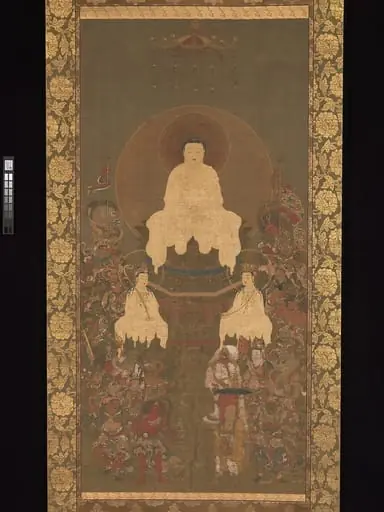
- 釈迦三尊十六善神像|Shaka (Shakyamuni), the Historical Buddha, with Two Attendant Bodhisattvas and Sixteen Benevolent Deities
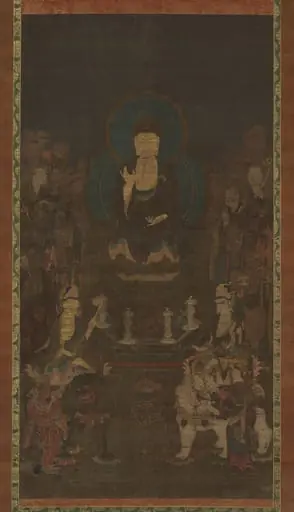 釈迦三尊十大弟子像|Shaka (Shakyamuni), the Historical Buddha, with Two Attendant Bodhisattvas and the Ten Great Disciples
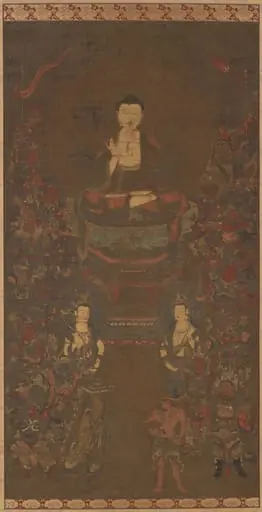 Shakyamuni with the Sixteen Benevolent Deities
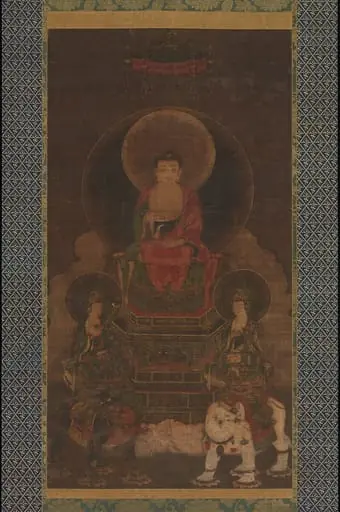 釈迦三尊像|Shaka (Shakyamuni) Triad
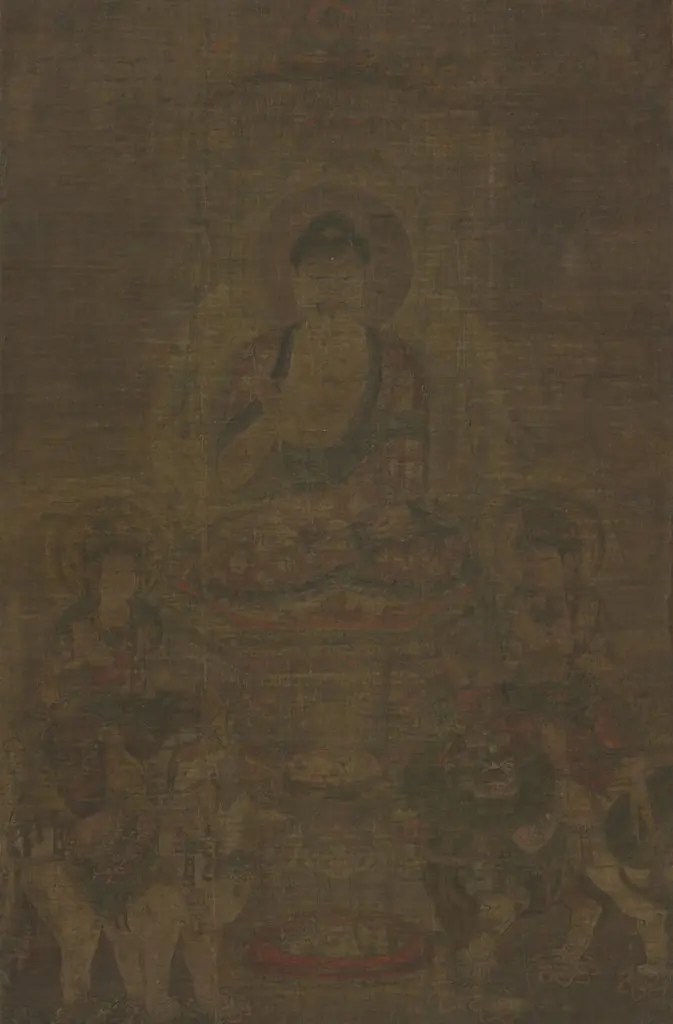 Shakyamuni Triad: Buddha Attended by Manjushri and Samantabhadra
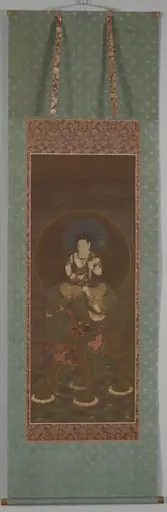 Monju with Five Hair Knots
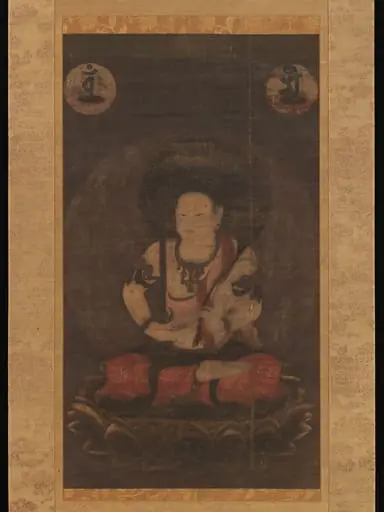 五髻文殊菩薩像|The Bodhisattva Monju (Manjushri) with Five Topknots
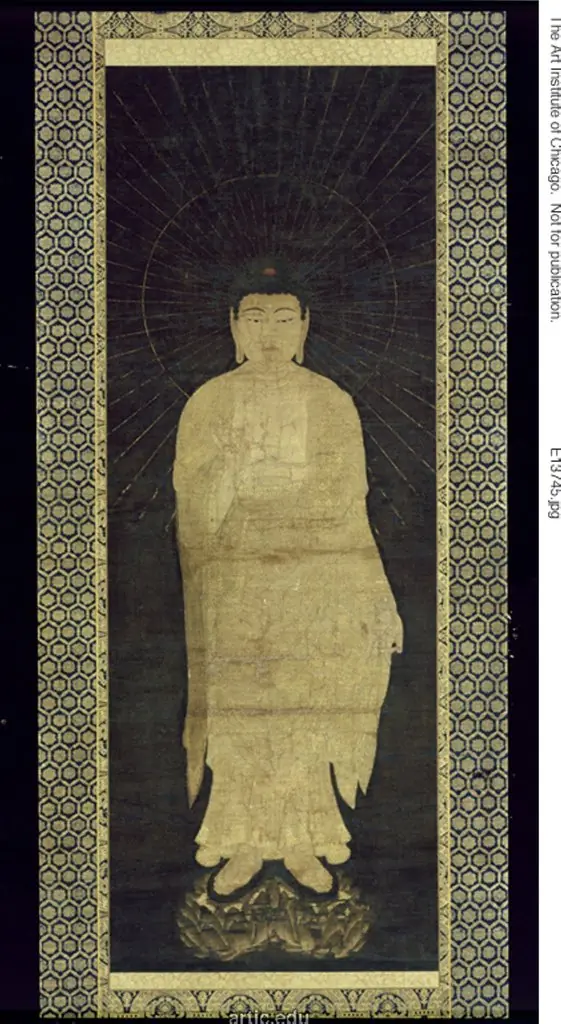 The Buddha Amida, from the triptych Approach of the Amida Trinity