Artwork
Water-Moon Kannon (Suigetsu Kannon)
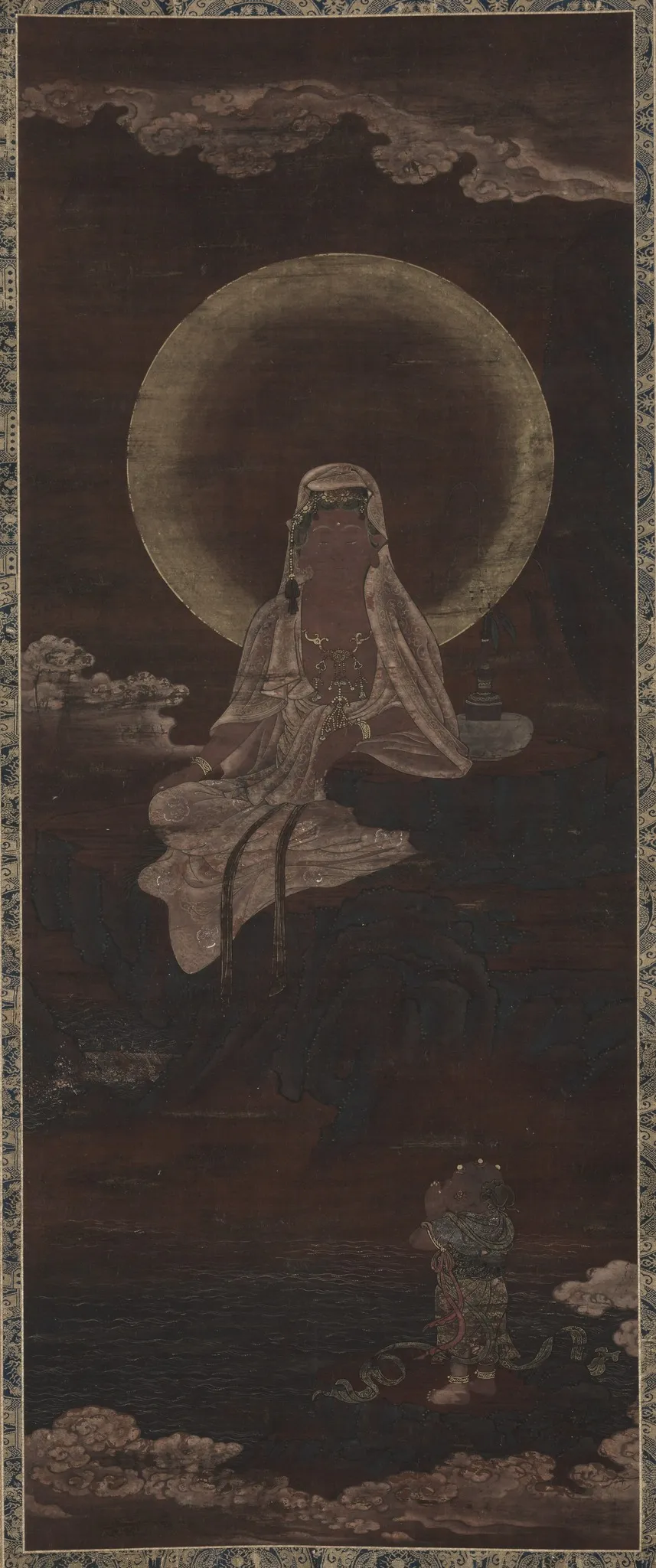
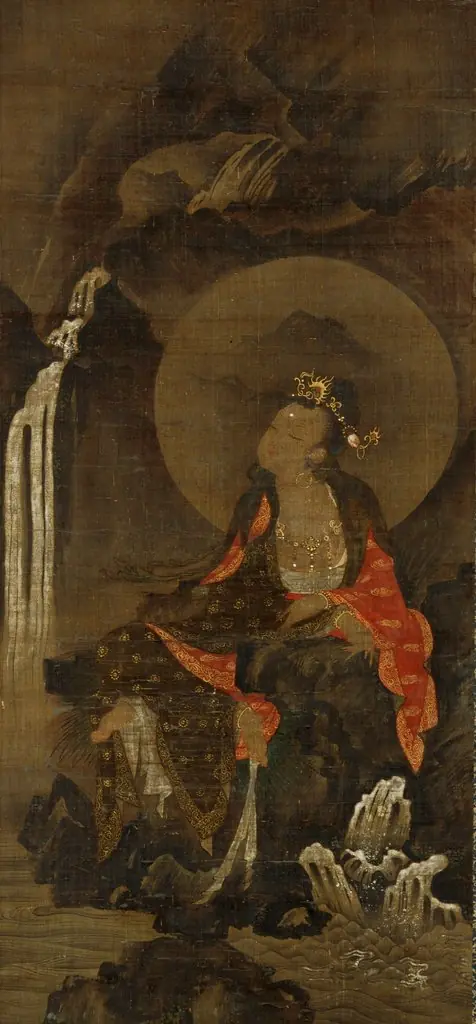
Water-Moon Kannon (Suigetsu Kannon) is an unspecified painting by Unknown. It dates from 1500 and is held in the collection of the Cleveland Museum of Art.
About this work
Overview
Its refined technique and layered materiality demonstrate how Meiji-era artists continued to honor and perpetuate centuries of religious painting conventions.
Water-Moon Kannon (Suigetsu Kannon) is a Japanese hanging scroll painting from the Meiji period (1868-1912), executed in ink, gold, silver, color, and cut gold-leaf on silk. The work, measuring 104.5 x 41.9 cm for the painting itself and 188.9 x 64.8 cm overall with mounting, depicts the bodhisattva Kannon in the Water-Moon manifestation, accompanied by the youthful pilgrim Zenzai Dōji. Acquired by the Cleveland Museum of Art in 1992 through the Mr. and Mrs. William H. Marlatt Fund, the scroll exemplifies the enduring vitality of traditional Buddhist iconography during a period of rapid modernization in Japan. Its refined technique and layered materiality demonstrate how Meiji-era artists continued to honor and perpetuate centuries of religious painting conventions.
Subject & Meaning
The central subject is Kannon, the bodhisattva of compassion and benevolence, seated in a relaxed posture on a rocky outcrop before a large circular halo. The bodhisattva wears flowing robes with intricate patterns, ornate jewelry including a necklace and headpiece, and has hands clasped together in a gesture of contemplation or teaching. A small vessel rests on the rock beside the figure, an attribute associated with Kannon's merciful interventions. Below, the diminutive figure of Zenzai Dōji (Sanskrit: Sudhana) stands on waves with hands raised in reverence, wearing elaborate garments with sashes and a crown. This pairing derives from the final chapter of the Flower Garland Sutra (Avatamsaka Sutra), which recounts the wealthy boy's pilgrimage to Kannon's abode at Fudaraka (Sanskrit: Potalaka) to learn the bodhisattva path. The Water-Moon (Suigetsu) iconography specifically evokes Kannon's manifestation above water, a theme that gained particular resonance in East Asian Buddhist art from the eighth century onward, when Kannon's independent worship flourished across China, Korea, and Japan. The dark water with gentle ripples, scattered stylized clouds, and the band of clouds across the upper portion create an otherworldly, meditative atmosphere that underscores the spiritual encounter between the bodhisattva and the devoted pilgrim.
Technique & Style
The painting employs a sophisticated combination of ink, gold, silver, color, and cut gold-leaf on silk, mounted as a vertical hanging scroll. The palette is dominated by dark browns and blacks, with muted gold, pale gray, and soft white accents in the garments, halo, and clouds. The surface exhibits fine, precise brushwork in the textile patterns and jewelry, contrasting with smoother, broader handling in the dark atmospheric areas. Subtle tonal gradations create depth against the dark ground, producing a refined and layered finish. The decorative woven border with blue and white patterns frames the image, contributing to the overall ceremonial presentation. This technical approach, blending meticulous detail with expansive atmospheric effects, reflects the accumulated conventions of Japanese Buddhist painting as transmitted and maintained into the Meiji period. The use of precious materials, including gold and silver, signals the work's ritual function and the continued prestige of religious commissions during this era.
History & Provenance
The painting dates to the Meiji period (1868-1912), a span of dramatic political and social transformation in Japan. Its creation within this period indicates the persistence of traditional Buddhist devotional imagery despite the official separation of Shinto and Buddhism and the broader push toward modernization and Westernization. The provenance records indicate that London Gallery, Ltd. of Tokyo sold the work to the Cleveland Museum of Art, with the transaction completed by 1992. The museum acquired it that year through the Mr. and Mrs. William H. Marlatt Fund, and it was assigned accession number 1992.119. The Cleveland Museum of Art's online catalogue notes that information about this object, including provenance, may not be currently accurate, suggesting ongoing research into its earlier history. The painting remains in the museum's collection in Cleveland, Ohio.
Context
The Water-Moon Kannon belongs to a long and significant tradition of Kannon imagery in Japanese art. By the eighth century, Kannon had become so popular across East Asia that the bodhisattva was frequently worshipped independently rather than merely as an attendant to the Buddha. The Suigetsu (Water-Moon) iconography specifically represents one of Kannon's most evocative manifestations, combining the bodhisattva's compassionate presence with the liminal, reflective quality of water. That this subject was painted during the Meiji period is notable: despite government policies that promoted Shinto and marginalized Buddhism, and amid sweeping technological and cultural modernization, artists and patrons continued to commission and produce works rooted in centuries of Buddhist visual tradition. The Cleveland Museum of Art's acquisition of this scroll reflects growing Western institutional interest in Japanese religious art during the late twentieth century, even as the museum acknowledges that full documentation of the work's history remains incomplete.
Legacy
As a Meiji-period work perpetuating an iconographic tradition with origins in the eighth century or earlier, Water-Moon Kannon testifies to the resilience of Buddhist visual culture through periods of radical social change. Its presence in the collection of the Cleveland Museum of Art ensures continued scholarly attention and public access, though the museum's caveat about potentially inaccurate information invites further research into its specific creation circumstances and earlier provenance. The work contributes to understanding how traditional religious painting functions not as a static relic but as a living practice, adapted and renewed across historical periods. Its digitization and distribution through platforms such as the Internet Archive broaden its accessibility for study and appreciation beyond the physical museum context, extending its role in contemporary conversations about Japanese art, religious continuity, and cross-cultural collecting practices.
Artist & collection