Artwork
Water-Moon Kannon (Suigetsu Kannon)
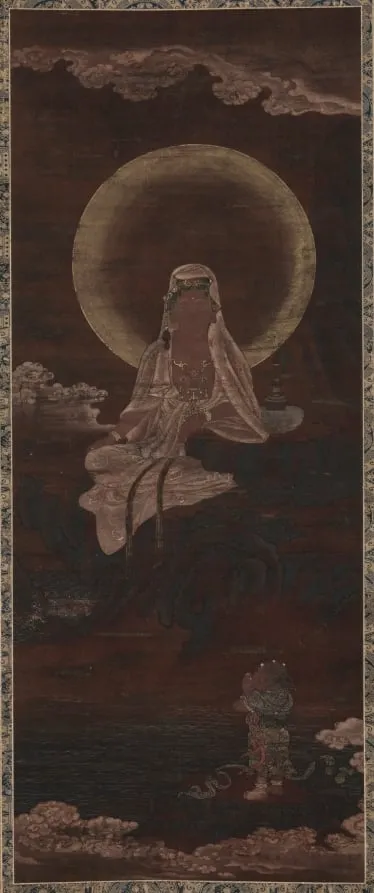
Water-Moon Kannon (Suigetsu Kannon) is an unspecified painting by the Impressionist artist Unknown. It dates from 1890 and is held in the collection of the Cleveland Museum of Art. The work portrays the bodhisattva Kannon seated upon a rock, illuminated by moonlight reflected on water.
- Accession no.
- 1992.119
- Credit line
- Mr. and Mrs. William H. Marlatt Fund
About this work
The painting comes from Japan’s Meiji period, when artists mixed old traditions with new ideas.
You see a golden figure sitting on a rock, holding a small child by the hand. The figure has many arms, each holding different objects, a vase, a lotus, a string of beads. Moonlight shimmers on water behind them.
This is Kannon, a Buddhist figure of kindness. The child is Zenzai, a boy who traveled far to learn from Kannon. The painting comes from Japan’s Meiji period, when artists mixed old traditions with new ideas. The gold leaf makes the scene glow, even in dim light.
To see more like this, look up japan, meiji period (1868–1912).
Overview
The work portrays the bodhisattva Kannon seated upon a rock, illuminated by moonlight reflected on water. Kannon is shown with an outstretched hand guiding a small child, while multiple arms hold symbolic items such as a vase, lotus and prayer beads. The composition combines a luminous gold surface with a serene nocturnal setting, emphasizing the figure’s compassionate presence.
Subject & Meaning
Kannon, the Buddhist embodiment of mercy, is accompanied by the youthful pilgrim Zenzai Dōji, known in Sanskrit as Sudhana. According to the concluding chapter of the Flower Garland Sutra, Sudhana visits the celestial abode of Kannon, Potalaka, to receive instruction on the bodhisattva path. Their interaction in the painting underscores the transmission of wisdom from a compassionate guide to a seeker.
Technique & Style
Executed in the Meiji era, the painting employs gold leaf to render Kannon’s form, creating a radiant effect that remains visible even in low light. The artist renders the figure’s multiple arms with precise detail, each bearing distinct ritual objects, while the background water is depicted with subtle brushwork that captures the shimmer of moonlit reflections.
History & Provenance
Created in Japan during the Meiji period (1868–1912), the piece reflects the era’s synthesis of traditional Buddhist iconography with emerging artistic influences. The work has remained within private collections, documented in early 20th‑century catalogues of Meiji religious art, and is now referenced in scholarly surveys of Buddhist visual culture.
Context
By the seventh century, Kannon had become a widely venerated figure across China, Korea and Japan, often worshipped independently of the historical Buddha. The inclusion of Sudhana links the image to a narrative that was especially popular in East Asian devotional practice, illustrating the bodhisattva’s role as a guide for aspirants on the path to enlightenment.
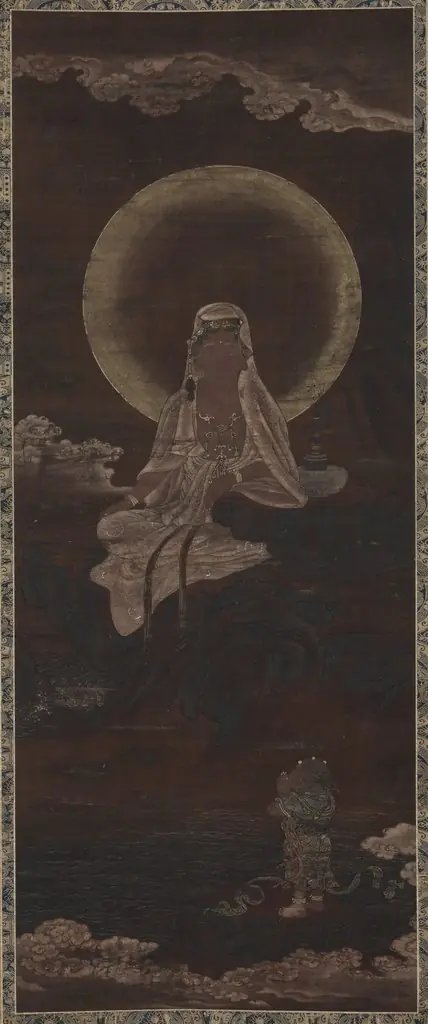
Artist & collection









- Water-Moon Kannon (Suigetsu Kannon)
 Eleven-Headed Kannon (Jūichimen Kannon)
 Kannon
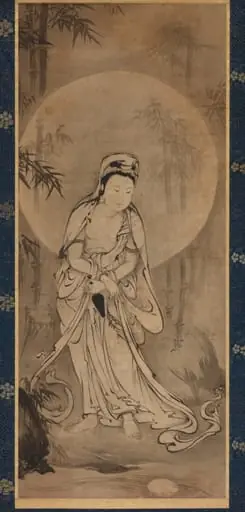 Willow-and-Moon Kannon (Yōryū Kannon)
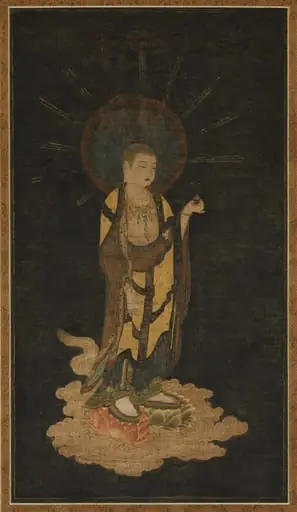 Welcoming Descent of Jizō
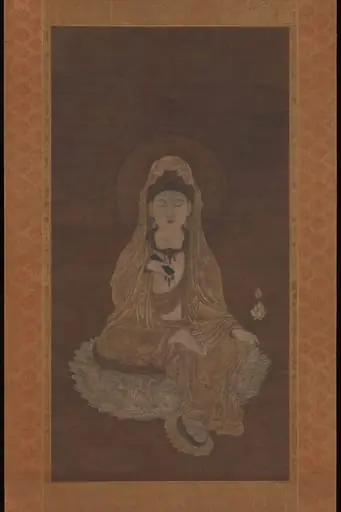 白衣観音図|White-Robed Kannon
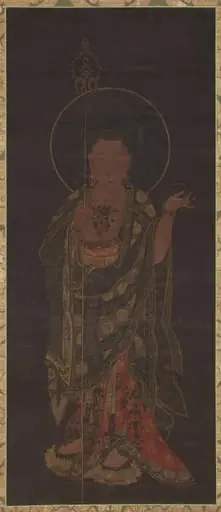 Standing Ksitigarbha
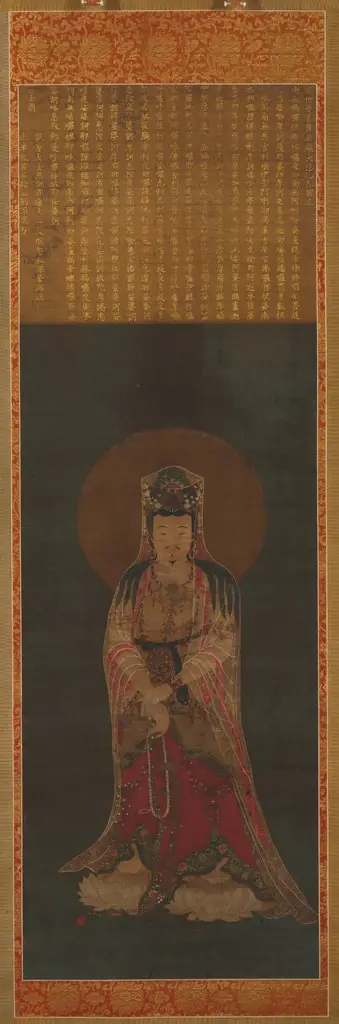 Kannon
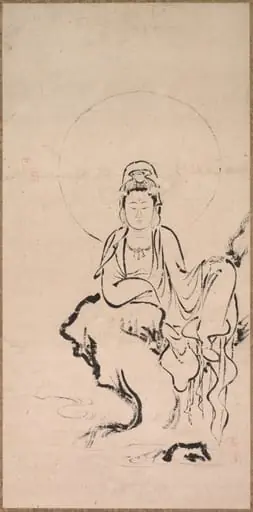 White-Robed Kannon (Byakue Kannon)
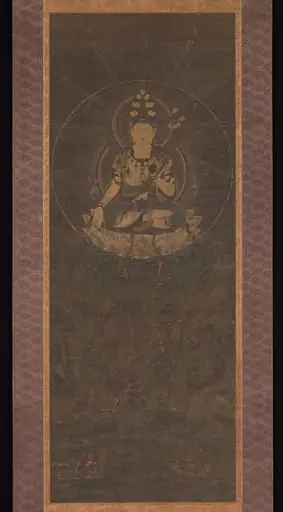 十一面観音影向図|Eleven-Headed Kannon on Mount Fudaraku
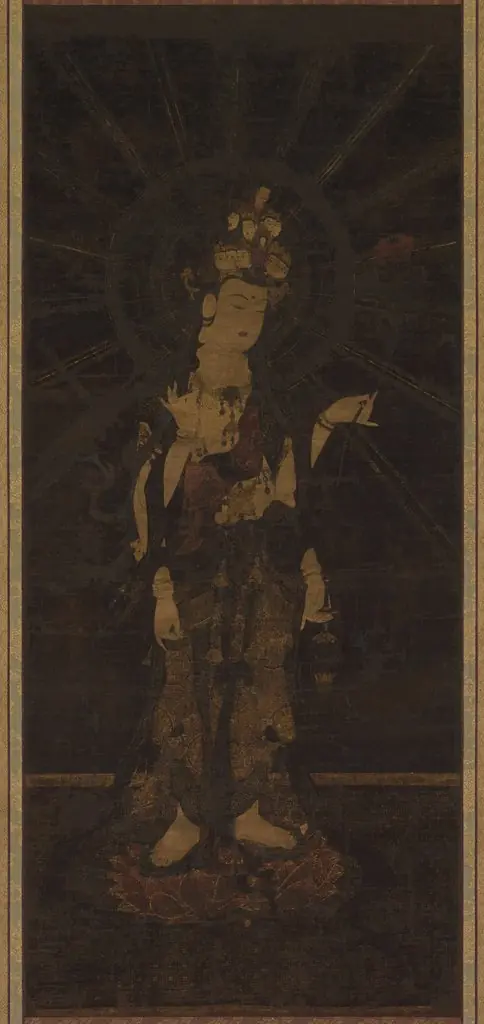 Eleven-Headed Kannon (Jūichimen Kannon)
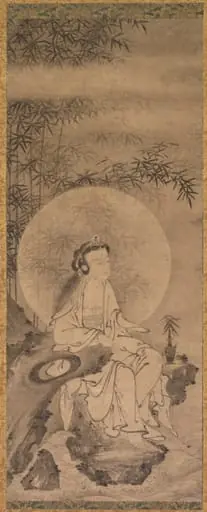 White-Robed Guanyin