Artwork
Yusuf
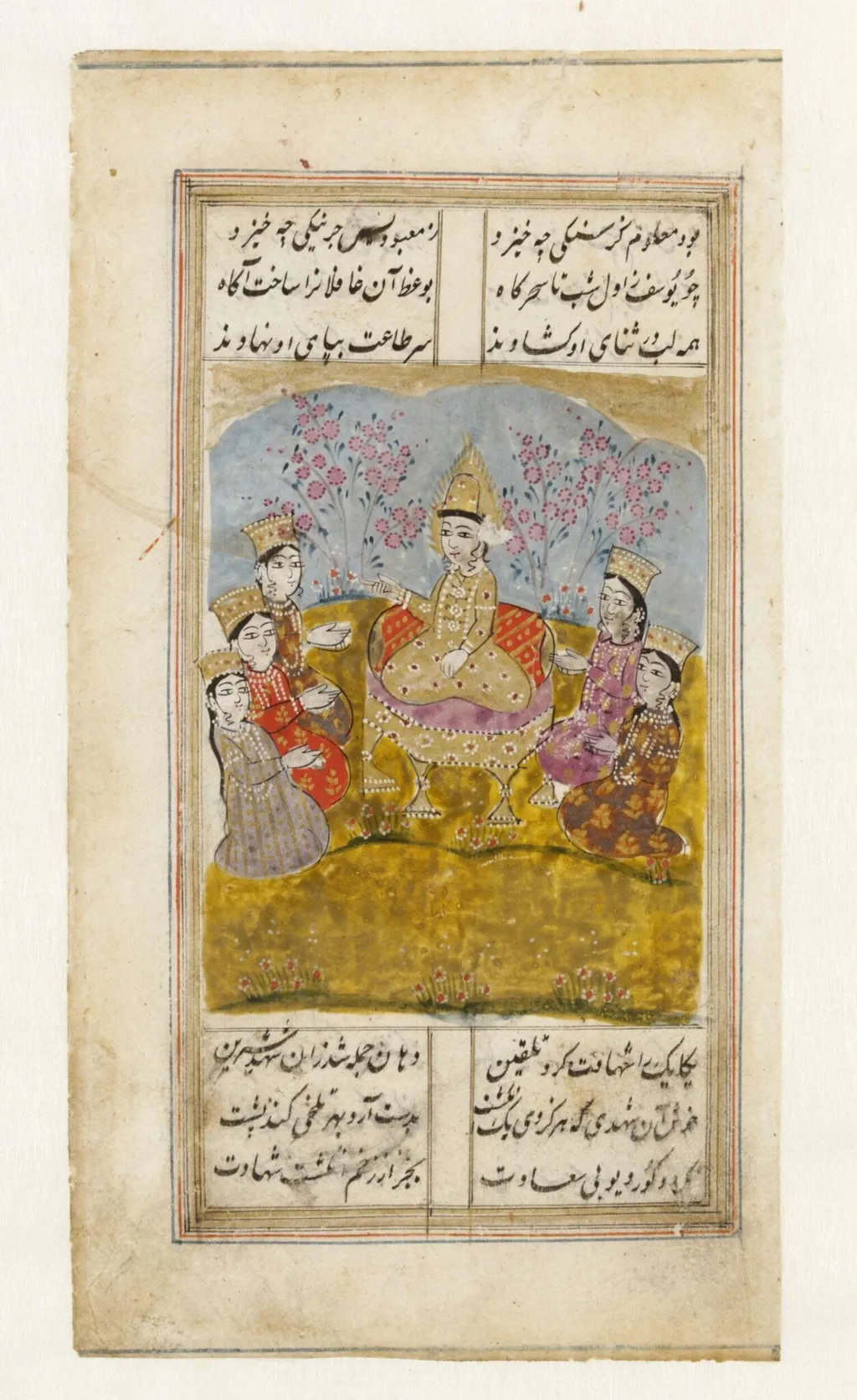
Yusuf is a paint painting by Unknown. It dates from 1850 and is held in the collection of the Victoria and Albert Museum. The work is a painted illustration on paper, executed with opaque water‑colour and gold leaf.
About this work
Overview
The work is a painted illustration on paper, executed with opaque water‑colour and gold leaf. It shows a central male figure seated on an elaborate golden throne within a lush garden, surrounded by several female attendants. A bright yellow‑ochre ground and a blue sky with flowering trees form the background, while decorative Nastaliq script appears in two columns beneath the scene.
Subject & Meaning
The central figure is identified as Yusuf, a prophetic character shared by Islamic, Jewish, and Christian traditions. The composition emphasizes his moral steadfastness, portraying him amid temptation yet poised and dignified, a visual reminder of his resistance to seduction.
Technique & Style
The artist employed opaque water‑colour pigments combined with applied gold, creating a richly textured surface. The figures are rendered in vivid hues, gold, red, purple, brown and gray, while the intricate hat forms and ornamental clothing reflect a stylised courtly aesthetic typical of South‑Asian manuscript illustration.
History & Provenance
The painting is part of a narrative manuscript that blends religious stories from multiple faiths. A comparable illustration appears in a 1976 study of Kashmiri manuscripts, indicating its regional artistic lineage. The piece is now in the collection of the Victoria and Albert Museum in London.
Context
The illustration belongs to a tradition of illustrated texts that convey moral lessons through opulent visual storytelling. The inclusion of Nastaliq calligraphy below the image integrates textual and pictorial elements, a common feature in Persian‑influenced manuscript art.
Artist & collection









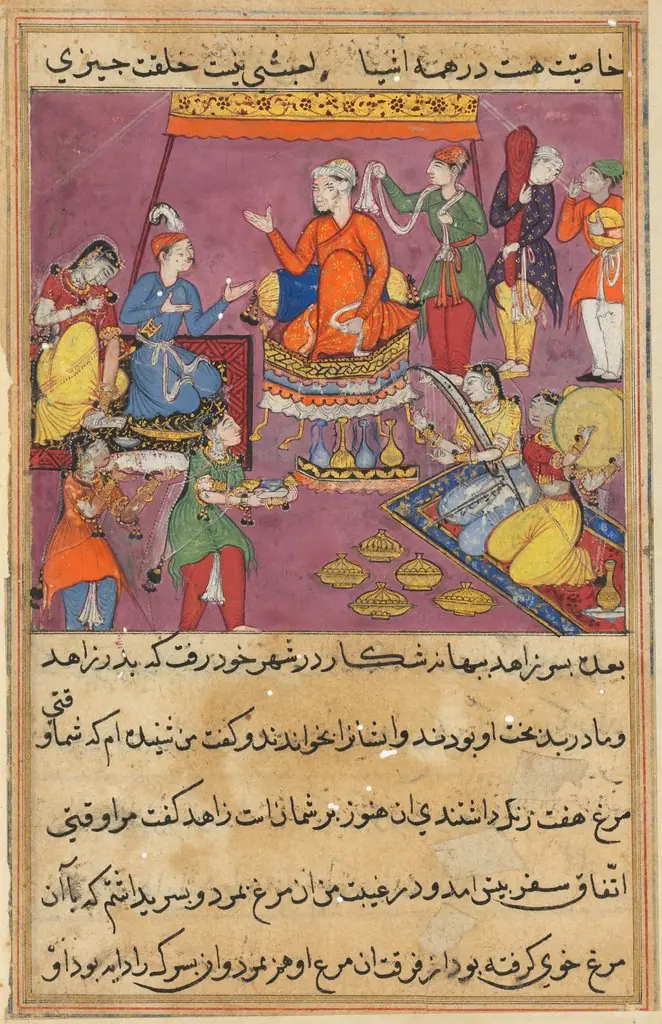
- The king gives his daughter in marriage to the pious man’s son, from a Tuti-nama (Tales of a Parrot): Fifty-second Night
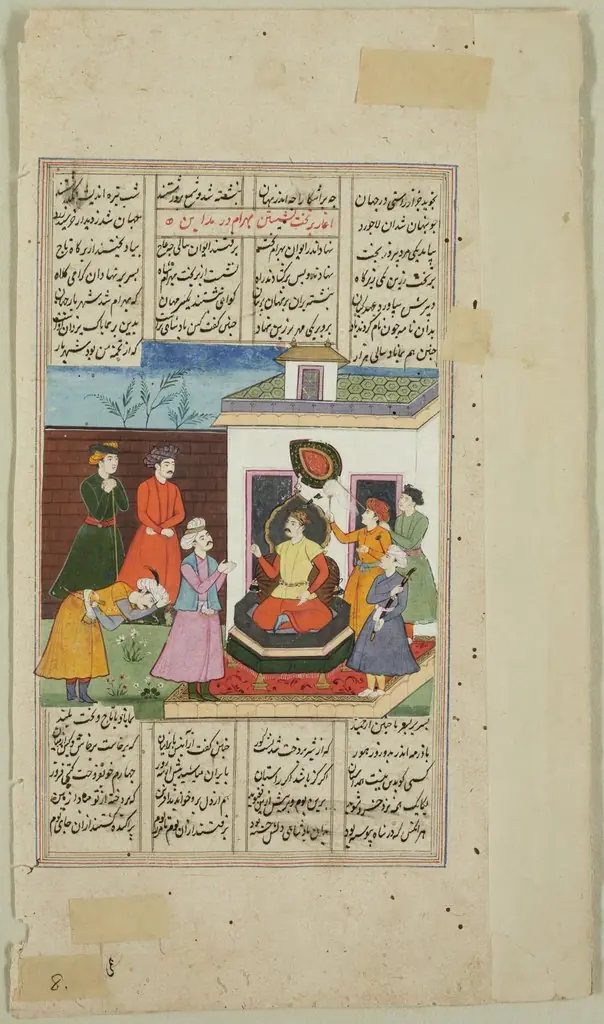 King Enthroned Outside and Standing Retainers
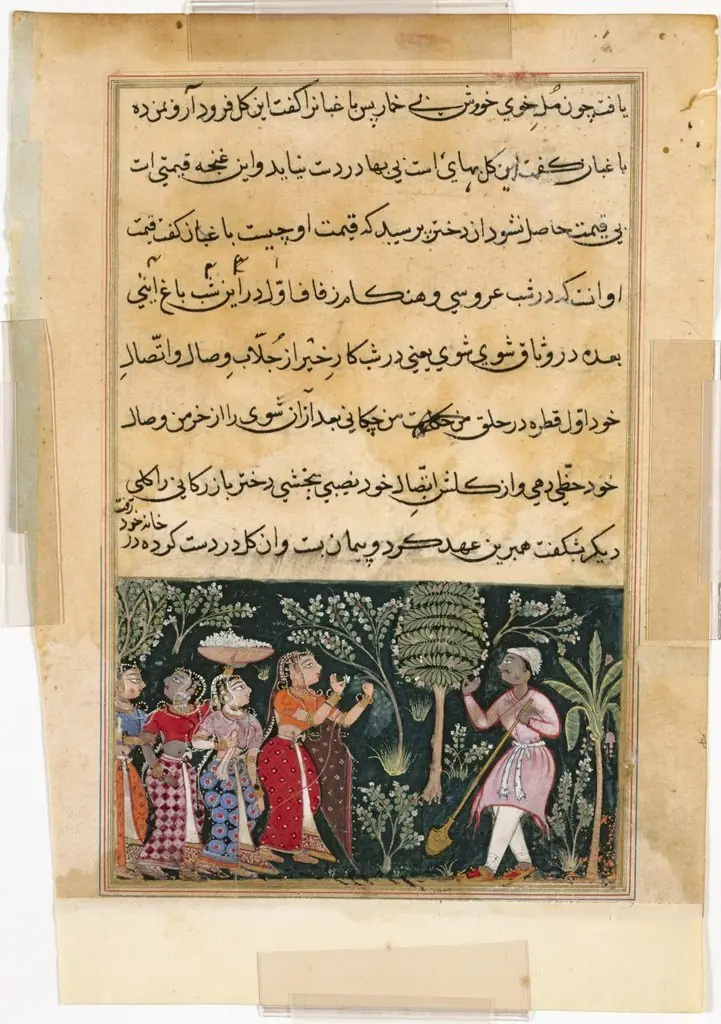 The daughter of the merchant of Mazanderan asks the gardener for the rose, from a Tuti-nama (Tales of a Parrot): Twelfth Night
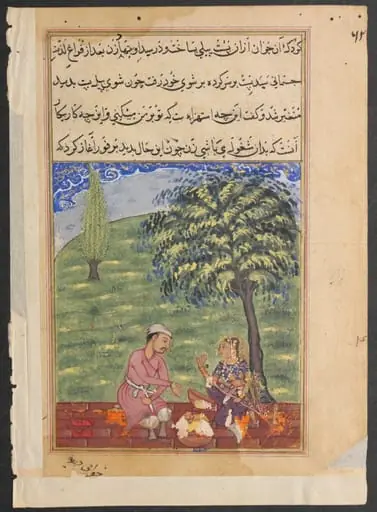 The unfaithful wife explaining away the presence of the dough elephant, from a Tuti-nama (Tales of a Parrot): Eighth Night
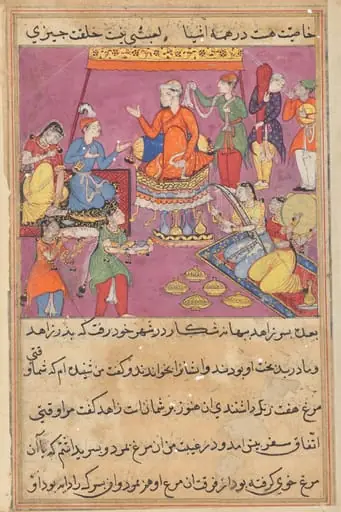 The king gives his daughter in marriage to the pious man’s son, from a Tuti-nama (Tales of a Parrot): Fifty-second Night
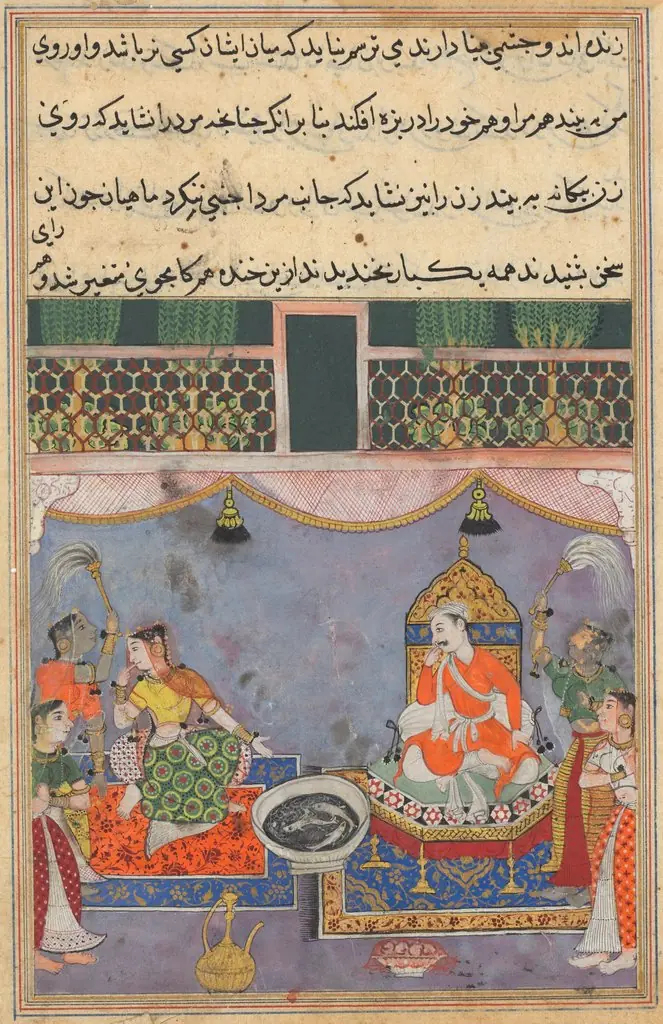 Kamjuy, the wife of the Raja, averts her face from the fishes, from a Tuti-nama (Tales of a Parrot): Twenty-third Night
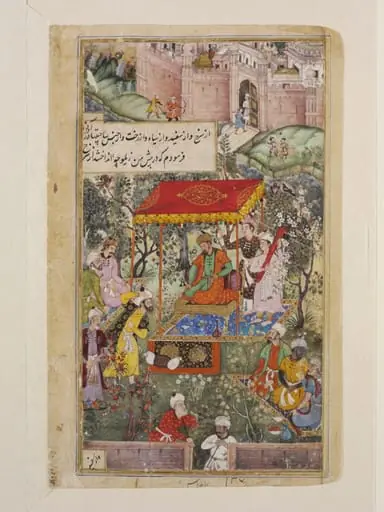 Untitled
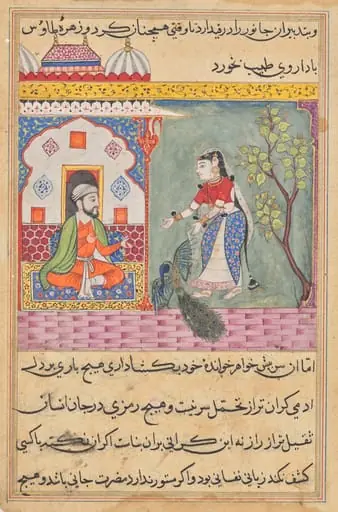 The Brahman’s wife who killed a peacock and ate its gallbladder on the physician’s advice, from a Tuti-nama (Tales of a Parrot): Nineteenth Night
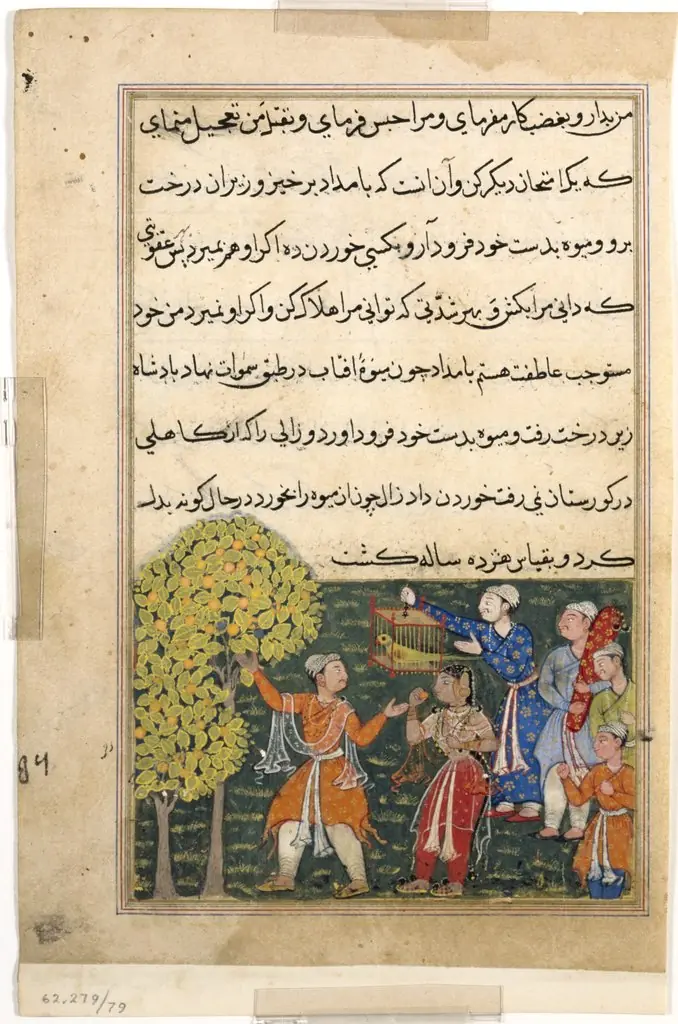 The king plucks fruit from the Tree of Life with his own hands and feeds it to a lady, from a Tuti-nama (Tales of a Parrot): Ninth Night
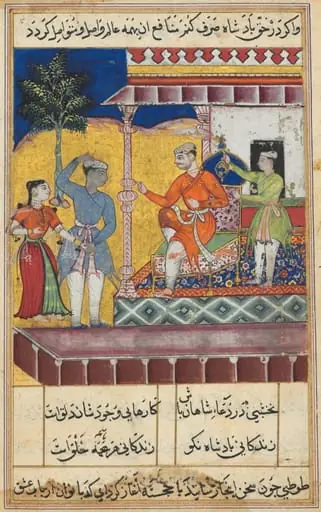 The rejuvenated old man and the daughter of the king of the jinns take leave of the King of Kings, from a Tuti-nama (Tales of a Parrot): Seventh Night
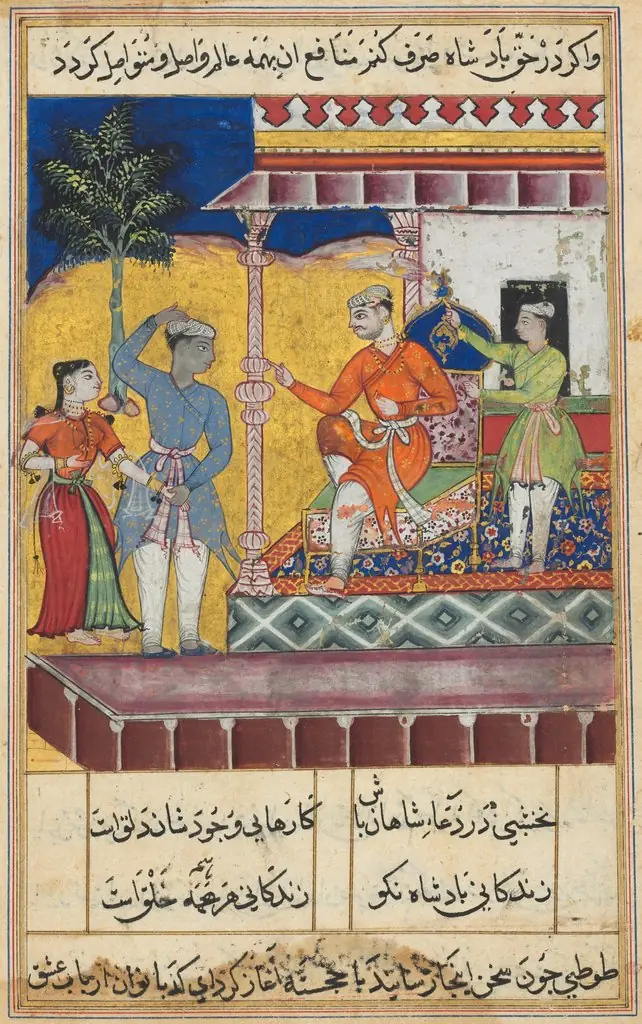 The rejuvenated old man and the daughter of the king of the jinns take leave of the King of Kings, from a Tuti-nama (Tales of a Parrot): Seventh Night
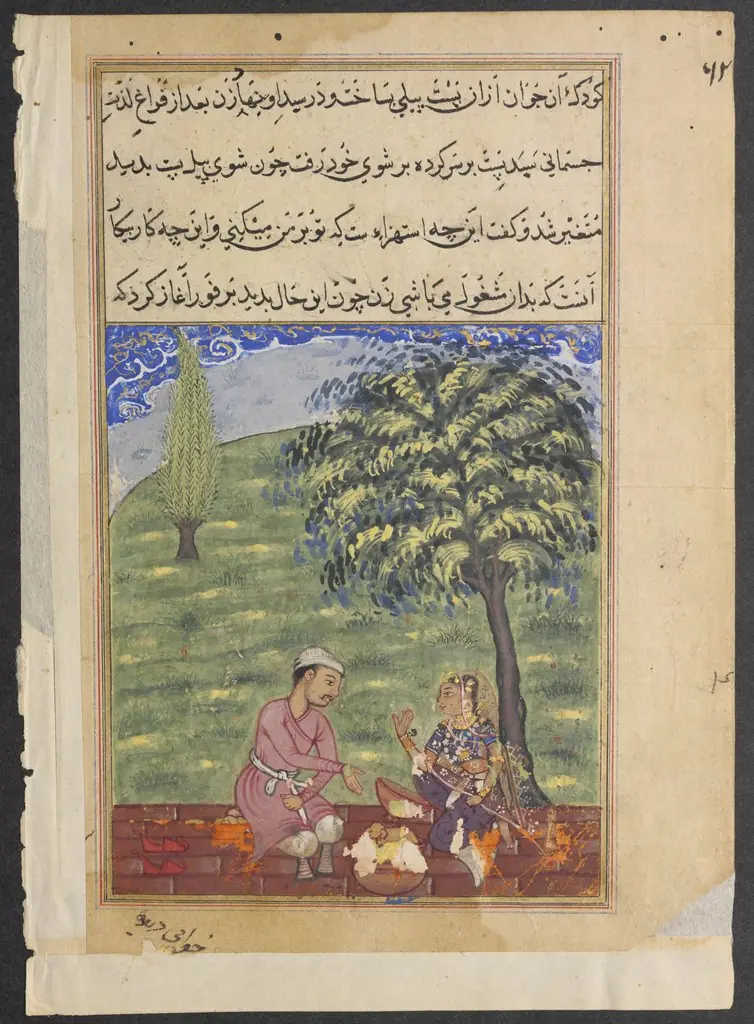 The unfaithful wife explaining away the presence of the dough elephant, from a Tuti-nama (Tales of a Parrot): Eighth Night