Artwork
Maharaja Shri Anand Singh-ji and His Consort
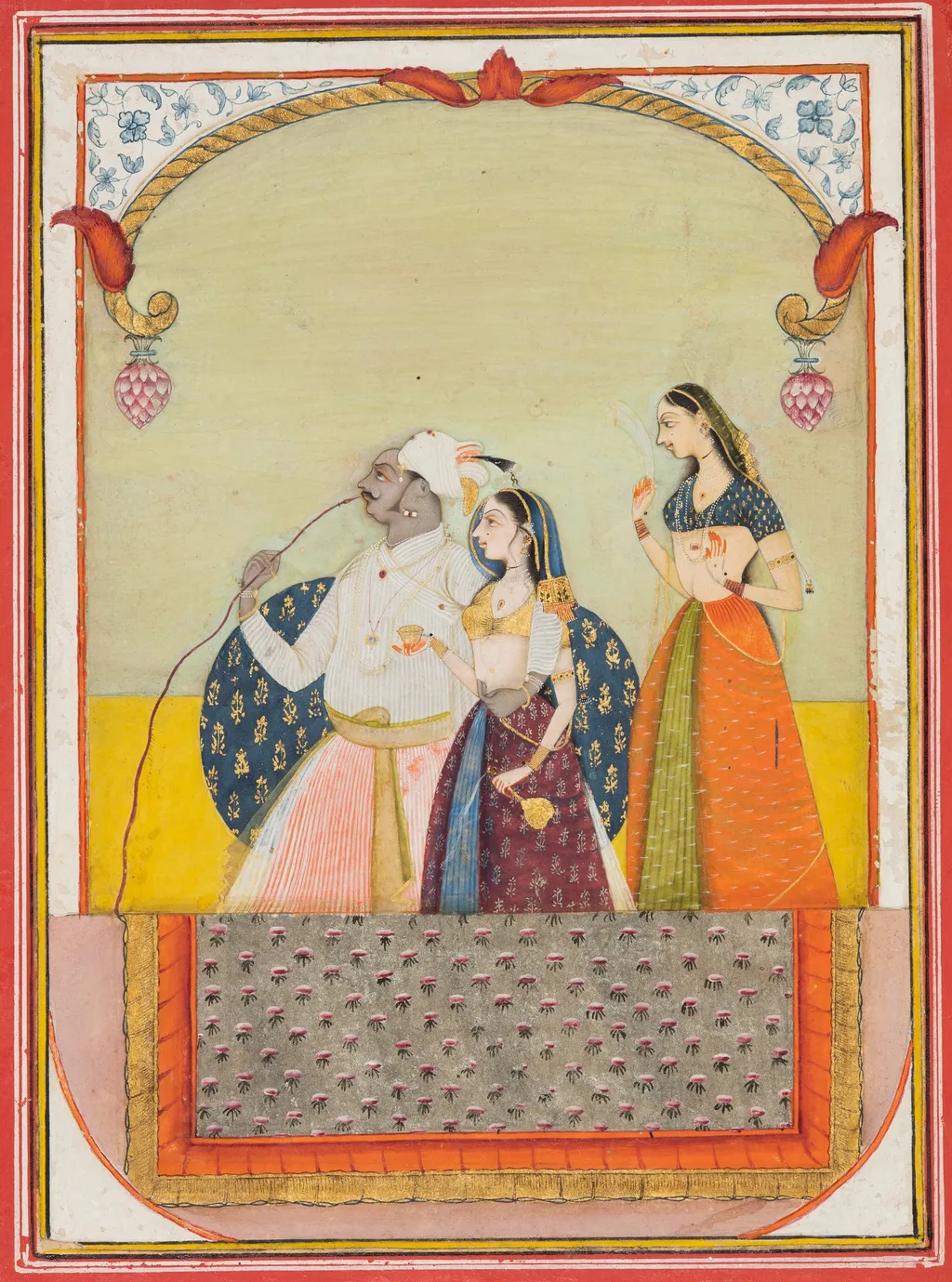
Maharaja Shri Anand Singh-ji and His Consort is an unspecified painting by the Mughal Painting artist Ustad Murad. It dates from 1729 and is held in the collection of the Cleveland Museum of Art.
About this work
Subject & Meaning
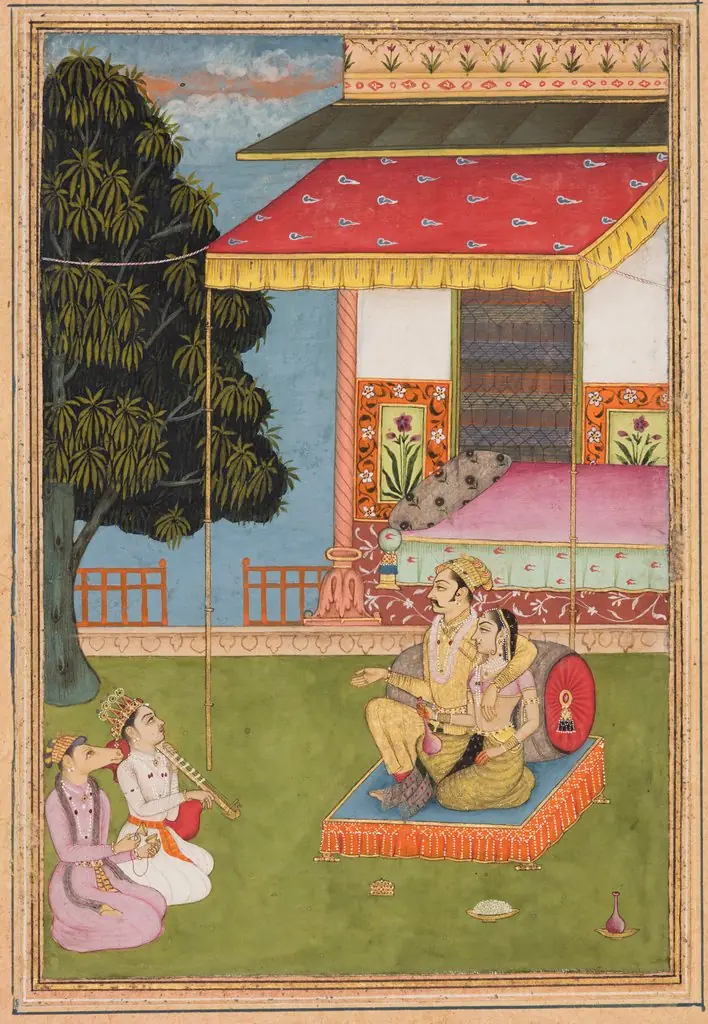
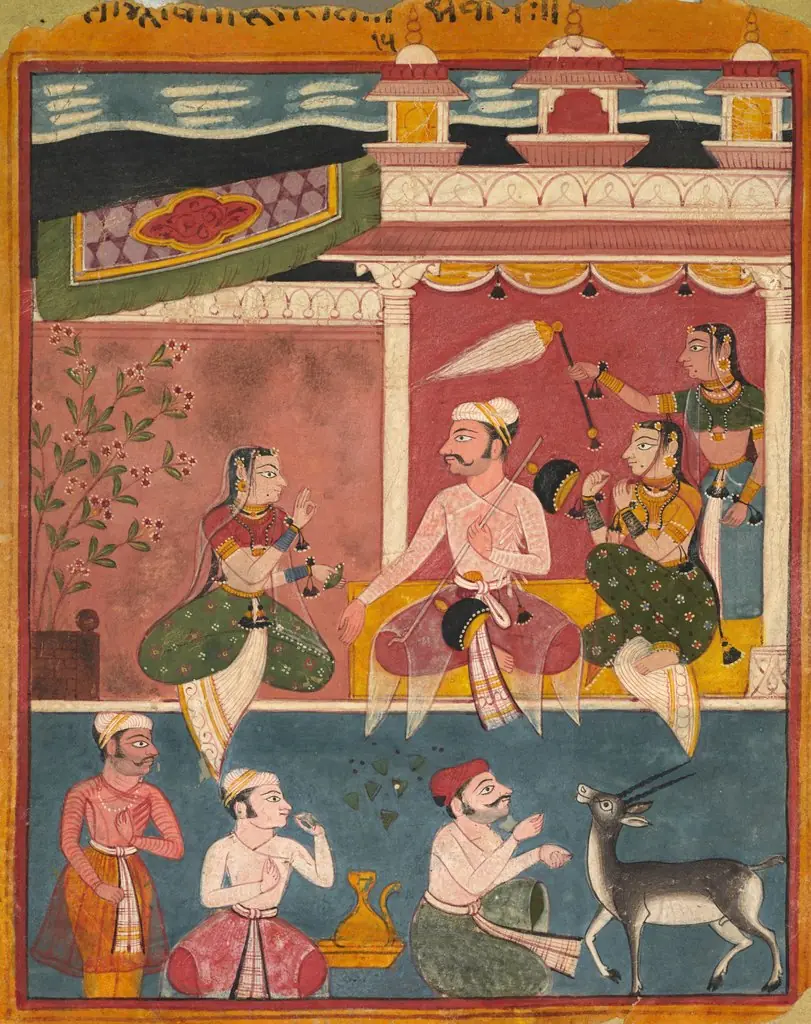
The painting depicts Maharaja Shri Anand Singh-ji and his consort, presenting a dual portrait of the ruler and his wife from Bikaner State.
The painting depicts Maharaja Shri Anand Singh-ji and his consort, presenting a dual portrait of the ruler and his wife from Bikaner State. Rendered in 1729, the work reflects the early‑18th‑century royal portraiture tradition, emphasizing the couple’s status and marital union. While the titles and provenance confirm the subjects, the sources do not elaborate on specific iconographic symbols or deeper allegorical meanings beyond their representation as a princely pair.
Technique & Style
Oil on canvas depicting Maharaja Shri Anand Singh-ji and His Consort, created by Ustad Murad in 1729 in Bikaner State. The work belongs to the Rajput painting tradition of 18th-century India, characterized by flat planes of vivid color, intricate pattern work, and fine line detail. It is part of the Cleveland Museum of Art's collection.
History & Provenance
Created in 1729 within the Bikaner State, the painting Maharaja Shri Anand Singh-ji and His Consort was executed by the artist Ustad Murad, who was active during the eighteenth century. The work is currently held in the collection of the Cleveland Museum of Art, where it is cataloged under accession number 2018.195. The piece entered the museum's holdings in 2018, marking its most recent documented transfer of ownership in the available records.
The painting Maharaja Shri Anand Singh-ji and His Consort is held in the collection of the Cleveland Museum of Art. The work, created in 1729 by the artist Ustad Murad, is registered within the museum's holdings under the accession number 2018.195. The provided sources confirm the artwork's location and inventory designation but do not list specific past exhibitions or a detailed exhibition history.
Legacy
The work has been recognized for its role in shaping Rajput court portraiture, with scholars citing its compositional balance and naturalistic rendering as influences on later Bikaner school artists. Its inclusion in major exhibitions of Indian miniature painting at the Metropolitan Museum of Art and the Victoria and Albert Museum has reinforced its reputation as a benchmark of 18th-century Rajasthani artistry. The painting remains a reference point in studies of courtly patronage and artistic exchange in Mughal-era India.
Overview
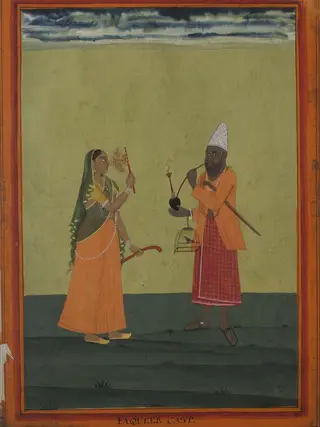
Created in 1729 by the artist known as Ustad Murad, this oil painting portrays a regal trio positioned before an ornate carpet. The work is part of the collection of the Cleveland Museum of Art, where it is displayed as an example of early eighteenth‑century court portraiture from the Indian subcontinent.
Context
The composition reflects the artistic conventions of Mughal‑influenced portraiture, where rulers and their families were depicted with elaborate textiles and ornamental interiors. The inclusion of a hookah and richly patterned surroundings aligns with contemporary visual codes that signified wealth, refinement, and the patron’s cultivated taste.
Own this work as a print
Artist & collection