Artwork
Courtesan as Daruma
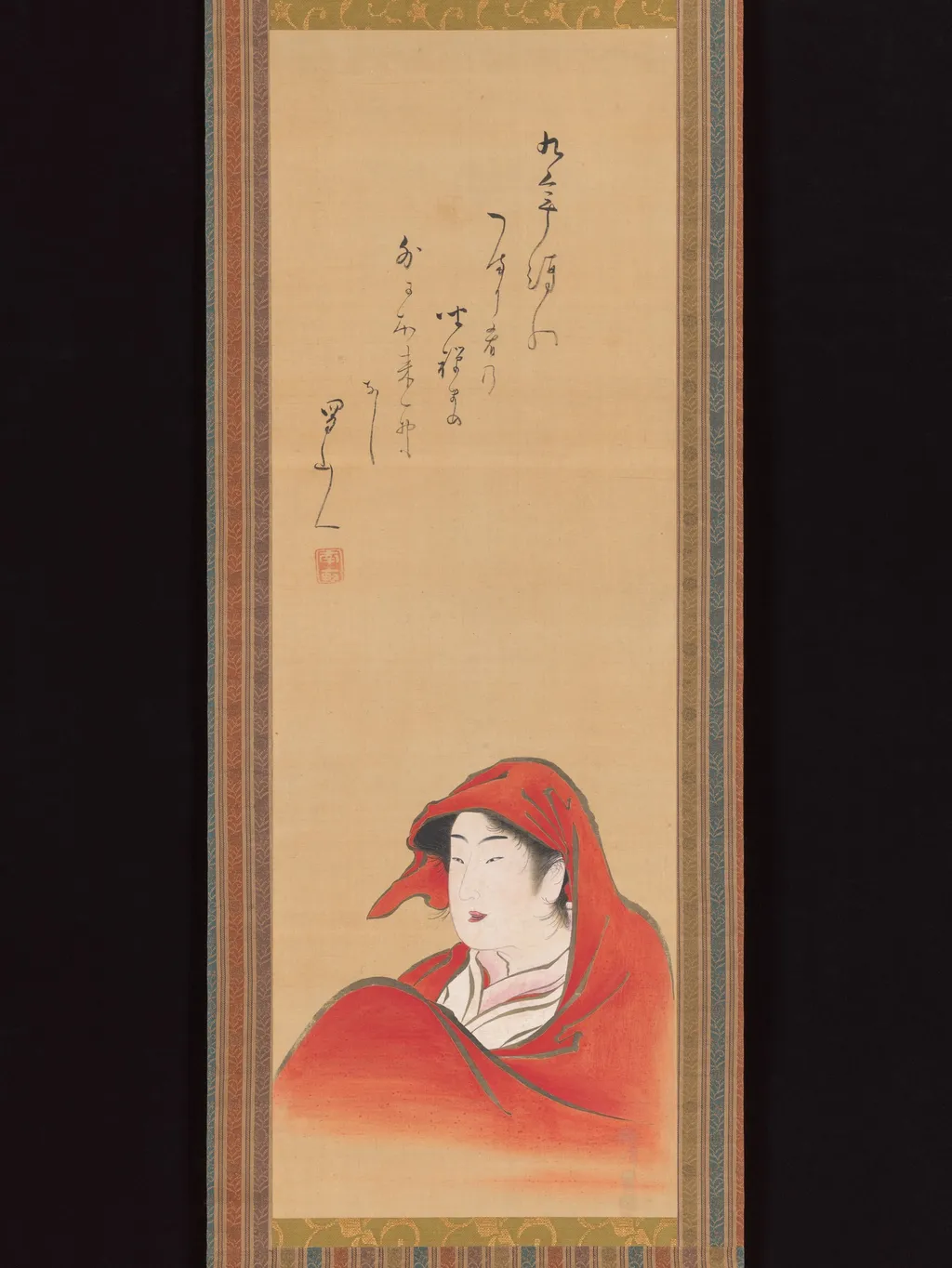
Courtesan as Daruma is an unspecified painting by the Ukiyo-e artist Utagawa Toyoharu. It dates from 1805 and is held in the collection of the Metropolitan Museum of Art.
About this work
Technique & Style
The formal qualities reflect the artist's engagement with the subject of a courtesan depicted in the guise of the Zen patriarch Daruma.
Courtesan as Daruma is a painting created by Utagawa Toyoharu in 1805. The work originates from Japan and is currently held in the collection of the Metropolitan Museum of Art. As a painting, the piece utilizes traditional pigments and supports characteristic of Japanese art from the early nineteenth century, though specific materials and dimensions are not detailed in the available records.
The formal qualities reflect the artist's engagement with the subject of a courtesan depicted in the guise of the Zen patriarch Daruma.
History & Provenance
The painting Courtesan as Daruma was created by the Japanese artist Utagawa Toyoharu in 1805. It originated in Japan and is currently held in the collection of the Metropolitan Museum of Art. The work is classified as a painting.
The specific date of inception is recorded as January 1, 1805. No further details regarding the original commission, the specific patron, or the detailed chain of ownership prior to its acquisition by the museum are provided in the available records.
The painting Courtesan as Daruma by Utagawa Toyoharu is part of the Metropolitan Museum of Art collection in New York, accessioned under the inventory number 2001.115. It has been exhibited in the museum's Japanese art galleries, including a display of ukiyo-e prints and paintings from the 18th and 19th centuries.
Overview
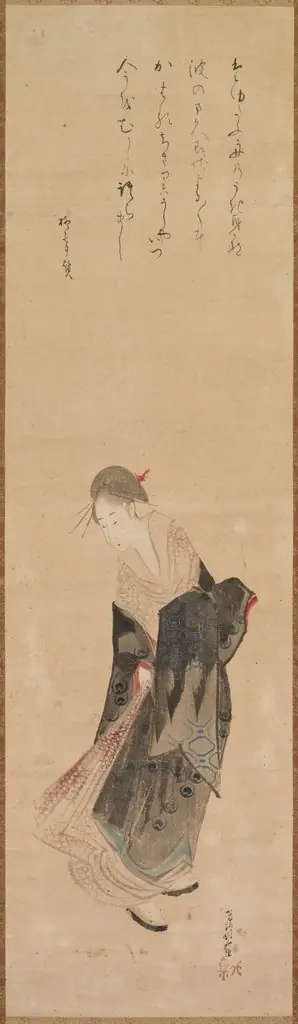
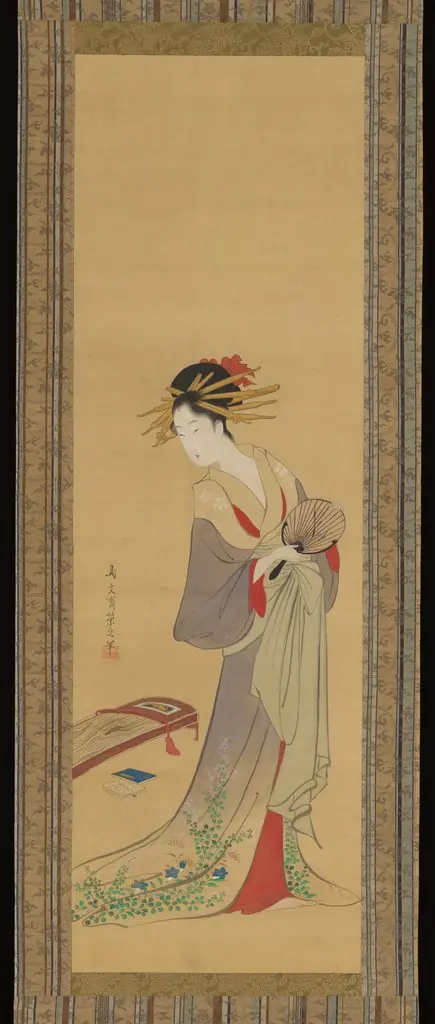
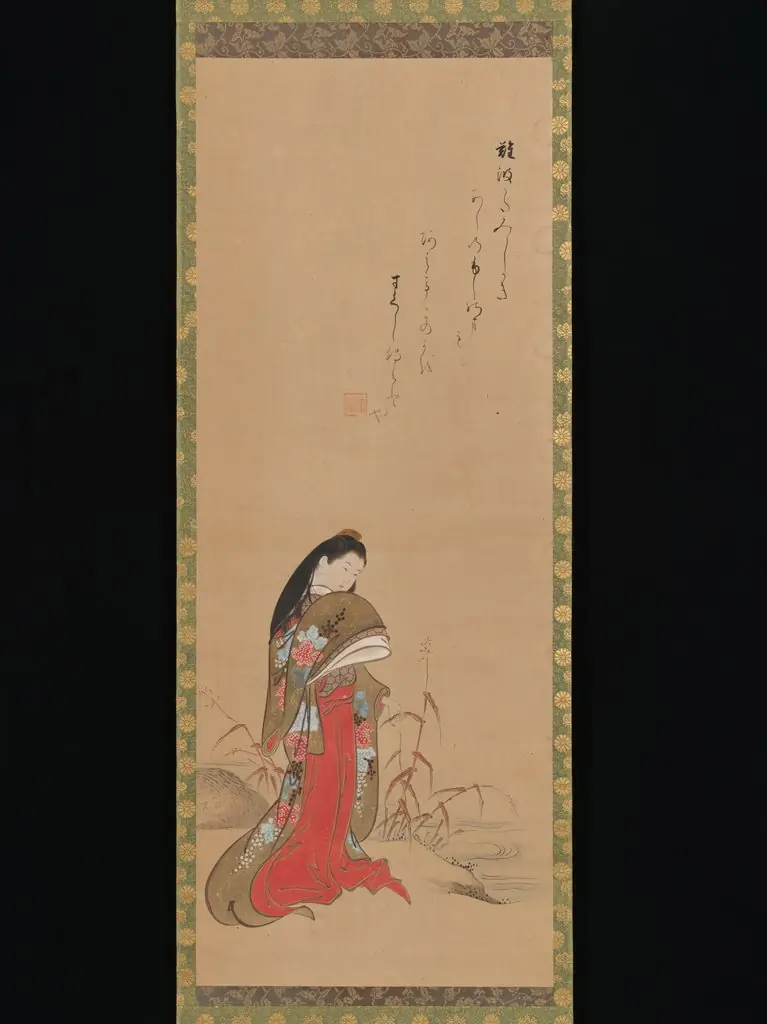
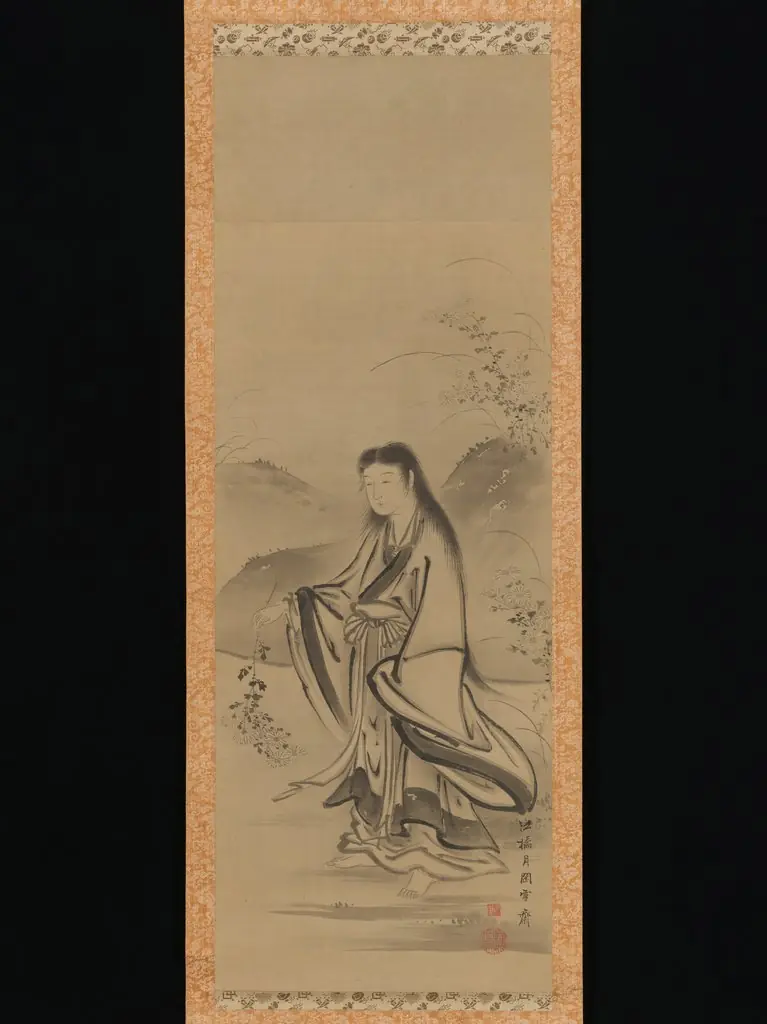
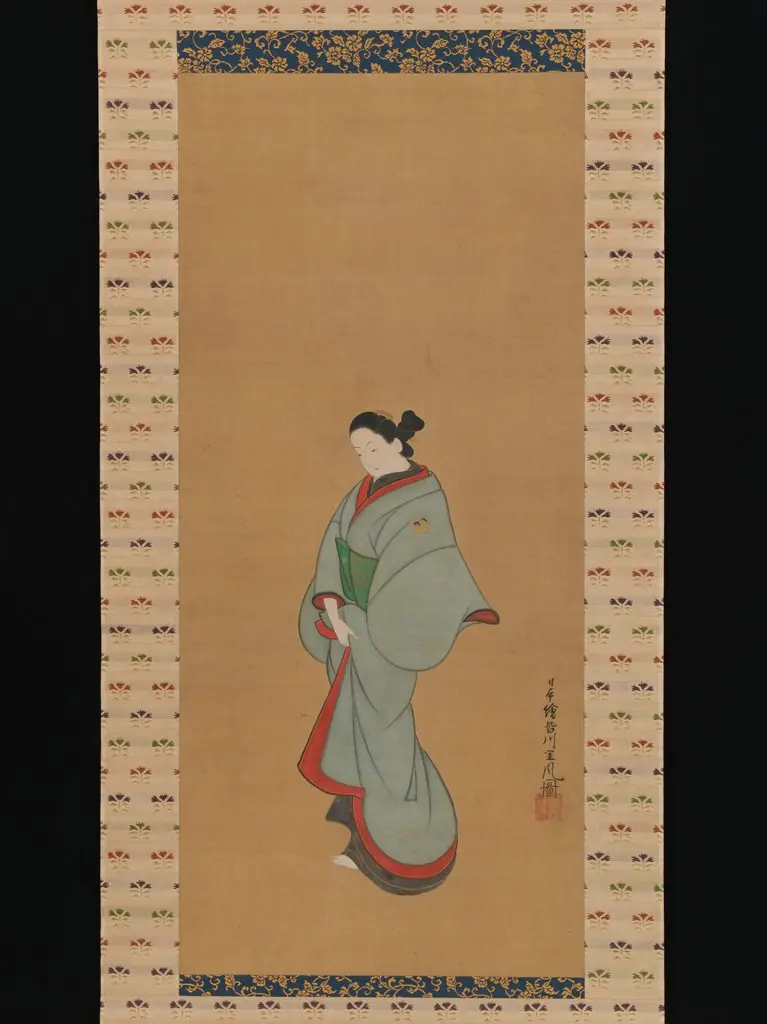
Courtesan as Daruma, painted in 1805 by the Edo‑period artist Utagawa Toyoharu, is part of the collection at the Metropolitan Museum of Art. The work presents a solitary female figure cloaked in a vivid red garment, set against an unadorned, light‑toned backdrop that emphasizes the striking colour of her attire.
Subject & Meaning
The sitter is depicted as a courtesan, a common theme in ukiyo‑e that celebrated urban pleasure districts. Her posture, with the head turned slightly away, and the modest jewelry, a single earring, suggest a blend of allure and restraint, inviting contemplation of the social roles and aesthetic ideals of early‑19th‑century Japan.
Own this work as a print
Artist & collection