Artwork
Landscape with House and Ploughman
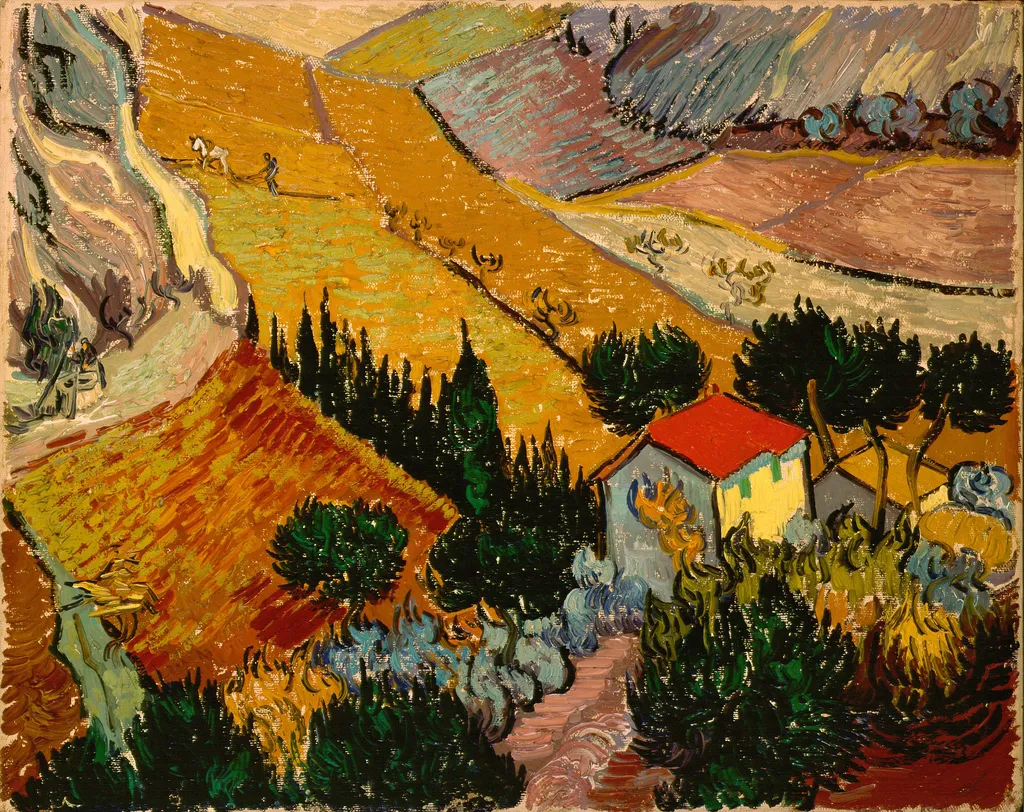
Landscape with House and Ploughman is an oil painting by the Post-Impressionist artist Vincent van Gogh. It dates from 1889 and is held in the collection of the Hermitage Museum.
About this work
This painting is called Landscape with House and Ploughman. It's an oil paint work by Vincent van Gogh.
The painting was produced during the autumn of his stay in Saint-Rémy. It has catalogue numbers F 727 and JH 1877, which suggests it's been well-documented.
You can learn more about the style and techniques used in this painting by looking up the artist, Vincent van Gogh.
Subject & Meaning
The work portrays a sunlit valley with a modest house and a lone ploughman working a field, set in the rolling Provençal landscape that Van Gogh observed from his Saint-Rémy-de-Provence asylum. The composition emphasizes the rhythmic furrows of the cultivated earth, reflecting his fascination with agricultural labour as a symbol of renewal and perseverance. Light falling from the right illuminates the roof of the house and highlights the ploughman’s figure, suggesting a quiet optimism amid the artist’s personal turmoil during his stay in the south of France.
Technique & Style
Its stylistic qualities demonstrate van Gogh's mature synthesis of observation and emotional resonance during his Saint-Rémy period.
The work is an oil on canvas painting created in Saint-Rémy-de-Provence in 1889, executed with oil paint applied to a canvas support, reflecting van Gogh's technique of layered brushwork and textured handling characteristic of his post-impressionist landscape style. The composition features a valley, house, ploughman, and field, rendered with dynamic perspective and vivid color contrasts, including sunlit roofs and expressive sky tones that emphasize the formal balance between natural elements and human activity. The painting measures 33 cm in height and 41.4 cm in width, and has been part of the Hermitage Museum's collection since its transfer from the Soviet-looted Krebs collection in 1995, following its provenance through the Gachet family and Berlin dealer Cassirer. Its stylistic qualities demonstrate van Gogh's mature synthesis of observation and emotional resonance during his Saint-Rémy period.
History & Provenance
Landscape with House and Ploughman was painted by Vincent van Gogh in December 1889 at Saint-Rémy-de-Provence, during the final months of his stay at the asylum of Dr. Peyron. According to the French-language account, the scene was likely visualized during walks in the surrounding hills in October and executed the following month in his studio, when the ploughing depicted corresponded to the agricultural season.
The painting was subsequently held in the collection of Dr. Gachet before being acquired by the Berlin dealer Cassirer. In 1928 it was sold to the German industrialist collector Otto Krebs (1873–1941). After the Second World War, the Krebs collection was transferred by the Soviet Army to the Hermitage Museum in 1947 as war reparations.
The work was long considered lost until 1995, when it appeared in the Hermitage exhibition "French Painting of the 19th and 20th Centuries from German Private Collections," alongside other formerly looted works. It has remained on display at the Hermitage since then.
Landscape with House and Ploughman is held in the collection of the Hermitage Museum in Saint Petersburg. The work bears the catalogue numbers F 727 and JH 1877. Following its acquisition by German industrialist Otto Krebs in 1928, the painting was transferred to the Hermitage by the Soviet Army in 1947 as war reparations and remained unpublicized until the 1990s.
The artwork first appeared in public during the 1995 exhibition titled "La Peinture française des XIXe et XXe siècles issue des collections privées d'Allemagne" at the Hermitage, which showcased looted art from pre-war German private collections. Since that exhibition, the painting has been on regular display at the museum.
Context
Landscape with House and Ploughman is regarded as a masterpiece from the final period of Vincent van Gogh’s life, painted in December 1889 during his stay at Saint‑Rémy‑de‑Provence. The work entered scholarly discourse through its inclusion in the 1928 catalogue raisonné by J.-B. de la Faille and was later examined in the 1995 Hermitage exhibition catalogue by Albert Kostenevitch, which accompanied its first public display after being identified among looted artworks recovered by the Soviet Union. Its 1995 re‑emergence underscored issues of wartime provenance and restitution, contributing to provenance studies.
Within art history, the painting exemplifies Van Gogh’s Saint‑Rémy landscape series, reflecting his continued focus on rural scenes and the expressive use of colour and light during his asylum period.
Overview
Landscape with House and Ploughman is an oil on canvas painted by Vincent van Gogh in 1889. Executed during the autumn months of his stay at the asylum in Saint‑Rémy, the work measures a modest size and depicts a rural scene viewed from an elevated perspective. It is catalogued as F 727 and JH 1877 and currently resides in the Hermitage Museum in Saint Petersburg.
Legacy
Since its identification, Landscape with House and Ploughman has been on public display at the Hermitage Museum. The museum’s ongoing research into looted artworks has highlighted the painting’s complex provenance, contributing to broader discussions about restitution and the ethical stewardship of cultural heritage.
Own this work as a print
Artist & collection
Artist
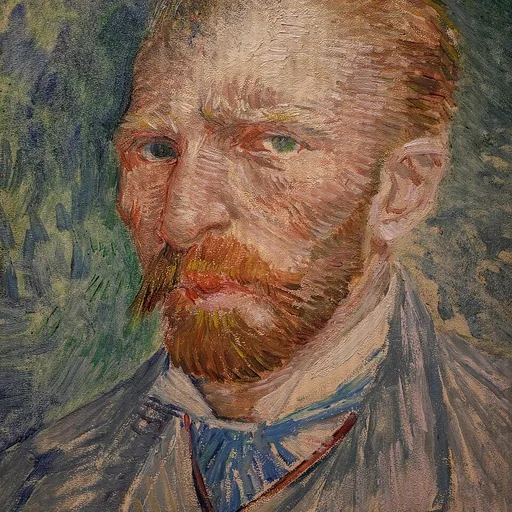
Vincent Willem van Gogh was a Dutch Post-Impressionist painter who is among the most famous and influential figures in the history of Western art.

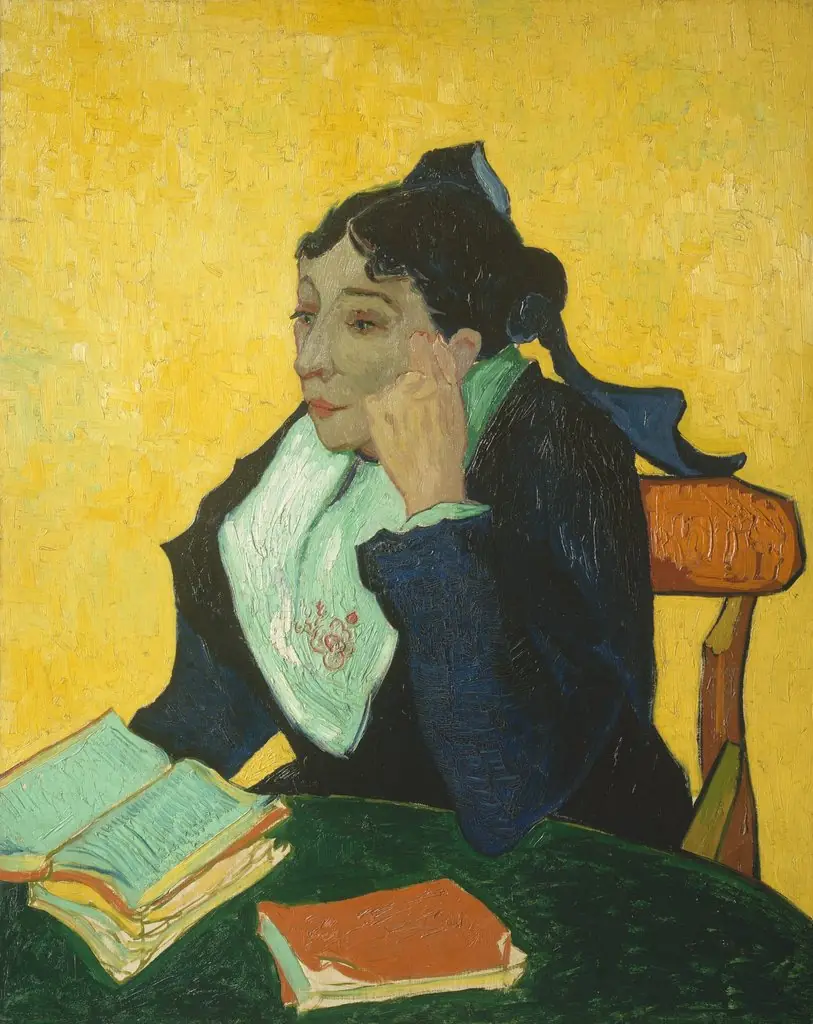
- Landscape with three trees and houses
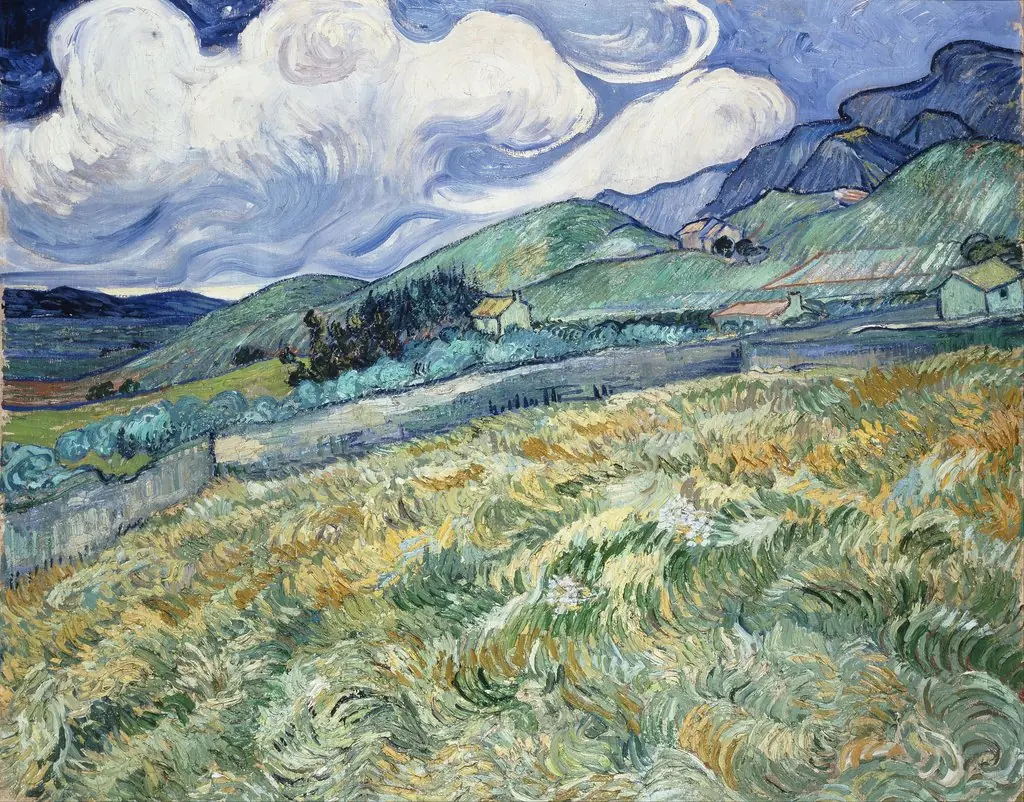 Mountainous Landscape Behind Saint-Paul Hospital
 Katu, Auvers-sur-Oise
 Street in Auvers-sur-Oise
 Farmhouse in Provence
 Garden Behind a House
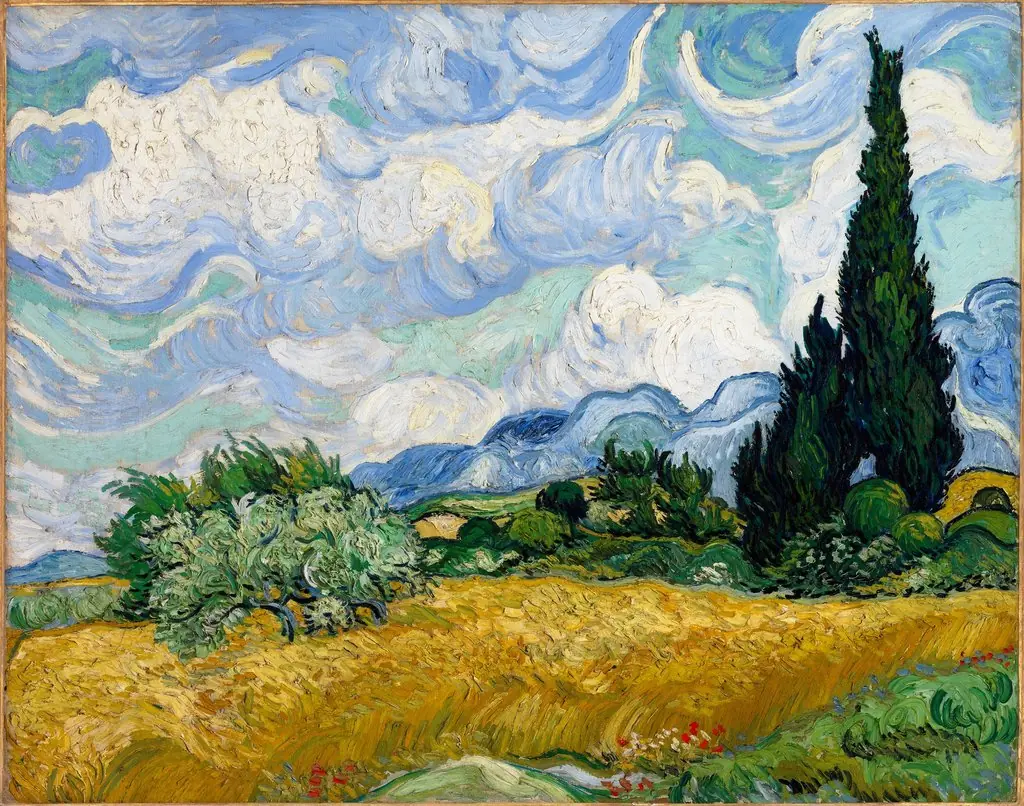 Wheat Field with Cypresses
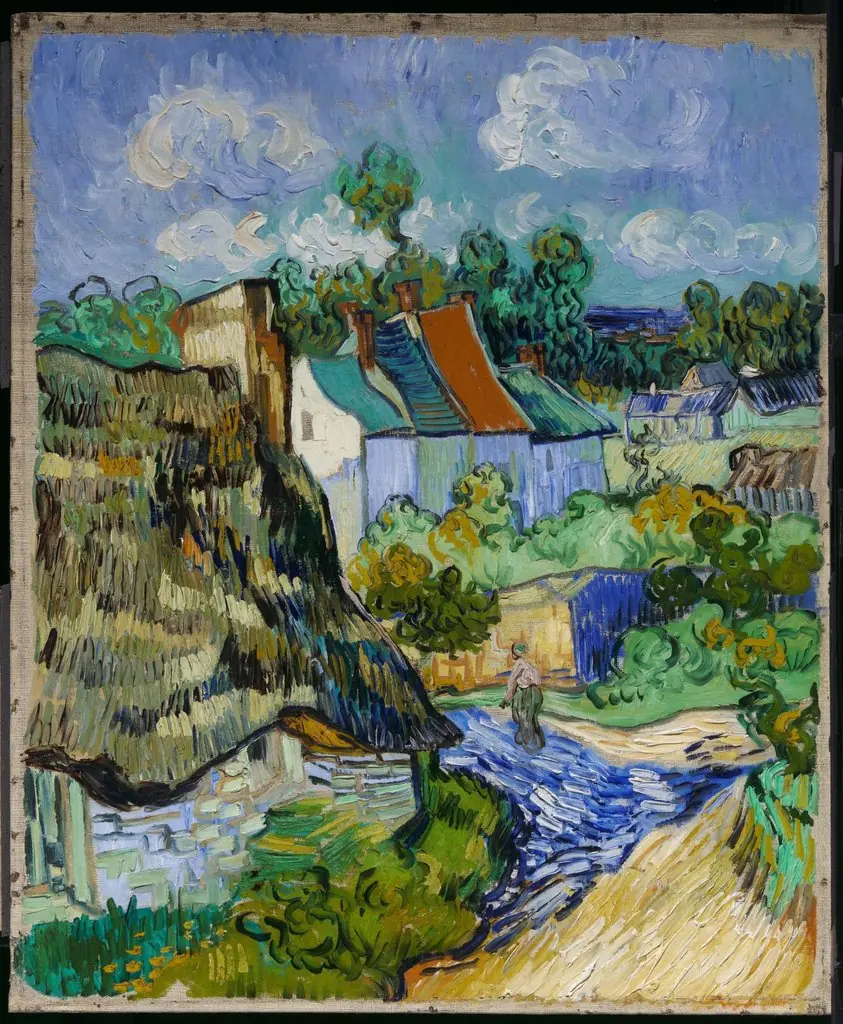 Houses in Auvers
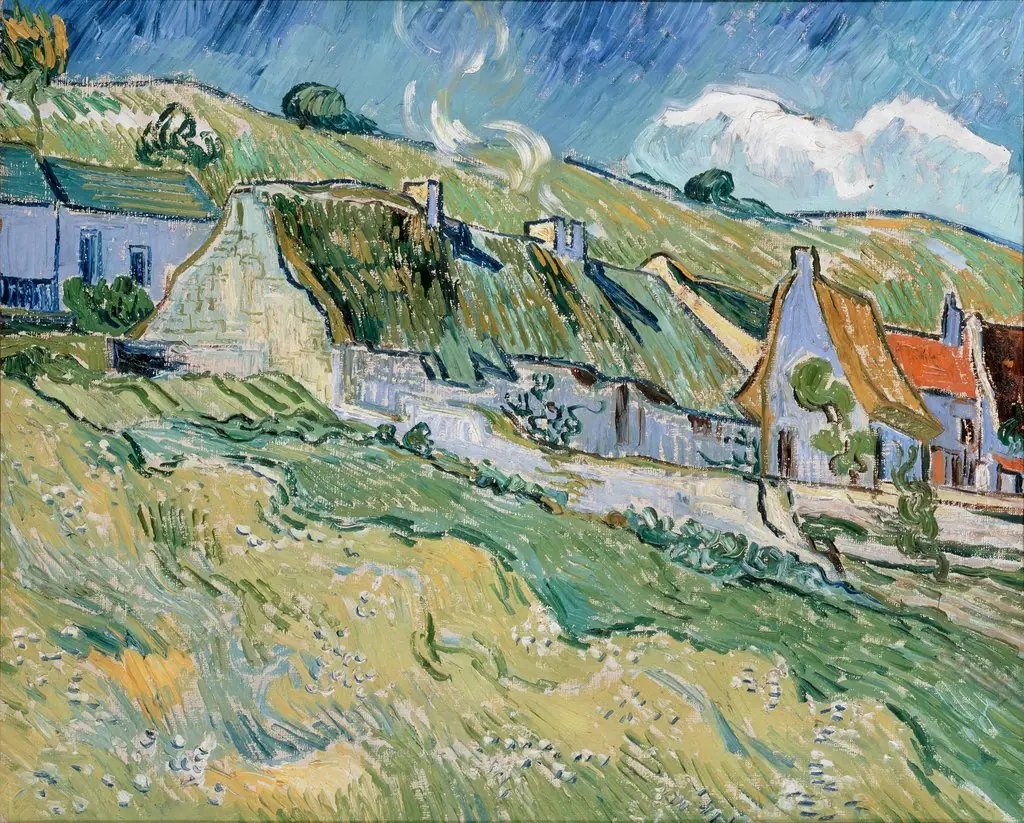 Thatched Cottages and Houses
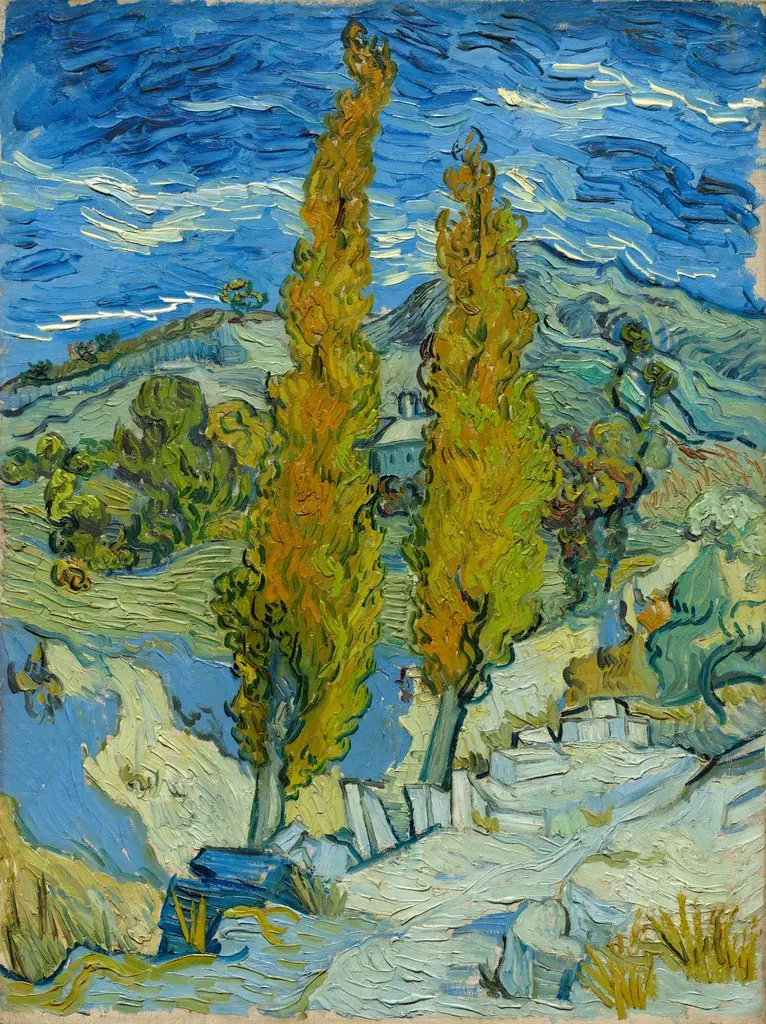 Two Poplars in the Alpilles near Saint-Rémy
 Landscape
 Enclosed Wheat Field with Rising Sun