Artwork
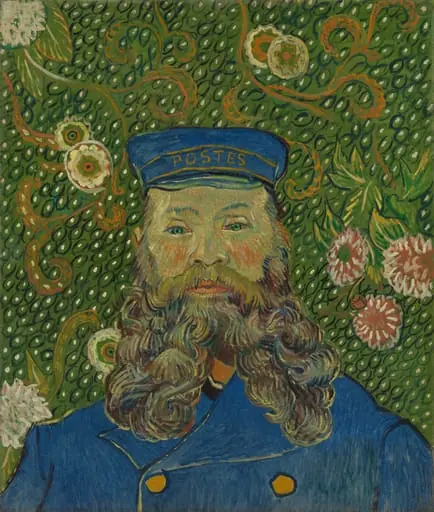
Postman Joseph Roulin
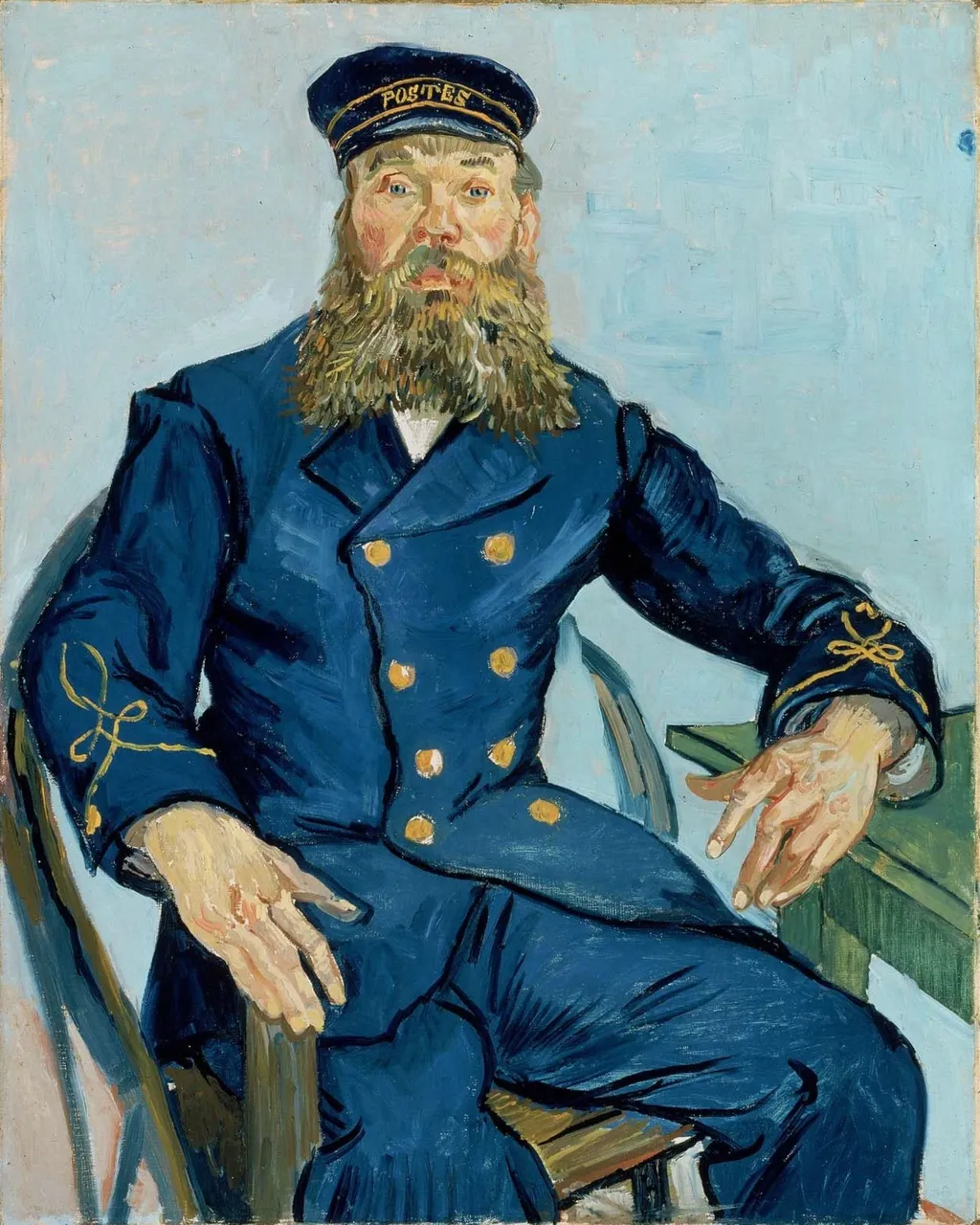
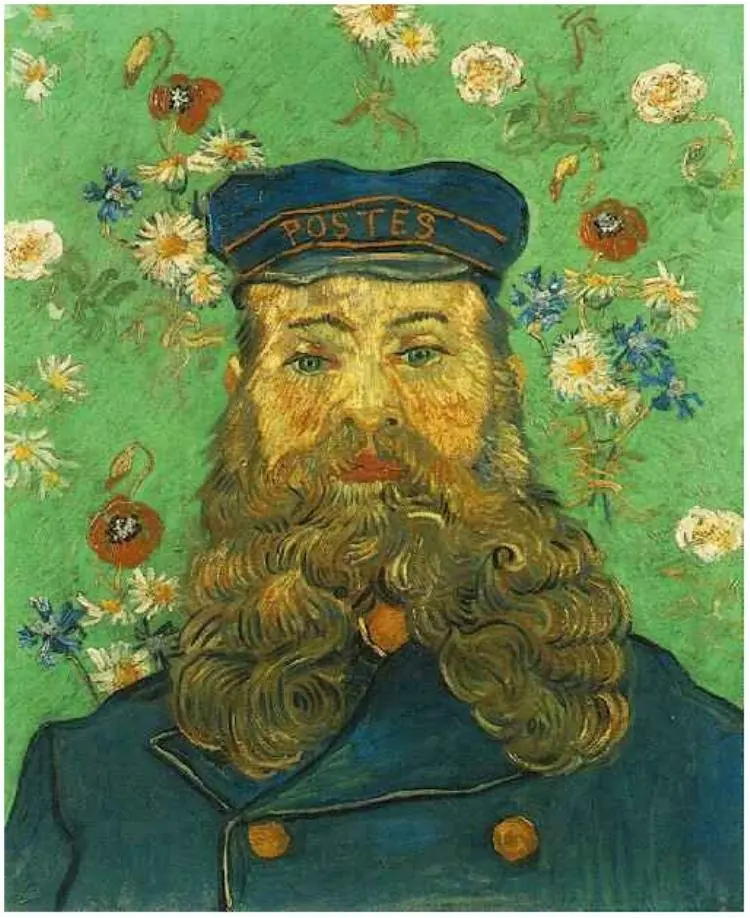
Postman Joseph Roulin is an oil painting by the Post-Impressionist artist Vincent van Gogh. It is held in the collection of the Museum of Fine Arts Boston.
About this work
Subject & Meaning
The portrait symbolizes the artist's deep personal connection to Roulin, whom he viewed as an embodiment of ethical integrity and paternal goodness.
The subject is Joseph Roulin, a postman at the Arles railway station, depicted in his blue uniform with gold trim and a cap marked "POSTES." Van Gogh described Roulin as having a large, bearded face resembling Socrates and characterized him as a passionate republican and socialist. The portrait symbolizes the artist's deep personal connection to Roulin, whom he viewed as an embodiment of ethical integrity and paternal goodness. Van Gogh saw in the postman's character and family devotion a reflection of his own existential aspirations, which he felt were otherwise thwarted by his personal struggles. The work captures Roulin as a figure of dignity and stability, with his robust, florid complexion and intense blue eyes set against a monochromatic blue background. This composition emphasizes the sitter's presence and moral weight rather than spatial depth, transforming a specific individual into a universal symbol of human virtue.
Technique & Style
Van Gogh applied oil paint to a canvas support to create this portrait, using his characteristic swift and textured brushwork. The composition isolates Joseph Roulin against a flat, energetic blue background, emphasizing the subject's bearded figure in a turquoise uniform with bold 'POSTES' lettering on his cap. The palette relies on restrained blues and yellows, with the sitter's rosy complexion heightened by red and azure accents. Roulin's wiry beard is rendered through short, stiff strokes, conveying tactile roughness. The work measures 81.3 cm in height by 65.4 cm in width, reflecting Van Gogh's focus on psychological depth and symbolic use of color.
History & Provenance
The Postman Joseph Roulin was painted by Vincent van Gogh in 1888 during his stay in Arles; he informed his brother Theo of its completion in a letter dated 8 September 1888 and noted that it is one of six portraits he made of the postal worker. After leaving the artist’s studio the work passed through several private hands, Thea Sternheim, the Bignou Gallery, M. Knoedler & Co., the Lefevre Gallery, Carl Sternheim and Cornelis Hoogendijk, before entering the collection of the Museum of Fine Arts, Boston, where it remains today. The painting is held by the Museum of Fine Arts, Boston, where it remains in the permanent collection. Its accession number is 48.249. Dimensions are 81.3 cm × 65.4 cm. The work has not been recorded in major traveling exhibitions in the sources consulted.
Context
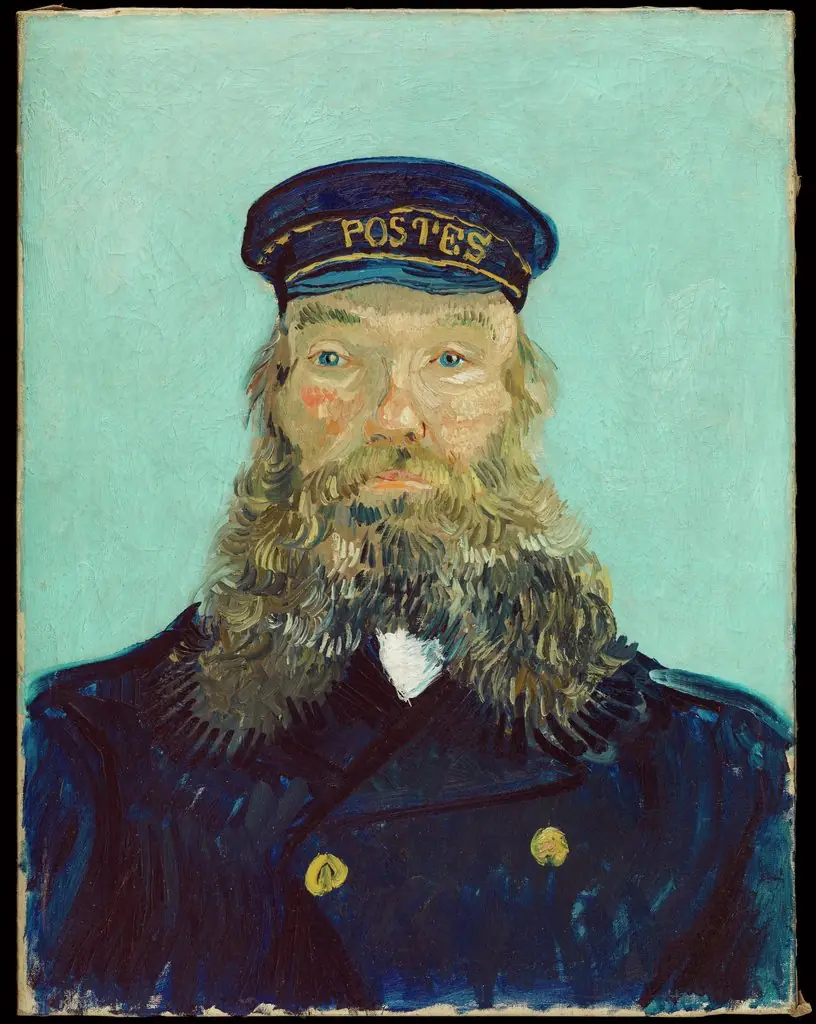
Painted in 1888 during Van Gogh's Arles period, *Postman Joseph Roulin* stands as a definitive example of the artist's mature portraiture. The work captures Roulin, a postman described by the artist as having a "Socratic" face, reflecting a deep personal bond formed between the painter and the subject's family. Art historian Giulio Carlo Argan identifies this specific version, held by the Museum of Fine Arts Boston, as a masterpiece that condenses Van Gogh's artistic philosophy. The painting utilizes a restricted palette of energetic blues and yellows to render the sitter's uniform and features, moving away from earlier direct painting methods toward a more decorative, symbolic approach. This piece is one of six portraits of Roulin, illustrating the artist's sustained focus on the working class and his ability to elevate a specific individual into an iconic figure of human dignity.
Legacy
The Boston version of *Postman Joseph Roulin* is recognized as one of Vincent van Gogh's most famous works, condensing his artistic philosophy through its restrained palette and expressive brushwork. Art critic Giulio Carlo Argan highlighted the painting's significance, noting how the depiction of Roulin's bristling beard and intense blue eyes, set against a monochromatic energetic background, exemplifies the artist's mature style. The work's legacy is further anchored by the profound personal connection between the painter and the sitter; Roulin remained a steadfast friend who cared for Van Gogh following the artist's self-inflicted ear injury, visiting him daily in the hospital. This enduring friendship and the painting's status as a definitive portrait of the Roulin family ensure its continued prominence in art history as a symbol of the bond between the artist and his subject.
Own this work as a print
Artist & collection
Artist
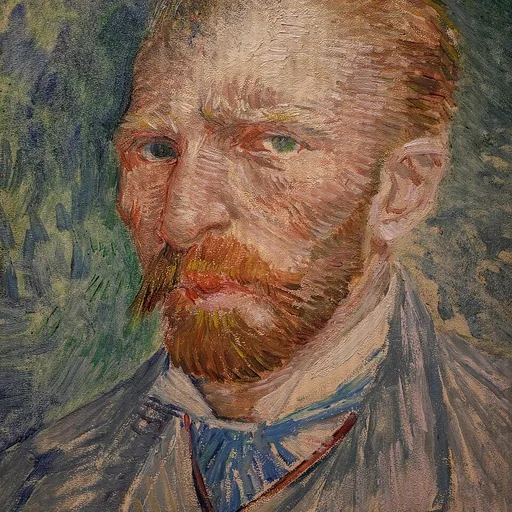
Vincent Willem van Gogh was a Dutch Post-Impressionist painter who is among the most famous and influential figures in the history of Western art.

 Portret van Joseph Roulin
 Untitled
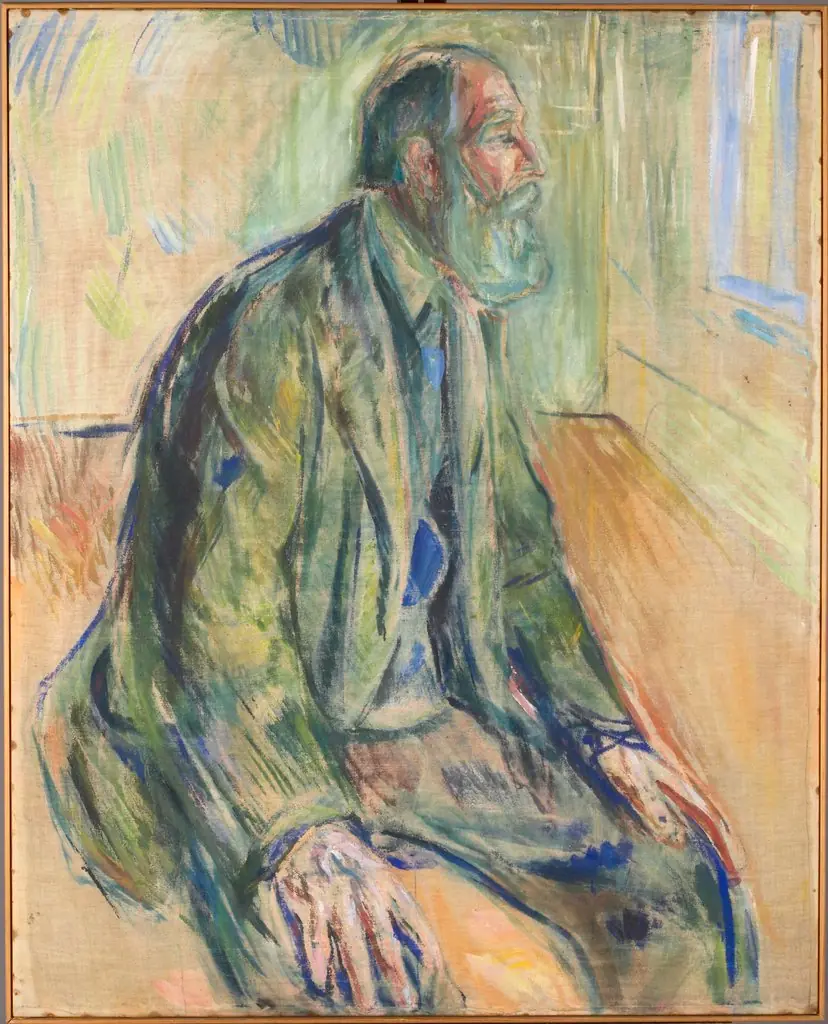 Børre by the Window
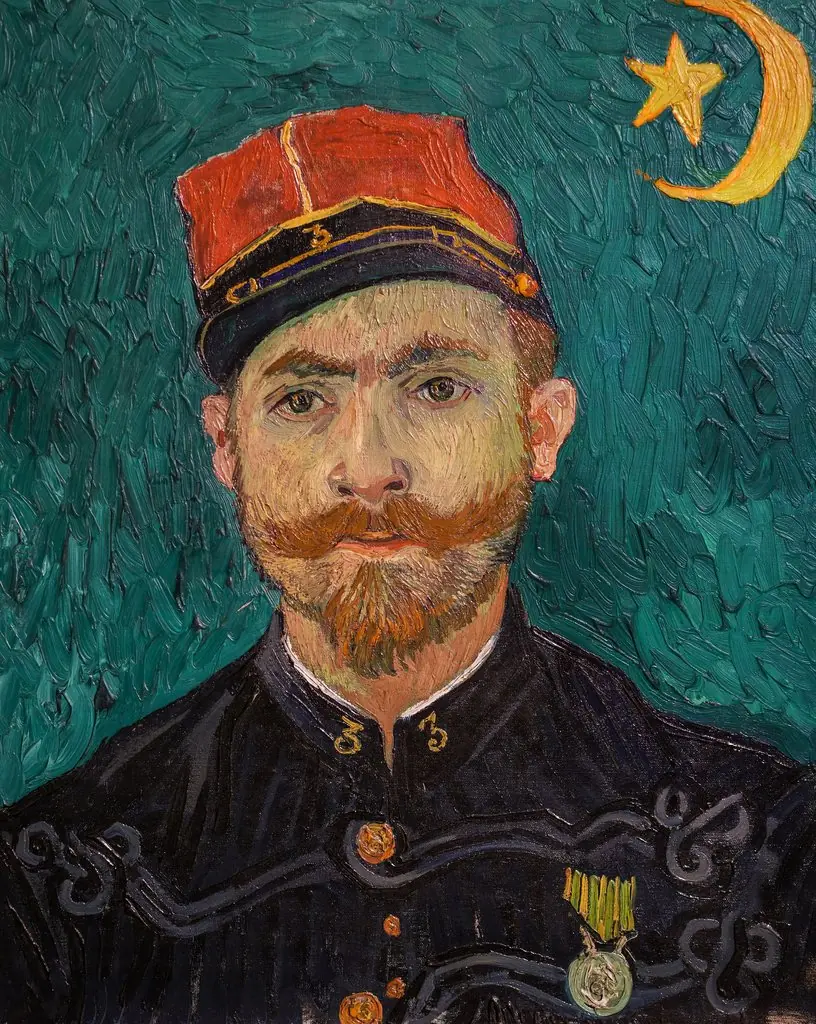 Portrait of Paul-Eugène Milliet, Second Lieutenant of the Zouaves
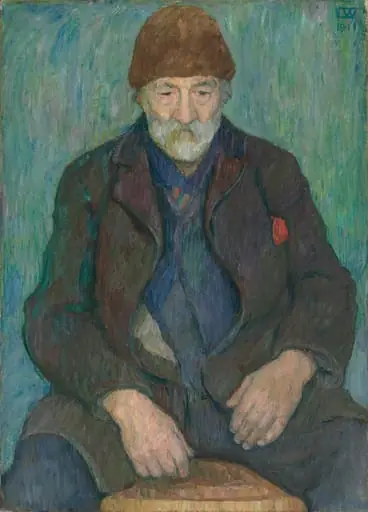 Vanha mies karvalakki päässä
 Portrait de l'artiste à la casquette (Self-Portrait in a Casquette)
 Bildnis Frederik Robert Martin
 Bildnis eines Unbekannten. Sitzender Winzer
 Sergeant of the Colonial Regiment
 Self-portrait