Artwork
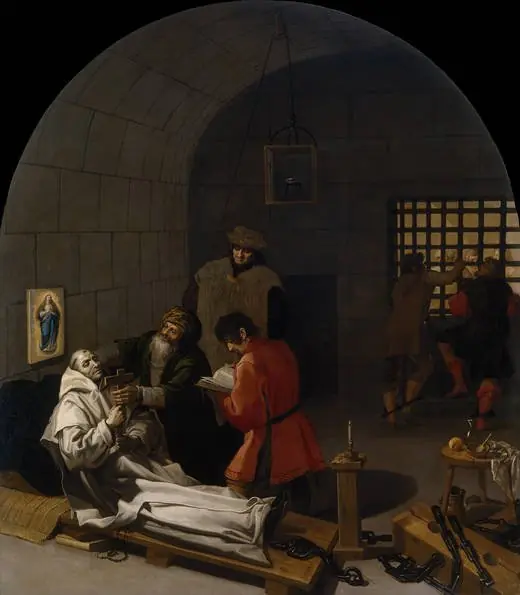
Prison and Death of the Ten Members of the London Charterhouse
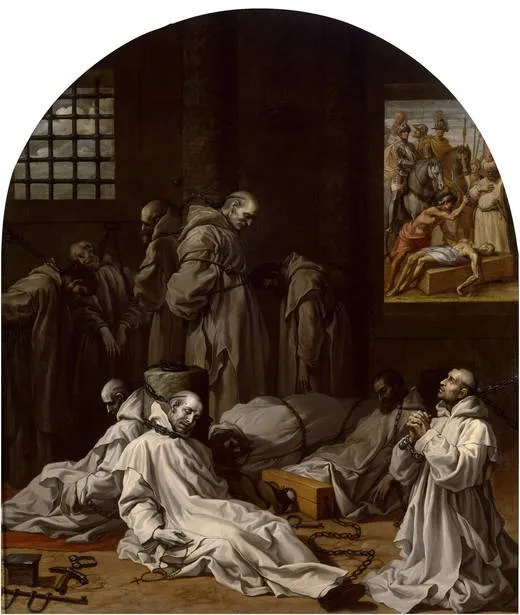
Prison and Death of the Ten Members of the London Charterhouse is an oil painting by the Early Baroque Italian artist Vincenzo Carducci. It dates from 1632 and is held in the collection of the Museo del Prado.
About this work
Technique & Style
Executed in oil on canvas in 1632, the work measures 337 cm in height and 297.
Executed in oil on canvas in 1632, the work measures 337 cm in height and 297.5 cm in width.
The handling is characteristic of Carducci’s mature style, combining crisp delineation of figures with a controlled chiaroscuro that organizes the scene into zones of light and shadow. Figures are arranged in shallow, stage-like spaces, with restrained gestures and restrained palette dominated by earthy browns, muted grays, and localized accents of red and white. The composition’s rhythm relies on repeated vertical accents, columns, spears, and standing figures, while the horizontal emphasis of the floor and bedstead grounds the action.
Stylistic traits include sharply modeled faces with attenuated proportions and a restrained emotional register, aligning with Counter-Reformation conventions for legibility and decorum.
History & Provenance
Vincenzo Carducci created the oil-on-canvas painting Prison and Death of the Ten Members of the London Charterhouse in 1632. The work measures 337 cm in height and 297.5 cm in width. Historically, the piece was held in the collection of the Museo de la Trinidad before entering the holdings of the Museo del Prado in Madrid. The painting is classified as a religious artwork depicting a narrative scene involving weapons.
The work is held in the collection of the Museo del Prado, where it is listed under the accession number P00968. It has been displayed in exhibitions at the Museo del Prado focusing on Spanish Baroque religious painting and has been featured in major retrospectives on Baroque art at the museum.
Legacy
The work has been recognized for its dramatic composition and emotional intensity, influencing later Spanish painters who explored martyrdom themes. Its presence in major institutions such as the Prado has cemented its reputation as a key example of Counter‑Reformation religious art. Scholars cite its narrative vigor as a reference point for subsequent depictions of collective sacrifice.
Overview
Vincenzo Carducci’s 1632 oil painting, Prison and Death of the Ten Members of the London Charterhouse, presents a somber interior where ten cloistered figures lie or kneel amid a dimly lit space. The composition is dominated by a sense of confinement, with scattered chains, a small box, and a pair of scissors on the floor, while a distant window offers a faint glow.
Subject & Meaning
The work portrays the final moments of ten monks from the London Charterhouse, captured in a moment of collective suffering and resignation. Their simple, coarse robes and the presence of a secondary canvas depicting a violent clash suggest a narrative of martyrdom and the harsh reality of religious persecution, inviting contemplation of faith under duress.
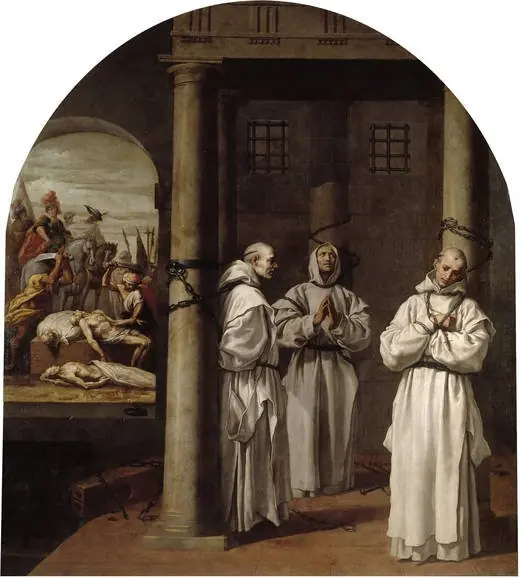
Artist & collection
Artist
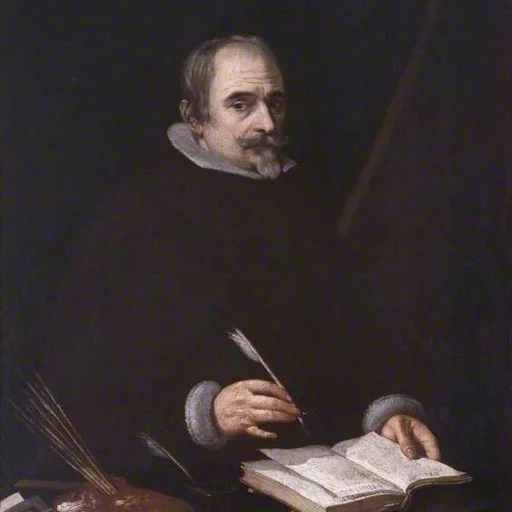
Vincenzio Carduccio (in Spanish, sometimes Vicencio or Vicente Carducho; 1576 or 1578–1638) was an Italian painter who spent his career in Spain.

 The Martyrdom of the Mauerbach Carthusians
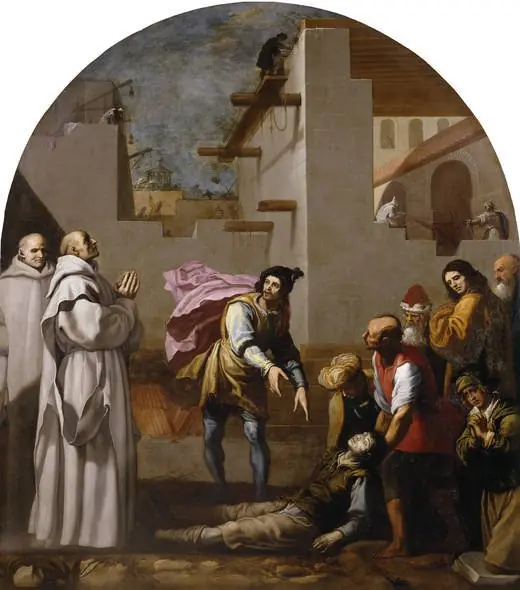 Prior Boson Revives a Mason
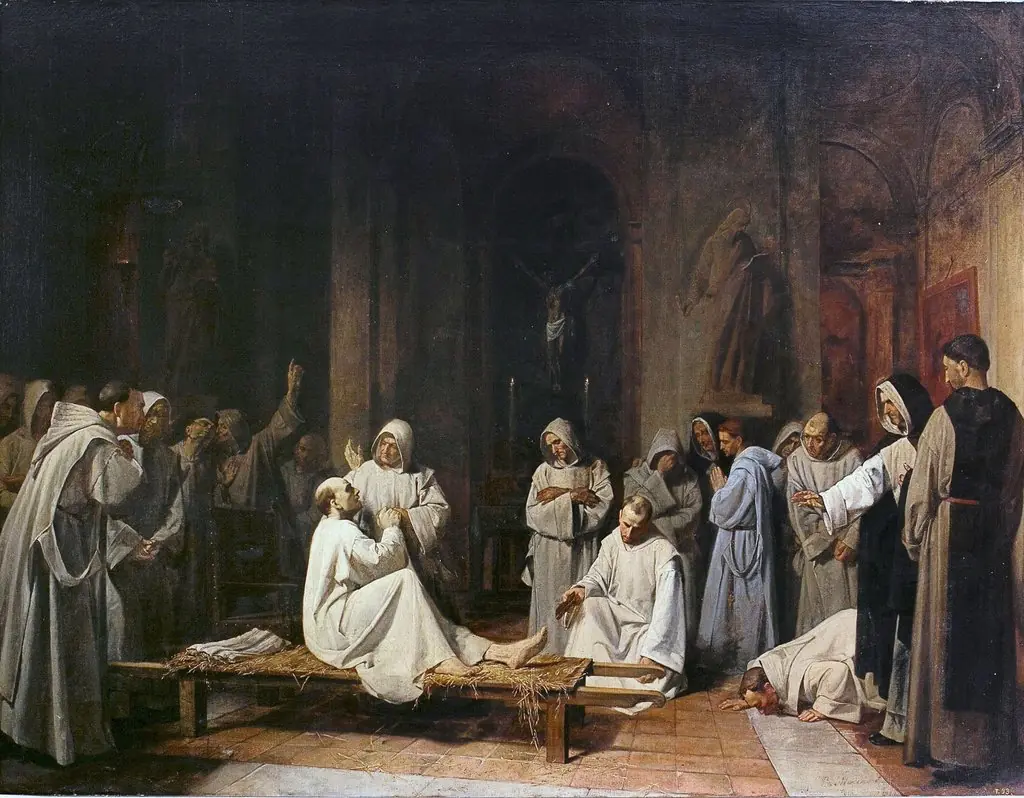 Últimos momento de Fray Charles Climaque
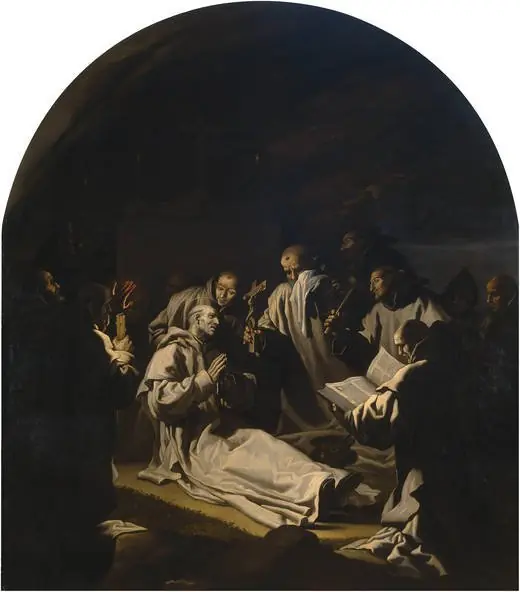 The Death of Saint Bruno
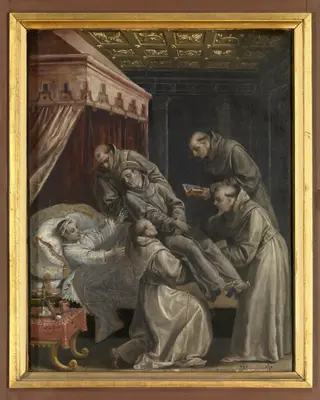 The Spanish Crown Prince Don Carlos Heals After Touching the Corpse of Saint Didacus
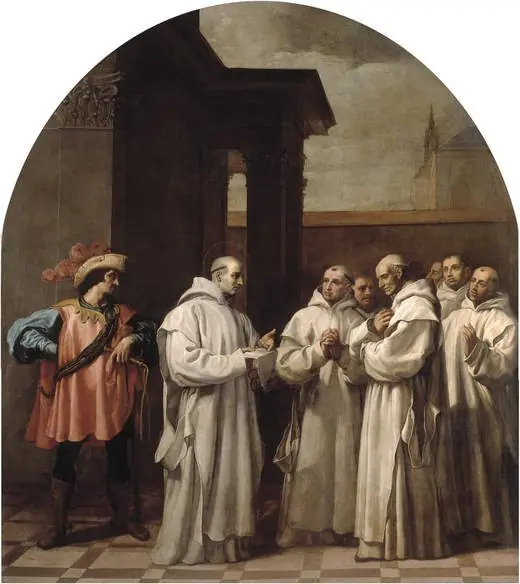 Pope Urban II Calls Saint Bruno to Rome
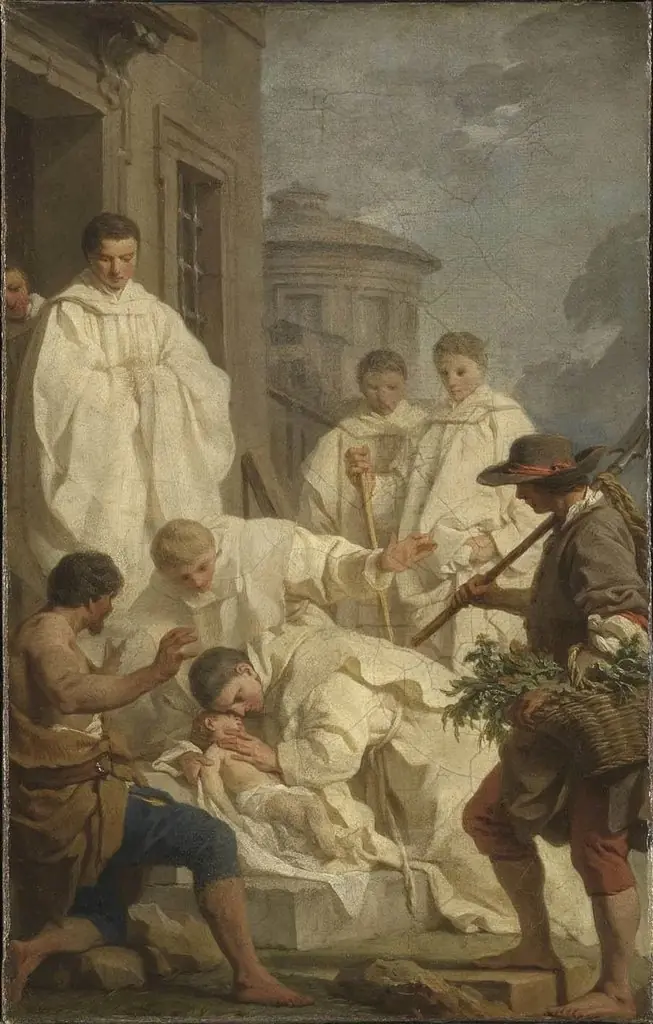 Der hl. Benedikt erweckt ein totes Kind
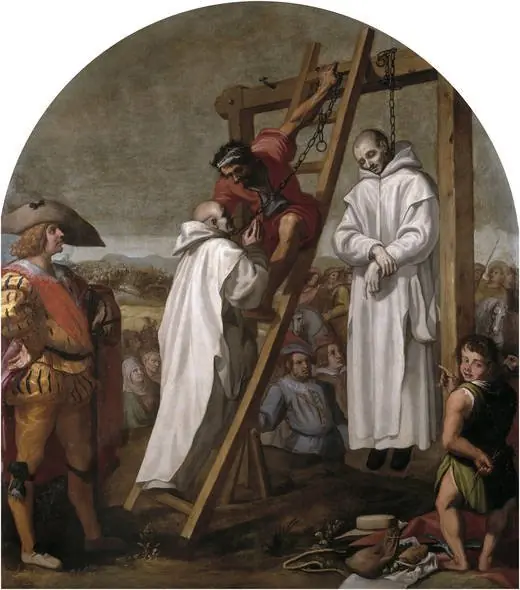 The Martyrdom of Fathers John Rochester and James Walworth
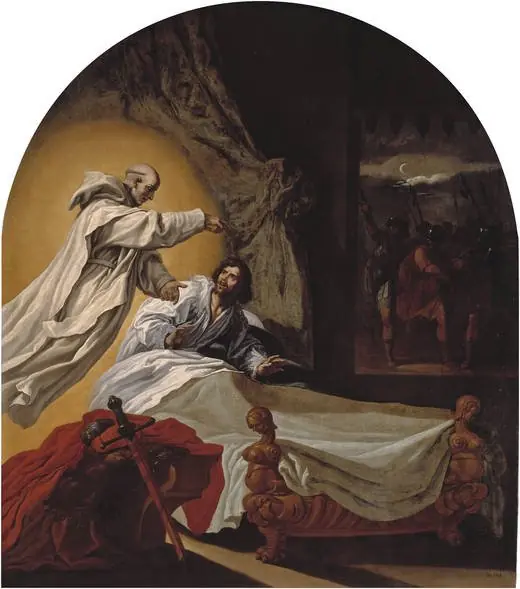 Saint Bruno Appears to Rogerio Guiscardo Count of Apulia and Calabria