Artwork
The Martyrdom of the Priors of the English Charterhouses of London Nottingham and Axholme
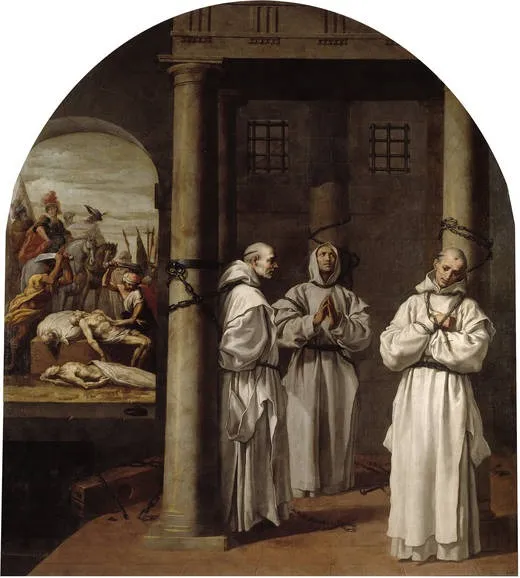
The Martyrdom of the Priors of the English Charterhouses of London Nottingham and Axholme is an oil painting by the Early Baroque Italian artist Vincenzo Carducci. It dates from 1626 and is held in the collection of the Museo del Prado.
About this work
Subject & Meaning
Their white habits symbolize purity and monastic devotion, while the swords and severed head underscore the violent suppression of religious resistance.
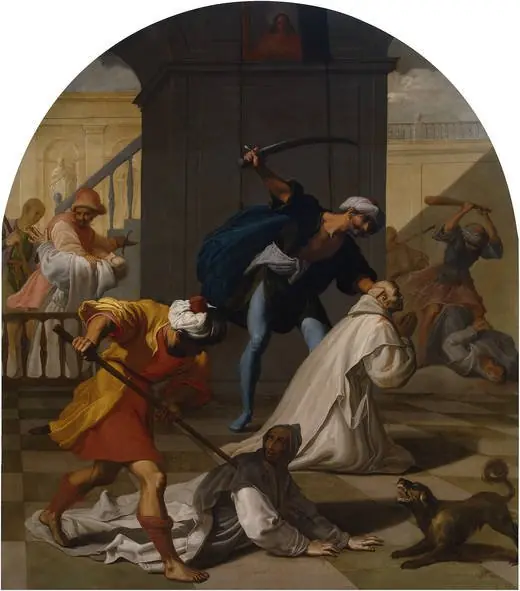
The painting depicts the execution of English Carthusian priors during the Dissolution of the Monasteries under Henry VIII. Seven Carthusian monks, identifiable by their white habits and black scapulars, kneel in a line awaiting beheading. One executioner raises a sword over the first prior while the second lies decapitated on the ground, his head placed beside him. The scene is set in a walled courtyard, with onlookers in contemporary dress observing the martyrdoms.
The work commemorates the beatified Carthusian martyrs of London, Nottingham, and Axholme, who refused to acknowledge royal supremacy over the Church. Their white habits symbolize purity and monastic devotion, while the swords and severed head underscore the violent suppression of religious resistance.
Technique & Style
Vincenzo Carducci executed this religious painting using oil paint applied to a canvas support. The work is characterized by its monumental scale, measuring 337 cm in height and 298 cm in width. As a large-format composition depicting a martyrdom scene involving weapons, the piece utilizes the durability and textural potential of oil on canvas to render its dramatic subject matter.
The substantial dimensions suggest the work was designed for a significant architectural setting, requiring a robust handling of materials to maintain structural integrity over time.
History & Provenance
The Martyrdom of the Priors of the English Charterhouses of London Nottingham and Axholme is an oil painting on canvas executed by Vincenzo Carducci (also known as Vicente Carducho). The work is dated to 1626, a specific year established as the authoritative date of creation, though some records note an inception range extending to 1629. The painting measures 337 cm in height and 298 cm in width.
Currently, the artwork is held in the collection of the Museo del Prado in Madrid, having been transferred from the Museo de la Trinidad. The piece falls within the genre of religious art and depicts a scene involving weapons as central to the narrative of the priors' martyrdom.
The painting is housed in the Museo del Prado in Madrid, where it is catalogued under the inventory number P00968. It has been included in several exhibitions at the museum, notably the 1996 retrospective on the artist’s religious works and the 2005 display of Baroque masterpieces from the Spanish school. Prior to its acquisition by the Prado, the work was documented in the collection of the Hospital de la Trinidad in Valencia, a provenance noted in archival records.
Context
Vincenzo Carducci's 1626 oil painting depicts the martyrdom of prior figures associated with English charterhouses in London, Nottingham, and Axholme. Painted in a religious genre, it reflects Counter-Reformation artistic concerns with visualizing spiritual sacrifice. Contemporary scholarship situates the work within the artist's devotional output for Spanish ecclesiastical contexts, though its specific iconography draws on earlier Carthusian martyr narratives rather than direct English connections. The composition demonstrates Carducci's engagement with narrative clarity and emotional restraint characteristic of early Baroque religious art.
Overview
The Martyrdom of the Priors of the English Charterhouses of London Nottingham and Axholme is a 1626 oil painting by Vincenzo Carducci, an Italian artist active in Spain.
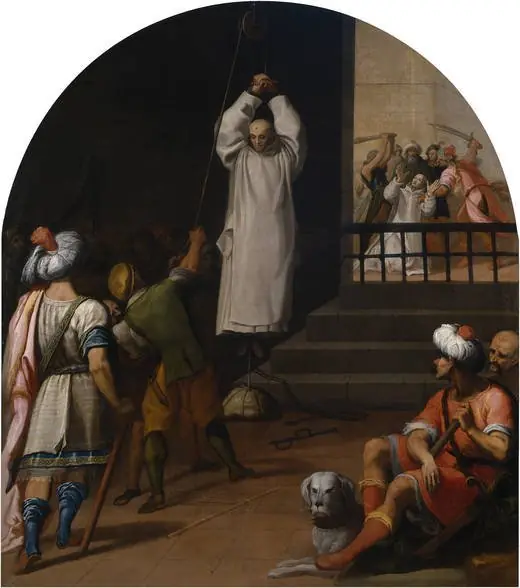
Artist & collection
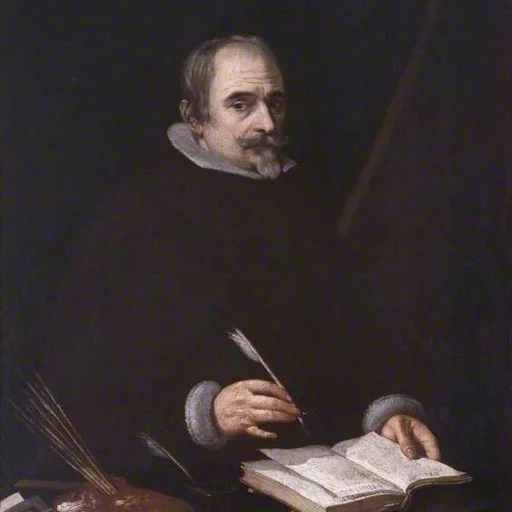
Artist
Vincenzio Carduccio (in Spanish, sometimes Vicencio or Vicente Carducho; 1576 or 1578–1638) was an Italian painter who spent his career in Spain.

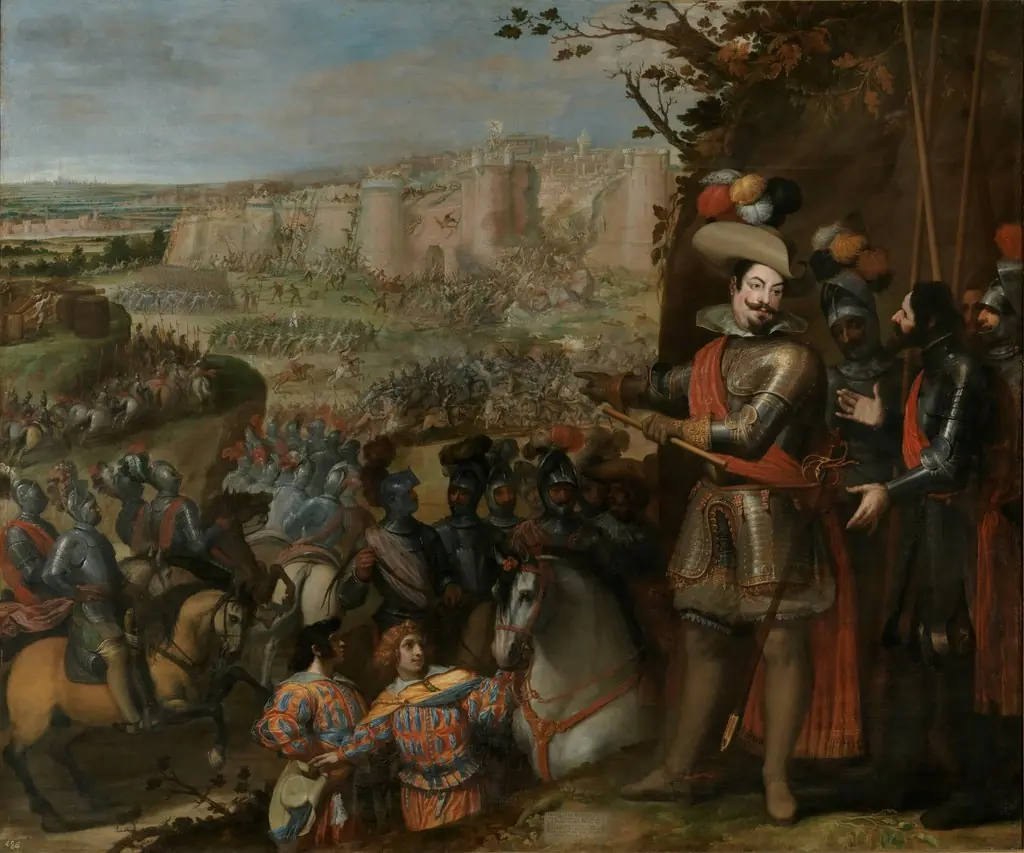
 The Martyrdom of the Mauerbach Carthusians
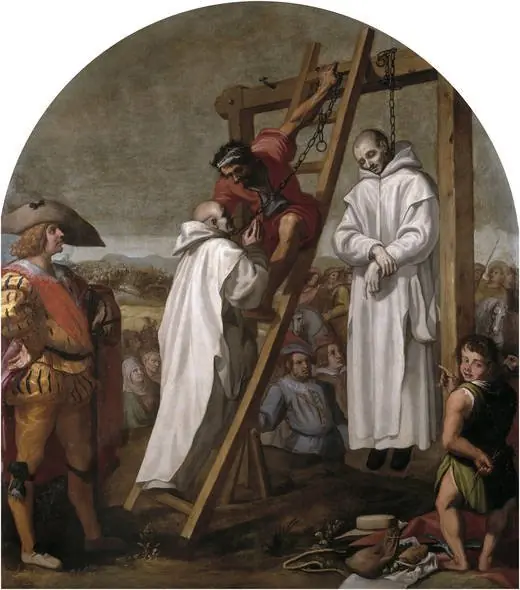 The Martyrdom of Fathers John Rochester and James Walworth
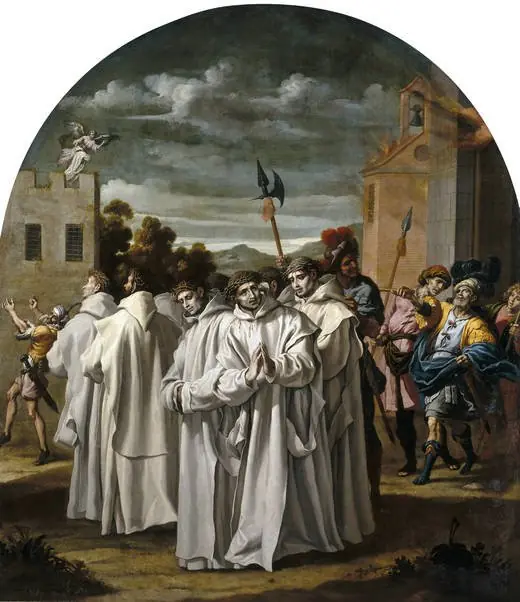 The Burning of the Prague Charterhouse and the Persecution of the Carthusians
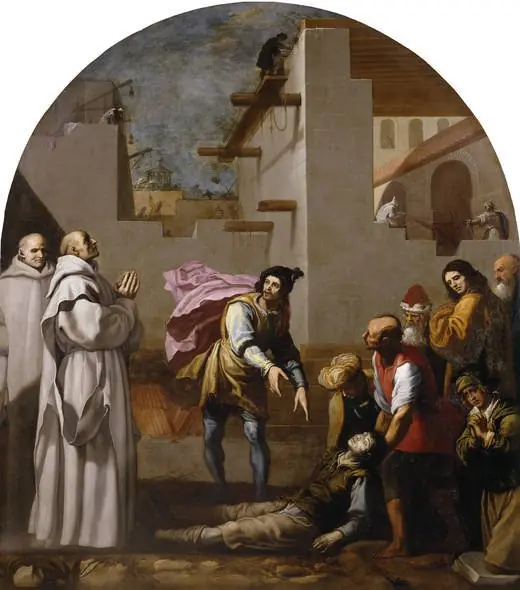 Prior Boson Revives a Mason
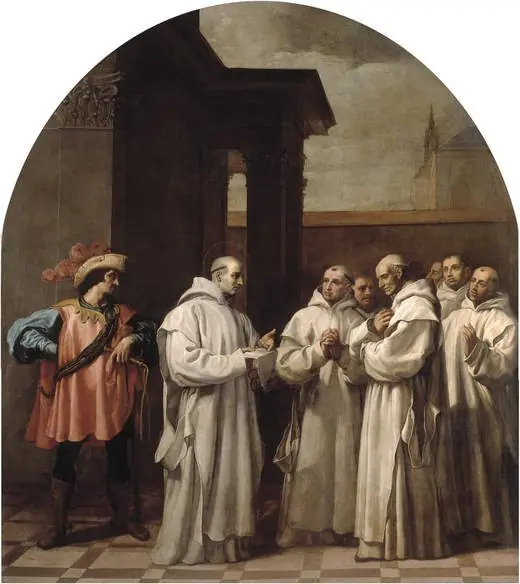 Pope Urban II Calls Saint Bruno to Rome
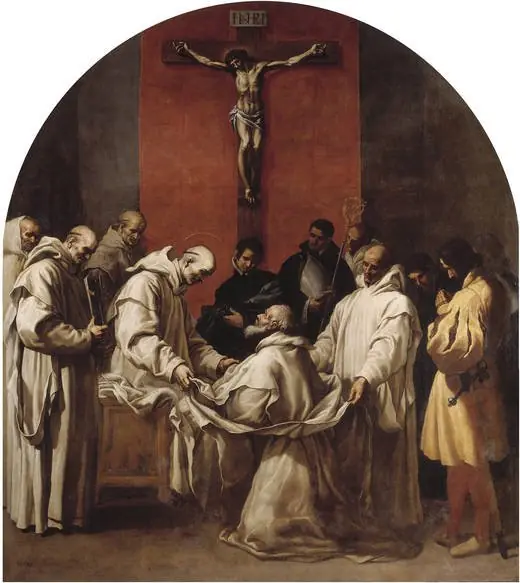 Bishop Hugo wears the Carthusian Habit
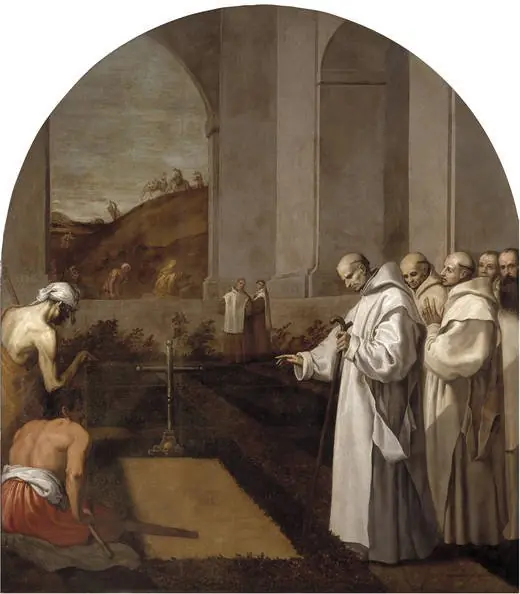 Carthusian Worship Beyond Death