Artwork
The Martyrdom of Fathers John Rochester and James Walworth
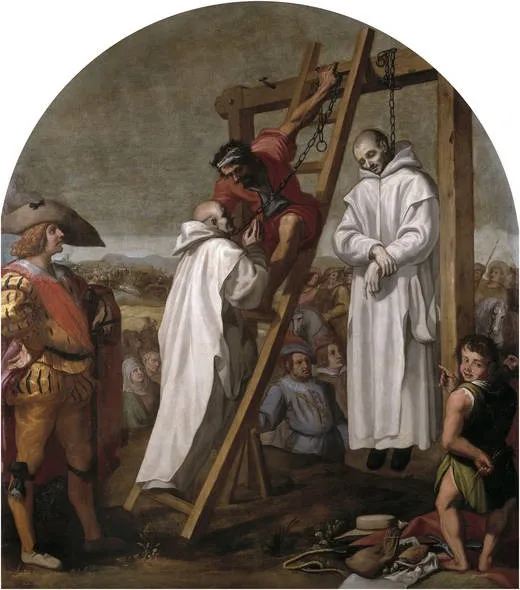
The Martyrdom of Fathers John Rochester and James Walworth is an oil painting by the Early Baroque Italian artist Vincenzo Carducci. It dates from 1626 and is held in the collection of the Museo del Prado.
About this work
Subject & Meaning
The painting portrays the martyrdom of the English Jesuit fathers John Rochester and James Walworth, depicted in the moment of their execution.
The painting portrays the martyrdom of the English Jesuit fathers John Rochester and James Walworth, depicted in the moment of their execution. Their steadfast faith is symbolized through traditional attributes of martyrdom, such as the palm of victory and the presence of a heavenly light, underscoring themes of sacrifice and divine favor. The composition emphasizes their devotion, reflecting the broader Counter-Reformation emphasis on resilience in the face of persecution.
The work belongs to the religious art genre, created in 1626 by Vincenzo Carducci, and is housed in the Museo del Prado, where it remains part of the collection of religious paintings.
Technique & Style
The work is executed in oil on canvas, a standard technique for early‑17th‑century religious paintings. The composition depicts the martyrdom of the two fathers, emphasizing their sacrifice through dramatic chiaroscuro and a tightly arranged spatial grouping. The canvas measures 337.5 cm in height and 298 cm in width, reflecting a grand scale typical of devotional works intended for major institutions such as the Museo del Prado.
History & Provenance
The Martyrdom of Fathers John Rochester and James Walworth is an oil painting on canvas created in 1626 by Vincenzo Carducci. It was originally commissioned for the Museo de la Trinidad, where it remains in the collection and is currently housed in the Museo del Prado. The work measures 337.5 cm in height and 298 cm in width and portrays the martyrdom of the two English Jesuit fathers.
Its creation history is documented through its inclusion in the Museo del Prado’s holdings, with provenance linked to the Spanish religious institution following its commissioning. The painting’s dating aligns with the documented inception date of 1626, corresponding to its creation for a religious context within the Spanish artistic tradition.
The Martyrdom of Fathers John Rochester and James Walworth is currently held by the Museo del Prado in Madrid. The work is also associated with the collection of the Museo de la Trinidad, indicating a historical link or transfer between these institutions. While the painting was originally created in 1626, its specific inventory or accession numbers are not provided in the available records. The sources do not contain information regarding a specific exhibition history for this artwork.
Context
Vincenzo Carducci's 1626 oil painting The Martyrdom of Fathers John Rochester and James Walworth has been interpreted as a stark example of Counter-Reformation religious art, emphasizing violent sacrifice through its depiction of martyrdom. Scholarship situates the work within the broader trajectory of Spanish Baroque painting, where artists like Vicente Carducho explored similar theological themes. The painting is housed in the Museo del Prado and Museo de la Trinidad, reflecting its integration into major institutional collections of Spanish art.
Overview
Created in 1626 by Vincenzo Carducci, an Italian artist who spent much of his career in Spain, this oil painting portrays the execution of two English Catholic priests. The work is part of the early Baroque tradition and is currently displayed in the Museo del Prado.
Artist & collection
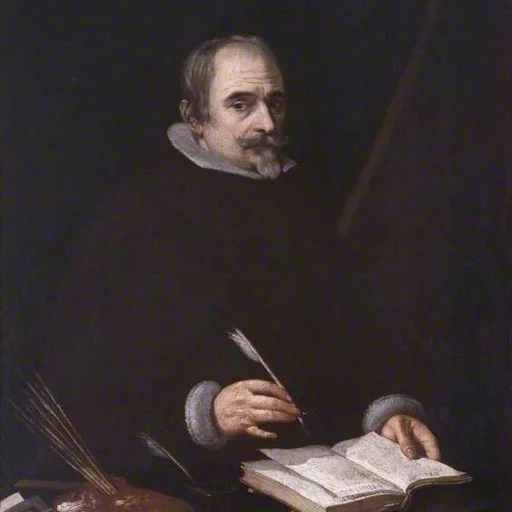
Artist
Vincenzio Carduccio (in Spanish, sometimes Vicencio or Vicente Carducho; 1576 or 1578–1638) was an Italian painter who spent his career in Spain.

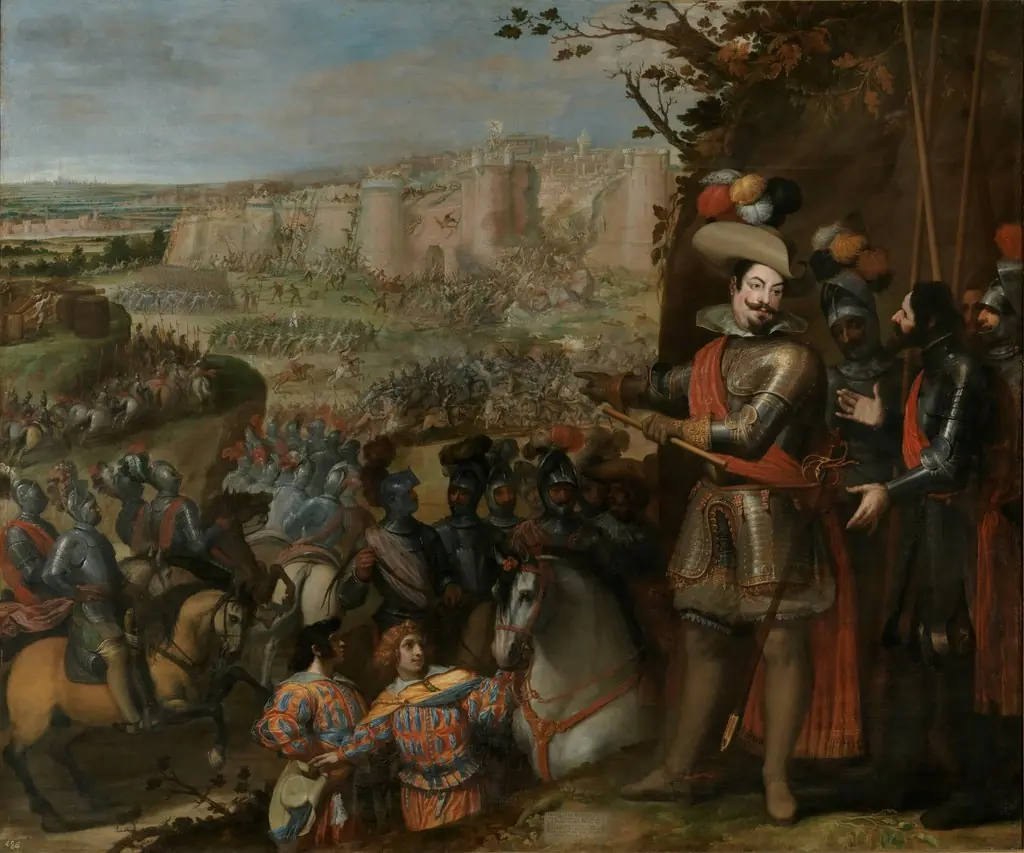
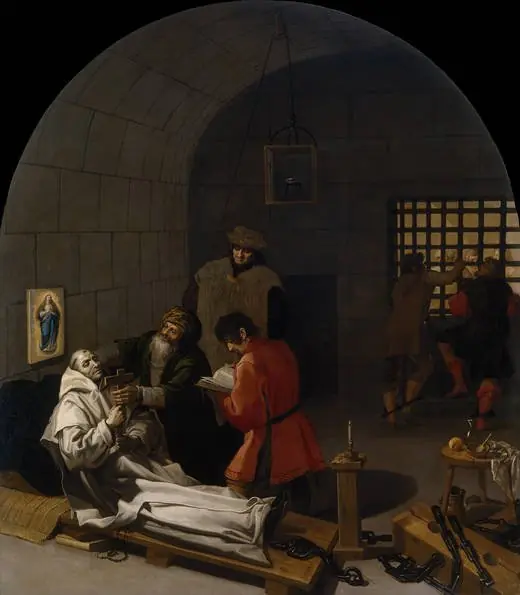
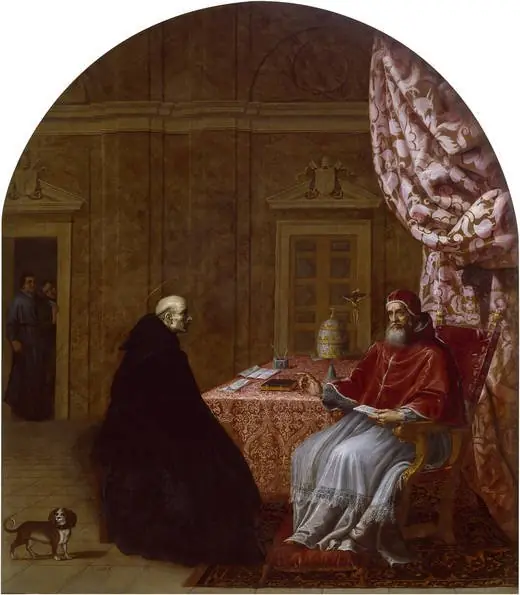
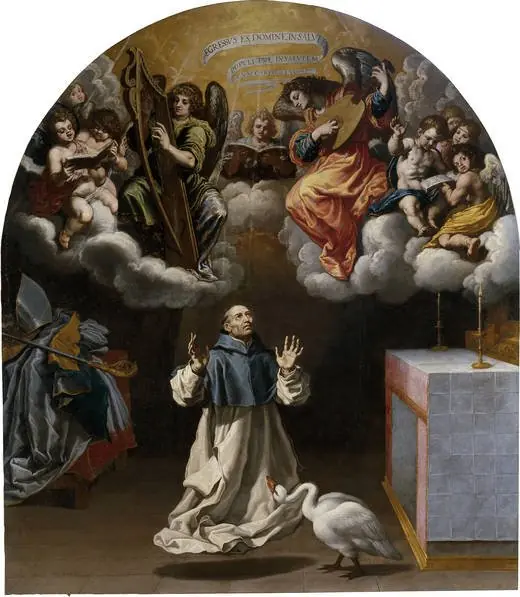
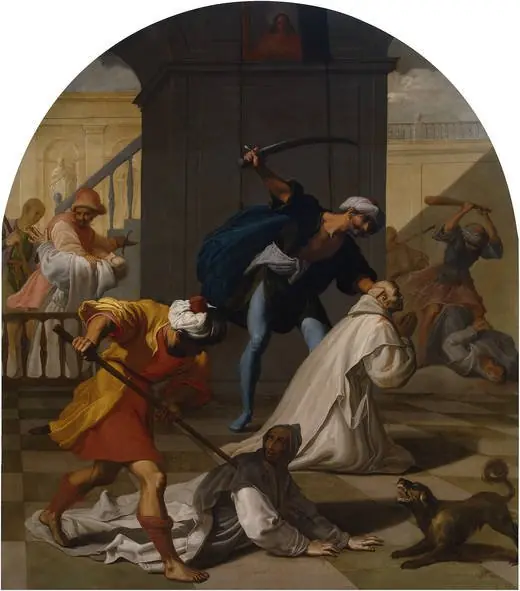
- The Martyrdom of the Mauerbach Carthusians
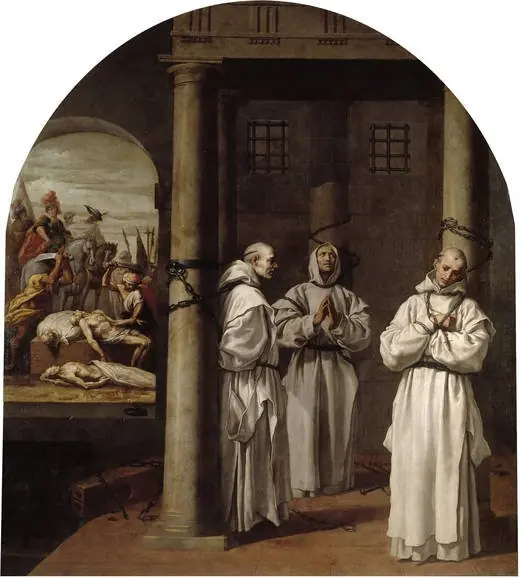 The Martyrdom of the Priors of the English Charterhouses of London Nottingham and Axholme
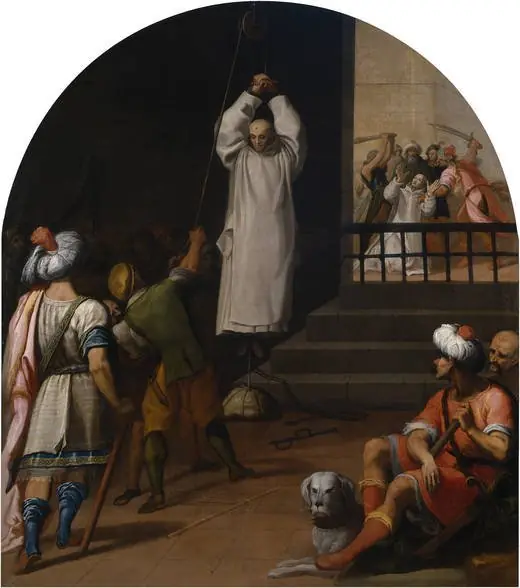 The Martyrdom of Father Andrés Prior of the Seiz Charterhouse
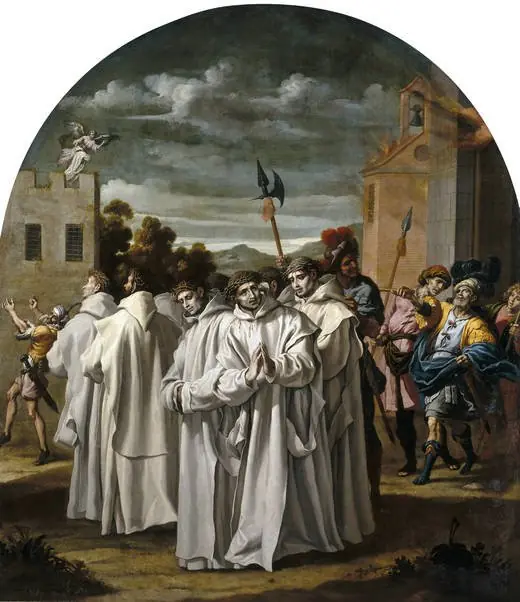 The Burning of the Prague Charterhouse and the Persecution of the Carthusians
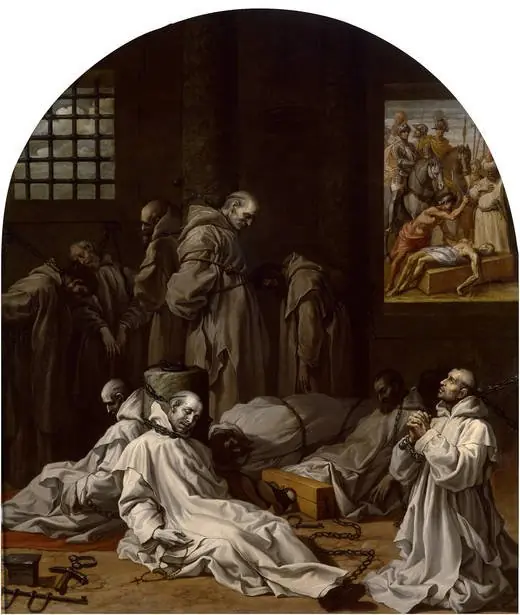 Prison and Death of the Ten Members of the London Charterhouse
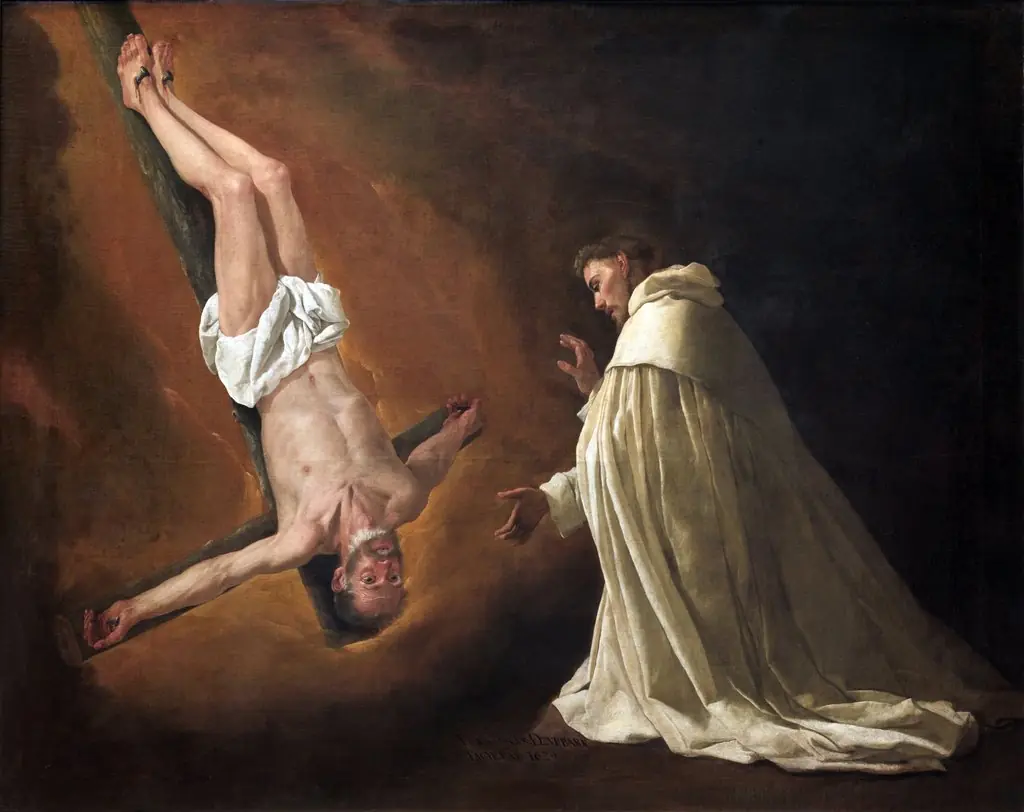 Apparition of the Apostle Peter to Saint Peter Nolasco
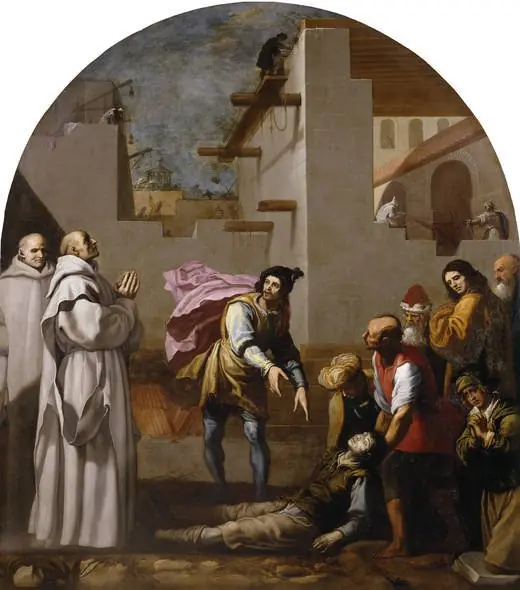 Prior Boson Revives a Mason
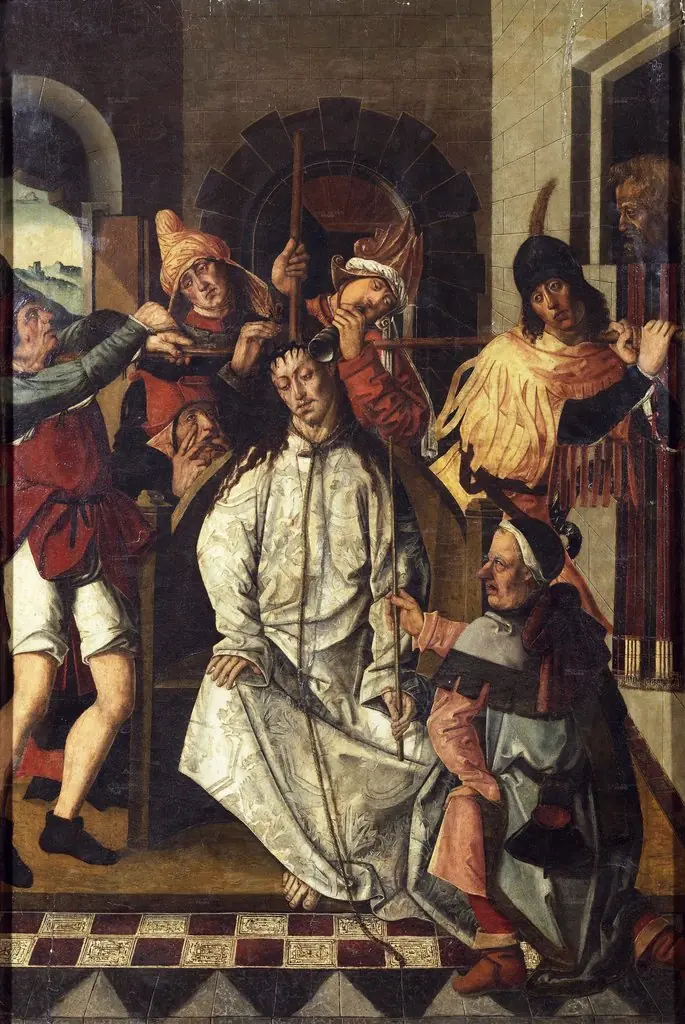 The Crown of Thorns
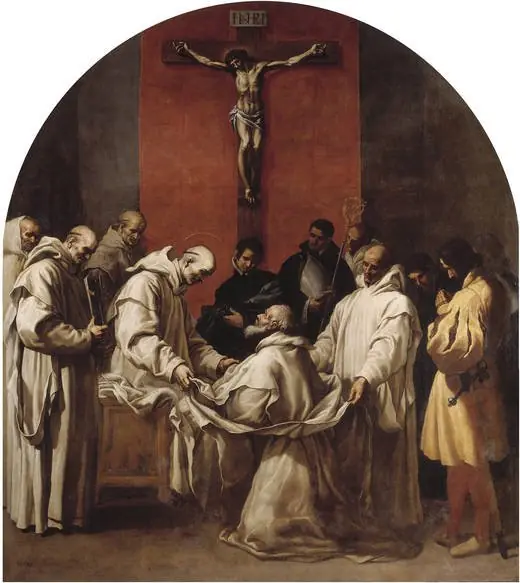 Bishop Hugo wears the Carthusian Habit
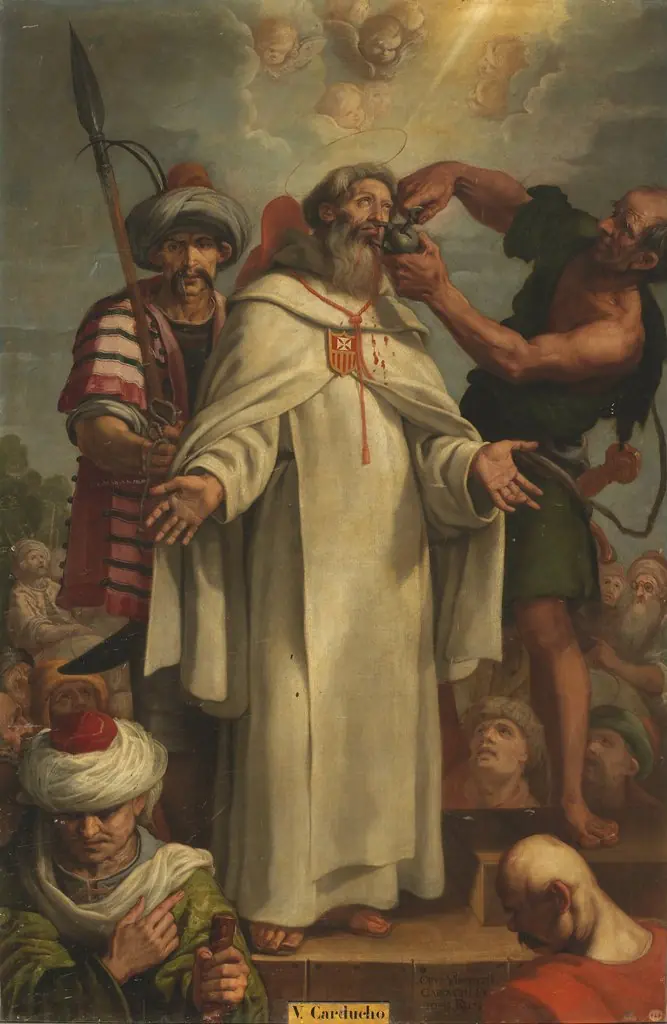 Martirio de san Ramón Nonato
 The Crucifixion of Saint Andrew
 The Martyrdom of the Roermond Carthusians