Artwork
The Burning of the Prague Charterhouse and the Persecution of the Carthusians
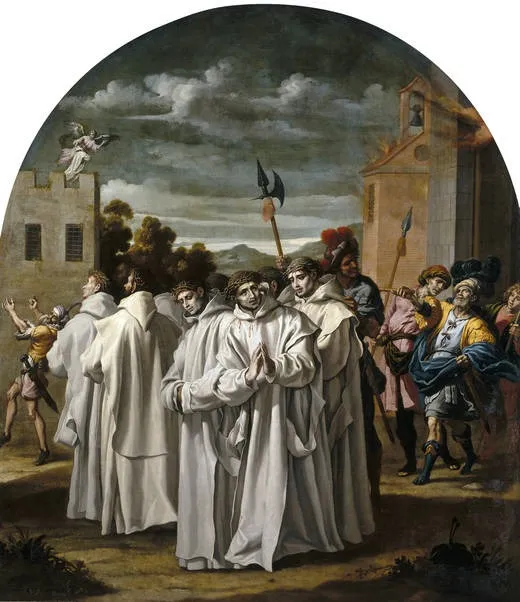
The Burning of the Prague Charterhouse and the Persecution of the Carthusians is an oil painting by the Early Baroque Italian artist Vincenzo Carducci. It dates from 1632 and is held in the collection of the Museo del Prado.
About this work
Technique & Style
Created in 1632, Vincenzo Carducci's The Burning of the Prague Charterhouse and the Persecution of the Carthusians is executed in oil paint on a canvas support.
Created in 1632, Vincenzo Carducci's The Burning of the Prague Charterhouse and the Persecution of the Carthusians is executed in oil paint on a canvas support. The work measures 337.5 cm in height and 298.5 cm in width, classifying it as a large-scale religious painting. Stylistically, the piece falls within the genre of religious art and is noted for its depiction of weapons amidst the narrative of persecution.
The painting is currently housed in the Museo del Prado, having been transferred from the Museo de la Trinidad collection.
History & Provenance
The work titled The Burning of the Prague Charterhouse and the Persecution of the Carthusians was created in 1632 by Vincenzo Carducci. It is an oil on canvas painting measuring 337.5 cm by 298.5 cm. The artwork entered the collection of the Museo del Prado and the Museo de la Trinidad, where it remains on display. Its provenance traces back to its original commission, though specific ownership transfers are not detailed in the sources.
The painting is housed in the Museo del Prado in Madrid, listed under its inventory as P009686. It has been displayed in the museum’s exhibition of Spanish religious art, including the 2003 exhibition "Spanish Masters of the Golden Age," which featured works from the museum’s 17th‑century collection.
The work measures 337.5 cm by 298.5 cm and was created in 1632.
Legacy
The Burning of the Prague Charterhouse and the Persecution of the Carthusians, painted in 1632 by Vincenzo Carducci, is recognized as a significant religious work that illustrates the violent suppression of the Carthusian order in Prague. Its dramatic portrayal of ecclesiastical conflict has been cited in art historical surveys as influencing later depictions of religious persecution, particularly in Central European religious art of the 17th and 18th centuries. The painting’s presence in major institutional collections, including the Museo del Prado, has contributed to its scholarly attention and reinforced its reputation as a key example of Counter-Reformation-era religious narrative painting.
Overview
Vincenzo Carducci’s 1632 oil painting, The Burning of the Prague Charterhouse and the Persecution of the Carthusians, portrays a violent episode involving Carthusian monks. The canvas captures monks in white habits confronting armed aggressors, a building ablaze, and a figure suspended in the sky, all set beneath a cloudy, treelike horizon.
Subject & Meaning
The work dramatizes the historical assault on the Prague Charterhouse, emphasizing the monks’ suffering and steadfastness. One monk clutches a staff while another folds his hands, suggesting both resistance and prayer amid chaos. The composition underscores themes of religious persecution and the clash between spiritual devotion and worldly violence.
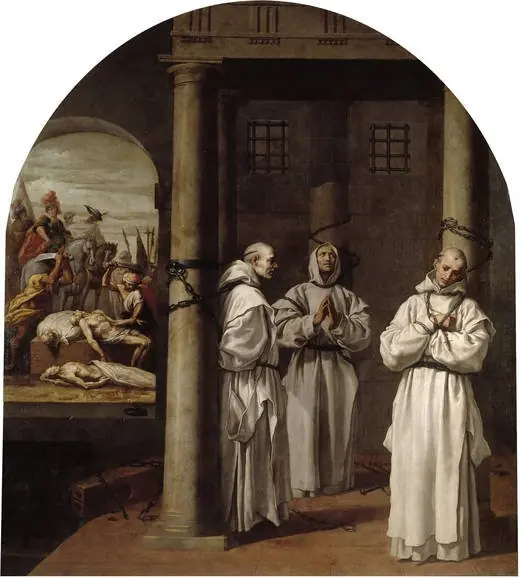
Artist & collection
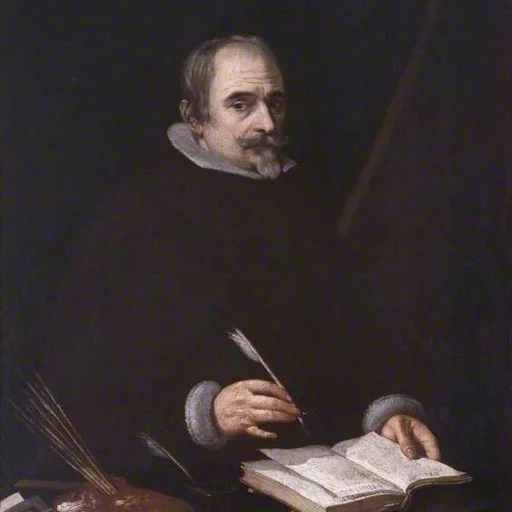
Artist
Vincenzio Carduccio (in Spanish, sometimes Vicencio or Vicente Carducho; 1576 or 1578–1638) was an Italian painter who spent his career in Spain.

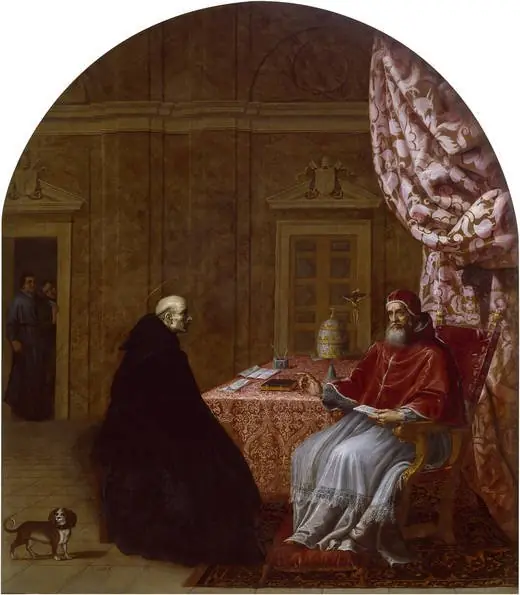
 Pope Urban II Calls Saint Bruno to Rome
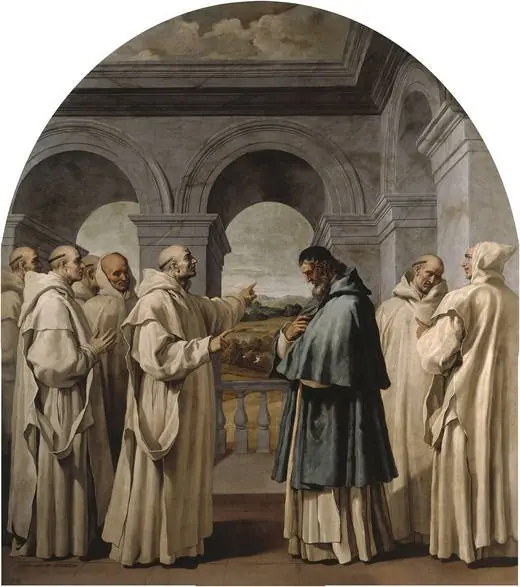 Saint Bruno Bids Farewell to Saint Hugo
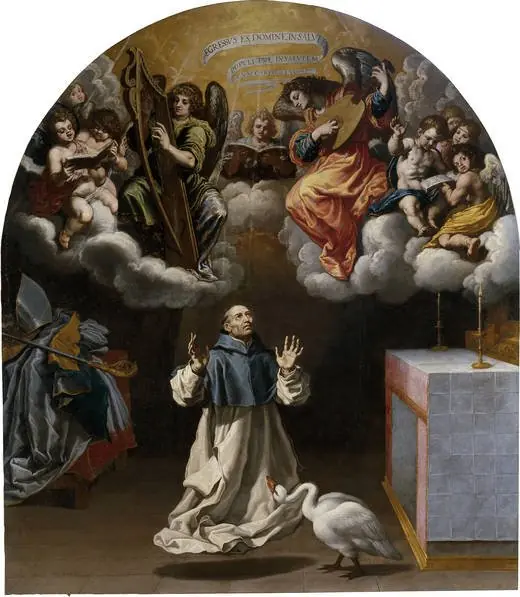
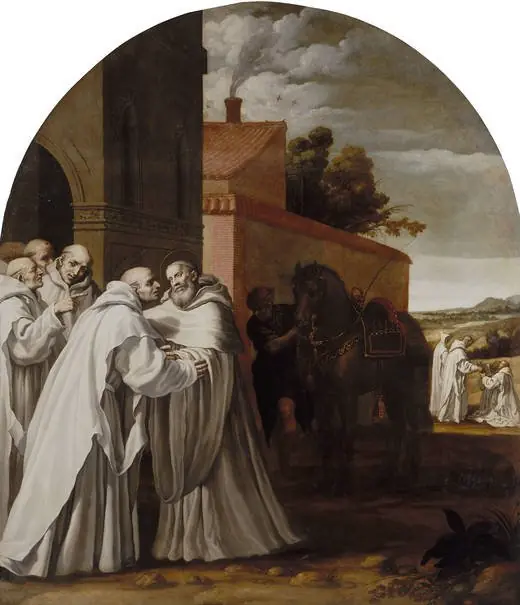 Saint Bernard of Clarivaux visits Guigo I at the Charterhouse
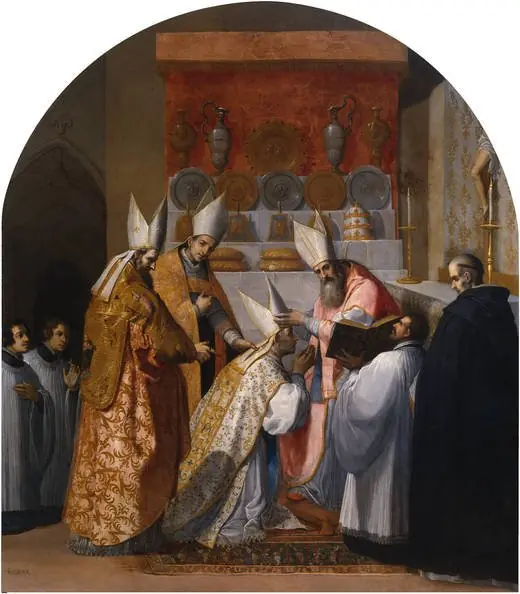
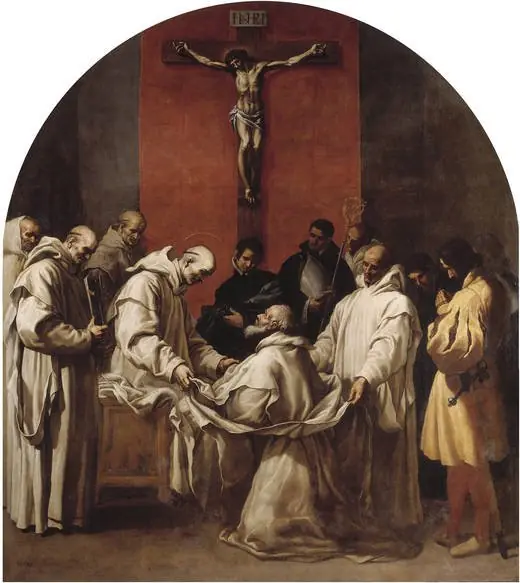 Bishop Hugo wears the Carthusian Habit
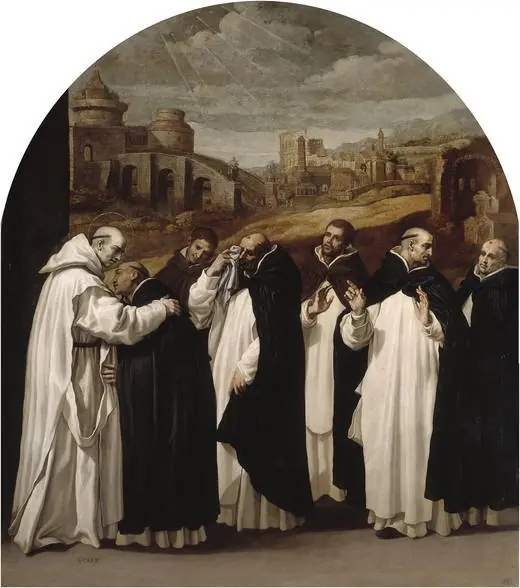 Saint Bruno Bids Farewell to his Companions in Rome
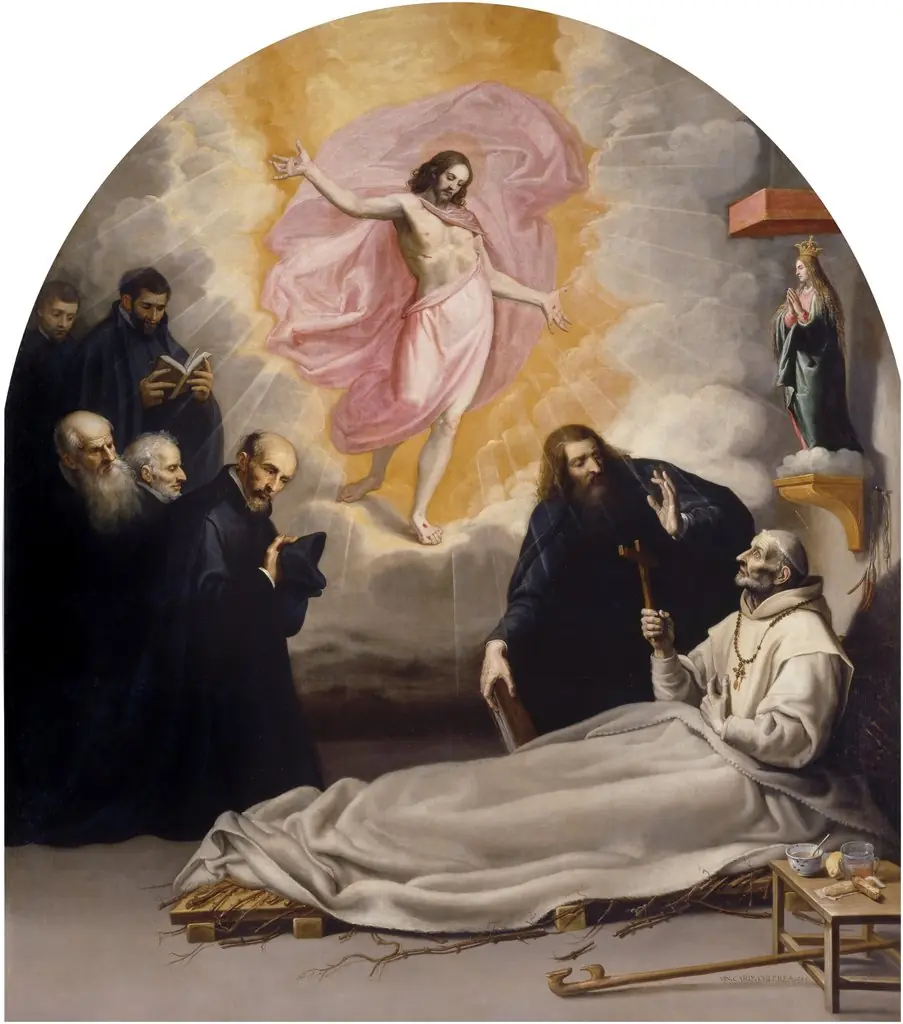
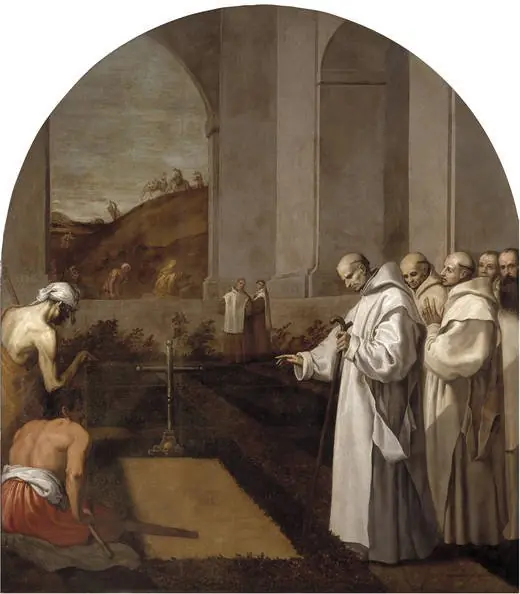 Carthusian Worship Beyond Death
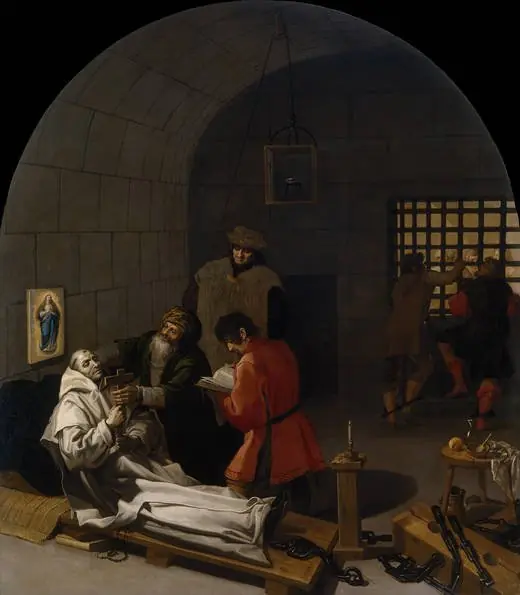
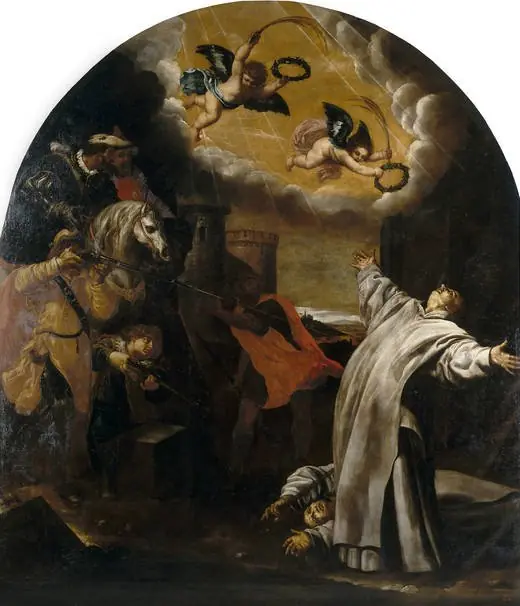 The Martyrdom at Roermond of Vinzenz Herck and Jan Van Loewen
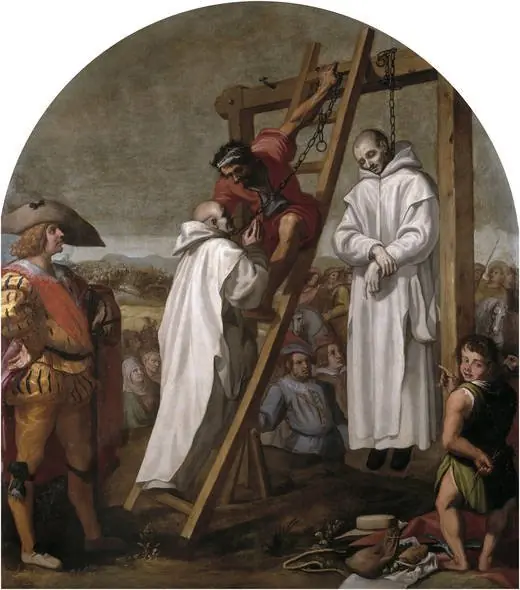 The Martyrdom of Fathers John Rochester and James Walworth
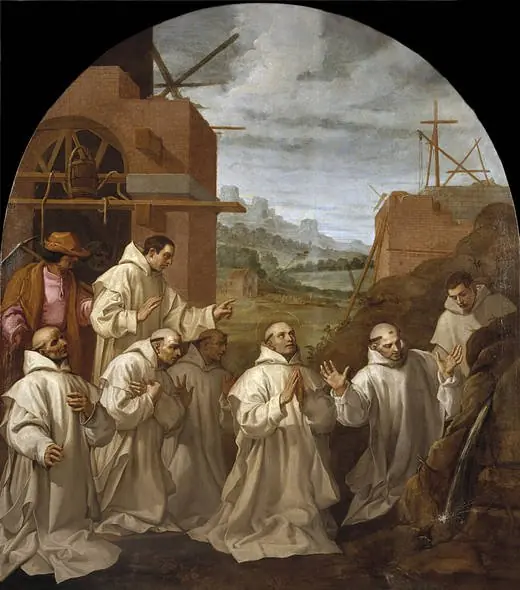 The Miracle of the Spring
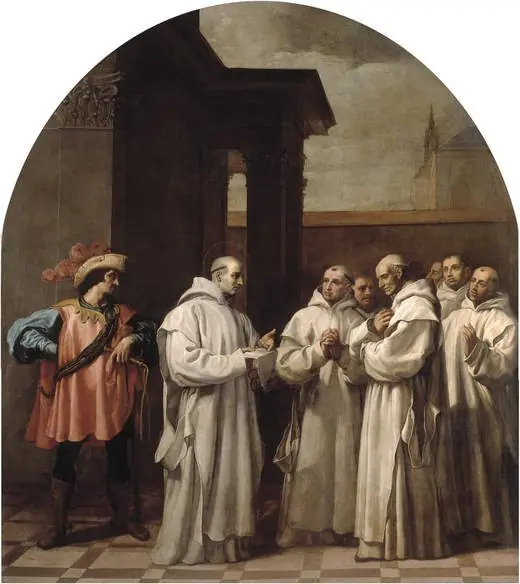
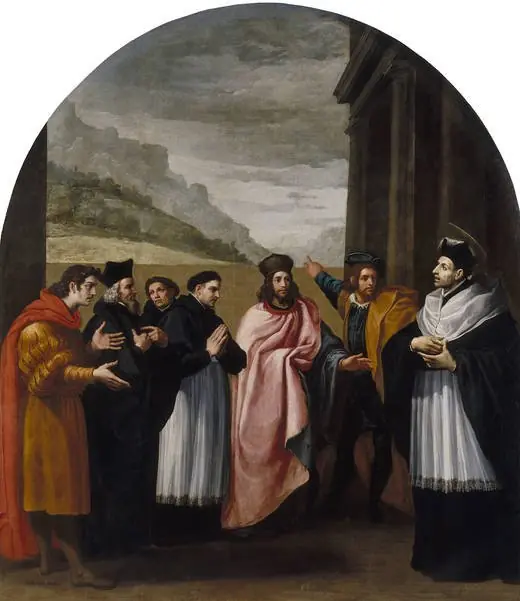 Saint Bruno and His Six Companions Withdraw from Active Life