Artwork
Carthusian Worship Beyond Death
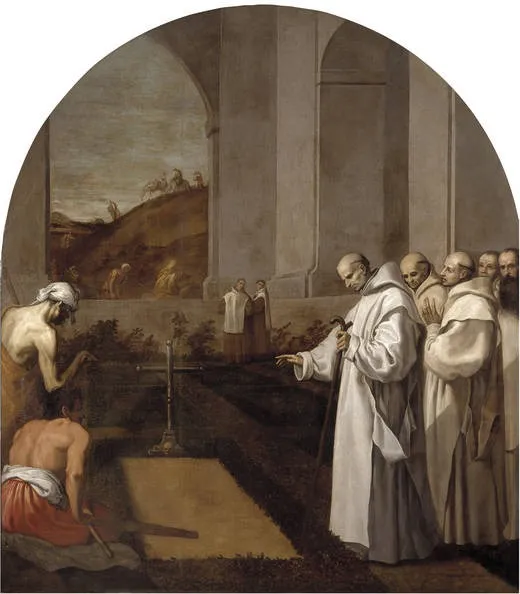
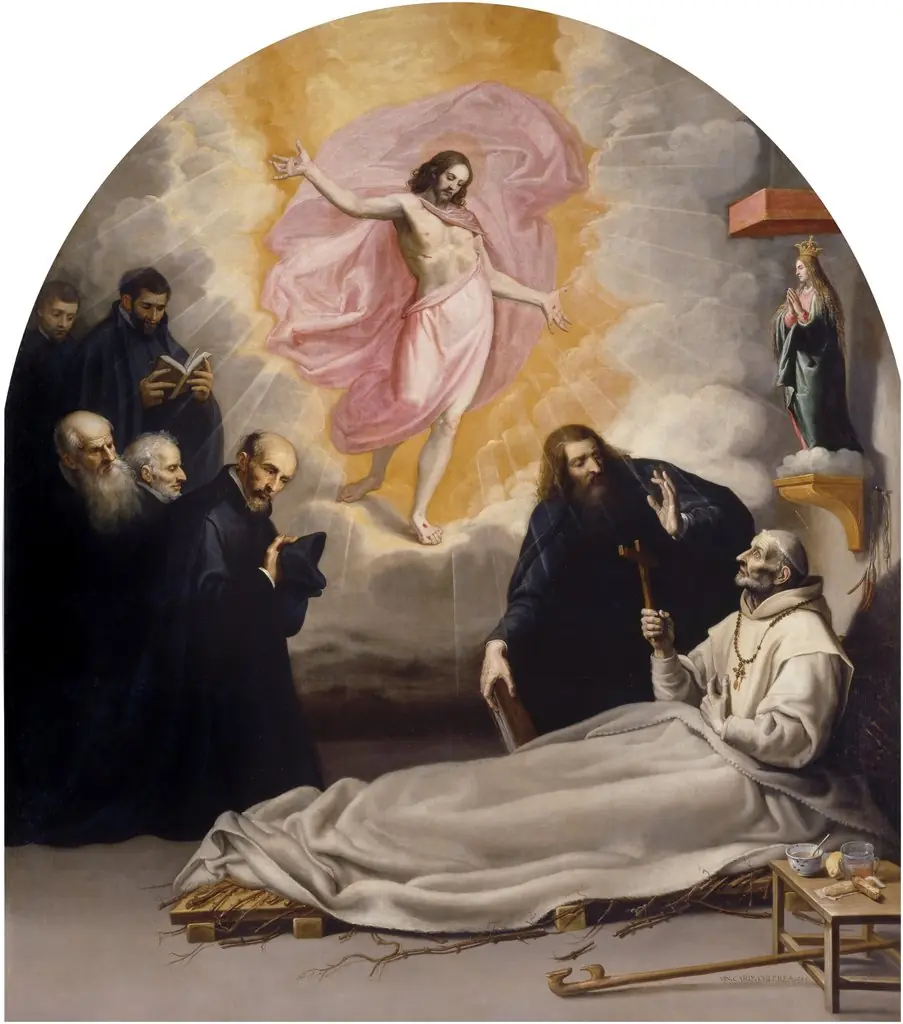
Carthusian Worship Beyond Death is an oil painting by the Early Baroque Italian artist Vincenzo Carducci. It dates from 1632 and is held in the collection of the Museo del Prado.
About this work
Technique & Style
The physical construction relies on traditional oil techniques on canvas, consistent with early 17th-century Spanish painting practices.
Vincenzo Carducci executed Carthusian Worship Beyond Death in 1632 using oil paint applied to a canvas support. The work measures 337 cm in height and 297.5 cm in width, establishing it as a large-scale religious painting. The composition centers on the depiction of a crucifix within a devotional context, characteristic of the artist's genre focus. The physical construction relies on traditional oil techniques on canvas, consistent with early 17th-century Spanish painting practices.
History & Provenance
The painting was created in 1632 by Vincenzo Carducci as an oil on canvas work. It entered the collection of the Museo del Prado and the Museo de la Trinidad, both institutions holding the piece within their religious art holdings. The work depicts a crucifix and measures 337 cm in height by 297.5 cm in width.
Carthusian Worship Beyond Death is held by the Museo del Prado, which also lists the Museo de la Trinidad as part of its collection history for the painting. The artwork measures 337 cm in height and 297.5 cm in width.
Context
Vincenzo Carducci's 1632 oil painting Carthusian Worship Beyond Death was created for the Carthusian monastery of Certaldo and later entered the collection of the Museo del Prado. The work depicts a crucifix framed by Carthusian figures, reflecting Counter-Reformation devotional practices centered on contemplation of mortality. Art historians situate it within the late-Baroque religious painting tradition of Spanish mysticism, noting its stylistic parallels to contemporary Spanish religious art while emphasizing its unique fusion of Carthusian spirituality with Spanish artistic conventions.
Legacy
Vincenzo Carducci's 1632 painting Carthusian Worship Beyond Death entered the Museo del Prado collection and was later displayed in the Museo de la Trinidad, establishing its institutional presence in Spain. The work's depiction of a crucifix within a Carthusian devotional context contributed to scholarly discussions of Counter-Reformation religious art, though it remains less frequently cited in broader art historical narratives than major altarpieces. Its technical execution in oil on canvas demonstrated the evolving naturalism of Spanish Baroque painting, influencing later interpretations of monastic iconography in European religious art.
Overview
Created in 1632 by Vincenzo Carducci, an Italian artist who spent his professional life in Spain, this oil painting is part of the Prado Museum’s collection. The work presents a solemn scene of monks gathered around an open tomb, with a crucifix prominently displayed, reflecting the devotional concerns of its era.
Subject & Meaning
The composition centers on a group of robed figures, presumably Carthusian monks, who stand vigil over a raised tomb lid. A man dressed in white holds a cross and gestures toward the interior, while a laborer kneels nearby. The arrangement suggests a meditation on mortality and the promise of resurrection within a monastic context.
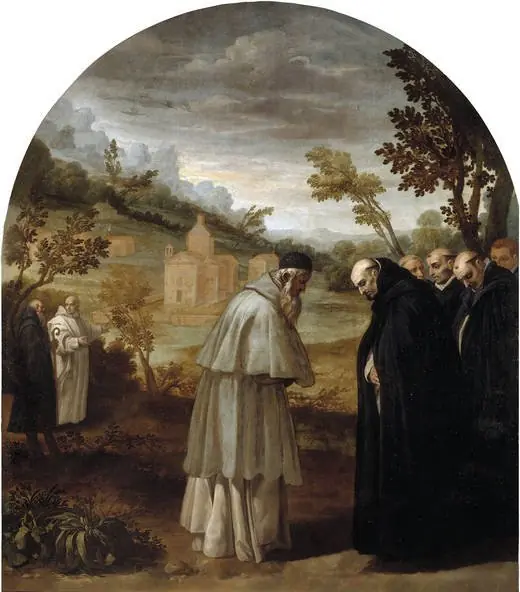
Artist & collection
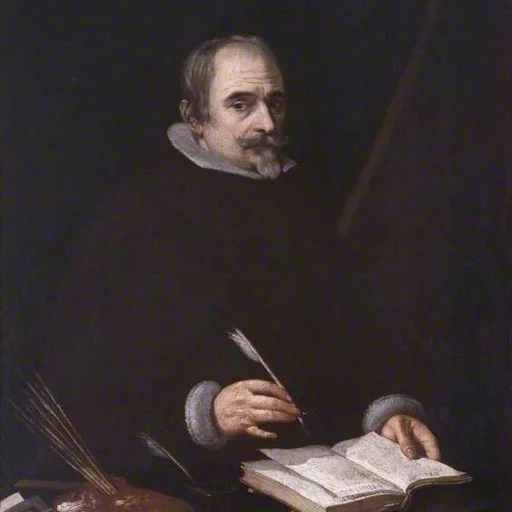
Artist
Vincenzio Carduccio (in Spanish, sometimes Vicencio or Vicente Carducho; 1576 or 1578–1638) was an Italian painter who spent his career in Spain.

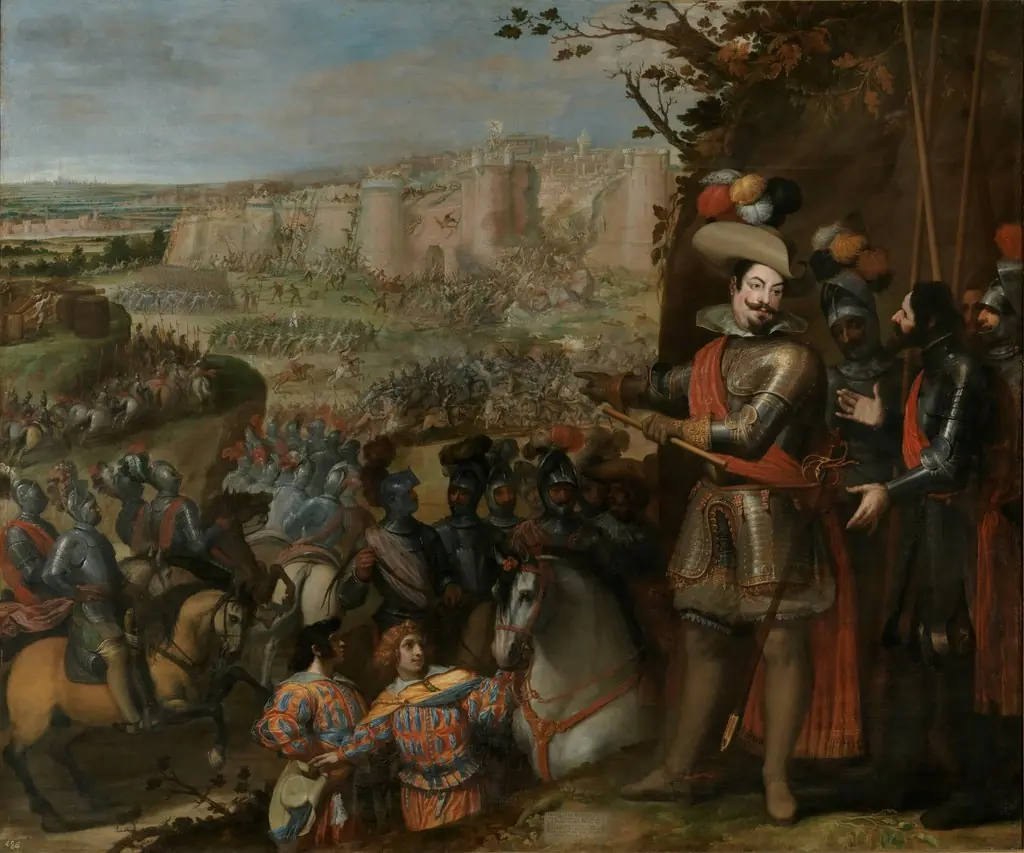
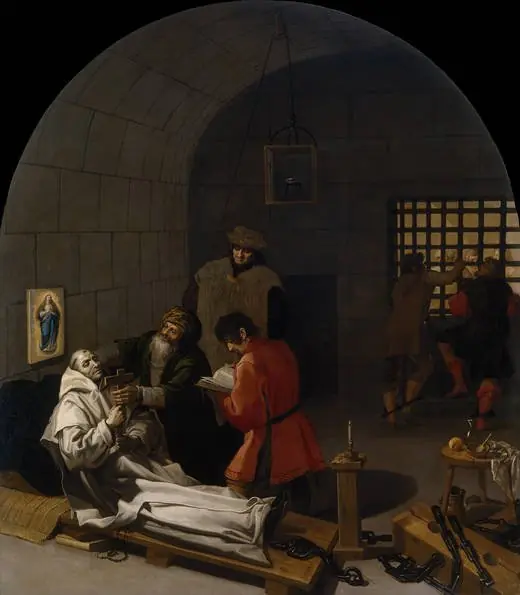
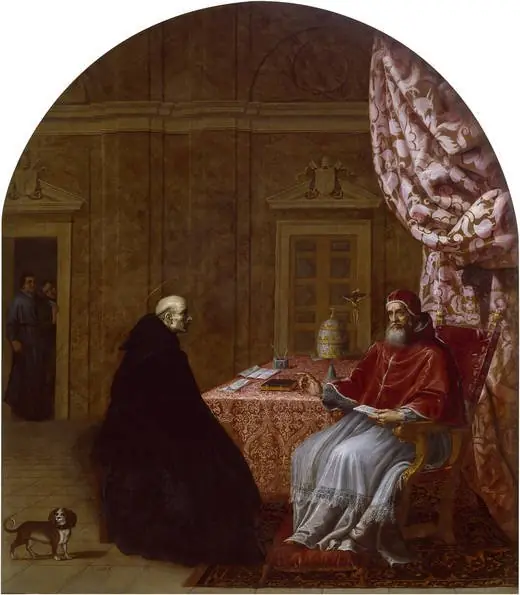
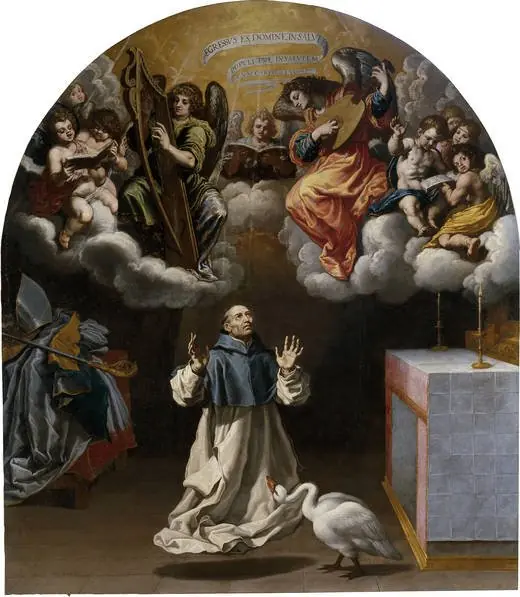
- Saint Bruno Bids Farewell to Saint Hugo Before his Trip to Rome
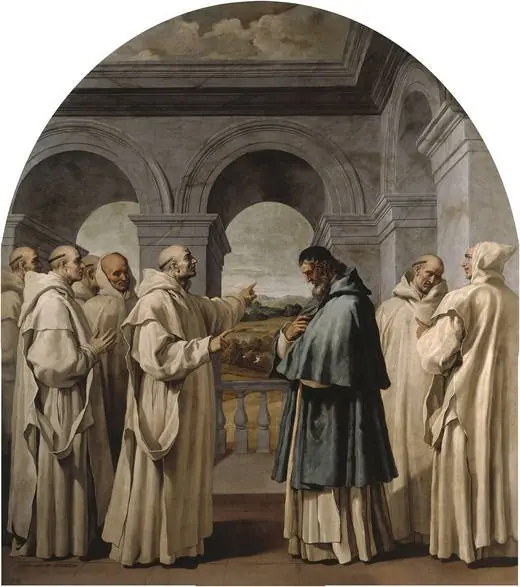 Saint Bruno Bids Farewell to Saint Hugo
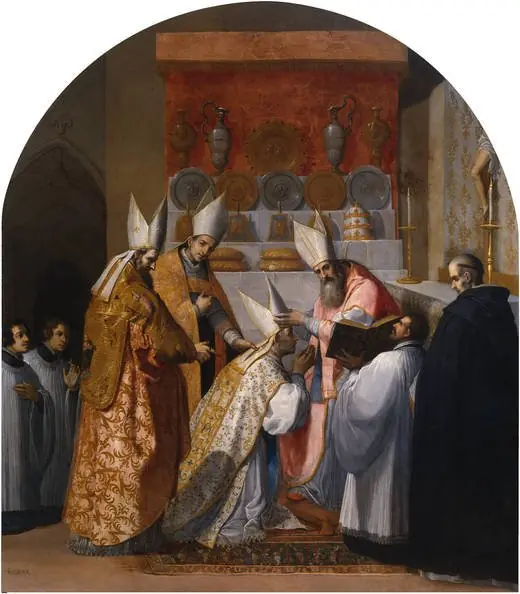
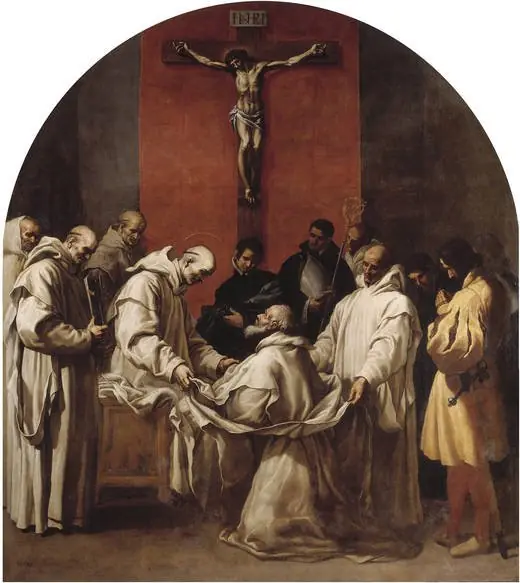 Bishop Hugo wears the Carthusian Habit
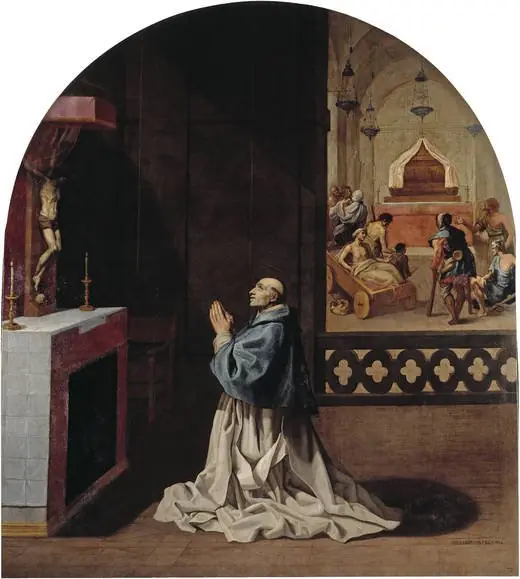 Father Bernard Praying in the Portes Charterhouse
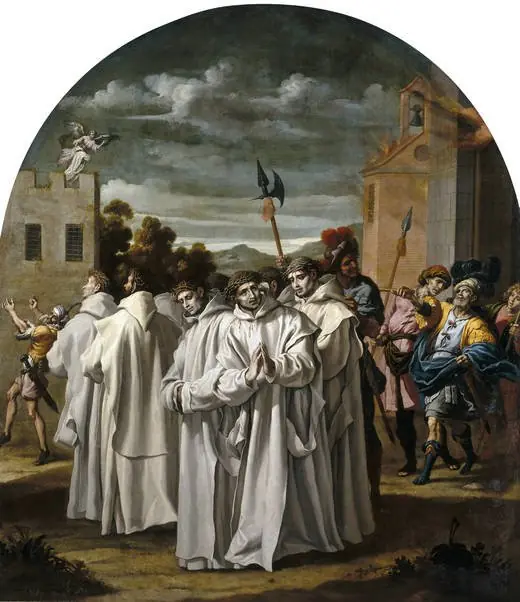 The Burning of the Prague Charterhouse and the Persecution of the Carthusians
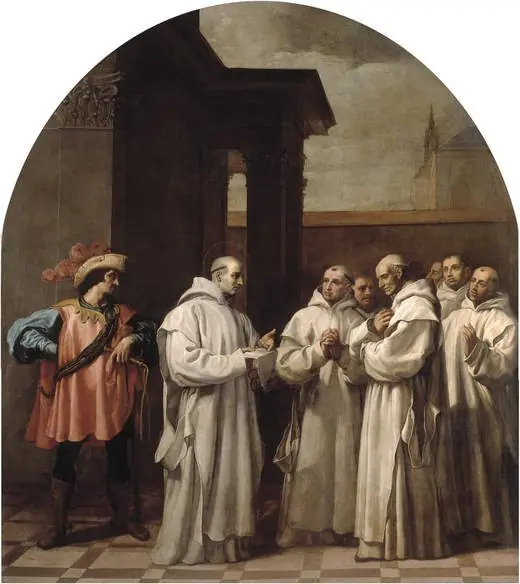 Pope Urban II Calls Saint Bruno to Rome
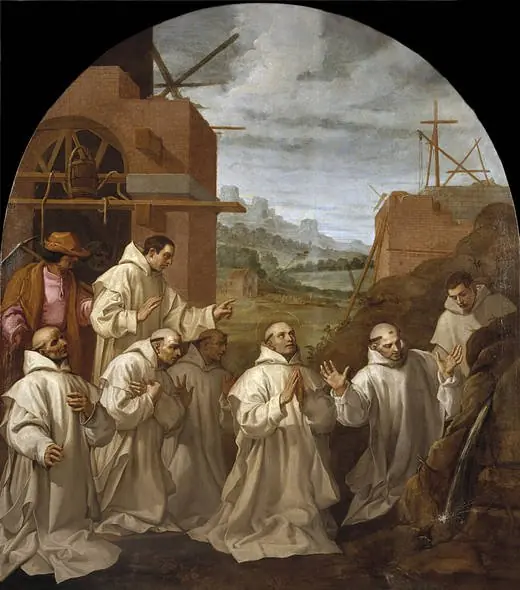 The Miracle of the Spring
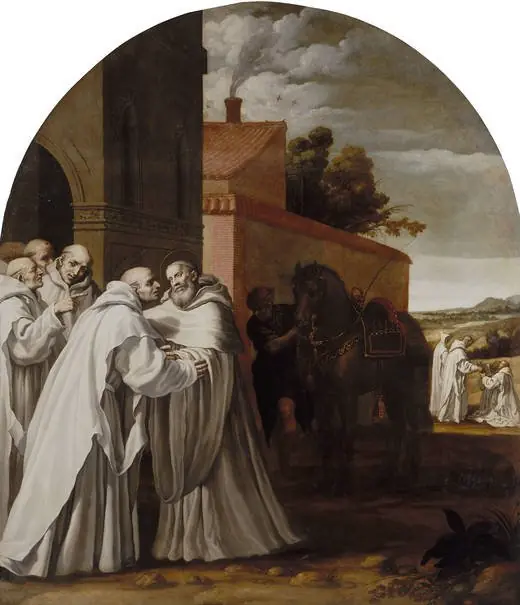 Saint Bernard of Clarivaux visits Guigo I at the Charterhouse
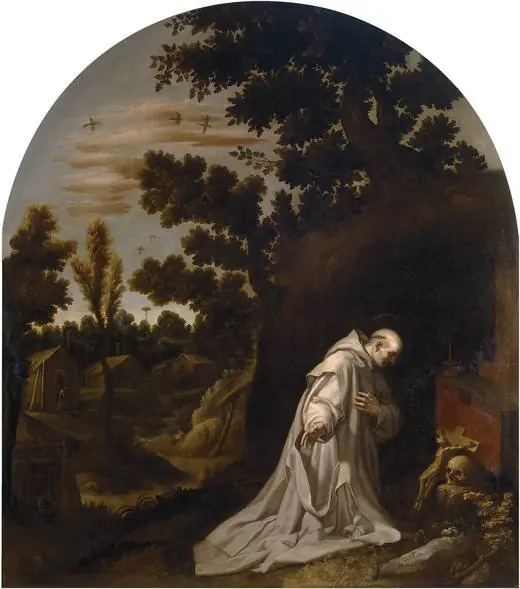 Saint Bruno Prays in La Torre Calabria
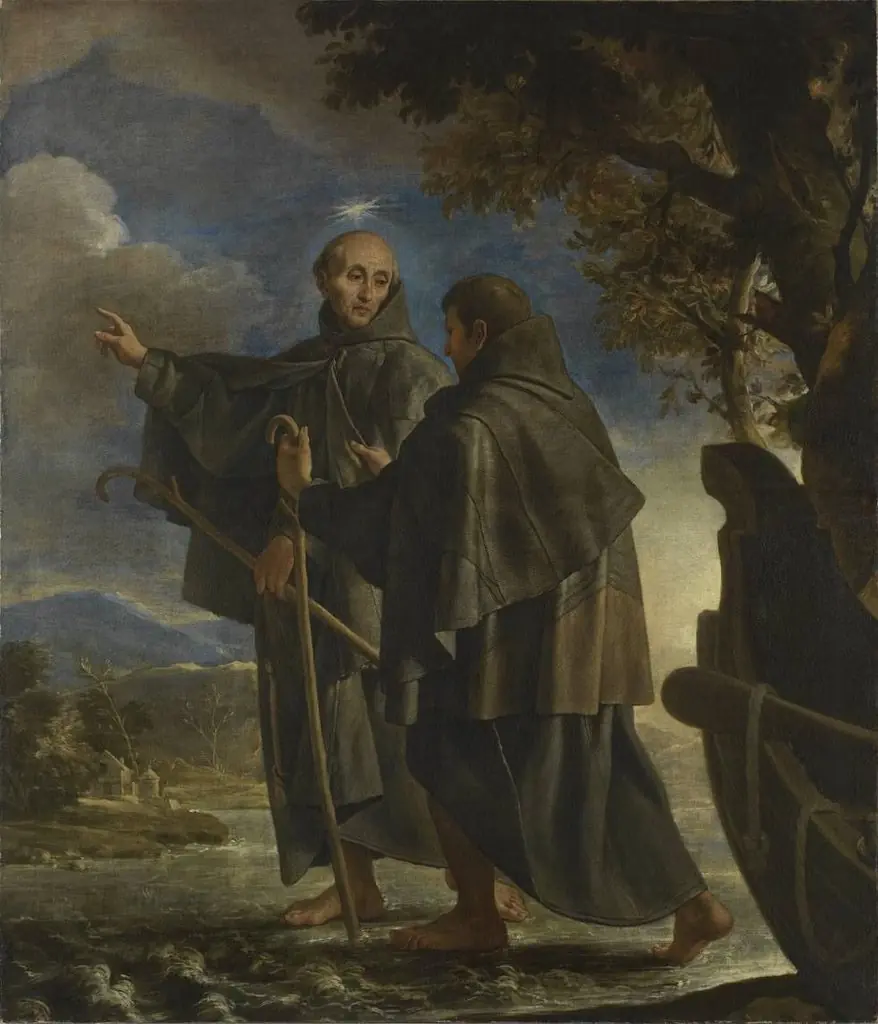 Der hl. Petrus von Alcántara wandelt über den Fluss Quadiana
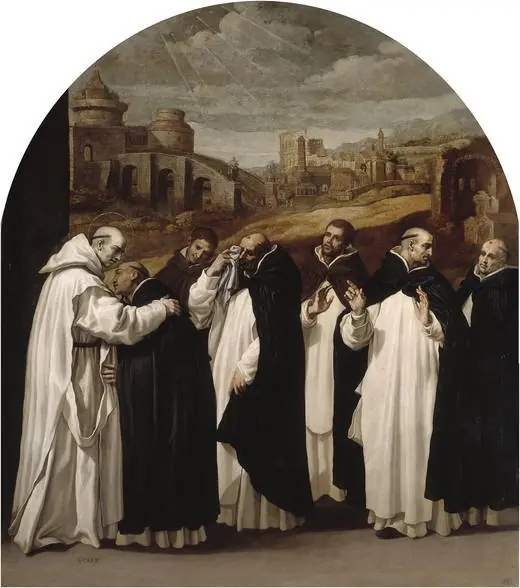 Saint Bruno Bids Farewell to his Companions in Rome
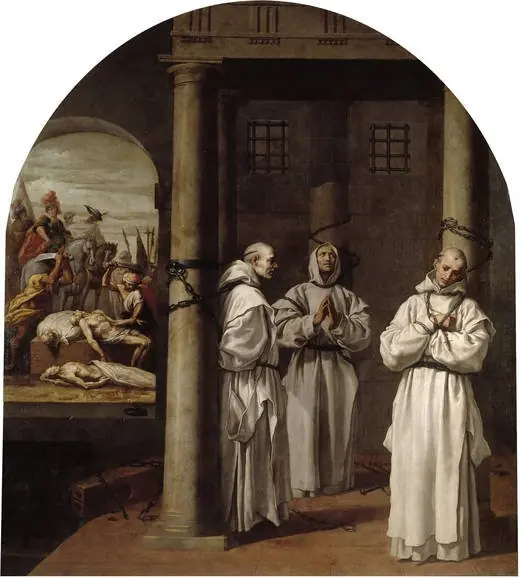 The Martyrdom of the Priors of the English Charterhouses of London Nottingham and Axholme