Artwork
The Meditation on the Passion
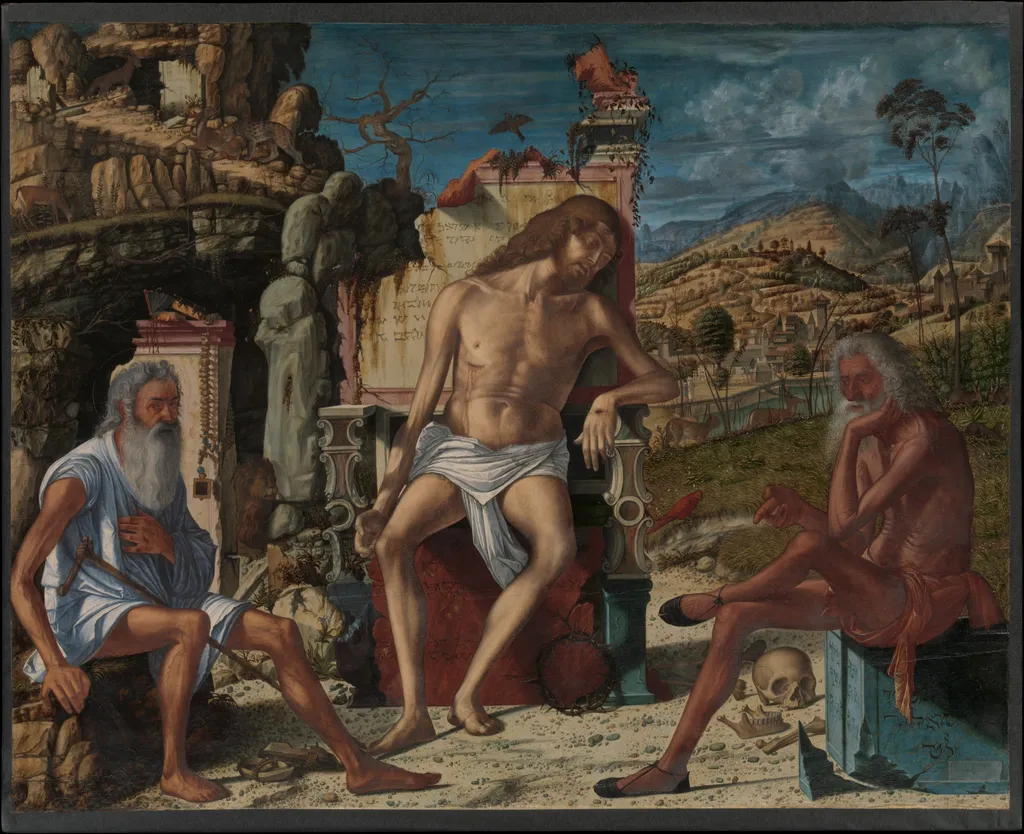
The Meditation on the Passion is a tempera painting by the Venetian Renaissance artist Vittore Carpaccio. It dates from 1500 and is held in the collection of the Metropolitan Museum of Art.
About this work
Subject & Meaning
Hebrew phrases taken from the Book of Job, notably "I know that my Redeemer lives," underscore a theological focus on resurrection.
The painting shows the dead Christ seated on a ruined throne inscribed with Hebrew text, flanked by Saints Jerome and Job, each identified by traditional attributes, a hermit with a stone tablet and a lion, and a half-naked figure bearing an ulcerous wound. A skull and scattered bones function as vanitas symbols, while a bird ascending represents the soul. Hebrew phrases taken from the Book of Job, notably "I know that my Redeemer lives," underscore a theological focus on resurrection.
The composition merges narrative elements of the Passion with allegorical references to mortality and divine hope, a theme documented in contemporary sermons and humanist literature.
Technique & Style
Vittore Carpaccio executed The Meditation on the Passion in tempera and oil on a wooden panel measuring 70.5 by 86.7 centimetres. Infrared analysis has revealed the artist's authentic signature, "Vjctorjs Carpattjj / venettj opus," beneath a later apocryphal inscription attributing the work to Andrea Mantegna. Stylistically, the composition is nearly symmetrical, placing the dead Christ on a ruined throne flanked by Saints Jerome and Job.
It shows strong influences from Mantegna, Antonello da Messina, and the Ferrarese school, while the form and pose of Christ recall Giovanni Bellini's Pietàs, combined with graphic accents and pathos borrowed from Rogier van der Weyden. The landscape contrasts harsh, rocky escarpments on the left with a softer, pastoral view on the right, a dichotomy alluding to the passage from death to life. Vanitas motifs, a skull, scattered bones, and chipped marble, are integrated alongside Hebrew inscriptions referencing the Book of Job.
History & Provenance
The circumstances of the commission and the original placement of Carpaccio's Meditation on the Passion are unknown. Its dating is uncertain, generally placed in the early sixteenth century, between about 1500 and 1510. The work is first documented in 1623 in the collection of Roberto Canonici in Ferrara, where it was attributed to Andrea Mantegna, an attribution supported by an apocryphal signature on the cartellino at the lower right that overlays Carpaccio's own; infrared examination reveals the underlying inscription "Vjctorjs Carpattjj / venettj opus."
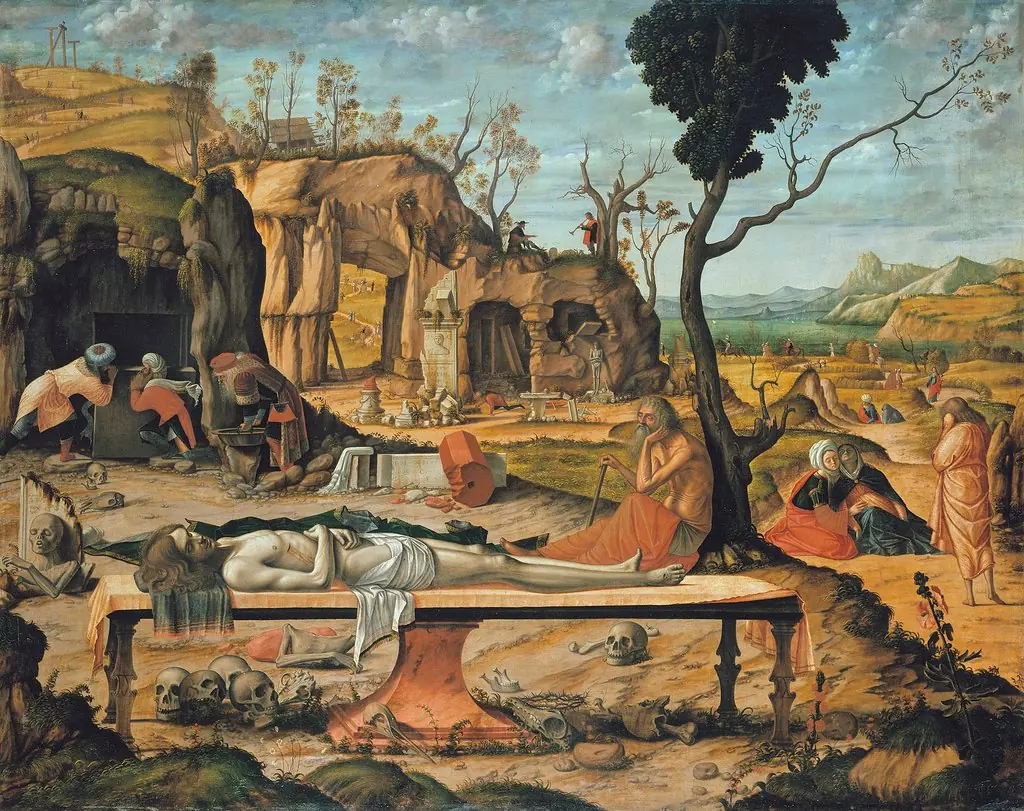
In the Canonici collection it was kept alongside Carpaccio's Dead Christ, with which it shares numerous features. The painting is now held in the Metropolitan Museum of Art, New York.
Context
Within early sixteenth-century Venetian painting, Carpaccio's Meditation on the Passion occupies a distinctive position through its synthesis of regional traditions, drawing on Andrea Mantegna, Antonello da Messina, and the Ferrarese school, while the seated dead Christ recalls Giovanni Bellini's Brera Pietà and the graphic accents and pathos derive from Rogier van der Weyden. Its early history reflects the vagaries of attribution: first recorded in 1623 as a Mantegna, it bore an apocryphal signature overlying Carpaccio's own. Scholarship dates it between 1500 and 1510.
The subject has been linked to devotional texts including the Sermones of San Lorenzo Giustiniani, Paolo Giustiniani's Dialoghi sull'amore di Dio, and Petrarch's Triumph of Death. Critical attention appears in studies by Francesco Valcanover, Augusto Gentili, and Daniele Trucco, the last examining Carpaccio's macabre iconography.
Overview
The Meditation on the Passion is a tempera painting depicting three figures in a rocky landscape. The artwork conveys a quiet and contemplative mood, inviting viewers to reflect on its solemn subject. The central figure is seated, while two others are positioned on the ground, all contributing to the serene atmosphere of the scene.
Own this work as a print
Artist & collection

Artist
Vittore Carpaccio (UK: kar-PATCH-ee-oh, US: -PAHTCH-, Italian: ; c. 1460/65 – c. 1525) was an Italian painter of the Venetian school who studied under Gentile Bellini. Carpaccio was largely influenced by the style of…

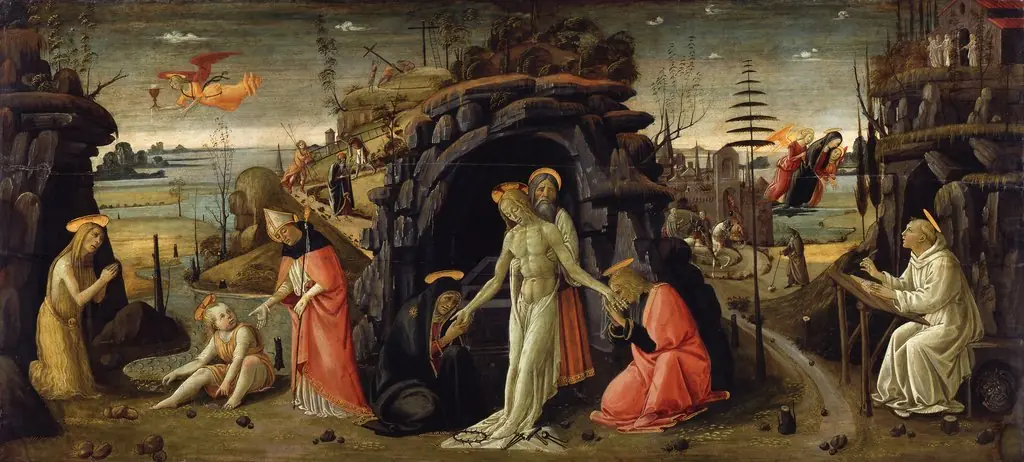 Landscape with biblical scenes and scenes from the legends of saints
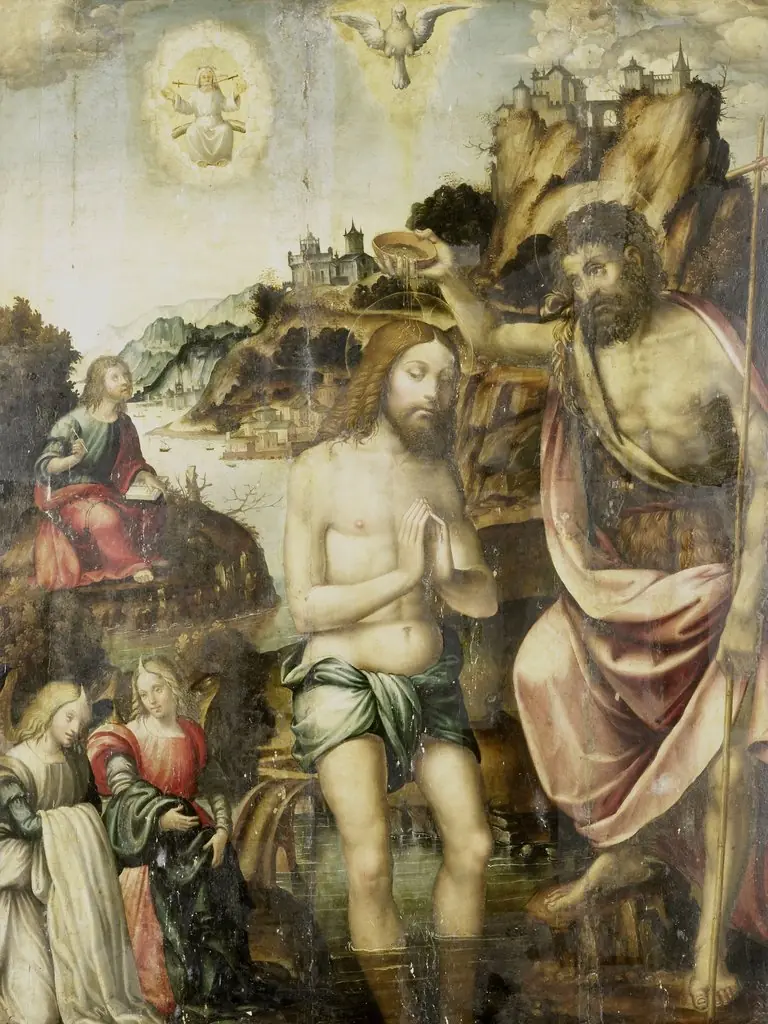 The Baptism of Christ
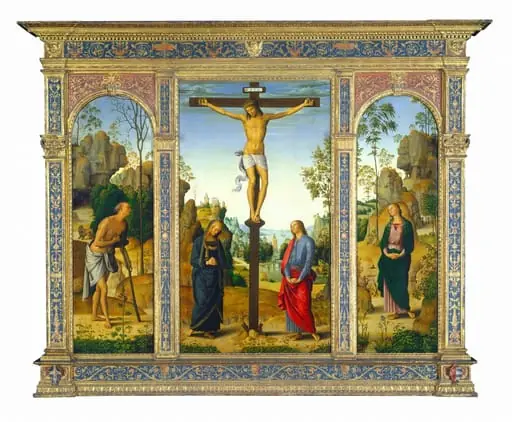 The Crucifixion with the Virgin, Saint John, Saint Jerome, and Saint Mary Magdalene
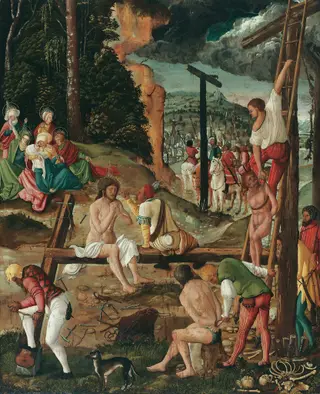 Before Christ's Crucifixion (Christ in Misery)
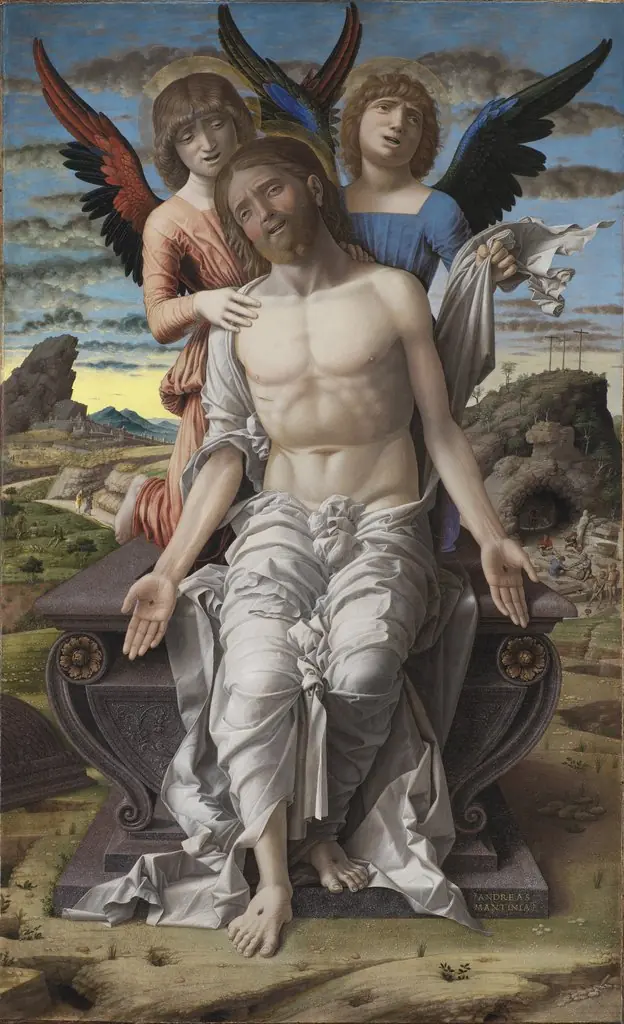 Christ as the Suffering Redeemer
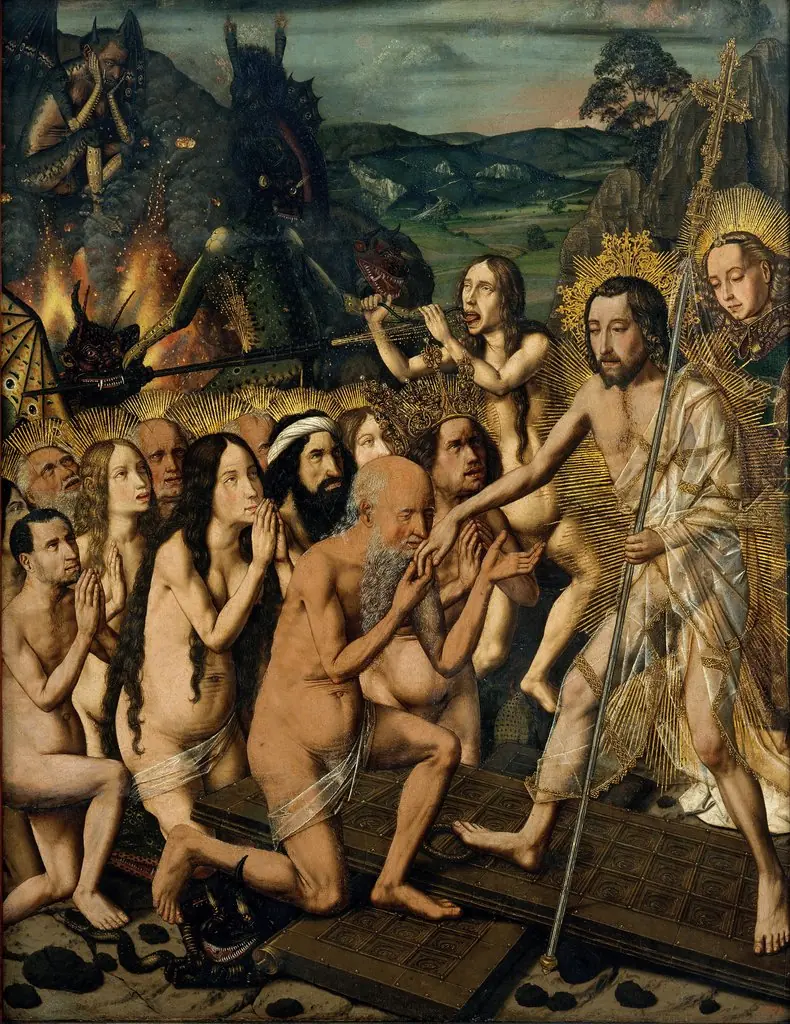 Descent of Christ into Limbo
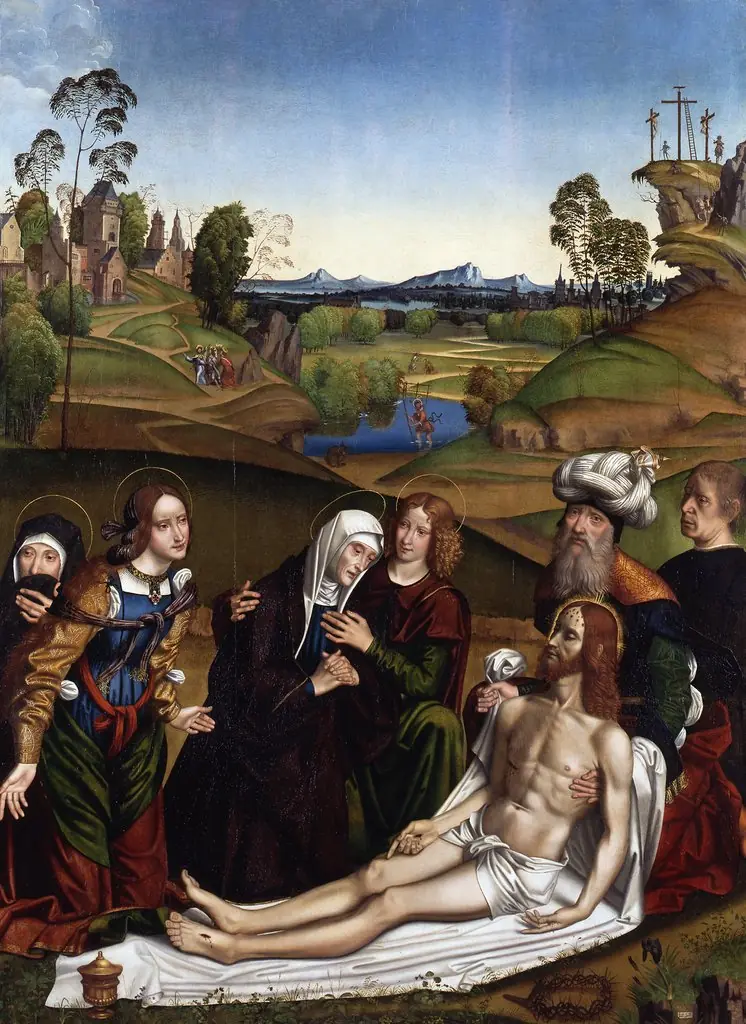 The Lamentation of Christ with a Donor
 Resurrection of Christ
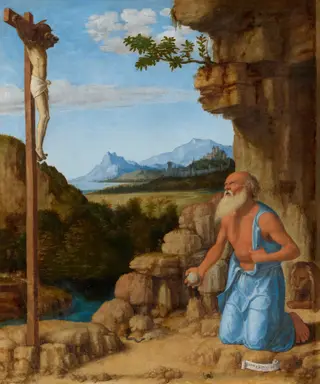 Saint Jerome in the Wilderness
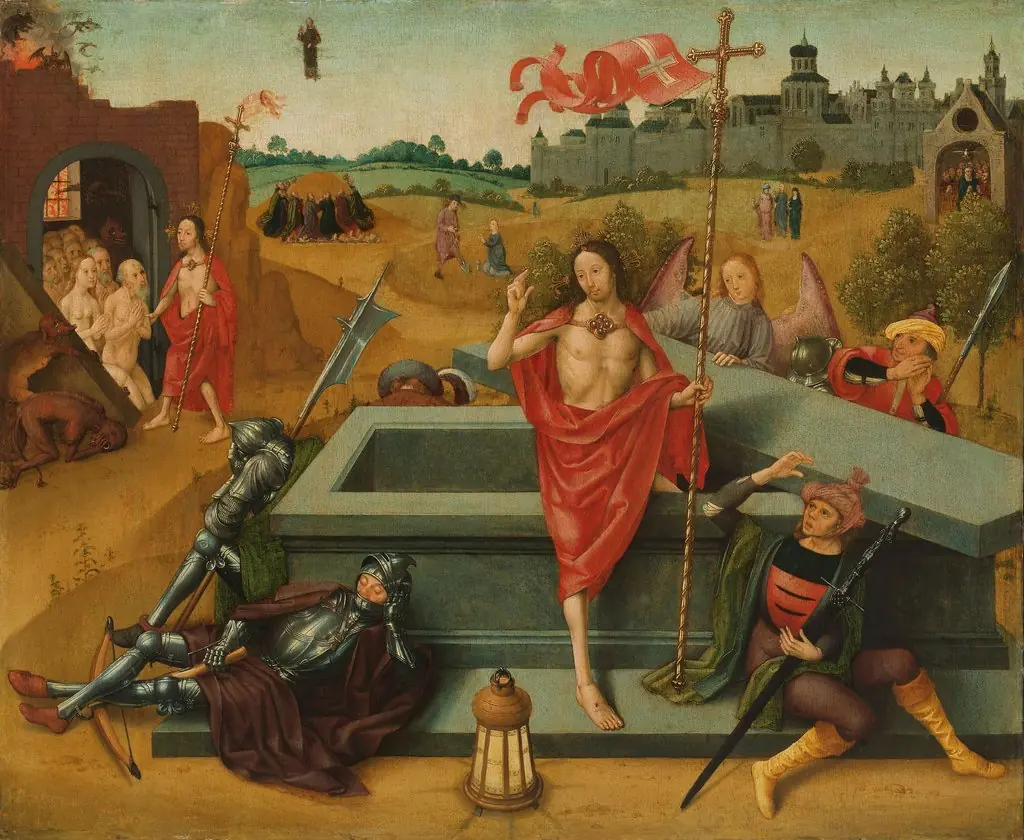 The Resurrection
 Crucifixion of Christ
- Preparation of Christ's Tomb