Artwork
王翬、楊晉、顧昉、王雲、徐玫 仿古山水圖 冊 紙本|Landscapes after old masters
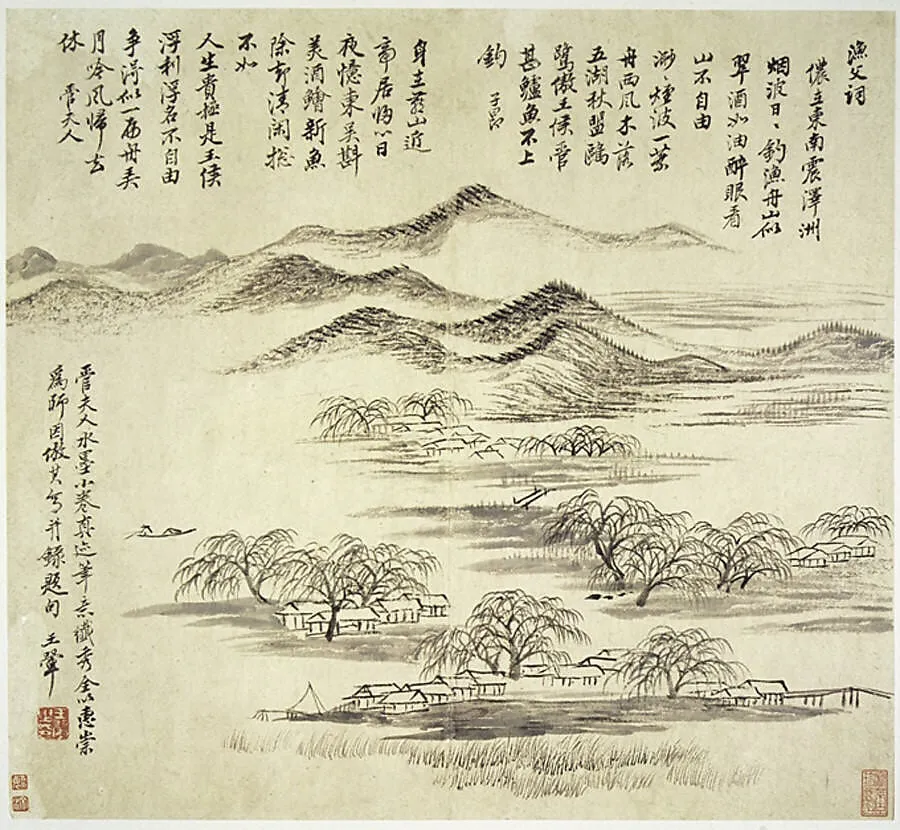
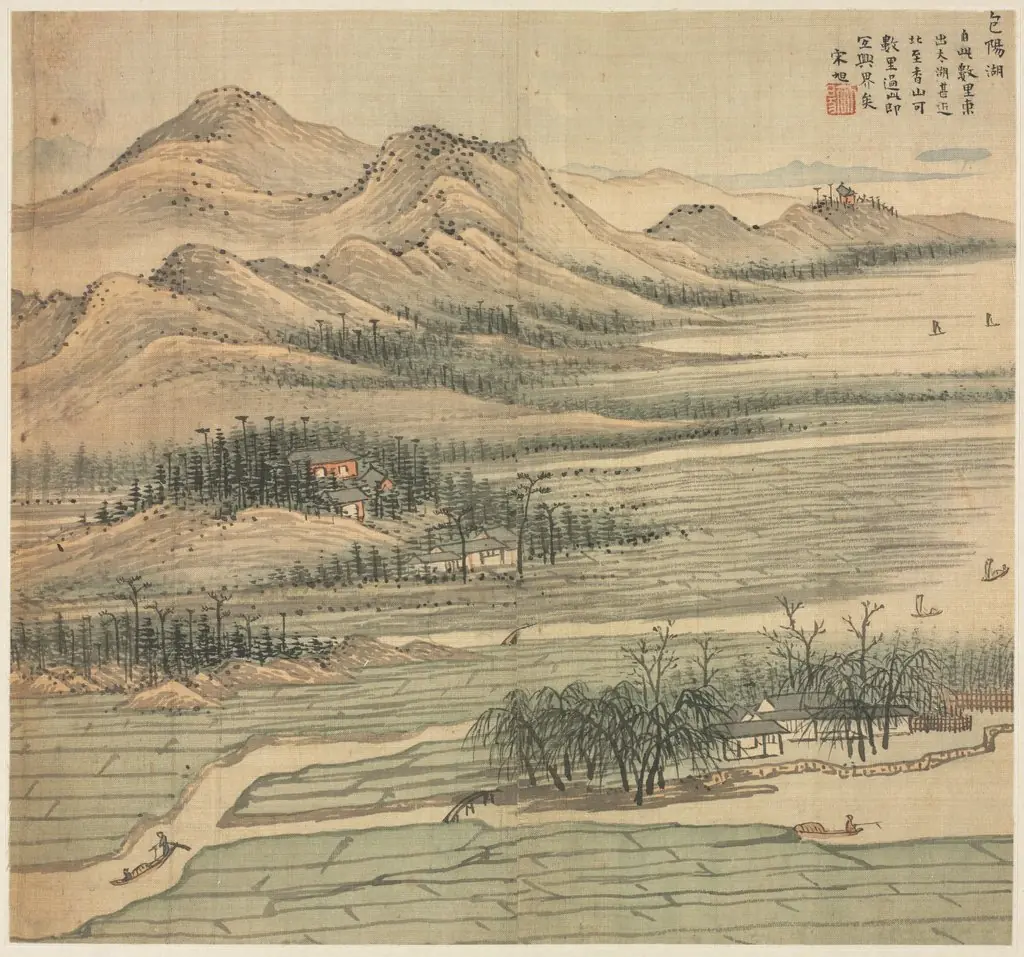
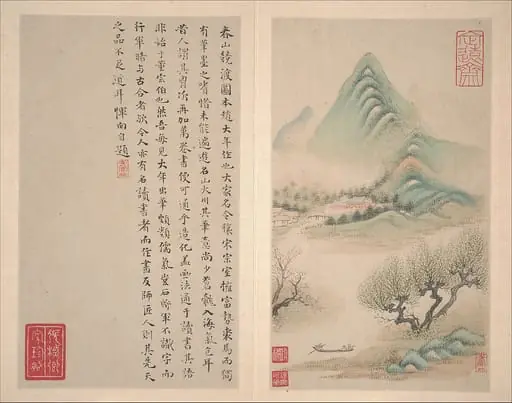
王翬、楊晉、顧昉、王雲、徐玫 仿古山水圖 冊 紙本|Landscapes after old masters is an ink painting by the Baroque artist Wang Hui. It dates from 1692 and is held in the collection of the Metropolitan Museum of Art. Created in 1692, this album consists of sixteen leaves of ink and color on paper, depicting landscapes modeled after earlier masters.
About this work
Subject & Meaning
This interpretation draws on the documented depiction of a mountain in the piece and its classification as a landscape painting.
The album titled "Landscapes after old masters" consists of sixteen ink-and-color leaves painted by Wang Hui in 1692. Its subject is a stylized mountain scene, a recurring motif in Chinese landscape painting that symbolizes permanence, spiritual retreat, and the moral ideal of harmony with nature. By reproducing compositional strategies of earlier masters, the work functions as a homage that links contemporary Qing‑era art to the classical tradition, expressing reverence for scholarly aesthetics and the enduring cultural significance of the mountain as a visual metaphor.
This interpretation draws on the documented depiction of a mountain in the piece and its classification as a landscape painting.
Technique & Style
This album comprises sixteen leaves executed in ink and color on paper, a format characteristic of collaborative literati painting practice. The work measures approximately 27.9 by 30.8 centimeters per leaf, a modest scale suited to intimate viewing and connoisseurship. Each artist, Wang Hui, Yang Jin, Gu Fang, Wang Yun, and Xu Mei, contributed leaves imitating the styles of earlier masters, a working method that required precise handling of brush and ink to evoke the textures, brushwork, and tonalities of canonical landscape precedents.
The paper support would have demanded careful preparation and controlled absorption to accommodate varied washes, textured strokes, and layered color associated with the orthodox landscape tradition. The album's condition, as held by the Metropolitan Museum of Art, reflects standard preservation of a late seventeenth-century Chinese paper album.
History & Provenance
The album was created in 1692 by Wang Hui in collaboration with Yang Jin, Gu Fang, Wang Yun, and Xu Mei, as recorded in the cataloguing of the work. It consists of sixteen leaves executed in ink and color on paper, each depicting mountainous landscapes in the manner of earlier masters. The album is currently held in the collection of the Metropolitan Museum of Art, where it remains part of the institution's holdings of Chinese paintings.
No further details concerning an earlier ownership chain, specific commissioning circumstances, or intermediate provenance prior to the museum's acquisition are documented in the available sources.
Overview
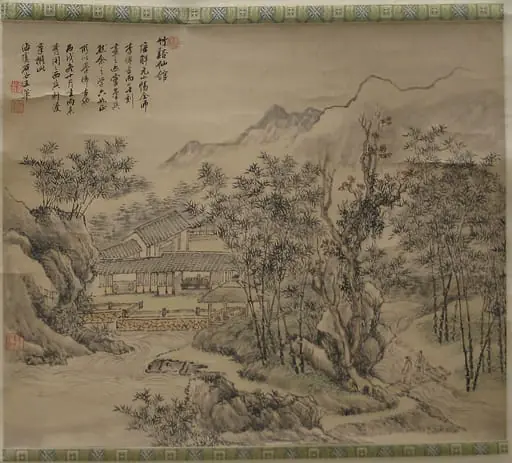
Created in 1692, this album consists of sixteen leaves of ink and color on paper, depicting landscapes modeled after earlier masters. The work is a collaborative effort by five prominent artists of the Qing dynasty: Wang Hui, Yang Jin, Gu Fang, Wang Yun, and Xu Mei. Each leaf presents a distinct scene featuring mist-shrouded mountains, meandering rivers, and diminutive figures, often scholars, situated within pavilions or along paths.
The composition adheres to the traditional Chinese aesthetic of the literati, emphasizing the study and emulation of historical brushwork rather than the invention of novel forms. This project reflects the mid-Qing artistic practice of 'copying the ancients,' a method used to demonstrate technical mastery and deepen understanding of the lineage of painting styles. The album serves as a significant example of the collective artistic endeavors undertaken by the Jiangnan school during this period, showcasing the harmonious integration of multiple hands within a single cohesive format.
The small scale of the leaves, comparable to postcards, invites intimate viewing, allowing the observer to appreciate the nuanced variations in technique and the atmospheric depth achieved through ink washes and subtle coloration.
Context
This album exemplifies a common practice in Chinese painting where artists engaged in collaborative projects to study and interpret historical works. Led by Wang Hui, a prominent painter of his era, the group, comprising Yang Jin, Gu Fang, Wang Yun, and Xu Mei, collectively explored the rich tradition of landscape painting. Such collaborations served as a pedagogical tool and a means to honor the artistic lineage, reinforcing the continuity of established aesthetic principles.
Artist & collection


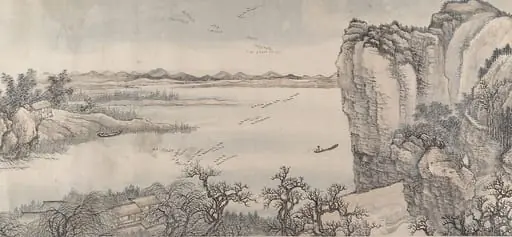 清 王翬 倣巨然燕文貴山水圖 卷|Landscape in the Style of Juran and Yan Wengui
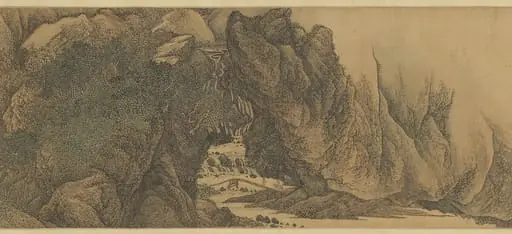 清 王翬 太行山色圖 卷|The Colors of Mount Taihang
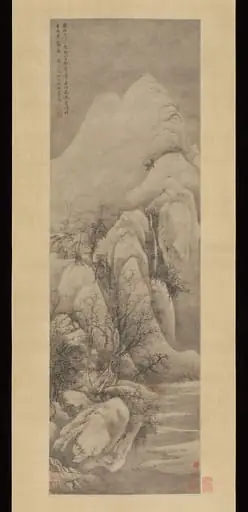 清 王翬 倣李成雪霽圖 軸|Snow Clearing: Landscape after Li Cheng
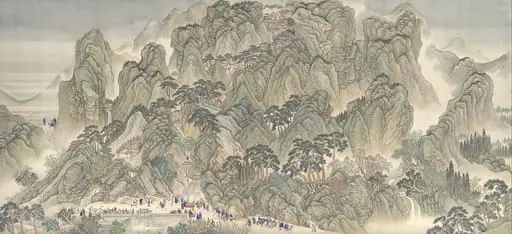 清 王翬等 康熙南巡圖 (卷三: 濟南至泰山) 卷|The Kangxi Emperor's Southern Inspection Tour, Scroll Three: Ji'nan to Mount Tai
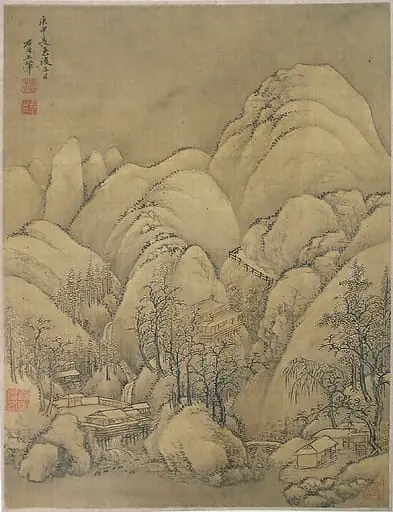 清 佚名 倣王翬 倣李成山水圖 軸|Landscape after Li Cheng
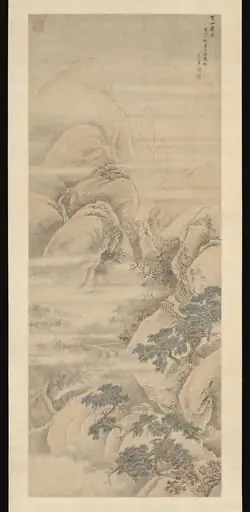 清 (傳)王翬 雪景山水圖 軸|Snowscape
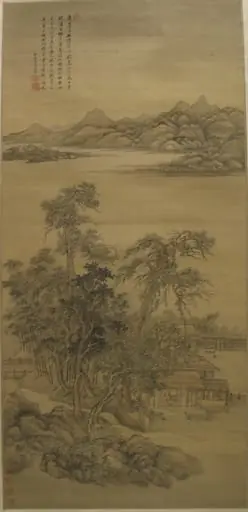 清 佚名 倣王翬 倣李公麟草堂圖 軸|Landscape in the Style of Li Gonglin
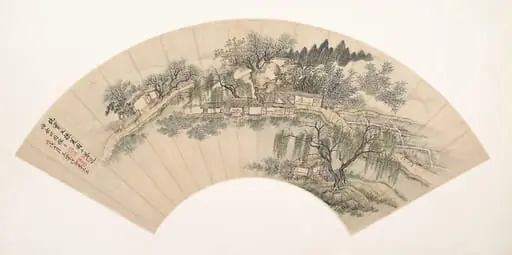 清 佚名 倣王翬 倣仇實父採菱圖 扇|Gathering Water Chestnuts