Artwork
Presenting the Tripod
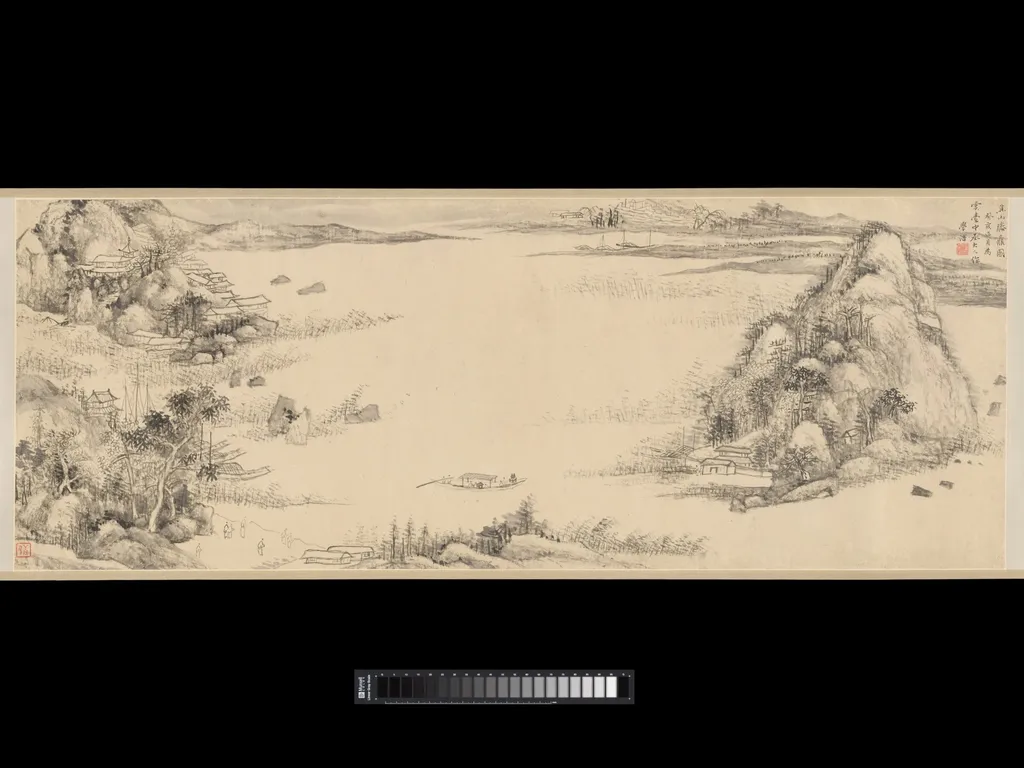
Presenting the Tripod is an unspecified painting by the Qing dynasty painting artist Wang Xuehao. It dates from 1803 and is held in the collection of the Metropolitan Museum of Art.
About this work
History & Provenance
The work has been included in exhibitions focused on early 19th-century Chinese painting at the institution.
The tripod by Wang Xuehao is dated 1803, aligning with the artist’s active period in the Qing dynasty. The work entered the collection of the Metropolitan Museum of Art, where it is currently held. No documented commission or earlier ownership chain is recorded in available sources.
Presenting the Tripod is held by the Metropolitan Museum of Art in New York. It is cataloged under the museum's accession records as part of their collection. The work has been included in exhibitions focused on early 19th-century Chinese painting at the institution.
Context
Critical reception of Wang Xuehao's Presenting the Tripod has been limited, with few contemporary reviews surviving. Scholars note its significance as a rare 1803 painting by the artist within the broader context of Qing dynasty court art and early Sino-Western exchanges. The work is housed in the Metropolitan Museum of Art, where it is studied as part of the institution's collection of Chinese paintings from the early 19th century. Its placement in the museum's galleries reflects an emphasis on cross-cultural artistic dialogue during this period.
Scholarship situates the painting within Wang Xuehao's development as a court painter, highlighting its technical execution and thematic focus on ceremonial objects. The work's provenance and acquisition by the Metropolitan Museum of Art underscore its recognized cultural value, though detailed exhibition histories remain sparse in available documentation.
Overview
‘Presenting the Tripod’ is a landscape painting executed in 1803 by the Chinese artist Wang Xuehao. The work is part of the collection of the Metropolitan Museum of Art in New York. It depicts an expansive, tranquil scene of rolling hills, scattered structures and a meandering river, rendered in a restrained palette of soft grays and whites.
Subject & Meaning
The composition presents a quiet countryside where modest buildings, suggestive of temples or dwellings, nestle within the hillsides. Small human figures traverse narrow paths, emphasizing the vastness of the natural setting. The serene atmosphere and the careful placement of architectural elements convey a contemplative view of humanity’s modest presence within the landscape.
Technique & Style
Wang Xuehao employs light ink strokes to model depth, using delicate lines to suggest foliage, architecture and distant terrain. The limited tonal range, dominated by muted grays and whites, creates a sense of atmospheric distance. Subtle, darker outlines define trees and structures, while the overall effect is one of understated elegance characteristic of early‑nineteenth‑century Chinese ink landscape painting.
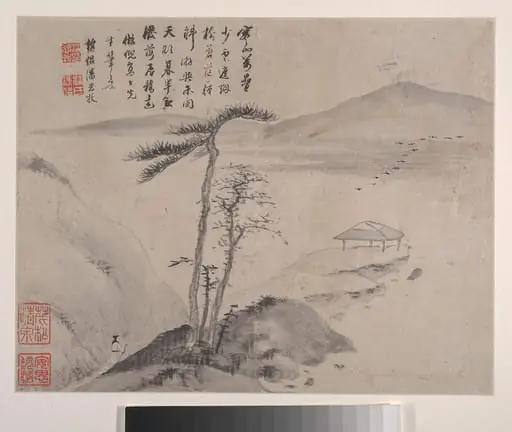
Own this work as a print
Artist & collection
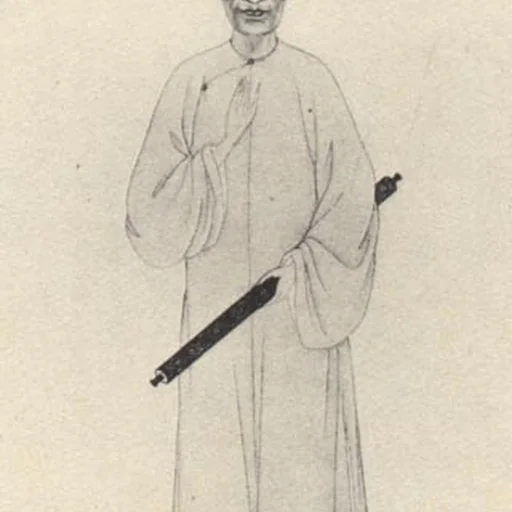

- 清 潘思牧 山水 冊頁八開|Landscapes
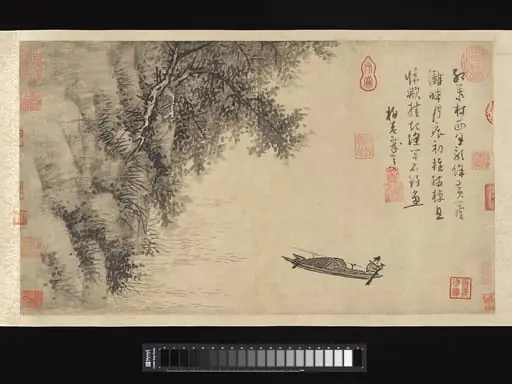 元 吳鎮 蘆灘釣艇圖 卷|Fisherman
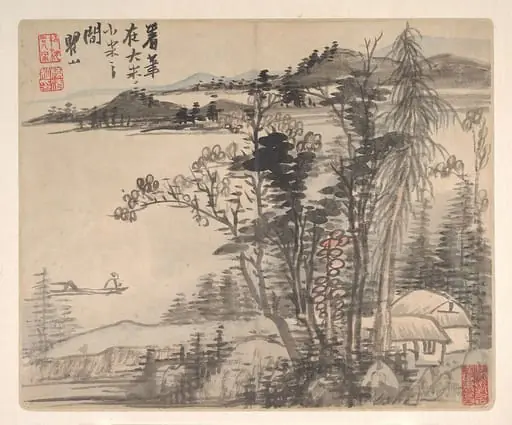 清 梅清 為澤翁倣各家山水圖 冊|Landscapes after Ancient Masters
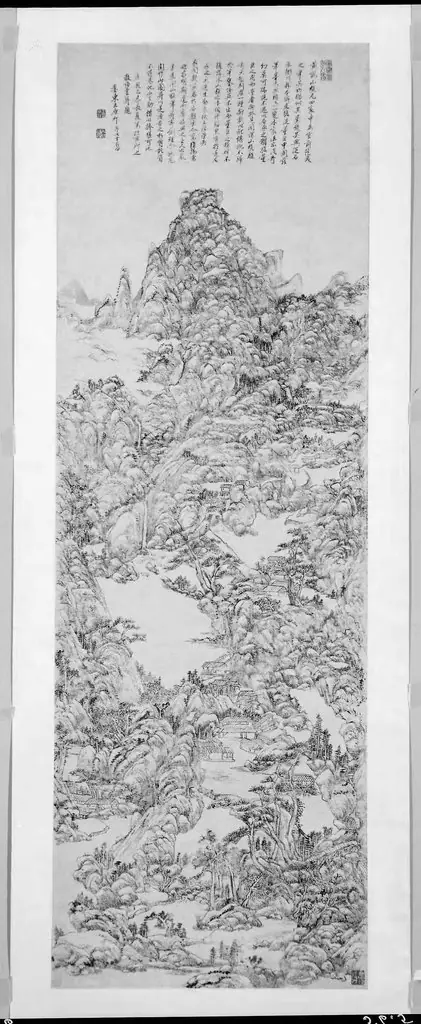 Mountainous Landscape after Wang Meng
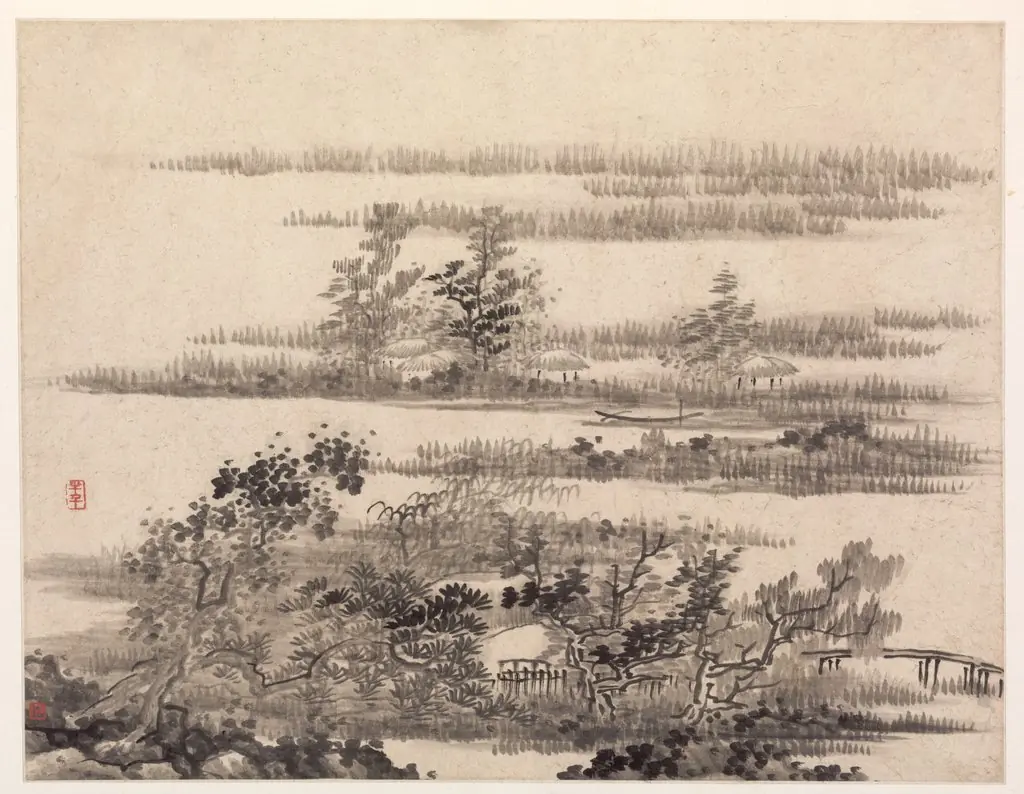 Summer in the Water Country
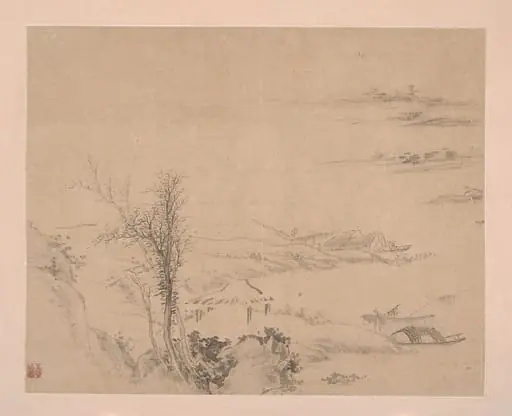 Untitled
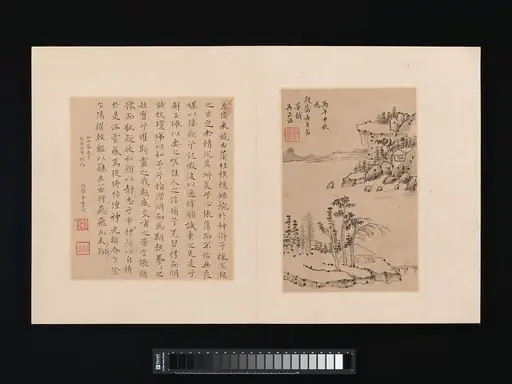 清 諸家 名家書畫 冊|Album of painting and calligraphy for Maoshu
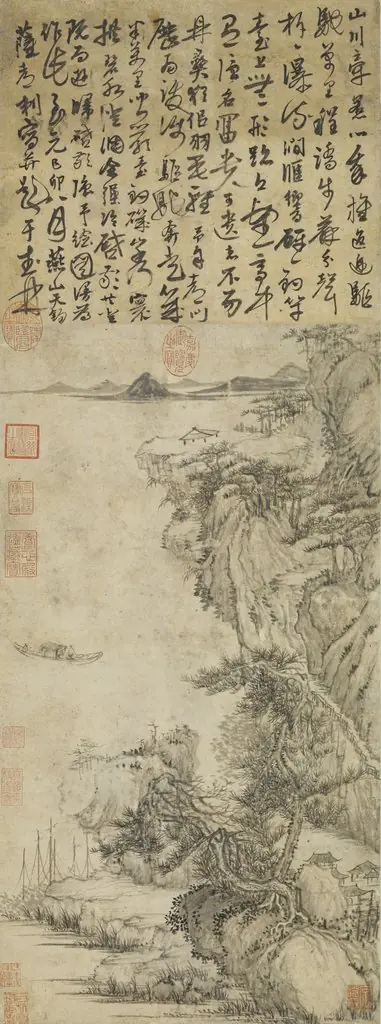 Angling Terrace at Yen-ling
![Daoist Retreat in Mountain and Stream (Landscape after Ni Zan [1301–1374]), by Lu Zhi](https://artifactworldgallery.com/img/lu-zhi--daoist-retreat-in-mountain-and-stream-landscape-after-ni-zan--a798050b065ab200-w320.webp) Daoist Retreat in Mountain and Stream (Landscape after Ni Zan [1301–1374])
Daoist Retreat in Mountain and Stream (Landscape after Ni Zan [1301–1374])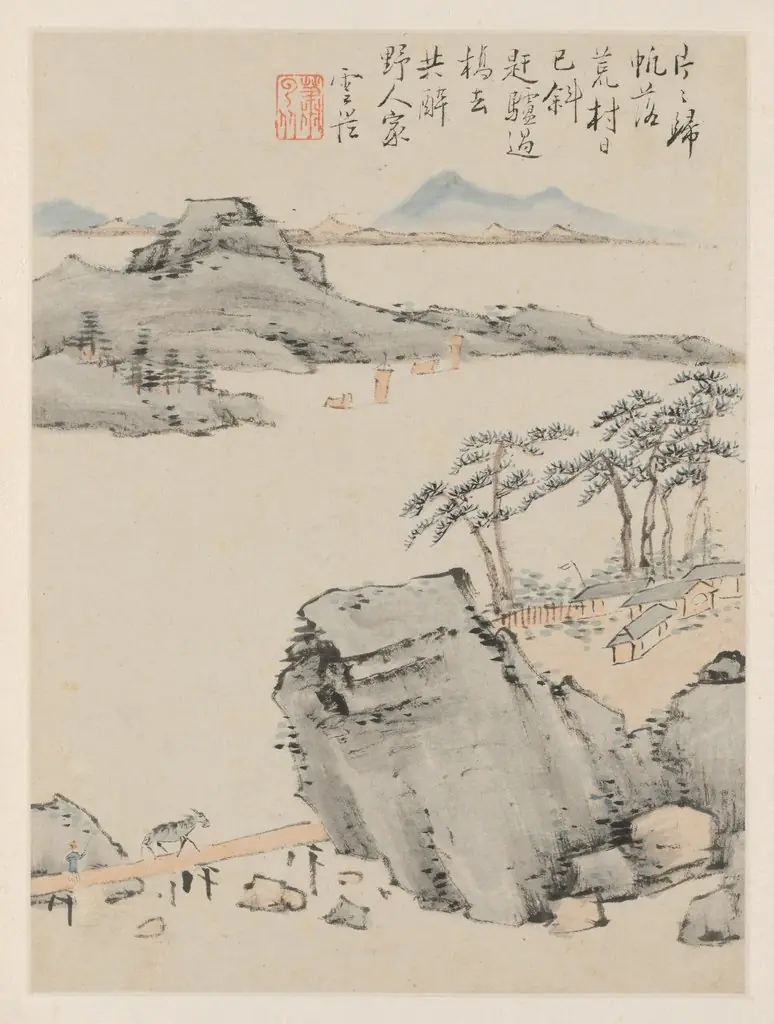 Album of Seasonal Landscapes, Leaf C (previous leaf 6)
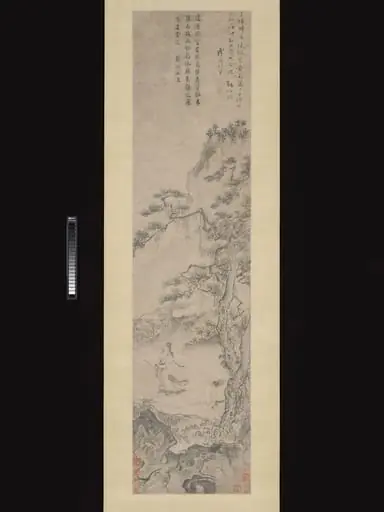 明 杜堇 陶淵明賞菊圖 軸|Tao Yuanming enjoying chrysanthemums
![Daoist Retreat in Mountain and Stream (Landscape after Ni Zan [1301–1374]), by Lu Zhi](https://artifactworldgallery.com/img/lu-zhi--daoist-retreat-in-mountain-and-stream-landscape-after-ni-zan--766e576a4810a8bc-w320.webp) Daoist Retreat in Mountain and Stream (Landscape after Ni Zan [1301–1374])
Daoist Retreat in Mountain and Stream (Landscape after Ni Zan [1301–1374])